
Why Move to Suffolk?
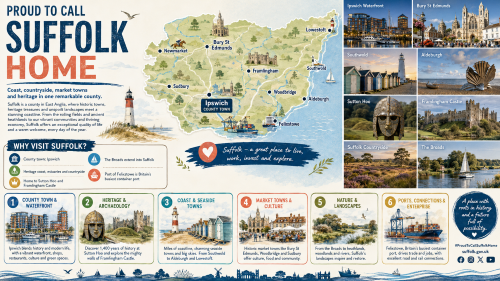
Suffolk offers coast, countryside, market towns, heritage and a strong quality of life. It sits in East Anglia and borders Norfolk, Cambridgeshire and Essex.
The county includes Ipswich, Bury St Edmunds, Lowestoft, Felixstowe, Newmarket, Stowmarket, Sudbury, Woodbridge and many rural villages. It also includes well-known coastal areas such as Southwold, Aldeburgh, Orford and the Suffolk Coast.
Suffolk suits many movers. Some buyers want waterfront living in Ipswich. Others prefer market towns, coastal villages, countryside homes or commuter locations. The county also offers access to schools, colleges, the University of Suffolk, apprenticeships and adult learning. Suffolk County Council supports adult learning for people aged 19 and above, with courses aimed at skills, wellbeing and employment.
Green space is a major draw. Residents can enjoy the Suffolk Coast, Dedham Vale, The Brecks, forests, rivers, estuaries and public rights of way. Visit Suffolk promotes the county for coast, countryside, market towns, places to stay, food, drink and things to do.
For many movers, Suffolk offers balance. It gives access to nature, coast, heritage, local jobs, education and slower-paced living, while still keeping links to London, Cambridge, Norwich and the wider East of England.
Living in Suffolk: What to Expect
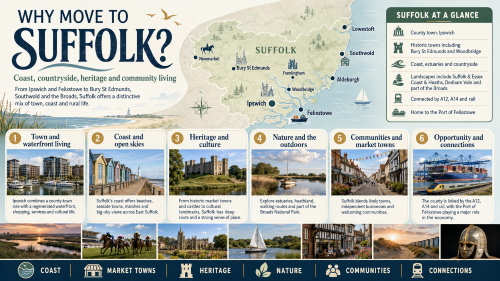
Suffolk offers variety. You can choose an urban centre, a coastal town, a rural village, a historic market town or a commuter base.
Ipswich suits buyers who want town-centre life, waterfront homes, rail links, shops, culture and access to employment. Bury St Edmunds suits buyers who want heritage, parks, independent shops and strong local character. The official tourism site describes Bury St Edmunds as a historic Suffolk destination with more than 1,000 years of history.
The Suffolk Coast appeals to buyers who want sea air, wildlife, walking routes and attractive towns. The official Suffolk Coast tourism guide covers destinations from Felixstowe to Lowestoft, including Aldeburgh and Southwold.
Inland Suffolk also has strong appeal. Towns such as Stowmarket, Sudbury, Hadleigh, Needham Market and Framlingham offer local services, schools, shops and community life.
Because of this mix, Suffolk works well for families, professionals, retirees, students, landlords and home movers.
Housing in Suffolk: Diverse and Desirable
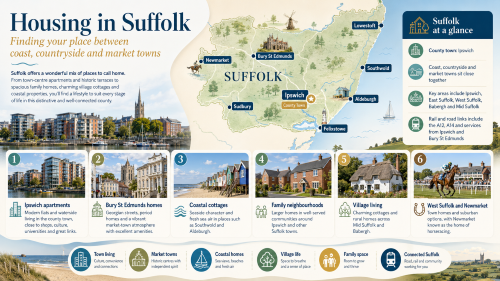
Suffolk has a broad housing market. Buyers can find townhouses, period cottages, coastal homes, new-build estates, terraces, flats, semis and detached homes.
Ipswich is often a practical choice for first-time buyers and commuters. The average house price in Ipswich was £214,000 in March 2026. The average monthly private rent was £986 in April 2026.
East Suffolk includes areas such as Lowestoft, Felixstowe, Woodbridge, Leiston, Saxmundham, Aldeburgh and Southwold. The average house price in East Suffolk was £281,000 in February 2026. The average monthly private rent was £831 in March 2026.
West Suffolk includes Bury St Edmunds, Newmarket, Haverhill and surrounding villages. The average house price in West Suffolk was £297,000 in March 2026. The average monthly private rent was £1,176 in April 2026.
Babergh and Mid Suffolk also offer many village, market-town and rural options. Babergh’s average house price was £329,000 in March 2026, while Mid Suffolk’s average house price was £319,000 in March 2026.
Different areas suit different needs. Ipswich may suit commuters and investors. Bury St Edmunds may suit families and professionals. Woodbridge, Southwold and Aldeburgh may suit buyers seeking coast or character. Stowmarket and Needham Market may suit buyers seeking rail links and town services.
Investors should compare local demand carefully. Rental demand can change by street, property type, transport access and tenant profile.
Education in Suffolk: Excellence in Learning
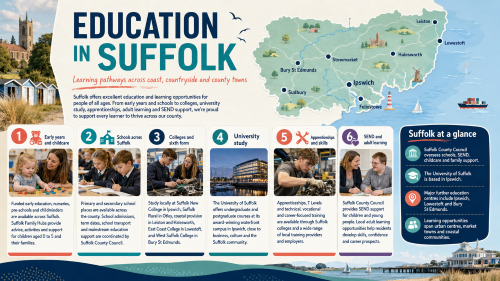
Suffolk offers education from early years to higher education. Families can access nurseries, primary schools, secondary schools, special schools, sixth forms, colleges and adult learning.
Suffolk County Council provides school information, school place guidance, attendance information, term dates and school transport support.
School leavers have several post-16 routes. Suffolk County Council lists options including school sixth forms, sixth form colleges, further education colleges, training centres, apprenticeships, employment with accredited learning and supported internships.
The University of Suffolk is based on Ipswich Waterfront. It describes its work as focused on transformation for individuals, the community and the region.
Apprenticeships are also part of the local skills offer. Apprenticeships Suffolk is a free, impartial Suffolk County Council service. It aims to increase the quality and quantity of apprenticeships in the county.
Therefore, Suffolk can suit families, school leavers, graduates, career changers and employers.
Employment Opportunities in Suffolk
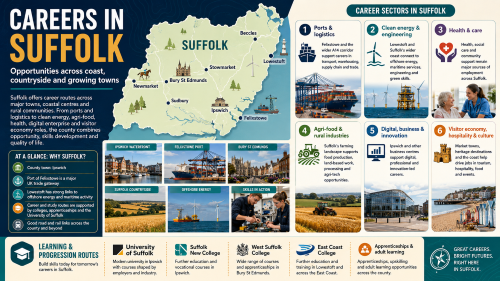
Suffolk’s economy includes agriculture, clean energy, tourism, logistics, ports, food and drink, health, care, education, digital, hospitality and manufacturing.
Suffolk’s economy strategy highlights clean energy, agri-food and logistics as major strengths. It also links these sectors with growth in technology and innovation.
Clean energy plays a strong role. Suffolk’s leadership includes offshore wind and nuclear projects. These areas support jobs in construction, engineering, operations, maintenance, project management and supply chains.
Ports and logistics also matter. Felixstowe is a major employment centre and supports trade, transport and supply-chain activity. Meanwhile, Ipswich supports office, education, culture, healthcare, port, retail and hospitality roles.
Bury St Edmunds supports jobs in tourism, food and drink, professional services, public services and local business. Newmarket adds jobs linked to horseracing, equine services, tourism and hospitality.
As a result, Suffolk offers career routes across towns, coast and countryside.
Why Move to Suffolk | Transport and Infrastructure
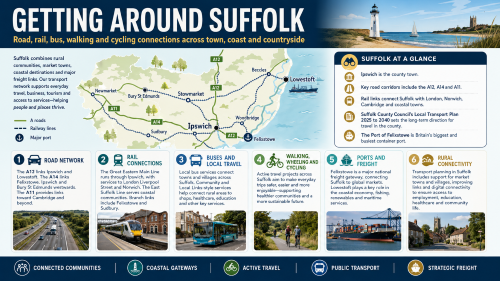
Suffolk has transport links by rail, road, bus, walking, cycling and community transport.
Suffolk County Council’s Local Transport Plan 2025 to 2040 sets out long-term ambitions for the county’s transport network.
Rail links serve key towns. Greater Anglia timetables include routes from Ipswich to London Liverpool Street, Norwich, Cambridge and Peterborough. They also include East Suffolk Line services to Lowestoft and Felixstowe.
Road links include the A14, A12, A11 and A140. These routes help connect Suffolk with London, Cambridge, Norfolk, Essex and the Midlands.
Buses and community transport also support local travel. Suffolkonboard provides information on bus timetables, journey planning, park and ride, trains, rural transport, cycling and school travel.
Ipswich Park and Ride can help with travel into the town. Rural transport options also help residents in areas without regular bus services.
Exploring Attractions in Suffolk
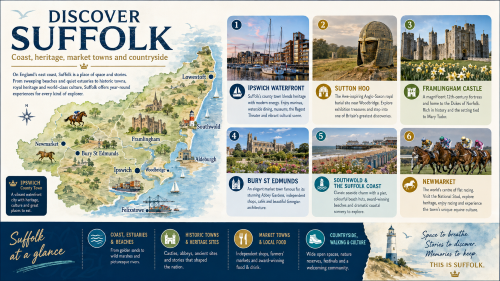
Suffolk has attractions linked to coast, heritage, countryside, wildlife, arts, food and family days out.
The Suffolk Coast is one of the county’s best-known draws. Its official tourism site covers places to stay, things to do, food, drink and events across the coast.
Southwold and Aldeburgh are popular coastal towns. Aldeburgh’s official website describes it as a historic, creative and foodie destination on the Suffolk Heritage Coast.
Bury St Edmunds adds heritage and culture. Its official tourism site highlights the town’s long history, the abbey’s story, and its links to Saint Edmund.
Suffolk also offers nationally known heritage. VisitEngland highlights Suffolk for historic villages, beaches, Sutton Hoo and foodie experiences.
Families can also explore coastal walks, country parks, wildlife sites, museums, piers, theatres, markets and independent shops.
Dining Out: The Best Places to Dine in Suffolk
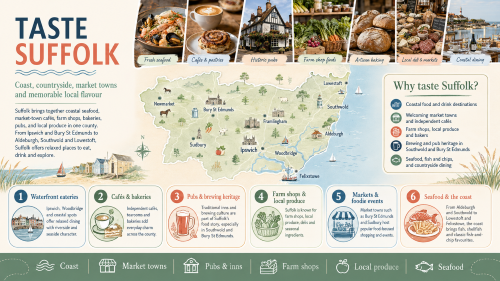
Suffolk has a varied food and drink scene. Residents can find pubs, cafés, farm shops, coastal seafood, breweries, restaurants, food markets and relaxed family dining.
The county’s food offer links closely with coast and countryside. Visit Suffolk promotes food, drink, places to stay, events and things to do across the county.
The Suffolk Coast also has a strong food identity. Its official tourism guide highlights places to eat and drink across the coastal area.
Aldeburgh, Southwold, Orford, Woodbridge and Felixstowe offer coastal food options. Ipswich and Bury St Edmunds offer town-centre dining, cafés, pubs and restaurants.
Local food can include seafood, farm produce, Suffolk pork, bakery goods, beer, spirits, farmers’ market produce and seasonal ingredients.
Dining out is part of the lifestyle appeal. It gives residents a choice of coastal meals, village pubs, independent cafés and town-centre restaurants.
Mortgage Brokers in Suffolk: Securing a Home
Buying in Suffolk can involve several choices. The right mortgage route depends on income, deposit, credit profile, property type and plans.
A mortgage broker in Ipswich can help compare suitable lenders. This can help first-time buyers, home movers, remortgage clients, landlords and self-employed applicants.
Suffolk has varied buyer profiles. Some buyers want homes in Ipswich or Bury St Edmunds. Others prefer coastal towns, market towns or villages.
Investors may focus on tenant demand, transport links, university access, employment centres or coastal rental appeal. However, each area needs careful research.
Connect Experts has a dedicated Suffolk mortgage brokers page. It helps users connect with advisers who support buyers, landlords and homeowners across Suffolk.
Advice can also help with complex cases. These may include adverse credit, contractor income, multiple income streams, buy-to-let, HMOs, bridging finance or limited company lending.

Why Suffolk is the Perfect Place to Call Home
Suffolk offers a strong sense of place. It combines coast, countryside, market towns, culture, food, heritage and space.
The county suits many buyers. Families may look at Bury St Edmunds, Woodbridge, Stowmarket, Ipswich suburbs or rural villages. Professionals may prefer Ipswich, Cambridge-linked areas, Bury St Edmunds, Newmarket or towns with rail access.
Coastal buyers may compare Felixstowe, Lowestoft, Southwold, Aldeburgh, Orford and nearby villages. Meanwhile, rural buyers may focus on Mid Suffolk, Babergh, the Waveney Valley, the Brecks or Dedham Vale.
Suffolk also has clear identity. Its coast, wool towns, rivers, ports, farms, food, arts, heritage and historic settlements shape daily life.
For many movers, the appeal is simple. Suffolk offers space, character, coast and connection in one county.
Browse Our Advisers in Suffolk


People who found this page helpful also explored these related topics






If you are Looking for a Mortgage Network
“Hi, I’m Liz Syms, Chief Executive Officer and founder of Connect Experts, Connect Mortgages, and Connect for Intermediaries.
If you are a UK mortgage broker based in Suffolk, joining our mortgage network can help you increase your visibility to clients actively searching for trusted, FCA-authorised advice. Brokers featured on our Suffolk mortgage brokers page are matched with clients who value clear communication and professional guidance, including those who prefer advice in a specific language.
Our platform is designed to support compliant, client-focused advisers and help you connect with the right audience across Suffolk.”
Choose the option that suits you best:
Option 1: Schedule a call with our Business Recruitment Manager
Option 2: Complete our contact form
Option 3: Call us

FAQ: Why Move to Suffolk
| Question | Answer | Location Focus |
|---|---|---|
| Why should I move to Suffolk? | Suffolk offers the perfect blend of countryside charm and coastal living. With award-winning beaches, historic market towns, and excellent transport links to London, it’s ideal for families, professionals, and retirees seeking a slower pace without sacrificing connectivity. | Suffolk, East of England |
| What is the cost of living like in Suffolk? | Compared to London and neighbouring counties such as Essex and Cambridgeshire, Suffolk offers more affordable housing and lower living costs, making it a smart choice for homebuyers seeking better value and quality of life. | Ipswich, Bury St Edmunds, Lowestoft |
| Is Suffolk a good place for families? | Yes. Suffolk is known for its outstanding schools, green spaces, and family-friendly communities. The county’s low crime rate and community spirit make it one of the safest and most welcoming regions in the UK. | Woodbridge, Framlingham, Stowmarket |
| What are the job opportunities in Suffolk? | Suffolk’s economy is diverse, with opportunities in technology, energy, healthcare, education, and tourism. The port of Felixstowe and nearby business hubs in Ipswich create strong career prospects for professionals. | Felixstowe, Ipswich |
| What’s the property market like in Suffolk? | Suffolk’s property market remains competitive but more accessible than the South East. Expect everything from period cottages and seaside homes to new developments and family estates, all offering long-term value. | Bury St Edmunds, Aldeburgh, Southwold |
| How is the transport and connectivity in Suffolk? | With regular train services to London Liverpool Street, Norwich, and Cambridge, plus good road access via the A12 and A14, Suffolk is well connected for commuters. The county also has reliable bus networks and scenic cycling routes. | Ipswich, Stowmarket, Sudbury |
| What makes Suffolk’s lifestyle unique? | Suffolk combines historic charm with modern living, think farmers’ markets, music festivals, nature reserves, and coastal walks. It’s a haven for those who appreciate a slower, more fulfilling lifestyle close to nature. | Aldeburgh, Southwold, Dedham Vale |
| Is Suffolk suitable for remote workers? | Absolutely. Suffolk offers strong broadband coverage, peaceful surroundings, and a growing community of remote professionals. Many residents enjoy the work-life balance of rural living with city connectivity. | Framlingham, Haverhill, Eye |
| What cultural attractions does Suffolk offer? | Suffolk is home to renowned attractions like Sutton Hoo, Framlingham Castle, and Snape Maltings Concert Hall. Art, history, and culture are woven into daily life here. | Woodbridge, Snape, Lavenham |
| What’s the overall quality of life in Suffolk? | High. Residents enjoy a safe, clean environment, excellent healthcare facilities, and a strong sense of community, all wrapped in beautiful natural surroundings and coastal scenery. |