
Why Move to Durham? | Durham is a city and county rich in history, natural beauty, and modern opportunities, making it an excellent place to live. Known for its breathtaking landscapes, prestigious university, and strong community spirit, Durham offers a high quality of life for individuals and families alike.
One of Durham’s main attractions is its blend of heritage and progress. The city is home to the iconic Durham Cathedral and Castle, both UNESCO World Heritage Sites, showcasing England’s medieval past. Beyond the historic center, the county boasts scenic countryside, including the Durham Dales and parts of the North Pennines Area of Outstanding Natural Beauty. These green spaces provide excellent opportunities for walking, cycling, and outdoor recreation.
Durham also has a diverse and growing economy, with job opportunities in education, healthcare, science, and engineering. The county benefits from excellent transport connections, including rail links to Newcastle, Edinburgh, and London, as well as access to the A1(M) motorway for easy travel across the UK.
For families, Durham offers highly rated schools, a friendly atmosphere, and a variety of cultural and leisure activities. The city hosts annual events such as the Durham Lumiere Festival, celebrating art and innovation, while its theatres, museums, and galleries provide entertainment for all ages. Additionally, the cost of living in Durham is lower than in many major cities, making it an attractive choice for those seeking affordability without compromising on quality.
Whether you are moving for work, education, or a better lifestyle, Durham offers a welcoming, well-connected environment, making it a fantastic place to call home.
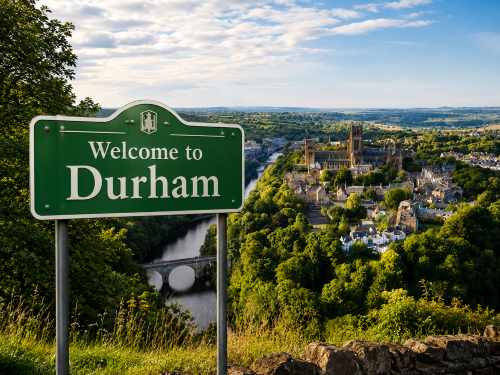
Why Move to Durham - What to Expect
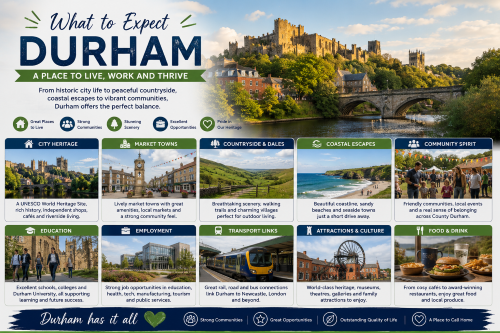
Living in Durham can feel varied. The city centre has heritage streets, riverside walks, shops, cafés, and university life. Meanwhile, surrounding towns and villages offer more space and a quieter pace.
Popular areas include Durham City, Chester-le-Street, Bishop Auckland, Consett, Seaham, Barnard Castle, Sedgefield, Spennymoor, Newton Aycliffe, and Peterlee. Each area has a different feel. Therefore, buyers should compare travel, schools, services, and property type before choosing.
Durham also has a strong appeal to the outdoors. High Force sits on the River Tees near Middleton-in-Teesdale. It is one of the area’s best-known natural landmarks.
The county’s heritage is also a major draw. Beamish, The Living Museum of the North, won the 2025 Art Fund Museum of the Year award. It also attracted more than 838,000 visitors in 2024.
Why Move to Durham - Housing in Durham: Exploring Your Options
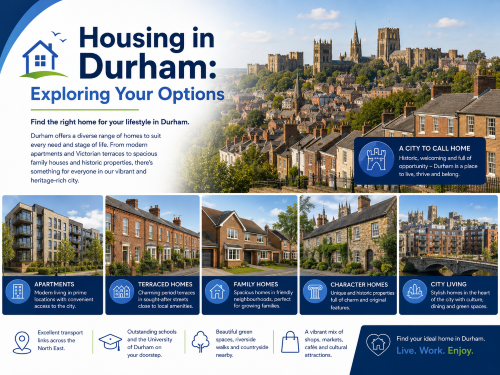
Durham offers a wide choice of homes. Buyers can find city apartments, Victorian terraces, stone cottages, family homes, new-build estates, rural properties, and coastal homes.
Durham City may appeal to buyers who want heritage, student demand, and access to the university. Chester-le-Street may suit commuters who need routes towards Newcastle, Durham, and Sunderland. Bishop Auckland, Spennymoor, Consett, Newton Aycliffe, and Peterlee may offer more value for some buyers.
The Durham property market should be checked area by area. Prices can vary between city streets, market towns, villages, and coastal locations. Recent Rightmove data showed Durham, County Durham, among the strongest areas for 2025 asking price growth in the UK.
However, buyers should not rely on one county-wide trend. Instead, they should compare live listings, lender criteria, deposit size, and local demand. A mortgage broker can help with this.
Why Move to Durham - Education in Durham: A Hub of Learning

Durham has a strong education identity. It is home to Durham University, one of the UK’s best-known universities. It also has schools, colleges, apprenticeships, adult learning, and specialist routes.
Durham University is closely linked with the city’s heritage. Its estate includes buildings within the Durham Castle and Cathedral World Heritage Site. It also has teaching and research facilities across the city.
Further education is also available across the county. New College Durham offers further and higher education in Framwellgate Moor. It also became part of the Durham Learning Alliance with Durham University and other County Durham colleges.
East Durham College has campuses in Peterlee and Houghall. Its Houghall campus includes land-based facilities, woodland, stables, gardens, and a working farm.
Therefore, families and learners can find routes from early years to university-level study. Still, parents should check school admissions, catchment areas, inspection reports, and travel before choosing a location.
Why Move to Durham - Employment Opportunities
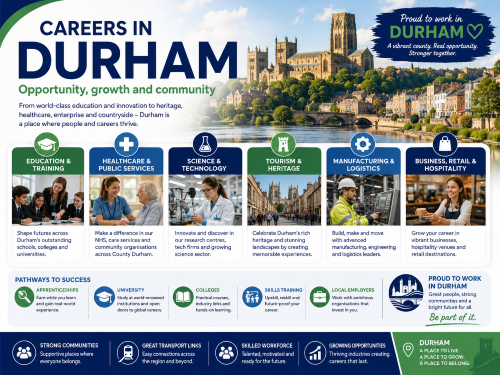
Durham has a mixed economy. Key areas include education, healthcare, public services, tourism, science, technology, manufacturing, logistics, construction, agriculture, and local enterprise.
NETPark in Sedgefield is one of the county’s main innovation assets. It is owned by Durham County Council and run by Business Durham. It hosts national innovation centres and catapult activities in manufacturing, satellite applications, semiconductors, formulation, printable electronics, and healthcare photonics.
Tourism also supports jobs. Durham Cathedral, Beamish, High Force, Raby Castle, The Bowes Museum, and the Durham Dales all support visitor spend. Beamish’s 2025 Museum of the Year award adds more weight to the county’s visitor profile.
Durham also benefits from regional links. Some residents commute to Newcastle, Sunderland, Darlington, Teesside, and other North East employment areas.
Key Employment Sectors in Durham
Science, Technology, and Innovation
NETPark supports high-value science and technology activity. It includes links to Durham University, CPI, satellite applications, semiconductors, photonics, and advanced manufacturing.
Education and Research
Durham University, local colleges, schools, and training providers create jobs in teaching, research, support services, administration, estates, and student services.
Healthcare and Social Care
Healthcare and social care provide stable local employment. Roles can include clinical work, care support, administration, facilities, management, and community services.
Tourism and Hospitality
Durham’s heritage and visitor economy support work in hotels, restaurants, attractions, museums, events, cafés, pubs, and visitor services.
Manufacturing, Logistics, and Trades
County Durham has industrial and logistics strengths. Newton Aycliffe, Peterlee, Bishop Auckland, and other areas offer manufacturing, engineering, warehousing, and trade-based work.
Rural and Land-Based Work
The Durham Dales and surrounding rural areas support farming, land management, equestrian activity, food production, and tourism-linked rural business.
Why Move to Durham - Transport Links
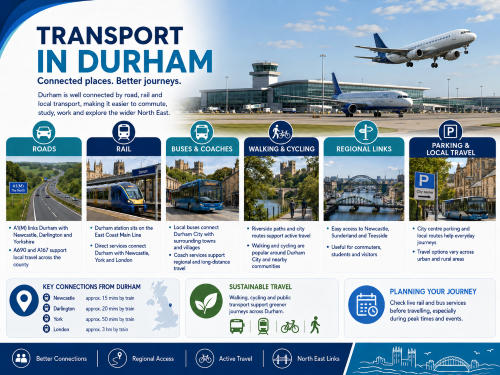
Durham has strong road and rail access. The A1(M) helps connect parts of the county with Newcastle, Darlington, Yorkshire, and the wider motorway network. The A19 also supports travel along the eastern side of the county.
Durham railway station sits on the East Coast Main Line. It serves the city and is managed by London North Eastern Railway. The route links London King’s Cross and Edinburgh through key stops including Darlington, Durham, and Newcastle.
Darlington is another major rail hub nearby. It is a principal stop on the East Coast Main Line and links with services from LNER, CrossCountry, TransPennine Express, and Northern.
Local travel will vary by town and village. Rural areas may need more car use. However, rail, bus, road, and walking routes can work well in many locations.
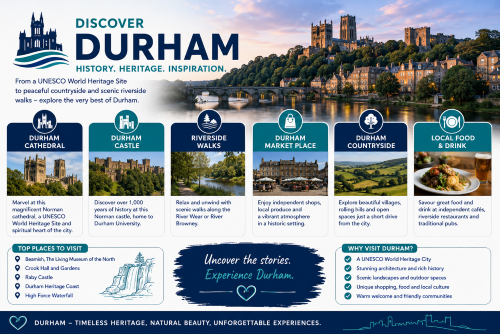
Exploring Attractions in Durham
Durham offers a wide choice of homes. Buyers can find city apartments, Victorian terraces, stone cottages, family homes, new-build estates, rural properties, and coastal homes.
Durham City may appeal to buyers who want heritage, student demand, and access to the university. Chester-le-Street may suit commuters who need routes towards Newcastle, Durham, and Sunderland. Bishop Auckland, Spennymoor, Consett, Newton Aycliffe, and Peterlee may offer more value for some buyers.
The Durham property market should be checked area by area. Prices can vary between city streets, market towns, villages, and coastal locations. Recent Rightmove data showed Durham, County Durham, among the strongest areas for 2025 asking price growth in the UK.
However, buyers should not rely on one county-wide trend. Instead, they should compare live listings, lender criteria, deposit size, and local demand. A mortgage broker can help with this.
Mortgage Brokers in Durham: Securing a Home

Buying in Durham can involve different property types and lender questions. A mortgage broker can help you compare options before you apply.
This can be useful if you are buying a city apartment, a terraced home, a new-build family house, a rural cottage, or a buy-to-let property.
A broker can help with:
- First-time buyer mortgages
- Home mover mortgages
- Remortgages
- Buy-to-let mortgages
- Self-employed income
- Complex income cases
- New-build purchases
- Protection and general insurance
A local adviser can also help you understand affordability. In addition, they can explain deposit needs, lender documents, and the likely timescale.
Dining Out: The Best Places to Dine in Durham

Durham has a strong mix of traditional pubs, cafés, restaurants, markets, Sunday lunch venues, and independent food spots.
Durham Indoor Market has long been part of the city’s trading life. Today, it has more than 50 traders and attracts more than two million visitors a year.
The city centre offers cafés, riverside restaurants, student-friendly venues, and historic pubs. Nearby towns and villages also offer country inns, farm cafés, and local dining.
County Durham’s visitor offer also includes pubs and food-led venues across the county. Recent travel coverage highlighted pubs in Durham, Peterlee, and the wider county, as well as local attractions that support dining and overnight visits.
For residents, this creates choice. You can have coffee in the city, lunch in a market town, a Sunday roast in a village pub, or a meal after a walk in the Dales.
Why Durham is the Perfect Place to Call Home
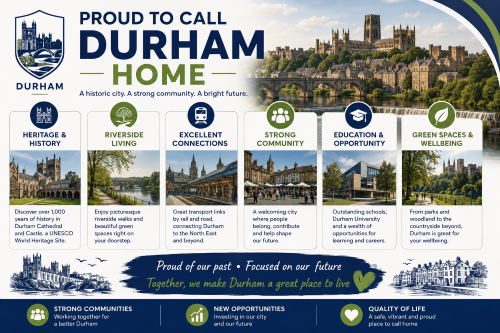
Durham offers a balanced lifestyle. It has historic streets, riverside walks, strong rail links, local schools, respected higher education, visitor attractions, market towns, and green countryside.
It also offers choice. You can live in the city, near the Dales, close to the coast, or in a commuter town. So, Durham can work for several stages of life.
Families may value schools, outdoor space, and community. Professionals may value rail links and regional jobs. Retirees may value heritage, walks, and a slower pace.
Most importantly, Durham gives buyers options. You can compare property type, price, lifestyle, and access before choosing the right area.
Browse Our Advisers in Durham


People who found this page helpful also explored these related topics:
FAQ: Why Move to Durham
| Question | Answer |
|---|---|
| Why should I consider moving to Durham? | Durham blends historic charm with modern convenience. From its UNESCO-listed cathedral to a thriving university city buzz, it offers culture, heritage, and a warm Northern welcome. |
| Is Durham affordable for homebuyers? | Yes — Durham is one of the North East’s most affordable cities. Average house prices are well below the UK average, yet property values have grown steadily thanks to strong local demand. |
| What’s the job market like in Durham? | The city benefits from growing employment in education, healthcare, and technology. With easy access to Newcastle, Sunderland, and Middlesbrough, professionals enjoy a wide range of career options. |
| What are the schools and universities like? | Durham is home to the world-renowned Durham University and excellent local schools rated highly by Ofsted. Families move here for both academic excellence and a safe, community-focused environment. |
| What is life like in Durham city centre? | The compact city centre offers independent shops, riverside cafés, and local markets. Residents enjoy a relaxed pace of life, surrounded by green spaces like Wharton Park and the River Wear walkways. |
| Is Durham well connected for commuters? | Absolutely. Durham lies on the East Coast Main Line, with direct train links to London, Edinburgh, and Newcastle. It’s also just off the A1(M), making commuting by car straightforward. |
| Are there good investment opportunities in Durham? | Yes — student housing, rental apartments, and family homes are in demand. Durham’s growing popularity among professionals and students makes it ideal for buy-to-let investors. |
| What makes Durham unique compared to other northern cities? | Durham offers the best of both worlds — a historic cathedral city surrounded by countryside, yet with modern infrastructure, affordable housing, and a strong sense of community. |