
Why move to Gloucestershire? Because a move should create more than a new address; it should create room for the life you want to live next.
In Gloucestershire, that room can take several forms. It may mean a city home in Gloucester, Regency surroundings in Cheltenham, an independent-minded community around Stroud, a market-town setting in Cirencester or Tewkesbury, a Cotswold village, or a home close to the woodland of the Forest of Dean.
Few counties ask you to choose simply between town and country. Gloucestershire allows the two to sit surprisingly close together.
That matters because the best location is rarely the one that wins on a single measure. Commute, schools, housing costs, employment, countryside and long-term financial plans all have to work together.
When a move becomes a mortgage decision, you can explore Mortgage Brokers in Gloucestershire and compare advisers across the county. Connect Experts currently lists Gloucestershire advisers and offers location-based search rather than recommending a single adviser.
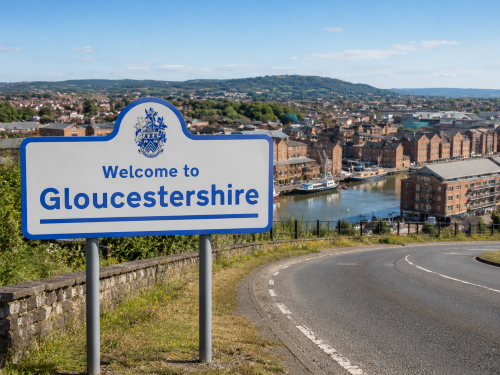
From Cathedral City to Cotswold Village: Gloucestershire Gives You Choices
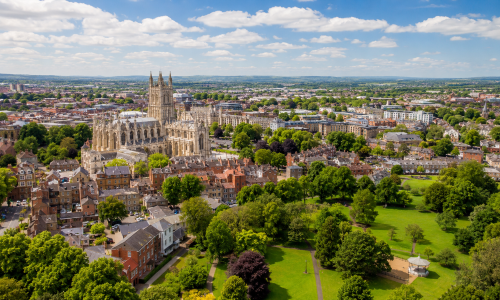
One answer to why move to Gloucestershire is that the county does not ask everyone to want the same lifestyle.
Gloucester provides city services, rail connections, employment, historic streets and the regenerated docks.
Cheltenham has a very different identity, shaped by Regency architecture, festivals, professional employment and established residential neighbourhoods.
Stroud is known for its independent character, surrounding valleys and proximity to the Cotswolds.
Cirencester offers market-town living at the heart of the Cotswold area, while Tewkesbury combines historic streets, riverside character and access towards the M5.
Further west, the Forest of Dean brings woodland, smaller communities and a more rural setting.
That range is important.
One household may want to walk to shops and a railway station. Another may place greater value on land, views and access to open countryside. A third may need to stay connected to Bristol, Birmingham or the wider Midlands.
Gloucestershire gives those households genuinely different places to consider rather than variations of the same town.
Gloucestershire House Prices Show Why Location Matters
Gloucestershire has no single property market.
The latest ONS figures for July 2026 show substantial differences between local areas:
- Gloucester: £241,000 average house price
- Cheltenham: £323,000
- Tewkesbury: £326,000
- Stroud: £352,000
- Cotswold: £421,000
Gloucester first-time buyers paid an average of £212,000, compared with £269,000 in Cheltenham, £264,000 in Tewkesbury, £288,000 in Stroud and £320,000 in Cotswold.
Cotswold had the highest average house price in the South West in July 2026. Detached homes there averaged £677,000, while the overall district average was £421,000.
Those differences affect more than the purchase price.
A buyer might be comparing:
- a city flat in Gloucester;
- a Regency or period property in Cheltenham;
- a family home around Tewkesbury;
- a hillside or valley property near Stroud;
- a stone cottage in a Cotswold village;
- a detached rural home near Cirencester;
- a property close to woodland in the Forest of Dean.
Construction, listed status, land, access, lease terms, condition and the availability of comparable sales can all influence valuation and lender criteria.
For someone buying their first home, the useful question is therefore not simply, “What is the average price in Gloucestershire?”
It is, “What does my budget buy in the part of Gloucestershire that actually fits my life?”
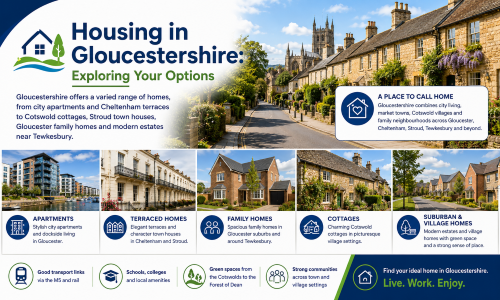
Education Can Shape Where a Gloucestershire Move Begins

For families asking why move to Gloucestershire, education may influence the search before a property portal does.
The county supports state primary and secondary education, further education, higher education and independent schools.
Cheltenham and Gloucester both offer higher- and further-education options, while independent schools are established in and around areas such as Cheltenham and Stonehouse.
But choosing a school should not be separated from choosing the home around it.
Families may also need to consider:
- school journey times;
- catchment arrangements;
- childcare;
- transport;
- whether both parents commute;
- school fees where applicable;
- the effect of education expenditure on disposable income.
Regular school costs can affect long-term affordability even though they aren’t part of the property’s value.
If independent education is part of a household’s plans, Education Finance provides more information on planning for education costs.
A larger house near a preferred school can look attractive. The stronger decision is the one that still leaves enough room in the household budget to enjoy living there.
Gloucestershire's Economy Is Becoming Part of the Relocation Story
Not everybody moving to Gloucestershire is travelling elsewhere for work.
The county has its own employment base across cyber security, advanced manufacturing, engineering, public services, healthcare, logistics, education, tourism, agriculture and professional services.
Cheltenham is particularly significant for cyber and security-related activity.
Current county plans include the Golden Valley development and National Cyber Innovation Centre, while the M5 Junction 10 programme is intended to support housing, employment and infrastructure around this growth. Gloucestershire County Council says the scheme is expected to support around 12,000 skilled jobs alongside substantial new housing.
Elsewhere:
- Gloucester supports public services, healthcare, logistics and education;
- the M5 corridor supports distribution and business activity;
- Stroud has a strong small-business and creative economy;
- Cirencester and the wider Cotswolds support tourism, professional services and land-based industries;
- the Forest of Dean combines tourism, rural enterprise and manufacturing.
That diversity can also create different mortgage applications.
Income may involve:
- salary;
- overtime;
- commission;
- annual bonuses;
- contractor income;
- company-director remuneration;
- dividends;
- retained profits;
- self-employed earnings;
- income from more than one source.
A household may therefore be financially secure but still need a lender whose affordability model reflects how that income is actually earned.

Roads and Rail Put Gloucestershire Between Several Major Economies
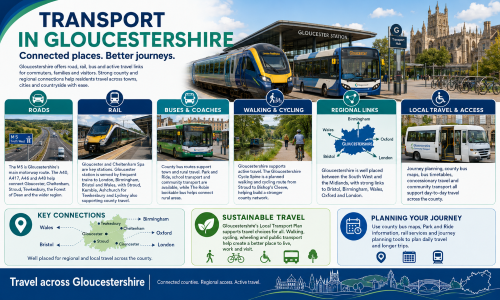
Transport is another practical answer to why move to Gloucestershire.
The county sits between several major economic areas, rather than relying on a single nearby city.
Gloucestershire County Council describes its strategic location as within about an hour of Birmingham, Bristol, Oxford, and Cardiff, with London about two hours away.
The M5 provides the county’s main north-south motorway connection towards Bristol and Birmingham.
Other important routes include:
- A40;
- A417;
- A419;
- A46;
- A48.
Rail also matters.
Gloucester, Cheltenham Spa, Stroud, Kemble, Moreton-in-Marsh, Ashchurch for Tewkesbury and Lydney help connect different parts of the county with regional and longer-distance destinations.
The county is currently consulting on a new Local Transport Plan designed to improve connectivity across road, bus, rail, walking, wheeling and cycling while supporting future housing and employment growth.
But commuting is more than a rail time or motorway junction.
Before choosing where to live, consider:
- how often you actually travel to work;
- station parking;
- school runs;
- peak-hour traffic;
- hybrid working;
- fuel or rail costs;
- whether one household has two different commutes.
A cheaper home further away can become less economical if every working week depends on expensive or difficult travel.
Gloucestershire's Landscape Is Part of Everyday Life, Not Just Tourism
For some households, scenery is one of the strongest reasons to ask why move to Gloucestershire.
The county contains two very different landscape identities.
The Cotswolds bring limestone villages, open countryside, market towns, walking routes and a distinctive built environment.
The Forest of Dean offers ancient woodland, trails, smaller settlements and a different rural character.
Gloucestershire also includes:
- Gloucester Cathedral;
- Gloucester Docks;
- Tewkesbury Abbey;
- Sudeley Castle;
- Berkeley Castle;
- Westonbirt Arboretum;
- Slimbridge Wetland Centre;
- the Severn landscape;
- Cheltenham’s festivals;
- Stroud’s valleys and countryside.
The attraction is not simply having somewhere to visit.
It is having those places available on an ordinary weekend without planning a holiday around them.
That is a different quality of life from living somewhere whose best features only appear when you leave it.
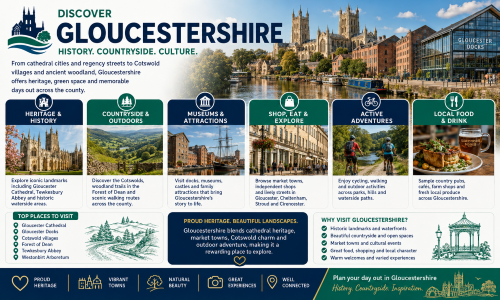
Dining Out: The Best Places to Dine in Gloucestershire
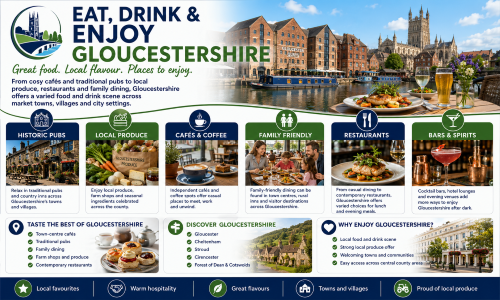
Gloucestershire has a strong food and drink scene. Residents can find cafés, pubs, restaurants, farm shops, markets, hotels and independent producers across the county.
Made in Gloucestershire celebrates local food and drink producers. It promotes the people and businesses behind bottles, cans, packets and plates made in the county.
Dining choices vary by area. Visit Gloucestershire highlights cafés in Chipping Campden, coffee shops in Cirencester, restaurants in Regency Cheltenham, village pubs and hotels across the county.
Gloucester also offers strong city dining. Visit Gloucester highlights independent pubs, bars, clubs, restaurants and cafés. It also points to dockside dining and city-centre food options.
For local flavour, buyers can explore farm shops, Cotswold produce, traditional pubs, street food, fine dining, bakeries and markets. This gives Gloucestershire a wide dining offer, from casual lunches to special meals.
A Gloucestershire Home Can Change the Mortgage Questions
The property search and mortgage search should ideally develop together.
Gloucestershire’s housing stock ranges from modern developments to buildings that have stood for centuries.
That can affect:
- valuation;
- construction type;
- listed status;
- acreage;
- outbuildings;
- private roads or access;
- lease terms;
- flood information;
- deposit requirements;
- loan-to-value;
- lender choice.
A Gloucester apartment may raise questions about service charges and lease length.
A Cheltenham period property may require closer consideration of age, alterations or construction.
A Cotswold stone cottage can be very different from a modern estate property.
A rural home around the Forest of Dean or Cotswolds may include land, outbuildings or access arrangements that matter to a lender.
If you are comparing several parts of the county, Find a Mortgage Adviser by Location lets you search by town, county or postcode and compare adviser profiles by expertise and location.
The better mortgage question is not always:
“What is the maximum I can borrow?”
It may be:
“What level of borrowing still leaves the move feeling worthwhile once every other cost is included?”
Cotswold and Cheltenham Homes Can Bring Larger Borrowing Decisions

Higher-value housing is a genuine part of Gloucestershire, but it should not be applied to the entire county.
ONS data illustrates the distinction.
In July 2026, the average Cotswold property price was £421,000. Detached properties averaged £677,000, while home movers paid an average of £500,000.
Cheltenham also contains a substantial upper end of the market. Detached homes there averaged £625,000 in July 2026.
Larger-property markets can be found around parts of:
- the Cotswolds;
- Cirencester;
- Cheltenham;
- Painswick;
- Tetbury;
- Chipping Campden;
- Stow-on-the-Wold;
- Bourton-on-the-Water;
- selected villages between Cheltenham and Cirencester.
The postcode alone does not make somebody a high-net-worth borrower.
What matters is the combination of property value, loan size, assets and income structure.
A borrower may have substantial wealth but receive income through dividends, retained company profits, investments, bonuses, partnerships or several businesses.
In those circumstances, High Net Worth Mortgage Brokers may be more relevant than simply choosing the adviser closest to the property. Connect Experts’ HNW guidance specifically covers cases with substantial assets and income that don’t fit straightforward salary-based underwriting.
Gloucestershire Can Also Make Sense When Priorities Change Later in Life
A move is not always about needing another bedroom.
Some people move because they need less.
Gloucestershire can appeal to people who are:
- downsizing;
- approaching retirement;
- leaving a larger city;
- moving closer to family;
- looking for a smaller market town;
- seeking countryside or village life;
- changing how they use the wealth held in their home.
Cheltenham may suit someone who wants services, restaurants and rail connections within reach.
Cirencester or Tewkesbury may appeal to people who prefer a smaller town.
The Cotswolds and Forest of Dean offer very different forms of rural living.
Later-life housing decisions also create different financial questions.
Someone may need to consider:
- whether an existing mortgage should be repaid;
- how pension income affects future borrowing;
- whether downsizing releases enough capital;
- how long they expect to remain in the next property;
- whether housing wealth should remain untouched;
- what alternatives exist before using property equity.
Where later-life borrowing is genuinely being considered, homeowners can explore Equity Release Advisers in Gloucestershire. Equity release is a specialist decision and can affect inheritance and entitlement to means-tested benefits. Connect Lifetime –

One County Can Work for Several Stages of Life
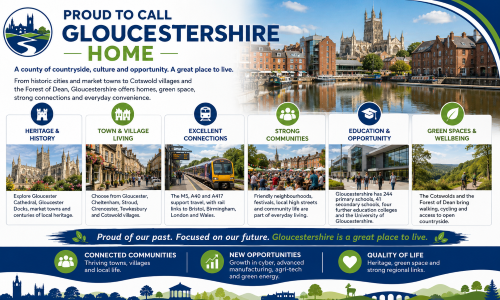
Gloucestershire’s appeal can change depending on who you ask.
A first-time buyer may compare Gloucester, Tewkesbury, or the Forest of Dean because property budgets vary widely across the county.
A family may prioritise education, commuting, and space around Cheltenham, Stroud, or surrounding villages.
Someone relocating for professional work may consider Cheltenham or the M5 corridor.
A senior professional or business owner may look towards larger homes around the Cotswolds or Cheltenham.
Someone approaching retirement may prioritise Cirencester, smaller market towns, villages, or access to woodland and countryside.
That flexibility is one of the best reasons to move to Gloucestershire.
The move does not only need to work on completion day.
A strong location should still make sense when careers change, children become older, commuting reduces, or financial priorities shift.
Browse Our Advisers in Gloucestershire
Once you know roughly where you want to live, the next question is whether the borrowing fits the property and the circumstances behind the move.
Connect Experts lets users find Gloucestershire advisers and compare them by location and relevant mortgage experience.
Local knowledge can help, but location should not be the only consideration.



People who found this page helpful also explored these related topics:

Mortgage Broker in Filton: Brabazon & Local Advice

Mortgage Broker in Kingswood: Practical Mortgage Advice

Mortgage Broker in Minchinhampton: HNW Property Expertise

Mortgage Broker in Nailsworth: Expert GL6 Insight

Mortgage Broker in Leckhampton: Clear Local Advice in GL53

Mortgage Broker in Charlton Kings
Neighbouring Counties
FAQs: Why Move to Gloucestershire?
Does Gloucestershire suit people who want countryside without giving up town life?
It can. Cheltenham, Gloucester, Stroud, Cirencester, and Tewkesbury offer town or city services, while the Cotswolds, Forest of Dean, and many smaller communities provide access to the countryside. The best area depends on how often you need rail connections, schools, shops, or major roads.
Where are the biggest differences in Gloucestershire house prices?
The latest ONS figures show a substantial gap between districts. In July 2026, the average was £241,000 in Gloucester and £421,000 in Cotswold. Cheltenham averaged £323,000, Tewkesbury £326,000 and Stroud £352,000. Property type and individual location can create further differences.
Is Gloucestershire practical if my work takes me to different cities?
Potentially. The M5 provides access towards Bristol and Birmingham, while rail services connect Gloucestershire with regional and longer-distance destinations. The county council also describes Gloucestershire as strategically positioned between Bristol, Birmingham, Oxford and Cardiff. Actual commuting costs and door-to-door travel should still be checked before choosing a location.
What should I check before buying an older Gloucestershire property?
Consider construction, condition, listed status where applicable, alterations, access, land, outbuildings and the lender’s valuation requirements. Period Cotswold properties, rural homes and modern city properties can require very different mortgage assessments.
Is Gloucestershire suitable for someone planning to stay long term?
No. Outer London can offer lower prices in some areas, but this is not universal. Property type, borough, transport links, school demand and local housing supply can all affect values. Travel costs and journey times should also be considered alongside the mortgage.