
Why move to Stirlingshire? A home shapes the days around it, from the journey to work to the places you enjoy when the working week ends. Stirling offers a city setting, while Bridge of Allan, Balfron, Killearn, and Drymen give buyers different ways to combine local services with countryside access.
This guide covers Stirlingshire and selected nearby communities within the modern Stirling Council area. Historic county boundaries and current council boundaries differ. Check the exact address when comparing schools, public services and housing figures.
At a glance: living in Stirlingshire
- Compare the whole commute, including travel to the station.
- Check school catchments before committing to a particular home.
- Include maintenance and utilities when assessing a rural property.
- Plan for the Scottish buying process, mortgage deposit and moving costs together.
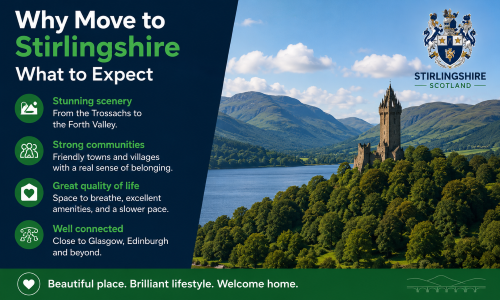
Why Move to Stirlingshire - What to Expect
Living in Stirlingshire can feel very different depending on where you settle.
Stirling offers city amenities, shops, restaurants, employment, rail links, historic streets, and the University of Stirling. Bridge of Allan is popular for its village feel, cafés, schools, and access to Stirling. Dunblane offers a strong sense of community, rail links, and heritage appeal.
Callander and Aberfoyle are closer to Loch Lomond and The Trossachs National Park. These areas suit buyers who want countryside, walking routes, tourism links, and access to outdoor space.
Stirlingshire’s lifestyle is shaped by history and landscape. VisitScotland describes the Loch Lomond, The Trossachs, Stirling and Forth Valley region as diverse, with countryside, mountains, lochs, glens, and attractions. It also highlights links to William Wallace and Robert the Bruce.
Buyers who want city convenience may consider Stirling, Bridge of Allan, Dunblane, or nearby commuter areas. Those seeking rural living may look at Callander, Doune, Killearn, Balfron, Aberfoyle, or Drymen.
For buyers who need mortgage advice in another language, Connect Experts also offers a Find a Broker by Language service.
Stirlingshire Homes: What Your Budget Could Buy

A city flat, an established family home, and a rural cottage can come with very different budgets. Start with the type of home you need, then compare its condition, location and running costs.
The ONS housing figures for Stirling report the following provisional averages for July 2026:
| Measure | Average price |
|---|---|
| All homes | £239,000 |
| Detached homes | £452,000 |
| Semi-detached homes | £259,000 |
| Terraced homes | £217,000 |
| Flats and maisonettes | £145,000 |
First-time buyers paid an average of £184,000. These figures cover the Stirling local authority area, rather than the historic county or Stirling city alone. They provide market context, not a valuation of the home you want to buy.
Before offering, review the property’s Home Report, where one is required. Its survey, valuation, property questionnaire and energy information can help you identify repairs and likely running costs.
Schools, Catchments and Education Costs
For families asking “why move to Stirlingshire?”, education can be central to the answer. Start with the proposed address and your child’s needs.
Use Stirling Council’s school enrolment guidance to check the process for children moving into the area. Ask about catchment schools, transport and any additional support required.
The University of Stirling’s travel information is useful for households connected with the campus. It explains how to get there from Stirling and Bridge of Allan by public transport, on foot, and by bicycle. Further education and training are available through Forth Valley College.
If fee-paying education forms part of your plans, include fees, travel and other school costs in your household budget. Our education finance information explains considerations to discuss with an adviser. Any borrowing must be assessed alongside its full cost and your mortgage commitments.

Why Move to Stirlingshire - Employment Opportunities



Stirlingshire benefits from a central Scottish location. It has access to local jobs and wider employment markets in Stirling, Glasgow, Edinburgh, Falkirk, Perth, and Clackmannanshire.
The economy includes public services, healthcare, education, tourism, hospitality, professional services, agriculture, retail, construction, and small businesses.
The Stirling and Clackmannanshire City Region Deal is also an important driver of growth. It aims to deliver £214 million of investment over ten years. Its themes include innovation, digital, culture, heritage and tourism, skills and inclusion, transport, low carbon, and infrastructure.
Key Employment Sectors in Stirlingshire
Public Services, Healthcare, and Education
Stirling Council, local schools, healthcare providers, public bodies, and the University of Stirling support stable employment across the area.
Roles may include teaching, administration, healthcare, research, social care, operations, and support services.
Tourism, Hospitality, and Heritage
Tourism plays an important role in Stirlingshire.
Stirling Castle, the Wallace Monument, Loch Lomond and The Trossachs, Callander, Doune Castle, walking routes, and heritage attractions all support visitor demand.
Hotels, restaurants, cafés, guided tours, outdoor activity providers, retail, and events businesses benefit from this demand.
Professional Services and Local Business
Stirling supports legal, accountancy, financial, property, marketing, consultancy, and business services.
Its central location helps firms serve clients across Scotland.
Rural, Land, and Environmental Work
Rural areas around Stirlingshire support agriculture, land management, conservation, outdoor education, tourism, and environmental projects.
This is especially relevant near the Trossachs and rural villages.
Digital, Innovation, and Infrastructure
The City Region Deal gives the area a long-term focus on innovation, digital growth, low carbon transport, skills, and infrastructure. This may support future business investment and job creation.
Choosing an Adviser Who Understands Your Move
An adviser should be able to explain how your plans affect the mortgage options available to you.
Useful questions include:
- Have you handled Scottish purchases similar to mine?
- Can you assess my income and this type of property?
- Which lenders and products can you consider?
- What fees would I pay, and when?
- How will you coordinate with my solicitor and me?
Check the firm and its relevant permissions through the FCA Financial Services Register. Where the firm is an appointed representative, check its principal firm and the activities it can undertake. Confirm contact details using the register.
Prepare Your Household for the Next Address
Set out what will change after moving: income, travel, childcare, insurance and the cost of maintaining the home. Keep an allowance for unexpected expenses so that your purchase budget leaves room for everyday life.
Find Advice for Your Stirlingshire Move
Bring your proposed purchase price, available deposit and income details to the conversation. If you already own a home, explain whether you intend to sell it and how the two transactions might fit together.
You can find a mortgage adviser for moving home through Connect Experts. Check the adviser’s experience with Scottish purchases and the type of borrowing you need.
If you would prefer to discuss the details in another language, find mortgage advisers by language.

Larger Loans and Multiple Income Sources

Rural Homes and More Complex Mortgage Needs
A rural location can raise questions about the property and your finances. Tell your adviser and solicitor about private access, outbuildings, land, non-standard construction or any proposed business use.
If you plan to alter a home, check its designation and the permissions needed. Stirling Council’s conservation area information includes Killearn and other local settlements. The status of the individual address matters.
Some buyers need a larger mortgage supported by company profits, investments or several income streams. In those circumstances, high-net-worth mortgage brokers may have relevant experience.
Borrowing should reflect income, commitments, and the chosen property. When finances are more complex, high-net-worth protection services may also fit into the wider discussion.
Compare Stirlingshire and the Wider Stirling Area
Use this shortlist to compare the practical setting of a home. Callander and Dunblane are included as nearby options within the modern Stirling Council area.
| Place | What to explore before choosing a home |
|---|---|
| Balfron | A village base west of Stirling; compare daily travel and access to services. |
| Bridge of Allan | Victorian character, independent shops and proximity to the university. |
| Callander | Access to the Trossachs; compare local amenities and onward travel. |
| Drymen | Walking routes and a village setting; include the journey to a railway station. |
| Dunblane | A cathedral town with rail access and everyday amenities. |
| Killearn | Village surroundings; check the home’s conservation status and commuting route. |
| Stirling | City services and rail connections; compare each neighbourhood’s location. |
These local distinctions are supported by the council’s community information and the National Park’s visitor guidance.
Once you have narrowed your shortlist, search for a mortgage adviser by location and check whether their experience matches your requirements.
Moving to Stirlingshire in Later Life
A later-life move may bring you closer to family, reduce the work involved in maintaining a home or change your access to everyday services. Compare the layout and location with what you may need in future.
The funding could involve sale proceeds, savings or borrowing. An adviser should assess your retirement income, existing commitments and reasonable alternatives.
Homeowners considering borrowing against property wealth can read about equity release advisers in Stirlingshire.
Equity release requires specialist advice. With a lifetime mortgage, unpaid interest can build up and compound. Equity release can reduce the value of your estate and affect means-tested benefits. Discuss any future move and the terms for repaying or transferring the plan before proceeding.

Why Move to Stirlingshire - Transport in Stirlingshire

Stirlingshire is well placed for travel across central Scotland.
Stirling is a major transport hub. VisitScotland describes the wider region as easy to reach due to public transport, a good road network, and proximity to Edinburgh and Glasgow airports. It also notes that Stirling is easy to reach by coach and bus for onward travel through the region.
Rail services connect Stirling with key Scottish locations. ScotRail operates routes across the central belt and wider Scotland.
Road links are also strong. The M9 connects Stirling with Edinburgh and central Scotland. The A9 links towards Perth and the Highlands. The A84 and A85 support access towards Callander and the west.
Commuters may consider Stirling, Bridge of Allan, Dunblane, or nearby towns with rail access. More rural areas may require more car use, so journey times should be checked before choosing a property.
Cycling and walking are also important lifestyle benefits. VisitScotland highlights cycling routes in the wider region, including national park cycle ways and National Cycle Network Route 76.
Dining Out: The Best Places to Dine in Stirlingshire
Stirlingshire has a varied dining scene.
Stirling city centre offers restaurants, cafés, pubs, bars, independent coffee shops, and casual dining. Bridge of Allan has a strong café and local food scene. Rural villages and tourist areas offer country pubs, tearooms, farm shops, and restaurants linked to local produce.
VisitScotland says the wider Loch Lomond, The Trossachs, Stirling and Forth Valley region has local producers, family-friendly restaurants, and cosy cafés.
Residents can enjoy a coffee in Bridge of Allan, lunch in Stirling, a family meal in Dunblane, or a countryside pub near Callander or Aberfoyle.
Food and drink also support tourism. This helps local hospitality businesses and adds to the lifestyle appeal for people moving to Stirlingshire.

Exploring Attractions in Stirlingshire
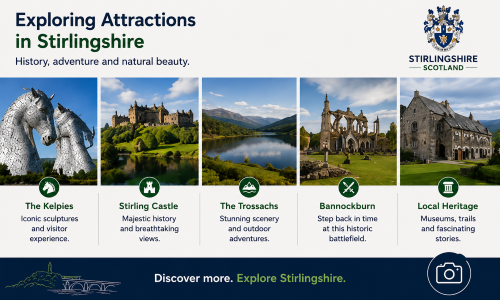
Stirlingshire has strong cultural, historic, and outdoor appeal.
Stirling Castle and the National Wallace Monument are two of the area’s best-known landmarks. The region is also closely linked to major figures in Scottish history, including William Wallace and Robert the Bruce. VisitScotland highlights the area’s historic importance and its links to Scottish legend.
Loch Lomond and The Trossachs National Park is a major lifestyle benefit. It gives residents access to lochs, forests, hills, walking, cycling, boating, wildlife, and scenic drives.
Callander is often used as a gateway to the Trossachs. Aberfoyle is popular for forest trails and outdoor activities. Doune Castle, Dunblane Cathedral, Blair Drummond Safari Park, and nearby Forth Valley attractions also support family days out.
Stirlingshire works well for people who enjoy heritage, green space, outdoor activity, and easy access to both city and rural experiences.
Why Move to Stirlingshire for Everyday Life?
The appeal becomes clearer when you compare an ordinary weekday with a weekend.
Stirling provides an urban base with rail connections towards Glasgow and Edinburgh. Bridge of Allan combines Victorian spa-town character with independent shops and cafés close to the university. The council’s guide to communities beyond Stirling helps explain these different settings. Invest in Stirling
Drymen offers a different emphasis. The village lies on the West Highland Way and at the western end of the Rob Roy Way. The National Park’s guide to Drymen and its surroundings describes its walking routes and village setting.
For commuters, compare the full journey: getting to the station, parking or connecting by bus, the train service, and the trip home. Check evening and weekend options through Traveline Scotland, particularly when considering a village address.
For work, the area includes education, local services, tourism and business activity. If you are moving for a role or working remotely, check the actual workplace journey and broadband available at the property. These details can matter more to your week than distance on a map.
Visit your shortlisted area at different times. Look at shopping, leisure facilities, traffic and access to outdoor space alongside the home itself.

Browse Mortgage Advisers Covering Stirlingshire
Once you have narrowed down where you want to live, the next decision is whether the mortgage fits the property and the circumstances behind the move.
Connect Experts lets users compare mortgage advisers by location and other relevant preferences.
That can be useful where you want:
- local coverage;
- experience with rural property;
- support with complex income;
- advice on a particular mortgage type;
- telephone or video appointments;
- language preferences.
Use the directory to compare advisers based on the decision you need to make, rather than simply choosing whoever is geographically closest.
Connect Experts is a mortgage adviser directory and matching platform. It does not provide mortgage advice directly. Advice is provided by the adviser or firm you choose.
People who found this page helpful also explored these related topics

Falkirk Mortgage Advice: Smart Choices for Life on Your Terms
Strathblane Mortgage Advice: Look Beyond the View
Stirling Mortgage Advice: 7 Decisions Worth Getting Right

Stenhousemuir Mortgage Advice: Know Before You Commit
Polmont Mortgage Advice: Look Beyond the Asking Price

Larbert Mortgage Advice: Your Payslip Isn’t the Full Story
Neighbouring Counties
FAQs: Why Move to Stirlingshire?
Is Stirlingshire the same as the Stirling Council area?
No. The historic county and modern council area have different boundaries. For example, Historic Environment Scotland’s Dunblane record identifies Stirling as the current local authority and Perthshire as the former county. Use the property’s address to establish the relevant council, schools and local data.
Why move to Stirlingshire if I work in Glasgow or Edinburgh?
You may value the choice of city, town, and village settings while still accessing those employment centres. Stirling has rail connections towards both cities. However, a rural address can add a substantial onward journey. Test the commute at your usual travel times and include fares, parking and childcare in your comparison.
Does buying near a particular Stirling school secure a place?
Proximity alone does not establish the admissions position. Check the catchment and enrolment requirements for the exact address. Stirling Council says parents should enrol at their catchment school even when making a placing request for another school.
Can I assume the mortgage will cover an offer above the Home Report value?
Ask about access, heating, drainage, water supply and the cost of maintaining the building. If it uses a private water supply, establish how it is managed and maintained. Discuss the survey findings, insurance and any proposed alterations with the appropriate professionals before committing to the purchase.
Will my mortgage automatically cover an offer above the Home Report valuation?
No. Ask your adviser how the lender will assess the price and valuation. You may need extra money to cover the gap between the agreed price and the available borrowing, in addition to your normal deposit and buying costs. Confirm the funding before your solicitor concludes missives.
Your answer to “why move to Stirlingshire?” should bring together the home you want, the life around it and a budget you can sustain.
Ready to plan your move? Find a mortgage adviser to discuss your circumstances and next steps.