
Mortgage affordability – Buying a home starts with one question: how much can you realistically afford to borrow?
Mortgage affordability is how lenders assess whether a mortgage is suitable and sustainable based on your income, outgoings, deposit, credit commitments, and future financial position. It is not based on salary alone. A lender wants to understand whether you can manage the repayments now and if your circumstances change.
Use this guide to understand how mortgage affordability works, what affects the amount you may be able to borrow, how to use the mortgage affordability calculator, and when speaking to a mortgage adviser may help.
If you are ready to compare your options, you can find a mortgage adviser through Connect Experts. Connect Experts helps you search by location, language, gender and mortgage type so you can choose an adviser suited to your circumstances.
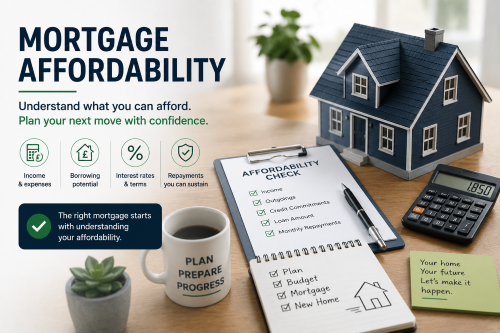
Mortgage Affordability Calculator
Use the mortgage affordability calculator to estimate how much you may be able to borrow. This is a guide only. It is not a mortgage offer, agreement in principle or lender decision.
How to use the mortgage affordability calculator
- Enter your annual income
Add your total yearly income before tax. This may include employed income, self-employed income, pension income, rental income or other regular income that can be evidenced. - Enter your monthly expenses
Include regular commitments such as loans, credit cards, car finance, childcare, school fees, maintenance payments, household bills and other essential spending. - Enter your deposit
Add the amount you have available to put towards the property purchase. A larger deposit may improve your loan-to-value position and could increase lender options. - Enter the interest rate
Use the rate you expect to pay, such as 5 if the expected interest rate is 5 percent. - Enter the mortgage term
Add the number of years you expect the mortgage to run for, such as 25, 30 or 35 years. - Review the estimate carefully
The result should be used as a starting point. A lender will still complete a full affordability assessment, credit check and property review before making a decision.
Mortgage Affordability Calculator
What Is Mortgage Affordability?
Mortgage affordability is the process lenders use to decide whether you can reasonably afford the mortgage you are applying for.
A lender usually reviews:
- Your income
- Your employment status
- Your deposit
- Your regular household spending
- Your credit commitments
- Your dependants
- Your credit history
- The mortgage term
- The interest rate
- Whether the mortgage may continue into retirement
- Any expected future changes to your income or spending
The aim is to check that the mortgage is affordable, not just on the day you apply, but over the longer term.
How Much Can You Borrow Based on Your Salary?
Many people start by asking how many times their salary they can borrow. Some lenders may use income multiples such as around 4 to 4.5 times income as a starting point. In some cases, higher borrowing may be possible where the applicant has a high income, low commitments, a larger deposit or a professional income profile.
However, income multiples are only part of the assessment.
For example:
- An applicant earning £50,000 with low outgoings may be considered differently from an applicant earning £50,000 with loans, childcare costs and high credit card balances.
- A joint application with two incomes may increase borrowing potential, but both applicants’ debts and credit records will also be reviewed.
- A larger deposit may improve the lender’s view of risk, but it does not remove the need for affordability checks.
The most accurate way to understand your borrowing position is to review your income, spending and deposits together.
If you are starting your property search, you may also want to read Mortgage in Principle to understand how an initial lender indication can support your next step.
What Affects Mortgage Affordability?
Income
Lenders look at income that is regular, provable and sustainable. This may include:
- Basic salary
- Overtime
- Commission
- Bonuses
- Self-employed income
- Contractor income
- Pension income
- Rental income
- Maintenance income
- Certain benefit income, where accepted by the lender
Not every lender treats income in the same way. Some may accept 100 percent of a regular bonus. Others may use only part of it or average it over time.
Monthly expenses
Your spending affects how much disposable income remains for mortgage repayments. Lenders may consider:
- Credit card payments
- Personal loans
- Car finance
- Buy now pay later commitments
- Childcare
- School fees
- Maintenance payments
- Council tax
- Utilities
- Insurance
- Travel costs
- Food and household spending
Even if you spend less than average, lenders may still apply their own living-cost assumptions.
Deposit
Your deposit affects the loan-to-value ratio. A bigger deposit means you are borrowing a smaller percentage of the property value. This can improve lender choice and may enhance affordability, although the lender will still need to assess whether the monthly repayments are sustainable.
Credit commitments
Existing borrowing can reduce affordability by lowering the amount of disposable income available each month. This includes loans, credit cards, store cards, overdrafts, car finance and other regular credit agreements.
If credit history is a concern, read What is a Credit Score? before applying.
Mortgage term
A longer mortgage term may reduce monthly repayments, which can improve affordability. However, it may also increase the total amount of interest paid over the life of the mortgage.
A shorter term may reduce total interest, but monthly payments will usually be higher. This can reduce the amount a lender is willing to offer if the payments do not fit within affordability limits.
How Do Lenders Calculate Mortgage Affordability?
Lenders calculate mortgage affordability by comparing your income with your financial commitments and expected living costs.
The process usually includes three stages.
1. Income assessment
The lender checks the income you have declared and asks for evidence. This may include payslips, bank statements, tax calculations, tax year overviews, company accounts, pension statements or rental income evidence.
The lender wants to see that the income is genuine, consistent and likely to continue.
2. Expenditure review
The lender reviews your regular spending and financial commitments. This helps them understand how much income remains after essential costs and existing debts.
They may review bank statements to confirm your spending patterns and check for commitments that were not included on the application.
3. Stress testing
A lender may assess whether repayments remain affordable if interest rates increase or if the mortgage moves to a higher rate later. This protects both the borrower and the lender from the risk of unaffordable payments.
This is why a mortgage may look affordable on a calculator but still be reduced during a full lender assessment.
Mortgage Affordability for First-Time Buyers
First-time buyers often use mortgage affordability to decide what price range to search in. This is an important step because the property price, deposit, income and monthly commitments all affect whether a mortgage is realistic.
Before viewing homes, first-time buyers should consider:
- How much deposit is available
- Whether the deposit covers lender requirements
- How much income can be evidenced
- Whether credit commitments should be reduced first
- Whether a Mortgage in Principle is needed before making an offer
- How monthly mortgage payments compare with current rent and bills
If you are buying your first home, use the calculator as a starting point, then find a first-time buyer mortgage adviser who can review lender options based on your situation.
Can You Get a Mortgage with Bad Credit?
Yes, it may be possible to get a mortgage with bad credit, but approval depends on your circumstances.
Lenders usually assess:
- The type of credit issue
- When it happened
- Whether the debt has been satisfied
- The value of the debt
- Your deposit size
- Your income and affordability
- Your current credit conduct
- The property type
- Whether you are buying, remortgaging, or raising capital
A small missed payment from several years ago may be viewed differently from a recent bankruptcy or repossession. A satisfied CCJ may also be assessed differently from an unpaid one.
The most important point is that lenders usually look at the full picture, not just the credit score. This is why a specialist mortgage adviser can be useful. They can review your credit history before you apply and help identify lenders whose criteria may fit your situation.
Find mortgage advisers across the UK to compare by location, language, gender, or firm.
Mortgage Affordability With Credit Issues
Credit history can affect affordability and lender choice. A lower credit score, missed payments, defaults, County Court Judgements or recent heavy credit use may limit the number of lenders available.
Credit issues do not always mean you cannot get a mortgage. They may affect:
- The deposit required
- The interest rate available
- The maximum borrowing amount
- The lender willing to consider the application
- Whether more explanation or evidence is needed
Before applying, review your credit file and correct any errors. Avoid making several applications in a short period, as this may make your profile look weaker.
If you are worried about your credit history, link users to find a mortgage adviser for credit issues.
What Happens If Your Mortgage Runs Into Retirement?
If the mortgage term continues beyond your expected retirement age, lenders will assess how the repayments will be maintained after retirement.
They may ask for evidence of:
- Workplace pension income
- Private pension income
- State Pension forecasts
- Investment income
- Rental income
- Other reliable retirement income
For example, if you are 45 and apply for a 30-year mortgage, the term would run until age 75. If you expect to retire at 67, the lender may assess affordability from age 67 to 75 using expected retirement income rather than employment income.
This may affect the maximum loan amount, mortgage term, or lender choice.
If this applies to you, use this internal link: find a mortgage adviser for older borrowers.
Documents Needed for a Mortgage Affordability Check
Having the right documents ready can reduce delays and help your adviser or lender assess affordability more accurately.
You may need:
- Proof of identity
- Proof of address
- Recent payslips
- Recent bank statements
- P60, if available
- SA302 tax calculations, if self-employed
- Tax year overviews, if self-employed
- Company accounts, if applicable
- Evidence of deposit
- Details of loans and credit commitments
- Pension statements, if the mortgage extends into retirement
- Proof of rental income, if relevant
The documents must match the income and commitments declared on the application. If the figures do not match, the lender may ask more questions, reduce the loan amount or decline the application.
How to Improve Mortgage Affordability
You may be able to improve mortgage affordability before applying. The right steps depend on your circumstances, but common options include:
- Reduce credit card balances
- Pay off or reduce loans where affordable
- Avoid new credit commitments before applying
- Check your credit report for errors
- Save a larger deposit
- Review regular subscriptions and unnecessary spending
- Prepare income documents early
- Consider whether a longer term is suitable
- Apply jointly, if appropriate
- Speak to an adviser before submitting a full application
Do not make major financial changes without checking whether they help your situation. For example, using deposit funds to repay debt may improve monthly affordability but reduce your deposit. A mortgage adviser can help you understand which route is more suitable.
Mortgage Affordability and a Mortgage in Principle
A Mortgage in Principle can help you understand how much a lender may be willing to lend before you make a full application. It can also show estate agents that you are serious about buying.
However, a Mortgage in Principle is not a guarantee. The lender will still complete a full affordability check, credit assessment and property valuation before issuing a formal mortgage offer.
Use this internal link in this section: read our Mortgage in Principle guide.
When Should You Speak to a Mortgage Adviser?
You may benefit from speaking to a mortgage adviser if:
- You are unsure how much you can borrow
- Your income is self-employed, variable or complex
- You have credit commitments
- You have had credit issues
- You are buying your first home
- Your mortgage term may run into retirement
- You need advice in another language
- You want to compare lenders rather than approach one bank directly
Connect Experts helps you search for advisers by mortgage type, location, language, gender and expertise. You can start with find a mortgage adviser through Connect Experts, or use find a mortgage adviser by language if you prefer support in a specific language.
Search for a Mortgage Adviser
If you want help understanding mortgage affordability, choose the route that best matches your situation:
People who found this page helpful also explored these related topics
FAQ: Mortgage Affordability
| Question | Answer |
|---|---|
| What is mortgage affordability? | Mortgage affordability is the way lenders assess whether you can afford a mortgage. They review your income, outgoings, deposit, credit commitments and wider financial circumstances before deciding how much you may be able to borrow. |
| How do lenders calculate mortgage affordability? | Lenders compare your income with your existing commitments and living costs. They also review your credit profile, deposit, mortgage term and whether repayments would remain affordable if rates or circumstances changed. |
| How much can I borrow for a mortgage? | The amount you can borrow depends on your income, deposit, debts, spending, credit history and lender criteria. Some lenders use income multiples as a starting point, but the final figure depends on the full affordability assessment. |
| Does my credit score affect mortgage affordability? | Yes. Your credit score and credit history can affect lender choice, interest rates, deposit requirements and the amount you may be able to borrow. Lenders also review your income and monthly commitments. |
| Can I improve my mortgage affordability? | You may be able to improve affordability by reducing debts, lowering regular commitments, saving a larger deposit, checking your credit report and preparing accurate income documents before applying. |
| Do self-employed applicants have different affordability checks? | Self-employed applicants may need to provide tax calculations, tax year overviews, accounts and bank statements. Lenders may average income over two or three years or use the latest year, depending on their criteria. |
| Does a bigger deposit improve mortgage affordability? | A bigger deposit can improve your loan-to-value position and may increase lender choice. However, lenders will still assess whether the monthly repayments are affordable. |
| What happens if my mortgage runs into retirement? | If the term continues beyond your expected retirement age, the lender may assess your future pension, investment or other retirement income to decide whether repayments remain affordable. |
| Is a mortgage affordability calculator accurate? | A mortgage affordability calculator gives an estimate. It cannot guarantee approval because lenders apply their own criteria, document checks, credit assessments and stress testing. |
| Should I get a Mortgage in Principle after checking affordability? | A Mortgage in Principle can be a useful next step because it gives an initial indication of how much a lender may be willing to lend. It is not a formal mortgage offer and remains subject to full checks. |
Important Notice
Mortgage affordability is not just about income. Lenders assess your full financial picture, including income, expenses, deposit, credit commitments, credit history, mortgage term and future changes.
A calculator can help you estimate what may be possible, but it cannot replace a full lender assessment. If you want a clearer view of your options, speak to a mortgage adviser who can review your circumstances and help identify lenders whose criteria may fit your position.
Your home may be repossessed if you do not keep up repayments on your mortgage or any loan secured on it.
Start here: find a mortgage adviser through Connect Experts.