
Semi-Commercial Mortgage Guide – Mixed-Use Property Finance for Shops, Flats, Offices and Business Premises
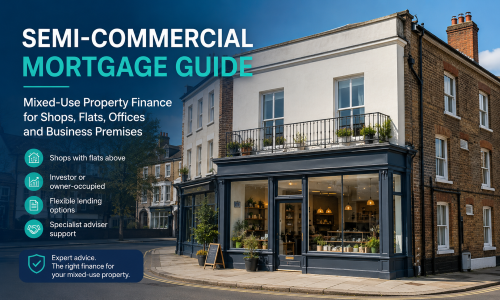
A semi-commercial mortgage is used to buy or refinance a property that has both commercial and residential use. These properties are often called mixed-use properties. Common examples include a shop with flats above, an office with residential accommodation, a restaurant with a flat, or a pub with owner accommodation.
This guide explains how semi-commercial mortgages work, who they are for, what lenders usually assess, and how to prepare before speaking to an adviser. If you already know you need mixed-use property finance, you can find a semi-commercial mortgage adviser through Connect Experts.
Connect Experts is an adviser directory and matching platform. We help you find a mortgage adviser by location, language, gender and area of expertise. Mortgage advice is provided by the adviser or firm you choose.
What Is a Semi-Commercial Mortgage?
A semi-commercial mortgage is a loan secured against a property that includes both a business element and a residential element.
The commercial part may be:
- A shop
- A café or restaurant
- An office
- A salon
- A pub
- A dental surgery
- A warehouse or light industrial unit
The residential part may be:
- A flat above the shop
- A maisonette connected to the premises
- Owner accommodation
- One or more self-contained flats
- Residential space let to tenants
A semi-commercial mortgage differs from a standard residential mortgage because the property is not used solely as a home. It is also different from a full commercial mortgage because part of the property is used for residential purposes. This mixed structure is why lenders assess the property, income, and risk in greater detail.
Simple Example: Shop With a Flat Above
One of the most common semi-commercial mortgage examples is a ground-floor shop with a flat above.
The shop may be let to a tenant on a commercial lease. The flat may be let separately on a residential tenancy. The lender will usually consider both income streams, the property valuation, the lease structure, tenant quality, access arrangements, and the borrower’s financial position.
This is why a mixed-use property can be more complex than a standard buy-to-let or a normal commercial purchase. It can also be attractive because income may come from multiple sources.
Who Are Semi-Commercial Mortgages For?
Who Are Semi-Commercial Mortgages For?
Semi-commercial mortgages may suit several types of borrowers.
Property investors
Investors may use semi-commercial mortgages to buy mixed-use buildings that generate commercial and residential rent. This can help diversify income, especially where the residential element supports the overall yield.
If the property is primarily held as an investment, you may want to speak with a commercial finance adviser for investment properties.
Business owners
A business owner may use a semi-commercial mortgage to buy premises where they trade from the commercial space and live in, or let out, the residential part.
This may apply to shop owners, restaurant operators, salon owners, healthcare professionals or other trading businesses. If you plan to use the business premises yourself, you may need an owner-occupied commercial finance adviser.
Landlords
Landlords may consider mixed-use property where residential units sit above or alongside a commercial unit. This may be used as part of a wider property portfolio.
Limited company applicants
Some investors buy semi-commercial property through a limited company. This can affect tax, lending criteria, personal guarantees and affordability checks. You should take tax advice before choosing a structure. If the residential element is important to the case, a limited company mortgage adviser may also be relevant.
Is a Semi-Commercial Mortgage the Same as a Mixed-Use Mortgage?
Yes. In many cases, the terms semi-commercial mortgage and mixed-use mortgage are used to describe the same type of finance.
Both refer to a mortgage secured against a property that includes commercial and residential use. The exact lender classification can depend on the property layout, title structure, planning use, rental income, percentage split between commercial and residential space, and whether the borrower is an investor or owner-occupier.
How Semi-Commercial Mortgages Work
A lender will usually assess the whole property as one security. This means they need to understand both sides of the building.
They may consider:
- The commercial rental income
- The residential rental income
- The value of each part of the property
- The strength of any commercial lease
- The lease length and tenant quality
- The borrower’s income, experience and credit profile
- The property condition
- Whether the property is easy to sell if needed
- Whether the residential area has separate access
- Whether the property has the correct planning use
Lenders may offer interest-only or repayment options, depending on the borrower, property and lender criteria. Terms can vary, so the right structure depends on your plans for the property.
How Much Deposit Do You Need for a Semi-Commercial Mortgage?
Many semi-commercial mortgage applications need a larger deposit than a standard residential mortgage. A deposit of around 25% to 35% is common, although the exact amount depends on the lender, property, borrower profile and risk.
A stronger case may include:
- Good rental income
- A strong commercial tenant
- A long lease
- A desirable location
- A good credit profile
- Experience as a landlord or business owner
- A clear repayment strategy
- A property that is easy to value and sell
A weaker case may need a larger deposit. This may apply where the commercial tenant is new, the lease is short, the property needs work, the location is harder to assess, or the borrower has limited experience.
What Rates Are Available for Semi-Commercial Mortgages?
Semi-commercial mortgage rates are usually priced differently from residential mortgage rates. They may also differ from full commercial mortgage rates because the residential element can change the lender’s view of risk.
Rates can depend on:
- Loan-to-value
- Borrower experience
- Credit history
- Property location
- Residential and commercial income
- Lease length
- Tenant strength
- Property condition
- Whether the case is owner-occupied or investment-led
- Whether the applicant is an individual or limited company
The most suitable rate is not always the lowest headline rate. Fees, valuation costs, repayment structure, early repayment charges and lender flexibility should also be reviewed.
A commercial mortgage adviser can help compare options based on the full case, not only the rate.
Can You Remortgage a Semi-Commercial Property?
Yes. You may be able to remortgage a semi-commercial property to switch lender, release equity, restructure borrowing, reduce monthly payments, or move from short-term finance to a longer-term mortgage.
A remortgage may be useful if:
- The property value has increased
- Rental income has improved
- A refurbishment has been completed
- A commercial lease has become stronger
- You want to repay bridging finance
- You want to consolidate borrowing secured on the property
- Your current mortgage rate is ending
If you used short-term finance to buy or refurbish the property, you may need a clear exit route into a semi-commercial mortgage. In that case, a bridging loan adviser may help you understand the short-term funding stage before you move to longer-term finance.
Semi-Commercial Mortgage for Refurbishment or Conversion
Some mixed-use properties need work before they are ready for letting, trading or refinancing. This may include converting upper floors into flats, improving access, separating utilities, refurbishing commercial space, or changing the property layout.
If the works are light, a lender may consider the case as a semi-commercial mortgage. If the works are heavy, involve planning changes, or require staged funding, development finance or bridging finance may be more suitable.
For larger projects, speak with a development finance adviser before committing to a purchase or refurbishment plan.
Semi-Commercial Mortgage Eligibility
Every lender has different criteria, but most will want to understand the borrower, property and income position.
Borrower checks
Lenders may review:
- Personal income
- Business income
- Credit history
- Deposit source
- Property experience
- Trading history, if owner-occupied
- Existing property portfolio
- Assets and liabilities
- Company accounts, if applying through a limited company
Property checks
Lenders may review:
- Property type
- Location
- Condition
- Planning use
- Title structure
- Commercial lease details
- Residential tenancy details
- Access to the residential element
- Market demand
- Valuation comments
Income checks
Lenders may review:
- Commercial rent
- Residential rent
- Business trading income
- Lease length
- Tenant reliability
- Rental coverage against mortgage payments
- Whether any part of the property is vacant
Advantages of Semi-Commercial Mortgages
A semi-commercial mortgage can support several property strategies.
Potential advantages include:
- One mortgage for a mixed-use property
- Income from both commercial and residential areas
- Potentially stronger yield than a standard residential property
- Useful for landlords, investors and business owners
- May support owner-occupied business premises
- Can help refinance mixed-use buildings
- May suit limited company property ownership
- Can form part of a long-term investment portfolio
Risks and Points to Consider
Semi-commercial mortgages can be more complex than standard mortgages.
Points to consider include:
- Fewer lenders may be available
- Deposits are often higher
- Valuations can take longer
- Legal work may be more detailed
- Lease quality can affect borrowing
- Commercial vacancy can reduce affordability
- Some properties may be harder to sell
- Planning or title issues can delay completion
- Rates and fees may be higher than residential products
You should understand the full cost, income position and exit strategy before committing.
What Documents May Be Needed?
The documents needed will depend on the case, but lenders may ask for:
- Proof of ID and address
- Bank statements
- Proof of deposit
- Personal income evidence
- Company accounts, if relevant
- Business bank statements, if owner-occupied
- Existing mortgage statements
- Tenancy agreements
- Commercial lease documents
- Property valuation
- Details of refurbishment works, if any
- Portfolio schedule, if you own other properties
Preparing these early can help reduce delays.
Find a Semi-Commercial Mortgage Adviser
Semi-commercial mortgage applications need careful packaging because lenders review both the commercial and residential parts of the property. The right adviser can help you understand which lenders may consider your case, what documents you may need, and how to present the property clearly.
Use Connect Experts to find an adviser who understands mixed-use property finance.
Start here: find a semi-commercial mortgage adviser
People Also Browse These Guides
FAQ: Semi-Commercial Mortgage Guide
| Question | Answer |
|---|---|
| What is a semi-commercial mortgage? | A semi-commercial mortgage is a mortgage for a property that has both commercial and residential use. A common example is a shop with a flat above. |
| What is a mixed-use property? | A mixed-use property is a building that combines different uses, usually commercial space and residential accommodation. |
| Can I get a mortgage for a shop with a flat above? | Yes, this is one of the most common reasons to use a semi-commercial mortgage. The lender will assess the shop, the flat, rental income, leases, valuation and borrower profile. |
| Can I live in the residential part? | This depends on the lender and property structure. Some cases involve owner accommodation, while others are investment properties where the residential part is let to tenants. |
| Can a limited company buy a semi-commercial property? | Yes, some lenders accept limited company applicants. The directors may still need to provide personal guarantees or financial information. |
| Can I get a semi-commercial mortgage as a first-time landlord? | Some lenders may consider first-time landlords, but the case needs to be strong. Experience, income, deposit size, tenant quality and property type can all affect the lender’s decision. |
| Is a semi-commercial mortgage regulated? | This depends on the property use, borrower and whether any part is occupied by the borrower or a close family member. Some commercial and business buy-to-let mortgages are not regulated by the Financial Conduct Authority. You should speak with a qualified adviser to understand how your case is treated. |
| How much can I borrow? | The amount you can borrow depends on the property value, rental income, borrower profile, deposit, lease quality and lender criteria. |
| Are semi-commercial mortgages interest-only? | Some lenders offer interest-only options. Others may require capital repayment, or a mix of both. This depends on the lender and your repayment strategy. |
| How do I find the right adviser? | You can use the Connect Experts adviser directory to search for advisers by location, language, gender and area of expertise. If you are ready to compare options, start with a commercial mortgage adviser. |
Important Information
Connect Experts is a mortgage adviser directory and matching platform. We do not provide mortgage advice directly. Advice is provided by the adviser or company you choose.
We are an FCA-approved broker network and not a lender. Advisers may have access to a range of lenders. If a lender is introduced, commission may be received after completion. The commission amount may vary by lender and product, but it should not affect the amount you pay under your credit agreement.
A fee may be payable for arranging your mortgage. Your adviser will confirm the amount before you choose to proceed.
Your home or property may be repossessed if you do not keep up repayments on your mortgage or loans secured on it.