Do I Need a Financial Adviser for a Mortgage?
A mortgage is a financial commitment, but arranging one does not always require a general financial adviser.
You may instead need a qualified mortgage adviser. A mortgage adviser can assess your circumstances, explain borrowing options and recommend a suitable mortgage where regulated advice is provided.
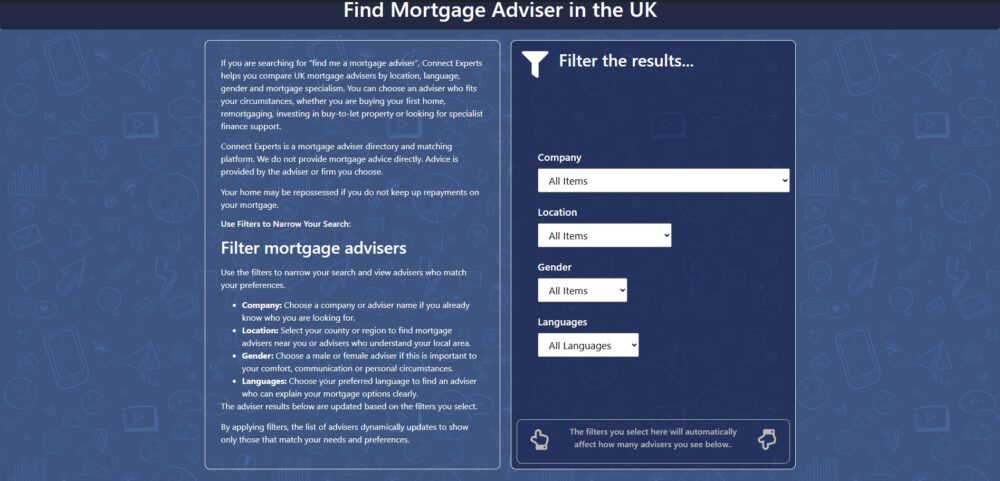
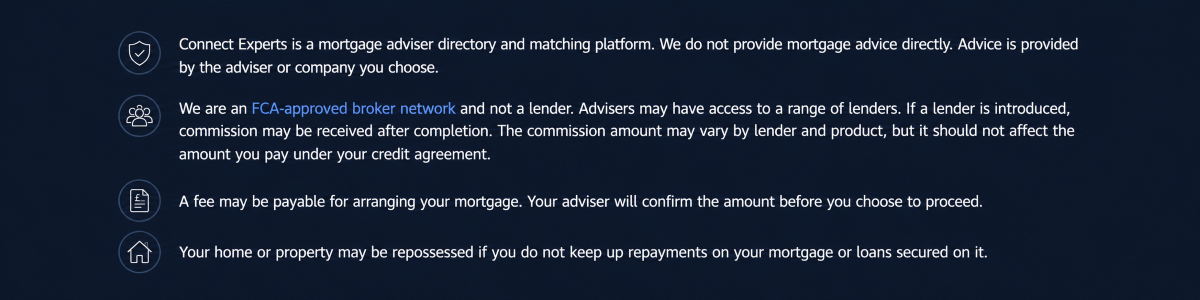
Connect Experts helps you search for mortgage advisers across the UK. It does not provide mortgage advice or recommend mortgage products directly. Advice is provided by the adviser or firm you choose.
At a Glance
You may benefit from a mortgage adviser if you:
- are unsure which lenders may consider your circumstances;
- want help comparing mortgage costs and features;
- have self-employed, irregular or complex income;
- have experienced credit problems;
- need buy-to-let, commercial or specialist finance;
- want support preparing and submitting an application.
You may feel comfortable approaching a lender directly if your circumstances are straightforward and you understand the available product, fees and risks.
Before accepting advice, check the firm’s regulatory status and permissions using the FCA Firm Checker.
Do I Need a Financial Adviser or a Mortgage Adviser?
The right adviser depends on the decision you need to make.
A general financial adviser may discuss subjects such as investments, pensions, retirement planning or long-term financial objectives.
A mortgage adviser concentrates on property borrowing. This may include residential mortgages, remortgages, buy-to-let finance and certain specialist mortgage requirements.
You may need both forms of advice when one decision affects another. For example, buying a property during retirement may involve mortgage affordability, pension income and wider financial planning.
However, someone arranging an ordinary residential mortgage will not automatically need full financial planning advice.
Is a Mortgage Adviser Required by Law?
You are not normally required to use a mortgage adviser when applying for a mortgage.
You can approach a bank or building society directly. However, that lender will usually discuss products from its own range.
A mortgage adviser may assess products from several lenders, depending on the service and market coverage offered by the adviser’s firm.
Using an adviser does not guarantee mortgage approval. Lenders make their own decisions based on affordability, credit history, property details and lending criteria.
When Could Mortgage Advice Help?
Mortgage advice may be useful when the decision involves more than comparing an interest rate.
You are buying your first home
First-time buyers may need help understanding deposits, affordability assessments, product fees and the application process.
An adviser can explain the evidence a lender may request and how different mortgage structures affect monthly payments.
You can search for first-time buyer mortgage brokers with relevant experience.
You are remortgaging
A remortgage may involve changing lender, borrowing more or selecting a new product.
The lowest advertised rate is not always the lowest overall cost. Arrangement fees, valuation costs, legal work and early repayment charges may affect the comparison.
You are self-employed
Lenders may assess company directors, sole traders and contractors differently.
The evidence requested can depend on trading history, business structure and the way income is received. An adviser with relevant experience may help identify lenders whose criteria fit the available evidence.
Your income is complex
Income may include bonuses, commission, overtime, dividends, retained profit, rental income or several employment sources.
Different lenders may treat these income types differently. Advice may help you understand which parts of your income could be considered.
You have experienced credit problems
Late payments, defaults, county court judgments and missed commitments do not all carry the same weight.
Their age, value and cause may affect the lenders and products available. Searching for an adviser with experience in adverse credit mortgages may help you begin with more relevant criteria.
You are arranging property investment finance
Buy-to-let and commercial borrowing can involve rental calculations, business structures, property types and tax considerations.
A mortgage adviser can discuss the finance. Tax advice should come from a suitably qualified tax professional.
You need a specialist mortgage
Some cases fall outside standard high-street lending.
Examples may include unusual property construction, short lease terms, several income sources, large loan requirements or borrowing through a limited company.
The mortgage brokers by expertise directory can help you search by the type of support required.
When Might Direct Research Be Enough?
Some people choose to apply directly to a lender.
This may suit you when:
- your income is straightforward;
- your credit record is clear;
- you have a suitable deposit;
- you understand the lender’s criteria;
- you are comfortable comparing fees and mortgage features;
- you understand the risks of the selected repayment method.
Direct research still requires care. A mortgage may include product fees, early repayment charges, valuation conditions and restrictions that are not reflected in the headline rate.
MoneyHelper provides impartial information about using a mortgage adviser and comparing mortgage options.
What Does a Mortgage Adviser Assess?
A mortgage adviser will usually gather information before making a regulated recommendation.
This may include:
- income and employment;
- regular spending and credit commitments;
- available deposit or property equity;
- credit history;
- property type and value;
- required mortgage term;
- future plans;
- preferred repayment method;
- tolerance for changes in monthly payments.
The adviser should explain why a recommended mortgage is considered suitable. They should also explain relevant costs, limitations and risks.
The lender will complete its own affordability assessment and underwriting checks.
What Should You Ask a Mortgage Adviser?
Choosing an adviser is not only about finding someone nearby.
Ask practical questions before proceeding:
- Are you authorised to provide the mortgage advice I need?
- Which mortgage areas do you regularly handle?
- How broad is the range of lenders you consider?
- Do you charge a fee?
- When is the fee payable?
- Might you receive commission from a lender?
- Will you provide a written mortgage recommendation?
- Who will manage the application after submission?
- Can appointments take place online, by telephone or face to face?
- Have you handled circumstances similar to mine?
A clear answer does not remove every risk. It helps you understand the service before making a commitment.
How to Check a Mortgage Adviser
Before sharing documents or paying a fee, confirm the firm’s identity and regulatory permissions.
The Financial Conduct Authority provides a public record of authorised firms and individuals. The record can also show whether a firm operates as an appointed representative.
Check:
- the firm name;
- trading names;
- contact details;
- Financial Services Register number;
- regulatory permissions;
- appointed representative status;
- any restrictions or warnings.
Use the contact details shown on the FCA record where possible. This can reduce the risk of dealing with a clone firm using another business’s identity.
Does a Mortgage Adviser Have to Recommend the Cheapest Rate?
A suitable mortgage recommendation considers more than the initial interest rate.
The adviser may also consider:
- total cost during the initial period;
- arrangement and booking fees;
- early repayment charges;
- mortgage term;
- repayment method;
- portability;
- overpayment allowances;
- lender criteria;
- likelihood of the application meeting the lender’s requirements.
A product with a lower rate may cost more after fees. It may also be unsuitable if its criteria do not fit your circumstances.
The purpose of advice is not to identify one attractive number. It is to understand how the full mortgage works.
How Much Does Mortgage Advice Cost?
Mortgage adviser charges vary.
An adviser may:
- charge a fixed fee;
- charge a percentage of the mortgage;
- receive commission from the lender;
- use a combination of fees and commission.
The adviser should explain the charging structure before you agree to proceed.
Ask for the amount, payment stage and refund conditions in writing. Also ask whether further fees may apply if the mortgage does not complete.
Finding an Adviser Through Connect Experts
Connect Experts is a UK mortgage adviser directory and matching platform.
You can use the directory to search by:
- location;
- mortgage type;
- specialist experience;
- language;
- gender;
- company or adviser name;
- preferred communication method.
Start with the factor that matters most to your decision.
For local or face-to-face support, use the mortgage adviser location search.
For a particular type of mortgage, search by adviser expertise.
For clearer communication, you can compare advisers by the languages they speak.
The directory helps you identify possible advisers. It does not decide which mortgage is suitable for you. That assessment belongs to the adviser or authorised firm you choose.
A Practical Decision Checklist
You may wish to speak with a mortgage adviser when one or more of these statements applies:
- I do not understand which lenders may consider my circumstances.
- I am unsure how much I could reasonably borrow.
- My income does not fit a standard monthly salary.
- I have experienced credit problems.
- The property is unusual.
- I need buy-to-let or commercial finance.
- I want someone to manage the application process.
- I do not understand the fees or mortgage conditions.
- I need to compare direct lender options with intermediary products.
You may choose direct research when you understand the mortgage, costs, eligibility requirements and application process.
Neither route removes the need to read the mortgage documents carefully.
Frequently Asked Questions
Do I need a financial adviser to get a mortgage?
No. You do not normally need a general financial adviser to obtain a mortgage. You may choose to use a qualified mortgage adviser for help assessing products, lender criteria and affordability.
Is it better to use a mortgage adviser or go directly to a bank?
That depends on your circumstances and the service you need. A bank normally discusses its own products. A mortgage adviser may consider several lenders, depending on the adviser’s market coverage.
Can a mortgage adviser guarantee approval?
No. The lender makes the final decision after completing affordability, credit, property and underwriting checks.
Is Connect Experts a mortgage adviser?
Connect Experts is a mortgage adviser directory and matching platform. It helps users search for advisers. Mortgage advice is provided by the adviser or firm selected by the user.
How do I know whether an adviser is regulated?
Check the adviser’s firm, permissions and contact details using the FCA Firm Checker or Financial Services Register before proceeding.
Does using a mortgage adviser affect the mortgage rate?
An adviser may have access to intermediary products, while some lenders offer direct-only products. Product availability depends on the lender, adviser and applicant’s circumstances.
Should I use a local mortgage adviser?
A local adviser may be useful when you prefer face-to-face meetings or value knowledge of the area. However, many advisers can provide a full service online or by telephone.
What information should I prepare?
You may need identification, address history, bank statements, income evidence, details of credit commitments and information about the property or deposit.
Find a Mortgage Adviser
A good mortgage decision begins with understanding the commitment rather than chasing a rate in isolation.
Connect Experts helps you search for mortgage advisers by location, expertise, language and other practical preferences.
Find mortgage advisers through Connect Experts.