
Why Move to Cumbria? Cumbria is one of England’s most recognisable places to live, offering lakes, fells, market towns, coastline, heritage, rural communities, and access to one of the UK’s most celebrated landscapes. The county is home to the Lake District National Park, Carlisle, Kendal, Barrow-in-Furness, Penrith, Workington, Whitehaven, Keswick, Cockermouth, Ulverston, Windermere, Ambleside, and many smaller villages and rural settlements.
It is important to note that the local government in Cumbria changed on 1 April 2023. The former six district councils and Cumbria County Council were replaced by two unitary authorities: Cumberland Council and Westmorland and Furness Council. Cumbria still remains widely used as the ceremonial and geographic county name, but local services now depend on which of the two council areas a property falls within.
Cumbria appeals to home movers who want access to outdoor space, a strong community identity, rural and market-town living, heritage, and regional employment opportunities. The Lake District is England’s largest National Park and is also a UNESCO World Heritage Site, with landscapes shaped by mountains, lakes, farming, villages, tourism, and cultural history.
For buyers, Cumbria offers a wide range of lifestyle options. Some people move to the Lake District scenery and outdoor living, while others choose Carlisle for city services, Barrow for manufacturing and maritime employment, Kendal for market-town amenities, or west Cumbrian towns for coastal access and stronger affordability.
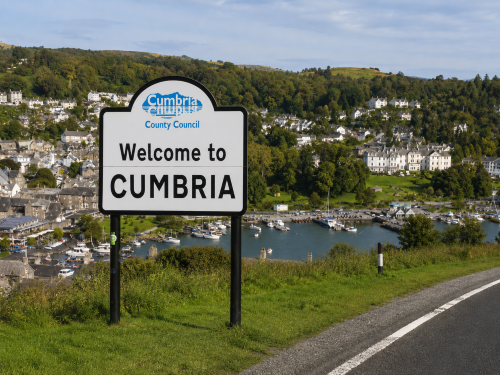
Why Move to Cumbria | What to Expect
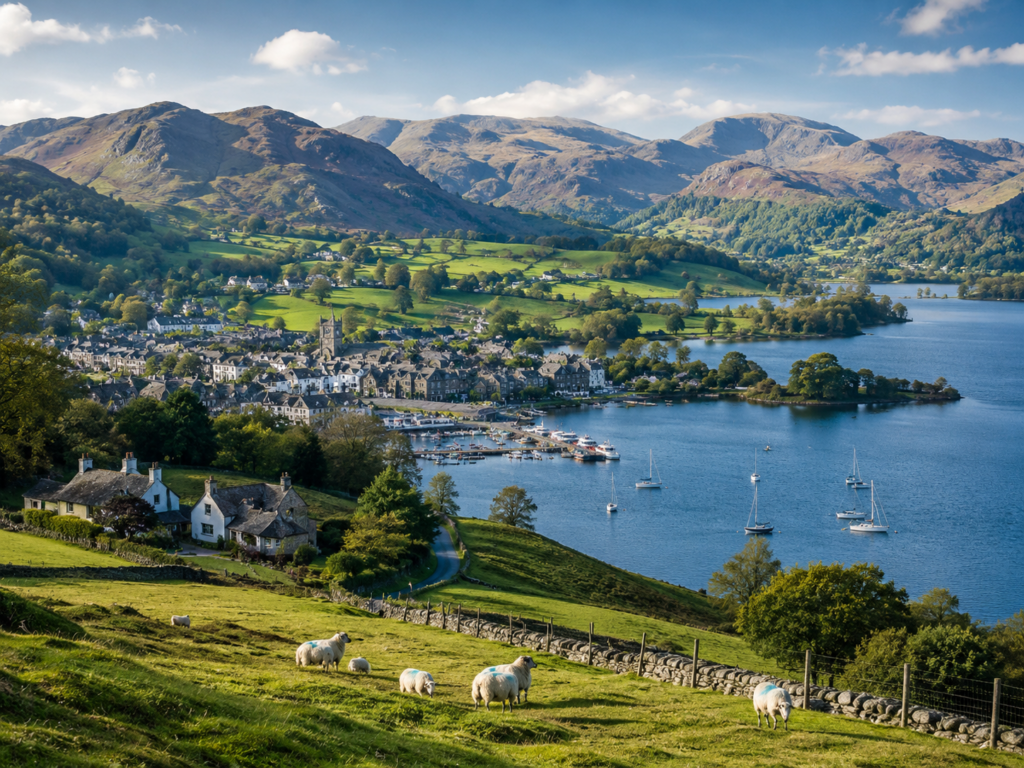
Living in Cumbria can mean very different things depending on location. The county includes lake villages, national park communities, rural hamlets, coastal towns, market towns, and city living in Carlisle. This gives buyers a wide range of options, from peaceful countryside to more practical town-centre living.
The Lake District is one of Cumbria’s strongest lifestyle draws. UNESCO describes the English Lake District as a mountainous cultural landscape shaped by glaciers, farming, settlements, designed landscapes, and the Romantic movement. The Lake District National Park also highlights Scafell Pike, Wastwater, picturesque villages, lakes, outdoor adventure, and rich cultural heritage as part of the area’s appeal.
Outside the Lake District, Cumbria also offers the Solway Coast, the Eden Valley, Hadrian’s Wall country, west Cumbrian towns, Furness, and access to parts of the Yorkshire Dales National Park. This makes the county attractive to families, retirees, remote workers, outdoor enthusiasts, and professionals who want a balance between natural surroundings and essential services.
Buyers should think carefully about transport, schools, work location, rural access, broadband, and winter travel. Cumbria’s landscape is a major advantage, but it can also mean longer journeys between towns, villages, schools, workplaces, and services.
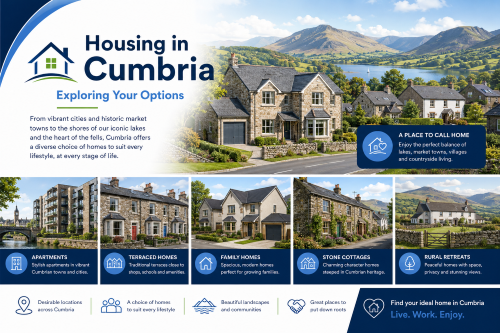
Housing in Cumbria: Exploring Your Options
Cumbria’s housing market is varied. Buyers can find city homes in Carlisle, market-town properties in Kendal and Penrith, coastal homes in Workington, Whitehaven, Maryport, Barrow, and Millom, stone cottages in rural villages, and higher-demand homes in Lake District locations such as Windermere, Ambleside, Keswick, Grasmere, and Bowness-on-Windermere.
Because local government is now split between Cumberland, Westmorland, and Furness, the most up-to-date ONS housing data is published under these two unitary authorities rather than a single Cumbria council area. In Cumberland, the average house price was £171,000 in February 2026, while average private rent was £659 in March 2026. In Westmorland and Furness, the average house price was £221,000 in February 2026, while the average private rent was £797 in March 2026.
Property values can vary significantly. Lake District and national park locations often attract strong demand from lifestyle buyers, retirees, second-home buyers, and holiday-let investors. In contrast, parts of West Cumbria and some larger towns may offer more accessible pricing for first-time buyers and families.
Westmorland and Furness ONS data shows average prices by property type in February 2026, including £373,000 for detached properties, £240,000 for semi-detached properties, £179,000 for terraced homes, and £129,000 for flats and maisonettes.
For buyers, the right area will depend on budget, work, schools, transport, lifestyle, and whether the property is intended as a main home, buy-to-let, holiday let, or retirement move. Speaking with a mortgage broker can help clarify affordability and lender expectations before making an offer.
Education in Cumbria: A Centre of Learning

Cumbria has a distinctive employment landscape shaped by energy, nuclear, advanced manufacturing, engineering, tourism, agriculture, food, health, education, public services, and rural enterprise.
Cumbria’s Strategic Economic Plan identifies four main priorities: advanced manufacturing growth, nuclear and energy excellence, a vibrant rural and visitor economy, and strategic connectivity of the M6 corridor. These sectors reflect the county’s mix of industrial, rural, visitor, and infrastructure strengths.
Cumberland Council’s 2026 economic strategy also highlights clean growth, advanced manufacturing and nuclear, the visitor and leisure economy, culture, the rural economy, and the natural environment.
Key Employment Sectors in Cumbria
Nuclear, Energy, and Clean Growth
West Cumbria is strongly associated with the nuclear sector and clean growth opportunities. The area supports supply chain roles, engineering, project management, construction, environmental work, and technical services. Cumberland Council’s recent economic strategy identifies clean growth, advanced manufacturing, and nuclear as significant opportunities.
Advanced Manufacturing and Engineering
Barrow-in-Furness, Carlisle, West Cumbria, and other employment areas support manufacturing, engineering, maritime, logistics, technical, and supply chain roles. Cumbria’s economic planning continues to identify advanced manufacturing as one of the county’s core growth priorities.
Visitor Economy, Tourism, and Hospitality
Tourism is central to many parts of Cumbria, especially the Lake District, Eden Valley, Hadrian’s Wall country, the Solway Coast, and market towns. Cumbria Tourism’s destination management work describes the county as a place famed for world-class landscapes and culture, with a five-year plan to support Cumbria as a place to live, work, visit, and study.
Agriculture, Food, and Rural Enterprise
Cumbria’s rural economy includes farming, food production, land-based businesses, countryside services, outdoor activity providers, and rural tourism. The county’s food and visitor economy is closely linked to local produce, farming traditions, country pubs, restaurants, and tourism.
Health, Education, and Public Services
Cumbria also supports steady employment through schools, colleges, the University of Cumbria, local councils, NHS services, care providers, emergency services, and public administration. These sectors are important for year-round employment across towns and rural communities.
Transport, Logistics, and Infrastructure
The M6 corridor, A66, ports, rail links, and regional road networks all support jobs in transport, logistics, construction, and infrastructure. The A66 is described by National Highways as a key local, regional, and national route for freight, tourism, businesses, and access to jobs, education, health, and essential services.
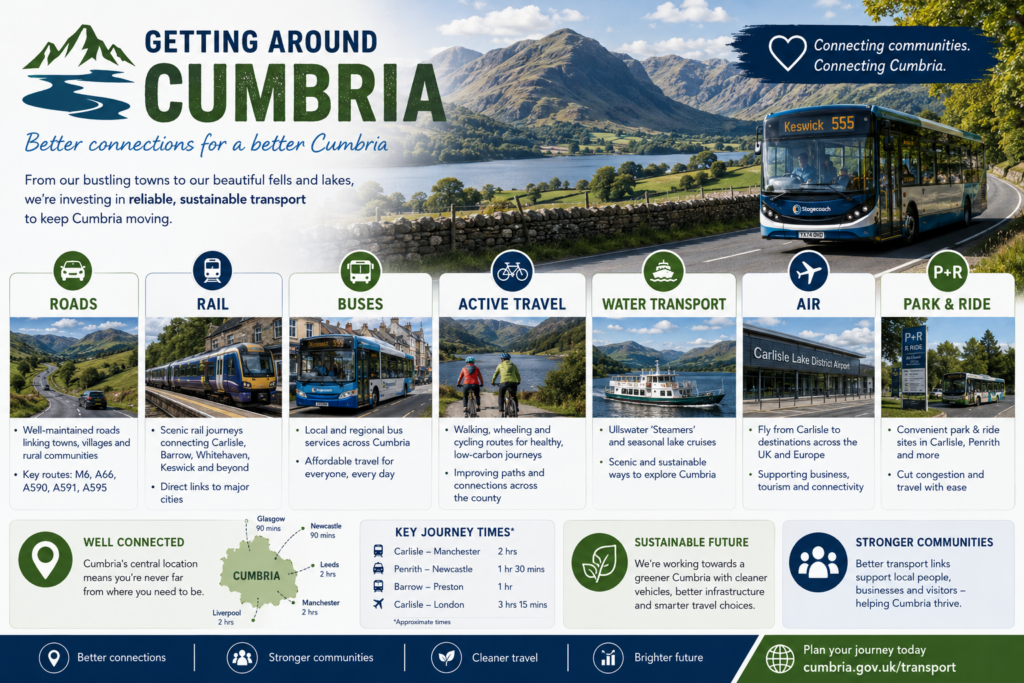
Transport Links in Cumbria
Cumbria’s transport network is shaped by its geography. The county has strong north-south road and rail links, but rural and Lake District locations can involve longer local journeys.
The M6 is one of Cumbria’s most important road corridors. National Highways notes that much of the M6 in Cumbria was built in the 1960s and that work is taking place on bridges, safety barriers, waterproofing, resurfacing, and maintenance across the corridor.
The A66 is also strategically important, linking east and west across the north of England. National Highways describes it as the most direct route between Scotland’s central belt and the eastern side of England, supporting freight, tourism, business travel, and local access to jobs, education, health, and services.
Rail access is strongest at key stations such as Carlisle, Penrith North Lakes, Oxenholme Lake District, Windermere, and Barrow-in-Furness. National Rail lists Carlisle and Oxenholme as Avanti West Coast-managed stations, while Windermere and Barrow-in-Furness are managed by Northern.
Public and community transport is especially important in rural areas. Cumberland Council provides information on bus timetables, bus passes, local rail services, rural transport schemes, community minibuses, Rural Wheels, and voluntary social car schemes.
For buyers, transport planning should be part of the property search. A scenic village may offer an outstanding quality of life, but daily access to work, school, healthcare, and shops should be checked carefully.
Exploring Attractions in Cumbria
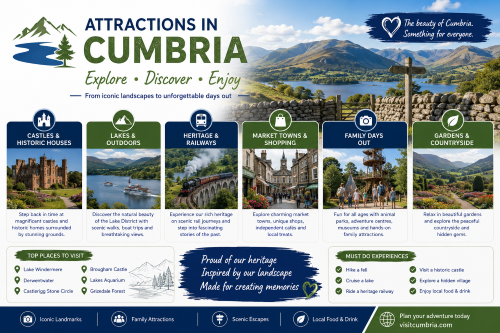
Cumbria is one of England’s strongest counties for outdoor attractions, heritage, and family days out. The Lake District National Park is England’s largest National Park and a UNESCO World Heritage Site, with lakes, fells, villages, cultural heritage, and outdoor activities such as boating, walking, paddleboarding, and cycling.
Hadrian’s Wall is another major heritage attraction. Visit Lake District notes that Hadrian’s Wall stretched 73 miles from coast to coast and once protected the northern frontier of the Roman Empire. Its forts, milecastles, and turrets extend into Cumbria, and the area forms part of the Frontiers of the Roman Empire UNESCO World Heritage Site.
Birdoswald Roman Fort is one of Cumbria’s key Roman sites. English Heritage describes it as a place where visitors can explore interactive displays, learn about Hadrian’s Wall, and see the longest continuous stretch of Hadrian’s Wall still visible today.
Cumbria also offers Carlisle Castle, museums, lakeside cruises, historic houses, fell walks, coastal routes, wildlife experiences, family attractions, market towns, and literary connections linked to figures such as William Wordsworth and Beatrix Potter.
For residents, this means weekends can include lake walks, heritage sites, village cafés, mountain routes, theatres, galleries, family days out, and coastal trips without needing to travel far.
Dining Out: The Best Places to Dine in Cumbria
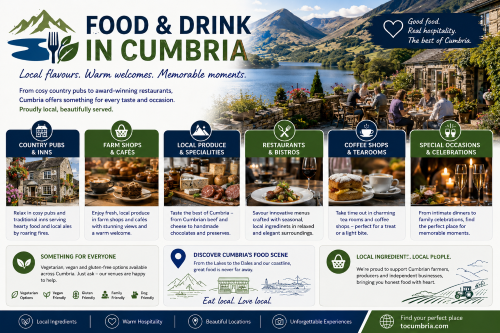
Cumbria has a strong food and drink reputation, shaped by farms, fells, lakes, coast, local produce, country pubs, fine dining, cafés, and visitor destinations. Visit Lake District describes the Lake District and Cumbria as having a food heritage with a strong dining reputation, highlighting local produce, afternoon teas beside the lakes, potted shrimp in West Cumbria, Herdwick hogget, country pubs, and fine dining.
Made in Cumbria also highlights the county’s food and drink suppliers, including meats, cheeses, jams, relishes, distilleries, bakeries, confectioners, chocolatiers, brewers, juicers, pie makers, butchers, fishmongers, and cheese producers.
For residents, dining out can range from a traditional pub meal after a fell walk to a lakeside afternoon tea, a market-town café, a fine dining restaurant, or seafood on the west Cumbrian coast. Areas such as Cartmel, Ambleside, Windermere, Keswick, Kendal, Carlisle, Penrith, Ulverston, Whitehaven, and Barrow all offer different dining experiences.
Cumbria’s food scene also supports local employment, tourism, farming, hospitality, and independent businesses. For home movers who value local produce and strong hospitality, the county offers plenty of choice throughout the year.
Mortgage Brokers in Cumbria: Securing a Home

Cumbria’s property market can vary significantly between areas. Buying in Carlisle, Kendal, Barrow, Penrith, Workington, Whitehaven, Keswick, Ambleside, Windermere, Ulverston, Cockermouth, or a rural village may involve different price points, property types, lender criteria, and affordability considerations.
A mortgage broker in Cumbria can help buyers understand their borrowing position, compare lenders, prepare documents, and review suitable options. This can be useful for first-time buyers, home movers, remortgage clients, self-employed applicants, contractors, buy-to-let investors, and buyers looking at rural or character properties.
Mortgage advice can also be valuable where properties have unusual features, are located in more rural areas, or are being considered for holiday-let or buy-to-let purposes. A broker can help explain how lenders may assess income, deposit, credit history, property type, and future plans.
With professional support, buying a home in Cumbria can feel clearer and more manageable, especially in areas where demand, location, and property style can influence mortgage options.
Why Cumbria is the Perfect Place to Call Home
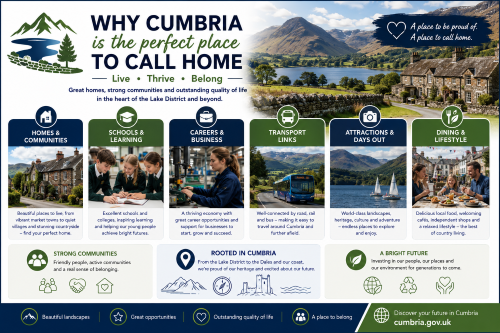
Cumbria offers a rare combination of natural beauty, heritage, community, employment, and lifestyle. From the Lake District and Hadrian’s Wall to Carlisle, Kendal, Barrow, Penrith, Workington, Whitehaven, Keswick, Ambleside, and Windermere, the county offers a wide range of places to live.
The Lake District is recognised internationally for its landscape, cultural history, lakes, mountains, and villages. UNESCO describes it as a cultural landscape shaped by nature and human activity, while the Lake District National Park highlights its spectacular landscapes, thriving communities, and rich cultural heritage.
For families, Cumbria offers schools, colleges, outdoor space, rural communities, and town amenities. For professionals, it offers career opportunities in energy, manufacturing, tourism, public services, healthcare, education, and rural enterprise. For retirees and lifestyle movers, it offers scenery, heritage, coast, countryside, and slower-paced living.
However, moving to Cumbria should be planned carefully. Buyers should consider transport, weather, rural access, broadband, school catchments, local services, healthcare access, and property affordability. The right location will depend on whether you want city services, national park living, coastal access, market-town convenience, or village life.
Browse Our Advisers in Cumbria



People who found this page helpful also explored these related topics:
FAQ: Why Move to Cumbria
| Question | Answer |
|---|---|
| What makes Cumbria an attractive place to live? | Cumbria combines natural beauty with a peaceful lifestyle. Home to the Lake District National Park, it offers spectacular scenery, outdoor recreation, and a welcoming community. Residents enjoy a slower pace of life, affordable homes, and strong local culture. |
| Is Cumbria a good place for families? | Yes — Cumbria is known for its safe communities, excellent schools, and family-friendly outdoor spaces. Towns like Kendal, Penrith, and Carlisle offer good amenities, while villages provide a close-knit, supportive atmosphere. |
| How affordable is housing in Cumbria? | Compared to major UK cities, Cumbria offers excellent value for money. Property prices are significantly lower than in London or Manchester, allowing buyers to access larger homes or rural properties without exceeding their budget. |
| What are the job opportunities in Cumbria? | The region has a diverse economy, with opportunities in tourism, healthcare, renewable energy, and education. Carlisle and Barrow-in-Furness are employment hubs, while remote work options continue to expand across Cumbria. |
| Is Cumbria well connected to other parts of the UK? | Despite its rural charm, Cumbria has strong transport links. The M6 motorway runs through the county, and direct rail services connect to Manchester, Glasgow, and London. For air travel, Manchester and Newcastle airports are within easy reach. |
| What lifestyle can I expect in Cumbria? | Expect a relaxed, nature-focused lifestyle. Weekends are filled with walking, cycling, and exploring local markets and villages. The area’s strong sense of community and slower pace appeal to families, retirees, and remote professionals alike. |
| Are there cultural or leisure activities in Cumbria? | Absolutely. Cumbria offers museums, festivals, artisan food markets, and independent shops. The Lake District attracts visitors year-round, and local towns host vibrant events celebrating Cumbrian heritage and arts. |
| What’s the weather like in Cumbria? | Cumbria experiences a mild but changeable climate. Expect cool winters, pleasant summers, and occasional rainfall — the trade-off for the region’s lush, green landscapes and thriving natural beauty. |
| Is Cumbria a good choice for property investment? | Yes. With rising demand for rural homes and holiday lets, Cumbria’s property market has shown steady growth. Areas around Windermere, Keswick, and Ambleside are particularly popular for both residential and investment buyers. |
| Can Connect Experts help me find a mortgage adviser in Cumbria? | Yes — we can connect you with trusted, FCA-authorised mortgage advisers in Cumbria who understand the local market and can guide you through buying or remortgaging a home in the area. Find a Mortgage Adviser in Cumbria. |