
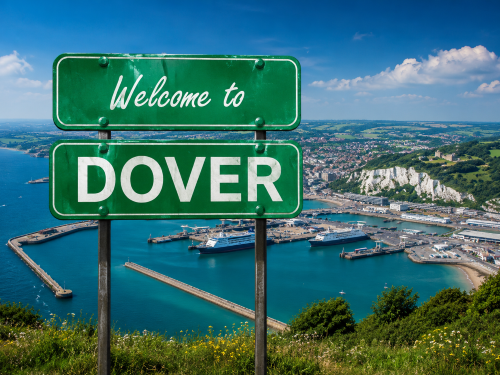
Why Move to Dover? Dover is one of Kent’s most recognisable coastal towns, known for the White Cliffs, Dover Castle, its port, its maritime identity, and its position as a gateway between the UK and mainland Europe. The town combines dramatic coastal scenery with heritage, transport links, local schools, employment opportunities, visitor attractions, and access to wider East Kent communities.
White Cliffs Country describes Dover as a place with a castle, Roman lighthouse, forts, an ancient pilgrim route, a beach where Channel swimmers train, a marina, a port, a cultural scene, and the iconic White Cliffs. The wider visitor area also includes Dover, Deal, Sandwich, rural villages, over 100 visitor attractions, 20 miles of coastline and beaches, and three iconic castles.
For people considering moving to Dover, the town can appeal to buyers who want coastal living, a strong history, practical amenities, and access to London, Canterbury, Folkestone, Deal, and the wider South East. The National Trust notes that Dover Priory offers high-speed rail services to London St Pancras, while road access to the White Cliffs is linked to the A2 and A20 routes.
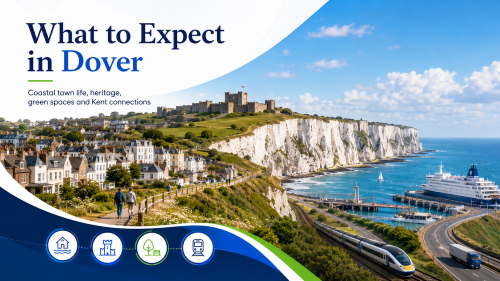
Why Move to Dover- What to Expect
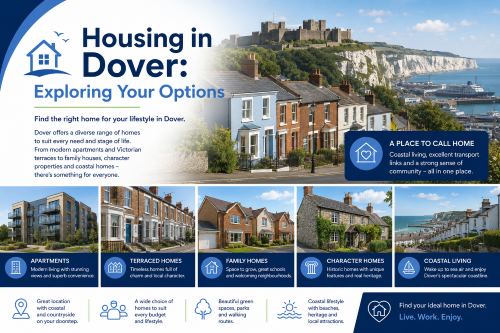
Dover’s housing market includes flats, terraced homes, semi-detached houses, detached properties, town-centre homes, period properties, coastal homes, and village properties in surrounding areas. Buyers can explore central Dover, Buckland, River, Elms Vale, St Radigunds, Maxton, Whitfield, St Margaret’s Bay, Aycliffe, and nearby coastal or rural communities.
The latest ONS local housing data shows that the average house price in Dover was £280,000 in February 2026, broadly in line with the figure for February 2025. The same data shows average property prices of £479,000 for detached homes, £301,000 for semi-detached homes, £236,000 for terraced homes, and £147,000 for flats and maisonettes.
For renters, the average private rent in Dover was £962 in March 2026, up 5.4% from £912 in March 2025. Average rents by bedroom size were £686 for one-bedroom properties, £896 for two-bedroom properties, £1,098 for three-bedroom properties, and £1,569 for four-or-more-bedroom properties.
This gives Dover a range of property options for first-time buyers, families, downsizers, commuters, and investors. However, affordability can vary depending on the exact location, property type, sea views, proximity to the station, and access to schools or transport.
Housing in Dover: Exploring Your Options
Dover’s property market offers a diverse range of housing options to suit different budgets and lifestyles. From charming period cottages near the seafront to modern developments in well-connected areas, the town provides a balance of affordability and coastal living.
As of 2024, the average house price in Dover is around £290,000, making it a more affordable option compared to many areas in the South East while still offering excellent amenities and transport links. Desirable locations such as St Margaret’s Bay, Whitfield, and River command higher prices due to their scenic surroundings, strong communities, and access to good schools. More budget-friendly areas, including Buckland and Aycliffe, offer great value for first-time buyers and renters, with a growing rental market catering to commuters, professionals, and families.
New developments in areas such as Whitfield and Aylesham provide modern homes with excellent local amenities and easy access to major roads like the A2 and M20. Whether you’re looking for a seafront property, a suburban family home, or a countryside retreat, Dover’s housing market offers a variety of options to suit different needs.
Why Move to Dover - Education in Dover: A Hub of Learning

Families moving to Dover can access education through Kent’s county-wide school system. Kent County Council provides information on school places, finding a school, term dates, school transport, free school meals, school attendance, SEND support, and school provision across the county.
For admissions, Kent County Council provides routes for primary school places, secondary school places, in-year admissions for families moving into Kent, the Kent Test for grammar school applications, school appeals, and support for children with special educational needs or disabilities.
Dover families can also look beyond the town for further and higher education pathways across East Kent. The University of Kent has a Canterbury location and lists undergraduate, postgraduate, foundation, apprenticeship, part-time, and short-course study options. Canterbury is also described by the university as well-connected, with London around an hour away by train and access to the surrounding coast and countryside.
This makes Dover suitable for families who want local schooling, Kent-wide admissions options, grammar school pathways, sixth-form routes, further education access, and nearby university choices.
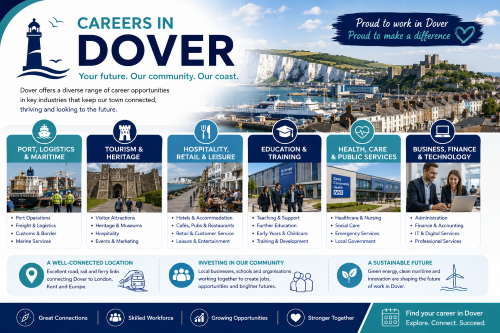
Why Move to Dover - Employment Opportunities
Dover’s employment profile is shaped by its port, visitor economy, transport links, hospitality sector, public services, education, retail, logistics, marine activity, and local enterprise. White Cliffs Country highlights Dover’s port, marina, castle, cultural scene, visitor attractions, coastline, and hospitality, all of which contribute to local employment and business activity.
Dover District Council’s business pages point local firms towards business rates, licences, permits, grants, loans, food business registration, business support, and the Kent and Medway Growth Hub. This supports local employers, start-ups, landlords, food businesses, and traders working across the district.
Key Employment Sectors in Dover
Port, Logistics, and Marine
Dover’s port and marina are central to the town’s identity. White Cliffs Country describes Dover as having a marina and port, while the National Trust notes that the White Cliffs are very close to the Port of Dover, with a signed footpath from the port to the cliffs.
Tourism and Heritage
Dover Castle, the White Cliffs, South Foreland Lighthouse, Dover Museum, Fan Bay Deep Shelter, and the wider White Cliffs Country visitor offer support tourism, hospitality, events, guiding, heritage, retail, and food service roles. English Heritage lists Dover Castle attractions, including the Great Tower, Secret Wartime Tunnels, Under Siege exhibition, play area, viewpoints, cafés, and year-round events.
Hospitality, Food, and Visitor Services
White Cliffs Country promotes Kentish food and drink, hospitality, cafés, bars, independent shops, events, and the wider Dover, Deal, and Sandwich visitor area. These support roles in restaurants, accommodation, visitor information, events, and local food businesses.
Education, Healthcare, and Public Services
Schools, local government, healthcare, transport, emergency services, and community organisations provide important year-round employment. Kent County Council’s education pages show the breadth of school and child-related services across Kent, including school places, transport, attendance, SEND support, and school provision.
Local Business and Enterprise
Dover District Council provides business support information covering grants, loans, licences, permits, business rates, food businesses, selling to the council, and the Kent and Medway Growth Hub.
Mortgage Brokers in Dover: Securing a Home

Dover’s property market offers a variety of opportunities, and expert mortgage broker advice can be invaluable in securing the best financing options. Whether you’re a first-time buyer, a buy-to-let investor, or looking to remortgage, working with a local broker can streamline the process and help you find the most competitive deals.
Dover-based mortgage brokers have extensive knowledge of the local housing market, ensuring you secure the most suitable mortgage for your financial situation. Whether you’re purchasing a seaside home near the White Cliffs, a family property in Whitfield or River, or a more affordable house in Buckland or Aycliffe, a broker can provide tailored guidance and access to exclusive mortgage rates.
With expert support, securing a home in this well-connected coastal town becomes a smoother and more efficient experience, allowing you to focus on finding the perfect property.
Transport Links
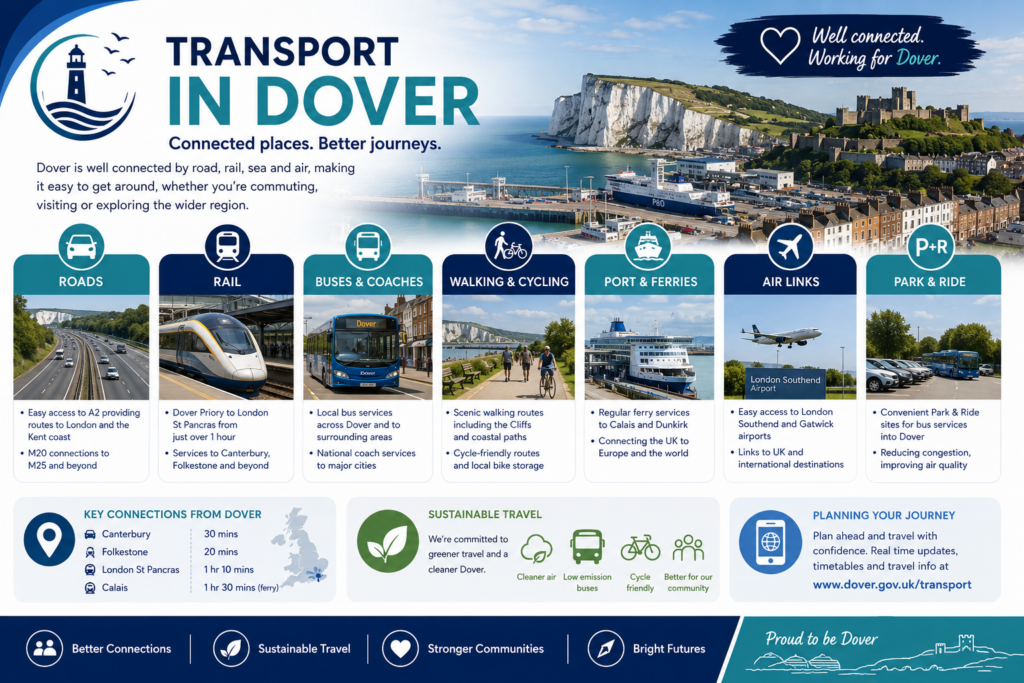
Dover has practical transport links by road, rail, walking routes, bus routes, and ferry connections. The National Trust notes road approaches from Canterbury and London via the A2 and from Ashford and London via the A20 when travelling to the White Cliffs area.
Dover Priory is the town’s main railway station. The National Trust states that Dover Priory is about two miles from the White Cliffs and has hourly high-speed train services from London St Pancras, as well as slower services from London Victoria or London Charing Cross.
Dover also benefits from its ferry and port setting. The National Trust notes that the White Cliffs are very close to the Port of Dover and that there is a signed footpath from the port. White Cliffs Country also highlights Dover’s marina and port as part of the town’s visitor identity.
For local living, buyers should think carefully about daily commute times, parking, school travel, ferry traffic, station access, and road congestion at peak holiday or port travel times.
Exploring Attractions in Dover
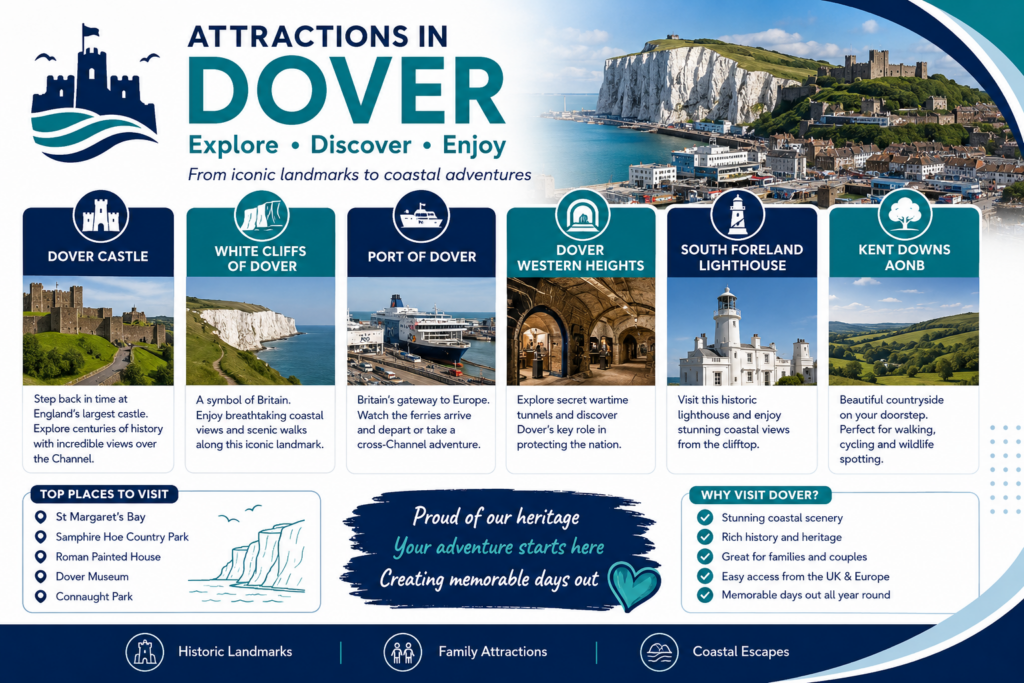
Dover is one of Kent’s strongest heritage and coastal destinations. The White Cliffs are an iconic landmark with views over the English Channel, Fan Bay Deep Shelter, South Foreland Lighthouse, SSSI and SAC countryside, walking routes, a café, shop, play area, and cliff-top paths.
Dover Castle is one of the town’s biggest attractions. English Heritage describes it as England’s mightiest castle and highlights the Medieval Great Tower, Secret Wartime Tunnels, Operation Dynamo story, Dover Castle Under Siege exhibition, new viewpoint, escape room, cafés, events, and family play area.
Dover Museum is located in the town centre and tells the story of the area’s history and archaeology. Its Bronze Age Boat gallery tells the story of a prehistoric wooden boat discovered in Dover in 1992, thought to be around 3,500 years old.
White Cliffs Country also highlights Dover, Deal, Sandwich, rural villages, walking routes, parks and gardens, castles and forts, cycling, museums, boat trips, over 100 visitor attractions, 20 miles of coastline and beaches, and three iconic castles across the wider visitor area
Dining Out: The Best Places to Dine in Dover
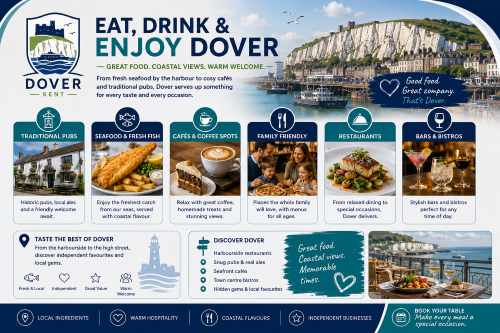
Dover’s dining scene is linked to its seafront, town centre, port, visitor economy, Kent produce, and nearby coastal towns. Residents can find cafés, pubs, restaurants, seafront refreshments, family dining, and places to eat across Dover and the wider White Cliffs Country area.
White Cliffs Country promotes Kentish food and drink, hospitality, cafés, bars, independent shops, and visitor-friendly places across Dover, Deal, Sandwich, and nearby villages.
The White Cliffs of Dover visitor centre also has a café serving hot and cold drinks, lunches, and cakes with views of the docks and the sea beyond. This reflects the town’s wider appeal for relaxed meals, coastal walks, day trips, and weekend stops.
Whether you want a pub lunch, coffee after a cliff walk, fish and chips near the seafront, or a meal in nearby Deal or Sandwich, Dover provides a good base for coastal dining and Kent hospitality.
Why Dover is the Perfect Place to Call Home
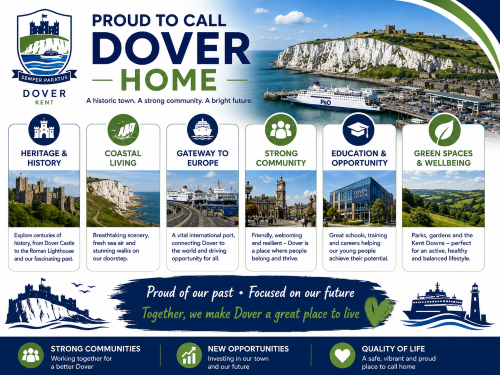
Dover offers a distinctive mix of coastline, heritage, transport links, property choice, schools, employment, food, and outdoor life. Its setting gives residents access to the White Cliffs, Dover Castle, the seafront, nearby villages, the wider Kent coast, and transport routes across the South East.
The town is particularly attractive for people who value coastal scenery, history, walking, heritage attractions, port links, and proximity to Canterbury, Folkestone, Deal, Sandwich, and London rail routes. White Cliffs Country describes Dover as a place with the White Cliffs, castle, forts, Roman lighthouse, port, marina, cultural scene, and coastal identity.
Dover may suit first-time buyers, families, commuters, downsizers, maritime workers, hospitality workers, public-sector employees, and buyers seeking better value than some other South East coastal areas. As with any move, buyers should compare property prices, school access, traffic patterns, commute times, parking, and lender criteria before deciding.
Browse our Advisers in Dover






People who found this page helpful also explored these related topics:
FAQ: Why Move to Dover
| Question | Answer |
|---|---|
| What makes Dover an attractive place to live? | Dover offers a unique blend of coastal beauty, rich history, and affordable housing compared to nearby Kent areas. Its scenic white cliffs, seaside lifestyle, and strong transport links make it a popular choice for both families and professionals. |
| How is the cost of living in Dover compared to London or Canterbury? | Dover’s cost of living is significantly lower than in major cities. Property prices are up to 40–50% cheaper than London, making it ideal for first-time buyers or those seeking better value for money while staying connected to the South East. |
| Is Dover a good place for commuters? | Yes. Dover has excellent rail connections to London St Pancras via the high-speed service (around 1 hour 10 minutes) and easy access to the A2 and M20 motorways. This makes it convenient for commuters working in London, Canterbury, or Ashford. |
| What is Dover known for besides the White Cliffs? | Beyond its famous cliffs, Dover is home to Dover Castle — one of England’s most impressive fortresses — and a lively harbour area with ongoing regeneration. The town’s maritime heritage and growing leisure scene make it a cultural and lifestyle hub in Kent. |
| Are there good schools in Dover? | Dover has a mix of reputable primary and secondary schools, including grammar options in nearby areas such as Folkestone and Canterbury. This makes it a great location for families seeking both quality education and a more relaxed pace of life. |
| What are the property options in Dover? | Dover offers a wide range of housing, from Victorian terraces and modern apartments near the seafront to new-build homes in developing areas like Whitfield. Prices remain affordable, with strong rental yields attracting buy-to-let investors. |
| Is Dover good for nature and outdoor activities? | Absolutely. Residents enjoy coastal walks, hiking along the cliffs, sailing, and easy access to Kent’s countryside. Dover’s seaside and country parks are perfect for outdoor enthusiasts and families. |
| How is Dover’s community and lifestyle? | Dover has a friendly, close-knit community with a growing number of independent cafes, local markets, and cultural events. The ongoing waterfront regeneration is helping shape Dover into a modern coastal town with a relaxed yet vibrant atmosphere. |