
Why Move to Greater Manchester?
Greater Manchester offers city living, strong transport links, green spaces and a wide choice of homes. It suits families, first-time buyers, professionals, students and landlords.
The city region covers ten councils. These are Bolton, Bury, Manchester, Oldham, Rochdale, Salford, Stockport, Tameside, Trafford and Wigan. Each area has its own identity, housing market and lifestyle.
Manchester city centre gives access to jobs, universities, culture and nightlife. Salford offers waterfront living around MediaCity and The Quays. Meanwhile, Stockport, Trafford, Bury, Bolton, Rochdale, Oldham, Tameside and Wigan offer town centres, suburbs, parks and commuter links.
Greater Manchester also has a clear growth plan. The Greater Manchester Strategy 2025 to 2035 sets out a vision for a thriving city region. It aims to grow the economy, improve homes, support transport and create better jobs.
For many movers, the main appeal is choice. You can live in a city apartment, a Victorian terrace, a suburban family home or a quieter town with easy links into Manchester.
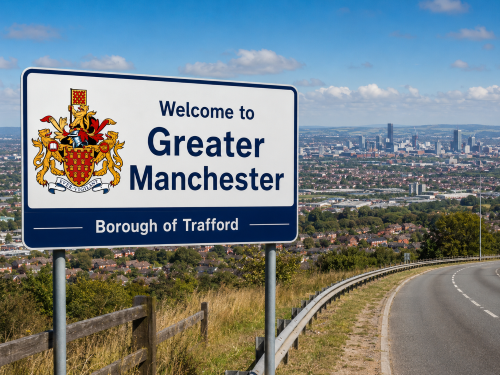
Why Move to Greater Manchester - What to Expect
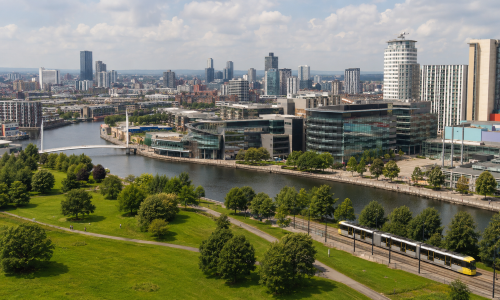
Greater Manchester offers an exceptional blend of cultural vibrancy, economic opportunity, and diverse communities, making it an outstanding place to live. From the dynamic city of Manchester to the thriving towns of Salford, Stockport, and Bolton, the region caters to a wide range of lifestyles and preferences.
As a major hub for business, education, and entertainment, Greater Manchester is home to a welcoming and diverse population. Whether you’re drawn to the world-class shopping and nightlife of Manchester city centre, the historic charm of Wigan and Rochdale, or the scenic beauty of areas like Heaton Park and the Pennines, there is something for everyone. The region is rich in heritage, with iconic landmarks such as the Manchester Town Hall, the Science and Industry Museum, and Old Trafford, while also embracing modern development with cutting-edge business districts and cultural hotspots.
Greater Manchester boasts outstanding transport connections, including the Metrolink tram network, major motorways such as the M60 and M62, and direct rail services to London, Birmingham, and Leeds, ensuring easy commuting and travel. With highly regarded schools, a strong sense of community, and a lower cost of living compared to London and the South East, the region offers an attractive balance of career prospects, leisure opportunities, and affordability.
Whether you’re seeking a thriving business environment, top-tier education, or a lively and well-connected place to live, Greater Manchester delivers an excellent quality of life with endless opportunities.
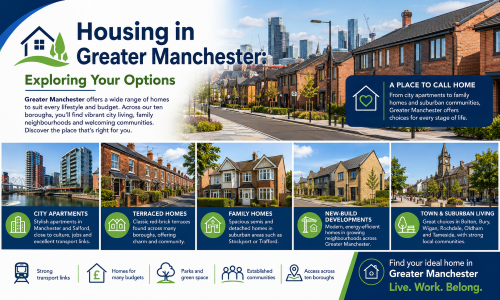
Housing in Greater Manchester: Exploring Your Options
Greater Manchester has a broad housing market. Buyers can find city flats, converted mills, terraced homes, semis, detached houses and new-build developments.
Prices vary by borough. In February 2026, the average house price in Manchester was £251,000. Average monthly rent was £1,347 in March 2026.
Other boroughs offer different price points. Bolton had an average house price of £200,000 and an average monthly rent of £878. Bury had an average house price of £241,000 and an average monthly rent of £965. Both figures use February 2026 house price data and March 2026 rent data.
Salford had an average house price of £224,000 and rent of £1,161. Trafford was higher, with an average house price of £378,000 and rent of £1,358. Trafford also had the highest average house price in the North West in February 2026.
These figures show why local advice matters. A buyer in Bolton may face a different market than one in Trafford. Likewise, a landlord in Salford may need a different approach from one in Stockport or Wigan.
First-time buyers may consider terraced homes, flats, and apartments. Families may compare school catchments, gardens and commuting times. Investors may focus on rental demand near stations, universities and employment areas.
Education in Greater Manchester: A Hub of Learning
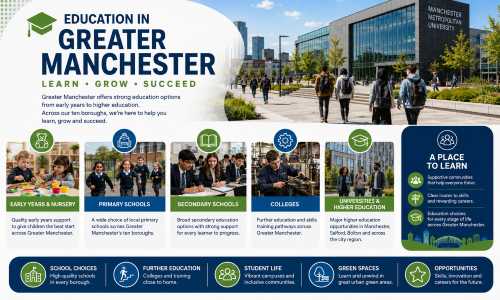
Greater Manchester offers education from early years to university level. Families can compare schools through each local council. For example, Manchester City Council provides school admissions, school place applications and appeals guidance.
Further education is also strong. GM Colleges represents nine further education colleges across Greater Manchester. It states that these colleges support 82,000 learners each year and work with 10,000 businesses.
Higher education is a major strength. Greater Manchester’s five universities work with GMCA and the ten local authorities through the Civic University Agreement. They support skills, research, jobs, culture and local growth.
The university group includes the University of Manchester, Manchester Metropolitan University, the University of Salford, the University of Bolton, and the Royal Northern College of Music. Together, the five universities educate more than 100,000 students each year and contribute about £6 billion to the regional economy.
Therefore, Greater Manchester works well for families, school leavers, graduates and career changers.
Why Move to Greater Manchester - Employment Opportunities
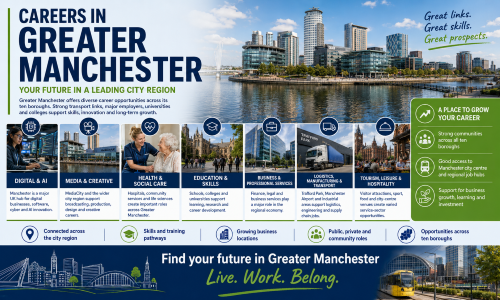
Greater Manchester has a large and varied economy. It supports jobs in finance, digital, creative industries, health, education, construction, hospitality, logistics, manufacturing and public services.
The Greater Manchester Strategy says the city region aims to attract £10 billion of investment. It also aims to create thousands of jobs and build thousands of new homes.
Growth sectors include advanced manufacturing, green industries and AI. The strategy also highlights commercial spaces, innovation districts, entrepreneurship hubs and new manufacturing sites.
The region has clear links between education and work. The strategy refers to the Greater Manchester Baccalaureate. This aims to give young people a clearer route into high-quality jobs.
Key employment locations include Manchester city centre, Salford Quays, MediaCity, Trafford Park, Airport City, Stockport, Bolton, Wigan and town centres across the region. As a result, residents can seek local roles or commute across the wider city region.
Why Move to Greater Manchester - Transport Links
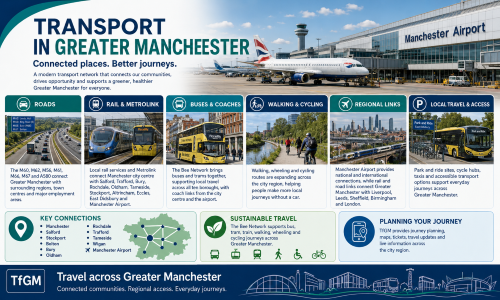
Greater Manchester has strong transport links. The Bee Network brings together bus, tram, train, walking, wheeling and cycling journeys. TfGM describes it as Greater Manchester’s joined-up transport network.
The Bee Network supports daily travel across the region. TfGM also provides journey planning, live departures, travel alerts, schedules, tickets and travel passes.
Metrolink is a major benefit. TfGM provides maps for all Metrolink lines and stops. It also provides Greater Manchester train, tram, bus and cycling maps.
Manchester Airport adds wider access. Trains from Manchester Airport to Manchester Piccadilly take around 20 minutes and run every 10 minutes, seven days a week. The airport station also connects passengers to wider UK rail routes.
Road links also support travel. Key routes include the M60, M62, M56, M61, M66, M67 and A580. These routes connect Greater Manchester with Liverpool, Leeds, Sheffield, Cheshire, Lancashire and the wider North West.
Exploring Attractions in Greater Manchester
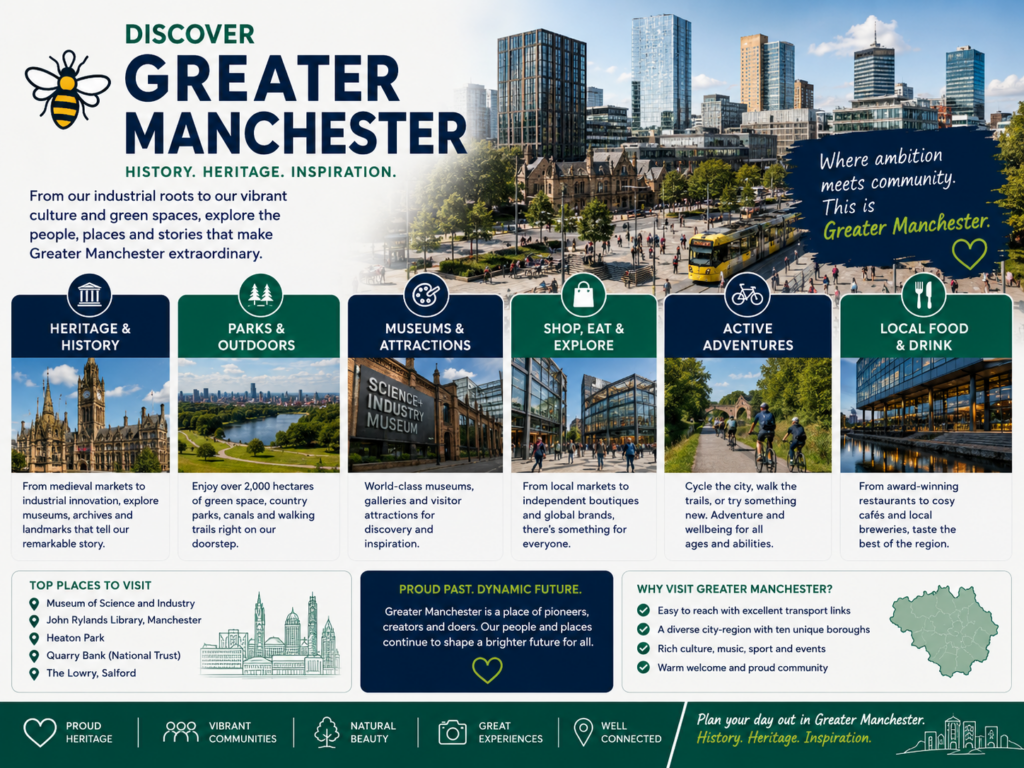
Greater Manchester has a strong mix of culture, sport, heritage, shopping, music and green space. Visit Manchester lists attractions, museums, galleries, parks, gardens, sporting attractions, tours, entertainment and borough guides.
Popular places include the National Football Museum, Old Trafford, Manchester City’s Etihad Stadium tour, Aviva Studios, RHS Garden Bridgewater, MediaCity and The Quays. Visit Manchester highlights several of these as current attractions or visitor experiences.
Green space also plays a major role. Visit Manchester lists Heaton Park, Fletcher Moss Botanical Garden, Alexandra Park and Whitworth Park as must-visit parks and gardens.
Each borough adds something different. Bolton, Bury, Oldham, Rochdale, Salford, Stockport, Tameside, Trafford and Wigan all appear in Visit Manchester’s Greater Manchester borough guide.
This means residents can enjoy a city day out, a football tour, a museum visit, a park walk or a local town-centre trip without travelling far.
Dining Out: The Best Places to Dine in Greater Manchester
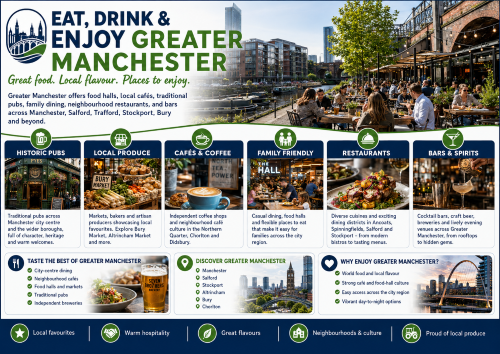
Greater Manchester has a varied food and drink scene. Visit Manchester lists restaurants, pubs, bars, cafés, delis, coffee shops, food halls, microbreweries and local produce.
Manchester city centre offers fine dining, food halls, coffee shops, casual restaurants and late-night venues. Visit Manchester also highlights well-known dining places such as Peter Street Kitchen, Adam Reid at The French, Chotto Matte, Canto and The Ivy Spinningfields.
The wider city region also gives residents choice. Altrincham, Sale, Didsbury, Chorlton, Stockport, Prestwich, Bury, Wigan, Bolton, Rochdale and Salford all have cafés, pubs and local restaurants.
Food choices vary by area. Some residents may prefer a city-centre meal. Others may choose a neighbourhood café, market hall, country pub or family-friendly restaurant.
Mortgage Brokers in Greater Manchester: Securing a Home
Buying in Greater Manchester can involve many choices. The right mortgage route depends on your deposit, income, property type, credit profile and plans.
A local mortgage broker can help you compare options. This can support first-time buyers, home movers, remortgage clients and landlords.
Greater Manchester has many buyer profiles. Some buyers want a city apartment in Manchester or Salford. Others want a family home in Trafford, Stockport or Bury. Meanwhile, buyers looking for value may compare Bolton, Rochdale, Oldham, Tameside and Wigan.
A broker can also help with more complex cases. This may include self-employed income, contractor income, buy-to-let, limited company buy-to-let, adverse credit or mixed income.
As a result, advice can save time. It may also help you find a lender that fits your circumstances.

Why Greater Manchester is the Perfect Place to Call Home
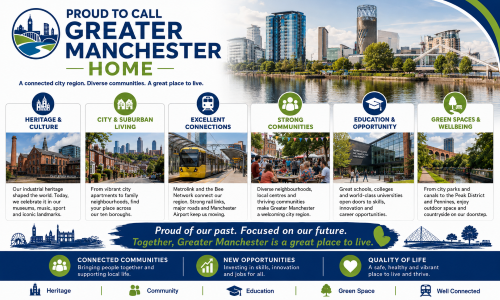
Greater Manchester offers balance. It combines city energy, local communities, transport links, education, jobs and green space.
The area gives people choice. Families can look for homes near schools and parks. Professionals can live near offices, trams and train links. Students can study at major universities. Investors can review rental demand across several boroughs.
The region also has a clear long-term plan. Its 2025 to 2035 strategy focuses on good homes, safe communities, green places, transport, everyday support and a thriving economy.
For many movers, Greater Manchester feels practical and ambitious. It offers strong local identity without losing city access.
Greater Manchester has a varied food and drink scene. Visit Manchester lists restaurants, pubs, bars, cafés, delis, coffee shops, food halls, microbreweries and local produce.
Manchester city centre offers fine dining, food halls, coffee shops, casual restaurants and late-night venues. Visit Manchester also highlights well-known dining places such as Peter Street Kitchen, Adam Reid at The French, Chotto Matte, Canto and The Ivy Spinningfields.
The wider city region also gives residents choice. Altrincham, Sale, Didsbury, Chorlton, Stockport, Prestwich, Bury, Wigan, Bolton, Rochdale and Salford all have cafés, pubs and local restaurants.
Food choices vary by area. Some residents may prefer a city-centre meal. Others may choose a neighbourhood café, market hall, country pub or family-friendly restaurant.
Browse Our Advisers in Greater Manchester






People who found this page helpful also explored these related topics:
If you are Looking for a Mortgage Network
“Hi, I’m Liz Syms, Chief Executive Officer and founder of Connect Experts, Connect Mortgages, and Connect for Intermediaries.
If you are a UK mortgage broker based in Greater Manchester, joining our mortgage network can help you increase your visibility to clients actively searching for trusted, FCA-authorised advice. Brokers featured on our Greater Manchester mortgage brokers page are matched with clients who value clear communication and professional guidance, including those who prefer advice in a specific language.
Our platform is designed to support compliant, client-focused advisers and help you connect with the right audience across Greater Manchester.”
Choose the option that suits you best:
Option 1: Schedule a call with our Business Recruitment Manager
Option 2: Complete our contact form
Option 3: Call us

FAQ: Why Move to Greater Manchester
| Question | Answer |
|---|---|
| 1. Why is Greater Manchester a popular place to live? | Greater Manchester offers a vibrant mix of city life and suburban comfort. It’s one of the UK’s fastest-growing regions, known for its strong job market, cultural diversity, excellent schools, and affordable property prices compared to London or the South East. |
| 2. What is the property market like in Greater Manchester? | The area has a healthy property market with steady growth. Average house prices remain below the national average, making it attractive for first-time buyers and investors alike. Regeneration projects in areas like Salford Quays and Ancoats have boosted both value and demand. |
| 3. Is Greater Manchester good for families? | Yes. The region offers great family-friendly communities, top-rated schools, large parks, and a variety of extracurricular options for children. Suburbs like Altrincham, Sale, and Prestwich are particularly popular with families. |
| 4. How strong is the local economy? | Greater Manchester has one of the UK’s largest regional economies, with thriving sectors in finance, media, healthcare, and technology. It’s home to major employers such as BBC, Siemens, and PwC, creating a wealth of opportunities. |
| 5. What’s the transport like in and around Manchester? | The city benefits from excellent transport links, including the Metrolink tram system, major motorways (M60, M62, M6), and direct rail services to London, Liverpool, and Leeds. Manchester Airport connects residents to over 200 destinations worldwide. |
| 6. Is Greater Manchester good for young professionals? | Absolutely. With an exciting nightlife, world-class universities, and co-working spaces, Manchester attracts graduates and entrepreneurs from across the UK. Areas like Northern Quarter and Deansgate are popular among young professionals. |
| 7. Are there investment opportunities in Greater Manchester? | Yes. Strong rental yields, regeneration schemes, and high student demand make Greater Manchester one of the UK’s top property investment hotspots. The region continues to attract domestic and international investors. |
| 8. What cultural and leisure activities are available? | From world-famous football clubs (Manchester United and Manchester City) to live music, art galleries, and restaurants, Greater Manchester offers endless leisure options. The area’s rich heritage and modern attractions make it an energetic and inspiring place to live. |
| 9. How diverse is the community in Greater Manchester? | Manchester is one of the UK’s most multicultural regions, with thriving communities speaking over 200 languages. This diversity enriches its culture, food scene, and local events throughout the year. |
| 10. Why should I consider buying or renting in Greater Manchester now? | With ongoing development, increasing demand, and affordable entry prices, Greater Manchester offers great potential for both homeowners and investors. Now is an excellent time to secure property before prices rise further. |