
Why move to Suffolk? Perhaps because moving home is not only about finding somewhere new. It is about finding somewhere that gives the next part of life enough room to develop.
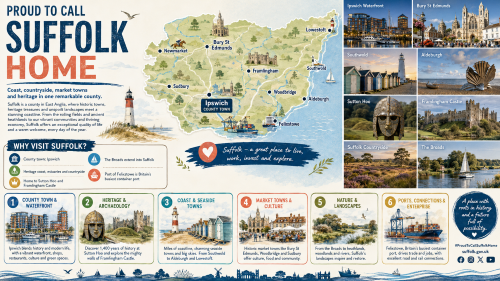
Suffolk offers that choice in several different forms. Ipswich provides an urban centre and waterfront setting. Bury St Edmunds combines heritage, employment and market-town life. Woodbridge sits close to the River Deben and the Suffolk Coast, while towns such as Stowmarket, Sudbury, Newmarket and Haverhill offer different links towards Cambridge, Essex and the wider East of England.
Then there is the coast. Felixstowe, Aldeburgh, Southwold, Lowestoft and the surrounding villages create a very different lifestyle from inland Suffolk.
For people considering why move to Suffolk, the attraction is therefore not one single feature. It is the ability to choose between coast, countryside, established towns and employment centres without leaving the same county.
If your move has reached the financial planning stage, you can also explore Mortgage Brokers in Suffolk and compare advisers across the county.
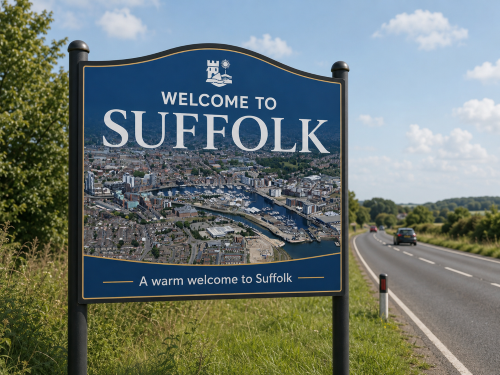
Suffolk Gives You More Than One Version of County Life
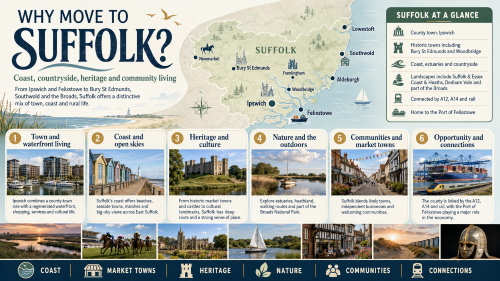
Living in Suffolk can feel very different depending on which direction you travel.
Ipswich offers the county’s largest urban centre, with the Waterfront, railway connections, shops, employment and the University of Suffolk. Bury St Edmunds brings historic streets, Abbey Gardens, retail and a strong West Suffolk identity. Woodbridge has a smaller market-town feel, with access to the Deben and the Suffolk Coast.
Coastal Suffolk changes the picture again. Visit Suffolk describes the Suffolk Coast as a National Landscape of beaches, shingle shores, tidal estuaries, heathland, marshes and reedbeds. It includes destinations such as Felixstowe, Aldeburgh, Southwold and Woodbridge.
Further inland, areas around Stowmarket, Needham Market, Framlingham, Eye, Hadleigh and Sudbury offer a mix of established communities, rural surroundings and local services.
That variety matters because the answer to why you move to Suffolk will differ for each household.
A commuter may focus on Ipswich or Stowmarket. A family may prioritise schools and space. Someone approaching retirement may look towards the coast or a quieter market town.
The county works best when you choose the part of Suffolk that fits the life you actually intend to lead.
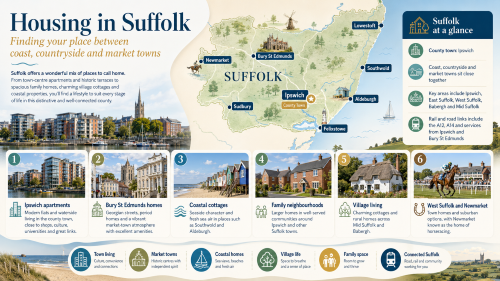
Suffolk Housing Changes Considerably by Area
Suffolk should not be treated as one property market.
The latest ONS data demonstrates why.
In July 2026, the average house price in:
- East Suffolk was £276,000
- West Suffolk was £295,000
- Mid Suffolk was £316,000
Mid Suffolk also recorded an average first-time buyer price of £258,000, while homes bought with a mortgage averaged £311,000.
Those averages conceal even greater differences at town and property level.
A flat in Ipswich may create very different affordability and service-charge considerations from a detached house in rural Mid Suffolk. A period property in Lavenham, a coastal home around Aldeburgh or a modern development around Stowmarket can also raise different questions for a lender and valuer.
Property choices across Suffolk can include:
- Ipswich apartments and terraces
- suburban family homes
- new-build developments
- market-town properties
- older cottages
- converted buildings
- rural homes with land or outbuildings
- coastal properties
- larger detached homes
That is why buyers should treat headline county averages as context rather than a guide to what an individual property is worth.
You can review the latest ONS housing data for Mid Suffolk when comparing current market conditions.
Education Can Shape Where a Suffolk Move Begins
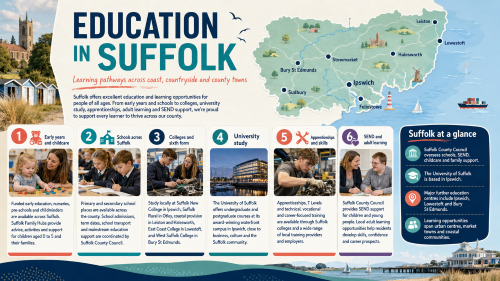
For families, moving home often starts with a map of schools, not a map of properties.
Suffolk has state schools, sixth-form provision, further education, independent schools and university study.
The University of Suffolk’s main campus is on the Ipswich Waterfront, close to the town centre, railway station and local amenities.
Independent education also plays a role in the county’s education landscape. Woodbridge School, for example, provides independent day and boarding education in Suffolk.
Check school admissions carefully before choosing a home. Suffolk County Council publishes individual admission policies, available places and oversubscription criteria, and it specifically advises families to consider how children will travel to school before applying.
That creates practical questions for movers:
- Which admissions authority applies?
- Does the preferred school have a catchment area?
- How will the school journey work each day?
- Will childcare costs change?
- Could independent school fees form part of future expenditure?
- Will a move affect household affordability?
Where independent education forms part of longer-term planning, the separate Education Finance guide may also be relevant.
The important point is that education and housing decisions often affect the same household budget.
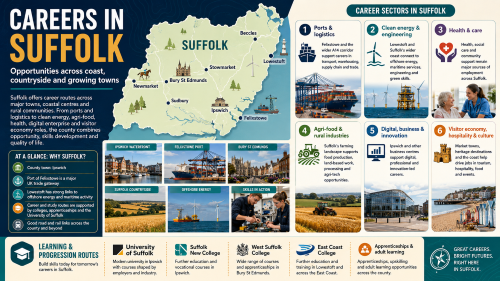
Work in Suffolk Extends Far Beyond Agriculture
Suffolk’s rural identity matters, but its economy is broader than its landscape suggests.
Suffolk County Council identifies key strengths in:
- clean energy;
- agri-food and drink;
- ports and logistics;
- advanced manufacturing and engineering;
- ICT and digital creative;
- life sciences and biotechnology;
- financial services.
The council’s employment planning also highlights healthcare, social care and the visitor economy as major sources of work.
Ports and Logistics
Felixstowe sits at the centre of Suffolk’s logistics economy. Suffolk’s own economic material describes it as the UK’s largest container port, with Ipswich and Lowestoft also supporting nationally significant port activity.
Clean Energy
The coast also supports significant energy activity, including offshore wind supply chains and Sizewell C.
Agri-food and Drink
Agriculture remains closely connected with food production, processing and agri-tech. Suffolk County Council identifies agri-food and drink as one of the county’s leading economic sectors.
Professional and Public-Sector Work
Ipswich supports finance, insurance, healthcare, education, public services and office-based employment. Bury St Edmunds has its own professional, healthcare, retail, tourism and public-sector economy.
Newmarket adds another distinctive employment market through horseracing, breeding and associated equine industries.
For a home mover, this means Suffolk is not simply a place to commute from.
For many people, the job is already here.
Suffolk's Transport Network Shapes Where People Settle
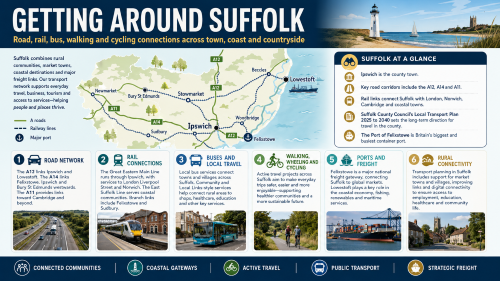
Transport is one of the practical considerations behind why move to Suffolk, because the county connects very differently depending on where you live.
The A12 is important for the east of the county and provides a road connection towards Essex and London.
The A14 crosses Suffolk and links Ipswich, Stowmarket, Bury St Edmunds and Newmarket while continuing towards Cambridge and the Midlands.
Rail is equally important.
Ipswich sits on the Great Eastern Main Line towards London Liverpool Street and Norwich. Stowmarket also benefits from mainline services.
Bury St Edmunds sits on the Ipswich to Ely route, providing connections towards Ipswich, Cambridge, Ely and Peterborough. Suffolk County Council’s transport plan identifies the railway as an important part of Bury St Edmunds’ regional connectivity.
The county’s wider transport strategy also highlights the importance of rail capacity around Ipswich, Felixstowe, Ely and the freight network.
For movers, however, the practical test is simpler.
Before choosing a property, check:
- real peak-time journey times;
- station parking;
- school-run routes;
- bus frequency;
- road congestion;
- how often you actually need to travel.
A village may offer more space. A station town may offer more time.
Both have value, but not necessarily to the same household.
The Suffolk Coast and Countryside Change the Pace of Life
Some reasons for moving are difficult to express through property prices.
Suffolk’s landscapes are one of them.
The Suffolk Coast includes beaches, tidal estuaries, heathland, marshes, rivers and wildlife habitats. Visit Suffolk highlights locations including Aldeburgh, Southwold, Felixstowe, Snape Maltings and Woodbridge.
Further south, Dedham Vale National Landscape runs along the Suffolk-Essex border and includes the lower River Stour. It aims to conserve and enhance the landscape, habitats, and biodiversity.
The county also offers:
- coastal walking;
- cycling;
- nature reserves;
- river landscapes;
- historic villages;
- open agricultural countryside;
- forest and heathland;
- market-town parks and green spaces.
For households leaving a larger city, this may be a major part of why move to Suffolk.
Yet access to open space does not automatically mean isolation. The county’s larger towns still provide employment, shopping, healthcare, education and leisure.
That balance is one of Suffolk’s strongest characteristics.
Suffolk's Culture Is Built Around Place, Food and History
Suffolk’s identity is visible in its towns as much as in its countryside.
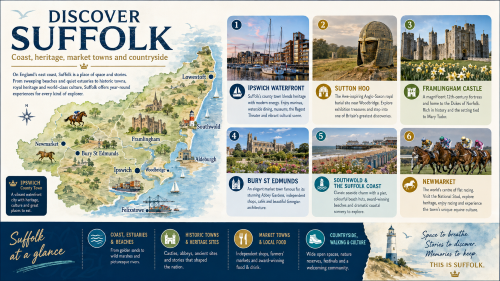
Bury St Edmunds has Abbey ruins, a Cathedral, and a long-established market-town centre.
Near Woodbridge, Sutton Hoo provides one of England’s most significant Anglo-Saxon archaeological landscapes.
Framlingham Castle adds another major historic landmark, while Snape Maltings has become closely associated with music, arts and the Suffolk coast.
Aldeburgh’s cultural identity is also tied to music and the coast.
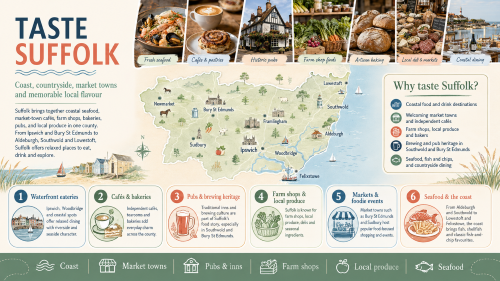
Food reflects the county in a different way.
Agriculture and food production remain important to Suffolk’s economy, while coastal locations add local seafood. Independent pubs, farm shops, cafés, restaurants and markets are spread throughout the county.
The appeal is not about claiming Suffolk has the “best” restaurants or the “perfect” lifestyle.
Local food, landscape, coast, history, and community often feel connected rather than separate.
For someone choosing where to put down roots, that can matter more than another shopping centre or another motorway junction.
Mortgage Planning Should Reflect the Suffolk Property
Once the lifestyle decision becomes a financial one, the property itself matters.
A mortgage lender considers more than the applicant’s salary and deposit.
It may also assess:
- property construction;
- condition;
- valuation;
- lease length;
- service charges;
- flood considerations;
- acreage;
- outbuildings;
- access;
- resaleability;
- loan-to-value;
- income structure.
That can be particularly relevant in a county with such varied housing.
From an underwriting perspective, a coastal house, Ipswich flat, listed village property, and rural home are not interchangeable.
A suitable adviser can help you understand whether your circumstances and intended property are likely to fit particular lender criteria.
You can compare advisers through the Connect Experts mortgage adviser directory or search more locally through Find a Mortgage Adviser by Location.
If you’d prefer to discuss detailed financial information in another language, Bilingual Mortgage Brokers offers another search option.
Larger Suffolk Homes Can Require a Different Mortgage Search

Suffolk should not be labelled as uniformly high-net-worth.
However, parts of the county include larger and higher-value coastal, rural and period properties. Areas around Southwold, Aldeburgh, Woodbridge, and some established villages can create borrowing requirements that fall outside a straightforward mainstream mortgage search.
Borrowers may also have more complex income, including:
- company profits;
- dividends;
- bonuses;
- investment income;
- partnership drawings;
- several income sources;
- existing property portfolios.
In those cases, the right adviser may need to understand both the mortgage size and how the applicant’s income or assets are structured.
When those circumstances apply, High Net Worth Mortgage Brokers may be a better next step than simply choosing the nearest adviser.
The deciding factor should be the case’s complexity, not the prestige of the postcode.
Later-Life Moving and Equity Release in Suffolk
For some people, why move to Suffolk is a question that comes later in life rather than at the start of a property journey.
The county can appeal to homeowners looking for a quieter pace, access to the coast, established market towns and communities with everyday services close by. Areas such as Southwold, Aldeburgh, Woodbridge, Felixstowe, Bury St Edmunds, and parts of rural Suffolk can attract people considering retirement, downsizing, or changing how they use their property wealth.
This can raise several financial questions.
A homeowner may be considering:
- moving to a smaller or more manageable property;
- repaying an existing mortgage;
- releasing funds for home improvements;
- helping family members;
- supplementing retirement income;
- remaining in their current home for longer.
Equity release is one option that may be considered in suitable circumstances, but it is not the same as a standard residential mortgage. It can affect inheritance, future financial choices, and entitlement to means-tested benefits, so specialist advice matters.
Homeowners exploring this area can read more about Equity Release Advisers in Suffolk.
The key question isn’t simply how much equity a property contains. It is whether using that equity supports the life the homeowner wants to lead next.

Why Suffolk Can Continue to Work as Life Changes
The strongest answer to why move to Suffolk may be whether the county can still work when your priorities change.
A first-time buyer may begin with affordability and a station.
A family may later care more about schools, bedrooms and outdoor space.
Someone working remotely may value broadband, a dedicated workspace and access to a market town.
A later-life mover may place greater emphasis on community, healthcare, walkability or proximity to the coast.
Suffolk offers several ways to make those changes without leaving the county.
You can move from Ipswich to a market town, from a rural village toward the coast, or from a larger family property to something more manageable while keeping familiar surroundings.
That flexibility is perhaps a better reason to move than any single headline statistic.
A home should suit the life you have now.
A good location gives it some chance of suiting the life that comes afterwards too.
Browse Our Advisers in Suffolk
Once you know where you might want to live, the next question becomes whether your mortgage fits the property and the circumstances behind the move.
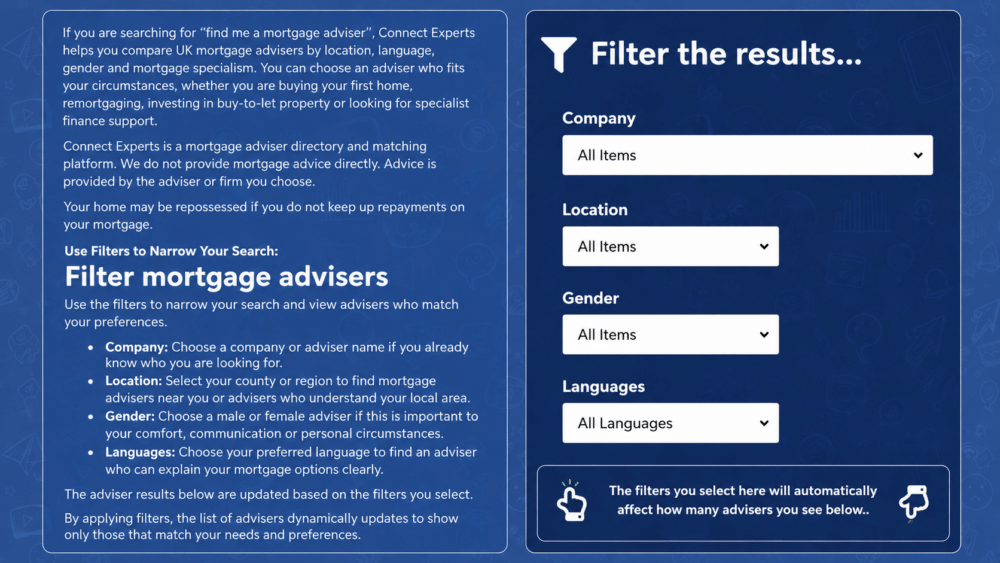
Connect Experts allows you to compare mortgage advisers by location, mortgage expertise, language and other relevant preferences.
Use the Connect Experts adviser directory to compare advisers rather than choosing solely by distance.
Connect Experts is a mortgage adviser directory and matching platform. It does not provide mortgage advice directly. Mortgage advice is provided by the adviser or firm you choose.


People who found this page helpful also explored these related topics

Mortgage Broker in Bungay- Find Trusted Mortgage Advice

Mortgage Broker in Leiston

Mortgage Broker in Brandon: Find Trusted Mortgage Advice in IP27

Mortgage Broker in Woodbridge IP12 – Find Expert Advice

Mortgage Broker in Mildenhall – Trusted Advice in IP28

Find a Trusted Local Mortgage Adviser in Historic Beccles
Neighbouring Counties
FAQs: Why Move to Suffolk?
Is Suffolk better suited to town, coast or countryside living?
Suffolk can support all three. Ipswich offers a larger urban setting; Bury St Edmunds and Woodbridge provide market-town living, while Aldeburgh, Southwold, Felixstowe and other communities offer coastal options. Rural areas across Mid and West Suffolk provide a different balance of space and access to services.
Which Suffolk areas may suit London commuters?
Ipswich and Stowmarket are among the more practical locations for rail travel towards London Liverpool Street. Journey frequency and total door-to-door travel time should still be checked before choosing a property, particularly where a home requires a drive to the station.
Are house prices the same across Suffolk?
No. ONS data for July 2026 shows significant differences between Suffolk’s local authority areas. Average prices were £276,000 in East Suffolk, £295,000 in West Suffolk and £316,000 in Mid Suffolk. Individual towns and property types can differ further.
What should families check before moving to Suffolk?
Families should consider school admissions, travel to school, childcare, commuting, housing costs, and access to everyday services. Suffolk County Council publishes admission policies and school place information and advises parents to consider travel arrangements before applying.
Does Suffolk have employment outside Ipswich?
Yes. Bury St Edmunds, Newmarket, Felixstowe, Lowestoft and other parts of Suffolk support significant employment. Major sectors include ports and logistics, clean energy, agri-food, advanced manufacturing, healthcare, public services and tourism.
Are coastal homes in Suffolk treated differently by mortgage lenders?
Not automatically. However, lenders and valuers assess each property individually. Construction, condition, flood information, insurance, valuation, and future saleability can matter depending on the home and its exact location.
How can I find a mortgage adviser covering Suffolk?
Use Mortgage Brokers in Suffolk to explore the county or use the Connect Experts adviser directory to compare advisers by location, expertise and other preferences.