
Mortgage Broker in Ipswich: A mortgage is a long financial commitment built from many smaller decisions.
The rate matters. However, income evidence, property type, deposit, fees and future affordability matter just as much.
A mortgage broker in Ipswich can assess these connected factors before researching suitable options. This can help buyers, homeowners and landlords understand what lenders may require.
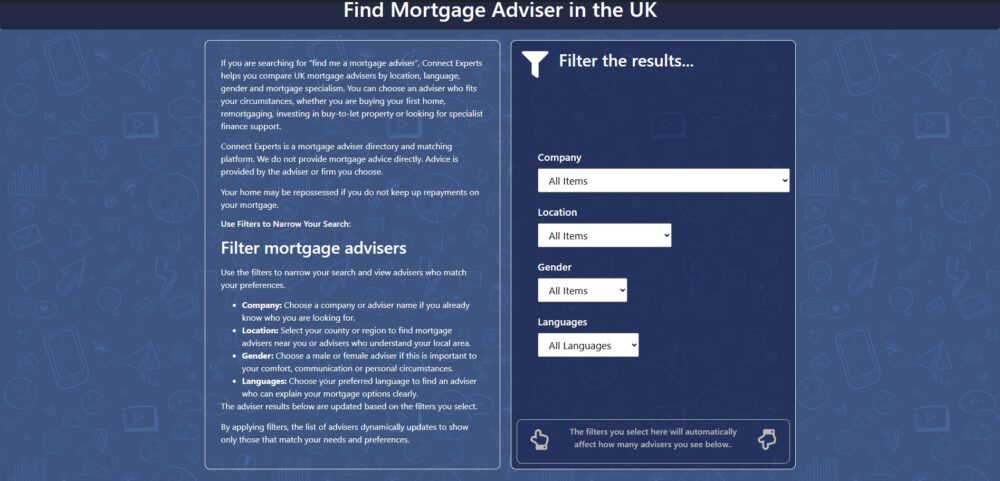
Connect Experts lets you search for mortgage advisers by location, language and mortgage expertise. You can review individual profiles before deciding whom to contact.
Find a mortgage adviser serving Ipswich and the surrounding Suffolk area.
At a Glance
- Mortgage brokers research borrowing options based on your circumstances.
- Lenders apply different affordability, income and property rules.
- Ipswich buyers may need advice for purchases, remortgages or buy-to-let finance.
- Self-employed income, credit history and property type can affect lender choice.
- Always check an adviser’s permissions, service scope and fees before proceeding.
- Connect Experts helps you search and compare relevant adviser profiles.
What Does a Mortgage Broker in Ipswich Do?
A mortgage broker gathers information about your finances, objectives and proposed property.
They may then research lenders whose criteria appear suitable for your circumstances.
The process commonly includes:
- Reviewing your income and regular expenditure.
- Assessing your deposit or available equity.
- Considering your credit commitments.
- Comparing repayment and interest-only structures.
- Checking lender rules for the proposed property.
- Explaining mortgage rates, fees and early repayment charges.
- Preparing and submitting the application.
- Communicating with the lender during underwriting.
A broker does not decide whether your mortgage will be approved. The lender completes its own affordability, credit and property assessments.
The Ipswich Property and Mortgage Market
Ipswich contains a broad mixture of flats, terraced homes, suburban family properties and rental accommodation.
According to the latest ONS housing data for Ipswich, the average local house price was £220,000 in May 2026.
The provisional average price paid by first-time buyers was £196,000. Homes purchased with a mortgage averaged £223,000.
These figures describe the wider market. They do not determine what an individual applicant can borrow.
Mortgage affordability depends on several personal factors, including:
- Earned and other acceptable income.
- Existing loans and credit commitments.
- Household expenditure.
- Deposit size.
- Mortgage term.
- Interest-rate assumptions.
- Credit conduct.
- Financial dependants.
Local property values can provide context. However, a lender still assesses each applicant and property separately.
First-Time Buyer Mortgages in Ipswich
First-time buyers often begin by asking how much they can borrow.
The more useful question is whether the proposed mortgage remains affordable after regular household costs.
A lender may assess:
- Basic salary and contractual income.
- Overtime, bonuses or commission.
- Student loans and other deductions.
- Credit card and loan repayments.
- Childcare or maintenance costs.
- Deposit source.
- Expected mortgage term.
An agreement in principle may provide an early lending indication. It is not a formal mortgage offer.
The lender must still assess the full application, supporting evidence and property valuation.
Before viewing properties, consider preparing:
- Recent payslips.
- Bank statements.
- Proof of deposit.
- Identification.
- Address history.
- Details of financial commitments.
Clear preparation can identify problems before legal and valuation costs begin.
Moving Home in Ipswich
Home movers usually need to coordinate a property sale with a new mortgage application.
Your available deposit may depend on:
- The agreed sale price.
- Your outstanding mortgage balance.
- Estate agency fees.
- Legal costs.
- Early repayment charges.
- Porting conditions.
- Additional savings.
Porting a mortgage does not automatically transfer the loan.
You normally make a new application and must satisfy the lender’s current affordability and property requirements.
A broker can compare porting your existing product against arranging a new mortgage. Any comparison should include fees and repayment charges, not only the headline rate.
Remortgaging an Ipswich Property
Remortgaging means replacing an existing mortgage with another mortgage.
Common reasons include:
- An existing deal is ending.
- Monthly payments need reviewing.
- A borrower wants a different mortgage term.
- Home improvements require funding.
- A borrower wants to change the repayment structure.
- Circumstances have changed since the original application.
A lower rate does not always produce the lowest overall cost.
Arrangement fees, valuation charges, legal work and early repayment charges can affect the calculation.
Borrowers approaching the end of a deal can search for remortgage mortgage brokers with relevant experience.
Mortgages for Self-Employed Applicants
Self-employed applicants can obtain mortgages. However, income assessment may differ between lenders.
Evidence can include:
- Finalised business accounts.
- Tax calculations.
- Tax year overviews.
- Business bank statements.
- Personal bank statements.
- Accountant details.
- Current trading information.
Some lenders assess salary and dividends for company directors. Others may consider salary and retained profit.
Sole traders may be assessed using taxable profit. Partners may need evidence of their share of business profits.
Trading history requirements also vary. Therefore, lender selection can be particularly important.
Search for self-employed mortgage brokers who understand different income structures.
Buy-to-Let Mortgages in Ipswich
Buy-to-let lending is primarily assessed through expected rental income. Personal income may also matter.
Lenders can apply different rules covering:
- Minimum applicant income.
- Rental stress calculations.
- Interest coverage ratios.
- Maximum loan-to-value.
- First-time landlords.
- Portfolio landlords.
- Property type.
- Tenancy arrangements.
- Personal or limited company ownership.
Local rent figures can help investors begin their research. However, lenders normally rely on a valuer’s rental assessment.
A strong forecast does not replace lender underwriting.
Landlords can search for buy-to-let mortgage brokers with suitable experience.
Tax treatment depends on personal circumstances. Mortgage advice does not replace independent tax or legal advice.
Property Factors That Can Affect an Ipswich Mortgage
Mortgage approval concerns both the applicant and the property.
A lender may examine:
- Construction type.
- Remaining lease term.
- Service charges.
- Ground rent provisions.
- Property condition.
- Flood risk.
- Commercial use nearby.
- Valuation comparables.
- Proposed occupancy.
- Rental demand for buy-to-let applications.
Flats may require closer examination of lease terms and management arrangements.
Some converted properties, former commercial buildings or unusual construction types may have fewer available lenders.
Discussing these features early can reduce the risk of applying to an unsuitable lender.
What Should You Ask an Ipswich Mortgage Broker?
Before instructing an adviser, ask clear and practical questions.
Are you authorised to provide the advice I need?
Check the individual or firm on the Financial Services Register.
Which mortgage areas do you advise on?
Permissions and experience can differ. A residential adviser may not handle commercial finance or equity release.
How broad is your lender access?
Ask whether the adviser researches a broad market or works from a restricted lender panel.
What will the service cost?
Ask about broker fees, lender fees and when each charge becomes payable.
How will we communicate?
Confirm whether meetings are held by telephone, video call, email or in person.
What documents will you need?
Providing complete evidence early can make the assessment more accurate.
Mortgage Advice for Later-Life Borrowers
A standard residential mortgage and an equity release product serve different purposes.
Equity release can involve long-term financial and inheritance consequences. It requires specific permissions and specialist advice.
People considering later-life borrowing can read about Equity Release Advisers in Ipswich.
This is a separate service from standard residential mortgage advice.
Areas Served Around Ipswich
An adviser serving Ipswich may also support applicants in surrounding areas, subject to availability.
Nearby locations can include:
- Kesgrave
- Rushmere St Andrew
- Pinewood
- Claydon
- Bramford
- Martlesham
- Woodbridge
Many mortgage discussions can take place remotely. Therefore, suitability and relevant expertise may matter more than office distance.
How Connect Experts Helps
Connect Experts is a mortgage adviser directory and matching platform.
It does not provide mortgage advice through this location page.
The directory allows you to search by factors such as:
- Location.
- Mortgage expertise.
- Preferred language.
- Adviser profile information.
- Available contact methods.
Individual advisers remain responsible for explaining their services, permissions and charges.
A profile should help you decide whether an adviser may be suitable. It does not guarantee a mortgage offer or particular outcome.
Find a Mortgage Broker in Ipswich
The purpose of mortgage advice is not simply to locate a product.
It is to connect your circumstances, the property and the lender’s requirements before a long-term commitment begins.
Use Connect Experts to search adviser profiles serving Ipswich. Compare their stated expertise, permissions, communication methods and service information.
Search for a mortgage adviser and decide who may be suitable for your circumstances.
Frequently Asked Questions
What is the difference between a mortgage broker and a mortgage adviser?
The terms are often used interchangeably.
A broker usually researches mortgage products from multiple lenders. An adviser employed by a lender may only discuss that lender’s products.
Always ask about the range of mortgages available through the service.
Do I need to use a mortgage broker in Ipswich?
There is no general requirement to use a broker.
You may apply directly to a lender. However, a broker can help assess criteria, compare options and prepare an application.
Can an Ipswich mortgage broker guarantee approval?
No.
Only the lender can approve an application after completing its affordability, credit and property checks.
Can I speak to an adviser before finding a property?
Yes.
An early discussion can help you understand possible borrowing limits, deposit requirements and documentation.
Can a broker help if my bank declined my application?
Possibly.
A decline can result from affordability, credit history, income evidence or property criteria. Another application should not be made until the reason has been considered.
Are mortgage advisers regulated?
Regulated mortgage advice must be provided through an appropriately authorised firm or individual.
Check the Financial Services Register before proceeding.
Does local knowledge replace mortgage expertise?
No.
Local context can be useful, but lender criteria and suitable mortgage advice remain more important.
Your home may be repossessed if you do not keep up repayments on your mortgage.
The Financial Conduct Authority does not regulate some forms of buy-to-let mortgage.