
Second Charge Mortgage Guide: How It Works, When It Helps and What to Consider
A second charge mortgage is a loan secured against a property that already has a mortgage. It allows you to borrow against available equity while keeping your current mortgage in place.
This guide explains how a second charge mortgage works, when it may be suitable, how it compares with remortgaging, what lenders assess, and what risks you should understand before applying.
If you already know you need advice, you can find a second-charge mortgage broker through Connect Experts. You can also search for a mortgage adviser near you by location, language, gender and area of expertise.
Your home may be repossessed if you do not keep up repayments on your mortgage or any loan secured on it.
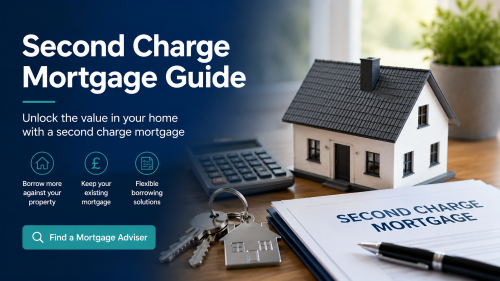
What Is a Second Charge Mortgage?
A second charge mortgage is an additional secured loan taken out alongside your existing mortgage. Your current mortgage remains the first charge on the property. The new loan becomes the second charge.
This means the first mortgage lender has the first claim on the property if it is sold because of missed repayments. The second charge lender is repaid after the first lender.
A second charge mortgage is also known as:
- A second mortgage
- A secured loan
- A homeowner’s loan
- Additional secured borrowing
It is different from remortgaging because it does not replace your current mortgage. Instead, it runs separately with its own rate, term and monthly repayment.
For tailored help, you can speak with second-charge mortgage brokers who understand secured lending and lenders’ criteria.
How Does a Second Charge Mortgage Work?
A lender looks at the value of your property, your existing mortgage balance, your income, your credit profile and your affordability.
For example:
- Property value: £300,000
- Current mortgage balance: £200,000
- Estimated equity: £100,000
You may be able to borrow against part of that equity, subject to lender criteria and affordability checks.
The second charge lender will usually need consent from your existing mortgage lender. Your adviser can explain how this works and what documents may be required.
Why Do Homeowners Use Second Charge Mortgages?
Homeowners often consider a second-charge mortgage when they need to raise money but do not want to disturb their existing mortgage.
Common reasons include:
- Home improvements
- Debt consolidation
- Business funding
- Tax bills
- School fees
- Property investment
- Family support
- Large one-off costs
A second charge mortgage may be helpful if your current mortgage rate is competitive, your early repayment charge is high, or your existing lender will not offer further borrowing.
If your borrowing is for short-term property finance, you may also want to compare this with bridging loan mortgage brokers. Bridging finance and second charge mortgages can serve different purposes, so advice is important.
When Could a Second Charge Mortgage Be Useful?
A second charge mortgage may be worth considering if:
- You want to keep your current mortgage deal
- You are tied into a fixed rate with early repayment charges
- You need to raise funds without replacing your main mortgage
- Your current lender will not offer further borrowing
- Your income is complex
- You are self-employed, a contractor or a company director
- Your credit profile has changed since your original mortgage
- You want to compare secured borrowing against remortgaging
If your circumstances are complex, you can review specialist mortgage and protection brokers who may be able to support cases involving non-standard income, credit issues or specialist lending.
Second Charge Mortgage vs Remortgage
A second charge mortgage and a remortgage can both help you raise money from property equity, but they work differently. A second charge mortgage keeps your current mortgage in place. You take an additional secured loan alongside it.
A remortgage replaces your current mortgage with a new one. This may include additional borrowing, but your entire mortgage balance transfers to the new deal.
| Question | Second charge mortgage | Remortgage |
|---|---|---|
| Does it replace your current mortgage? | No | Yes |
| Can you keep your existing rate? | Yes | No, the mortgage is replaced |
| Can it avoid early repayment charges? | Often, because the first mortgage stays in place | Not always |
| Will you have two payments? | Yes | Usually no |
| Can it suit complex income? | Sometimes, depending on lender criteria | Sometimes, depending on lender criteria |
| Can it cost more long term? | Yes, especially over a longer term | Yes, depending on the rate, term and fees |
If your current deal is ending soon, a remortgage may be more suitable. You can compare this with remortgage mortgage brokers before deciding.
When Might Remortgaging Be Better?
Remortgaging may be more suitable if:
- Your current fixed rate is ending soon
- You can secure a lower overall rate
- Your early repayment charge is low or no longer applies
- You want one mortgage payment instead of two
- Your credit profile and income fit mainstream lender criteria
- The total cost is lower than taking a separate second charge loan
The right choice depends on the full cost, not just the monthly payment. A broker can compare the interest rate, fees, term, early repayment charges and total amount repayable.
Second Charge Mortgage vs Further Advance
A further advance is extra borrowing from your existing mortgage lender. It may be worth checking before applying for a second-charge mortgage.
A further advance may be suitable if your current lender offers the amount you need on acceptable terms.
A second-charge mortgage may be considered if your current lender declines the additional borrowing, offers unsuitable terms, or cannot meet your timescale.
A mortgage adviser can compare both options alongside remortgaging.
Can You Get a Second Charge Mortgage With Bad Credit?
Some lenders may consider a second charge mortgage if you have adverse credit, but approval depends on your full circumstances.
Lenders may review:
- Missed payments
- Defaults
- County Court Judgments
- Debt management plans
- Current mortgage conduct
- Income and affordability
- Loan purpose
- Property equity
A second charge mortgage is not guaranteed. If credit history is a concern, you can also review adverse credit mortgage brokers for specialist support.
Can Self-Employed Applicants Get a Second Charge Mortgage?
Self-employed applicants may be able to get a second charge mortgage, subject to lender criteria and affordability.
Lenders may ask for:
- SA302s or tax calculations
- Tax year overviews
- Business accounts
- Bank statements
- Accountant details
- Evidence of current trading
Some lenders may consider company directors, contractors, freelancers and applicants with multiple income sources. The right adviser can help identify lenders that understand your income structure.
You can search for a suitable adviser through the Connect Experts mortgage adviser directory.
How Much Can You Borrow With a Second Charge Mortgage?
The amount you may be able to borrow depends on:
- Property value
- Current mortgage balance
- Available equity
- Income
- Credit history
- Existing debts
- Monthly commitments
- Loan purpose
- Lender criteria
- Affordability assessment
There is no single amount that applies to every borrower. Some lenders may offer larger loans where there is enough equity and affordability. Others may apply tighter limits.
A broker can help estimate realistic borrowing before you submit an application.
What Can a Second Charge Mortgage Be Used For?
Home Improvements
You may use a second charge mortgage to fund an extension, loft conversion, kitchen renovation, bathroom upgrade or energy-efficiency work.
Home improvements may support comfort, space or future sale appeal. However, property value increases are never guaranteed.
Business Funding
Some borrowers use secured borrowing for business purposes, such as equipment, cash flow or expansion.
Lenders will usually want to understand the purpose of the loan and may ask for supporting evidence.
Property Investment
A second charge mortgage may sometimes be used to raise funds for a buy-to-let deposit, renovation or portfolio purpose.
Landlords can also compare support from buy-to-let mortgage brokers if the borrowing relates to rental property.
Debt Consolidation
Some homeowners use a second charge mortgage to consolidate unsecured debts.
This may reduce monthly payments, but it can increase the total amount repaid if the borrowing is spread over a longer term.
You should take advice before securing previously unsecured debt against your home.
Large One-Off Costs
Some borrowers use a second charge mortgage for tax bills, school fees, family support or major life costs.
This should be reviewed carefully because the loan is secured against your home.
Benefits of a Second Charge Mortgage
You Can Keep Your Existing Mortgage
If your current mortgage rate is low, you may not want to replace it. A second charge mortgage can allow you to borrow more while leaving the first mortgage untouched.
You May Avoid Early Repayment Charges
If your fixed-rate mortgage has high early repayment charges, remortgaging could be expensive. A second charge mortgage may help you avoid breaking your current mortgage deal.
You Can Borrow Against Equity
If you have built up equity in your property, a second charge mortgage may give access to funds without selling the property.
It May Suit Complex Circumstances
Some second charge lenders may consider borrowers with complex income, self-employment or historic credit issues.
It Can Be Used for Different Purposes
A second charge mortgage can support home improvements, debt consolidation, business needs or major costs, subject to lender approval
Risks of a Second Charge Mortgage
A second charge mortgage is secured against your home, so it must be considered carefully.
Main risks include:
- Your home may be repossessed if you do not keep up repayments
- You will have two secured loan payments
- Interest rates may be higher than your main mortgage
- Fees can increase the total cost
- Longer terms can increase the total interest paid
- Debt consolidation can turn unsecured debt into secured debt
- Future remortgaging may become more complex
- Moving home may require the second charge mortgage to be repaid
Before applying, compare the total cost against remortgaging, a further advance, an unsecured loan or waiting until your current deal ends.
What Fees Should You Consider?
Second charge mortgage costs may include:
- Arrangement fees
- Broker fees
- Valuation fees
- Legal fees
- Lender fees
- Early repayment charges
- Exit fees
- Higher total interest if the loan is taken over a long term
Some fees may be added to the loan. This may reduce upfront costs, but it can increase the total amount repaid.
Always compare the annual percentage rate of charge, total amount repayable, monthly payment and term.
Documents You May Need
You may be asked for:
- Proof of identity
- Proof of address
- Payslips or income evidence
- Bank statements
- Mortgage statement
- Credit commitment details
- Property details
- Evidence of loan purpose
- Business accounts, if self-employed
- Tenancy details, if the property is buy-to-let
Requirements vary by lender and borrower profile.
Is a Second Charge Mortgage Right for You?
A second charge mortgage may be right for you if you need to raise funds, have enough equity and want to keep your current mortgage in place.
It may not be right if the total cost is too high, affordability is tight, your borrowing purpose is not essential, or another option is cheaper.
The key question is not simply “Can I borrow?” The better question is, “Is this the most suitable and cost-effective way to borrow based on my circumstances?”
A qualified adviser can help you compare your options.
How Connect Experts Helps You Find the Right Adviser
Connect Experts helps you search for mortgage advisers by location, language, gender and area of expertise.
This matters because second charge lending can involve detailed affordability checks, lender criteria, property equity and risk assessment. A suitable adviser can explain your options clearly and help you compare second charge mortgages with remortgaging, further advances and other forms of borrowing.
You can:
- Find second charge mortgage brokers
- Search all mortgage advisers
- Find a mortgage adviser near you
- Compare brokers by location
- Explore specialist mortgage brokers
Connect Experts is a mortgage adviser directory and matching platform. Advice is provided by the adviser or firm you choose.
People Also Browse These Guides
FAQ: Second Charge Mortgage Guide
| Question | Answer |
|---|---|
| What is a second charge mortgage? | A second charge mortgage is a separate loan secured against a property that already has a mortgage. It sits behind the first mortgage and is repaid separately. |
| Is a second charge mortgage the same as a secured loan? | Yes, the terms are often used in the same way. A second charge mortgage is a type of secured loan because it is secured against your property. |
| Does a second charge mortgage replace my current mortgage? | No. Your current mortgage stays in place. The second charge mortgage runs alongside it. |
| Why would I choose a second charge mortgage instead of remortgaging? | You may choose a second charge mortgage if you want to keep your current mortgage rate, avoid early repayment charges, or borrow when your current lender will not offer further funds. |
| Is remortgaging better than a second charge mortgage? | Not always. Remortgaging may be better if your current deal is ending or if the total cost is lower. A second charge mortgage may be better if replacing your current mortgage would be expensive. |
| Can I get a second charge mortgage with bad credit? | Some lenders may consider applicants with bad credit, but approval depends on the type of credit issue, when it happened, affordability, equity and lender criteria. |
| Can I get a second charge mortgage if I am self-employed? | Yes, some lenders consider self-employed applicants. You may need to provide tax calculations, tax year overviews, accounts, bank statements or other income evidence. |
| How much can I borrow with a second charge mortgage? | The amount depends on your property value, mortgage balance, equity, income, credit profile, commitments and lender criteria. |
| What can I use a second charge mortgage for? | Common uses include home improvements, debt consolidation, business funding, tax bills, school fees, property investment or large one-off costs. |
| Is a second charge mortgage risky? | Yes. It is secured against your property. If you do not keep up repayments, your home may be repossessed. |
| Do I need my current lender’s permission? | Usually, your existing mortgage lender needs to be notified and may need to give consent. Your adviser can explain the process. |
| Can I repay a second charge mortgage early? | Some lenders allow early repayment, but early repayment charges may apply. Always check the terms before proceeding. |
| Will a second charge mortgage affect my remortgage later? | It can. A future mortgage lender will consider the second charge loan as part of your overall commitments. The second charge lender may also need to be involved if you remortgage. |
| How long does a second charge mortgage take? | Timings vary. Straightforward cases may complete faster than complex cases, but delays can occur if valuations, lender consent, legal work or documents take longer. |
| How can Connect Experts help? | Connect Experts helps you find mortgage advisers who can explain second charge mortgage options, compare alternatives and guide you based on your circumstances. You can start by visiting second charge mortgage brokers or find mortgage advisers. |
Important Notice
Connect Experts is a mortgage adviser directory and matching platform. We are not a lender. Mortgage advice is provided by the adviser or firm you choose.
Your home may be repossessed if you do not keep up repayments on your mortgage or any loan secured on it.
Some forms of buy-to-let, commercial finance and business borrowing may not be regulated by the Financial Conduct Authority.
A fee may be payable for mortgage advice or arrangement. Your adviser will explain any fees before you choose to proceed.