

Second Charge Brokers – Find Second Charge Mortgage Brokers Near You
A second charge mortgage can help you borrow against your home equity. It sits behind your current mortgage. You keep your existing mortgage in place.
This can be useful if you do not want to remortgage. It may also help if your current mortgage rate is low. In some cases, it can avoid early repayment charges.
Second charge brokers compare lenders on your behalf. They look at your income, property value, current mortgage, credit profile, and loan purpose. Then they help you find a suitable secured loan option.
You can use a second charge mortgage for many legal purposes. Common reasons include home improvements, debt consolidation, business funding, tax bills, school fees, or a large purchase.
However, this type of borrowing is secured against your property. So, advice is important before you apply.
Your home may be repossessed if you do not keep up repayments on your mortgage or any loan secured on it.
What Is a Second Charge Mortgage?
A second charge mortgage is an extra loan secured against your property. It does not replace your current mortgage. Instead, it runs alongside it.
Your main mortgage is known as the first charge. The new secured loan becomes the second charge. This means your first mortgage lender has the first claim if the property is sold due to missed payments.
The amount you can borrow depends on several factors. These include your property value, mortgage balance, income, credit history, and lender criteria.
For example, your home may be worth £300,000. Your current mortgage may be £200,000. The remaining equity could support a second charge loan, subject to affordability and lender approval.
Why Use a Second Charge Broker?
A second charge broker can save time and reduce guesswork. They understand which lenders may consider your case. They can also explain the costs, risks, and alternatives.
This matters because lender criteria can vary. Some lenders may accept complex income. Others may consider credit issues, self-employed applicants, or unusual loan purposes.
A broker can also help you compare second charge mortgages with other options. These may include remortgaging, further advances, personal loans, or bridging finance.
You can also find a mortgage adviser near you through Connect Experts. This helps you search by location, language, gender, and area of expertise.
When Should You Consider a Second Charge Mortgage?
A second charge mortgage may be worth considering when remortgaging is not ideal.
You may want to keep a low fixed rate. You may face high early repayment charges. Your income may have changed since your first mortgage started. Or, your current lender may not offer the extra borrowing you need.
It may also help if you need a larger loan than an unsecured lender can offer. Because the loan is secured, rates may be lower than some unsecured borrowing. However, this depends on your circumstances.
A second charge mortgage should only be taken after careful advice. The loan adds another monthly payment. It also increases the debt secured against your home.
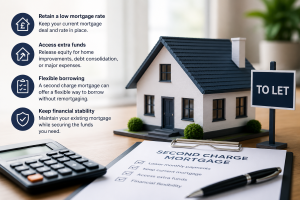
Common Reasons for Taking a Second Charge Mortgage
Home Improvements
Many homeowners use second charge borrowing to fund renovations. This may include extensions, loft conversions, kitchens, bathrooms, or energy upgrades.
Home improvements may increase comfort and space. In some cases, they may also support future property value. However, this is never guaranteed.
Debt Consolidation
Some borrowers use a second charge mortgage to combine debts. This may reduce monthly payments. Yet it can also increase the total amount paid over time.
Debt consolidation must be reviewed carefully. You may be turning unsecured debt into debt secured against your home.
Business Funding
Some homeowners use secured borrowing for business needs. This may include cash flow, equipment, expansion, or investment.
Lenders will want to understand the purpose of the loan. They may also ask for evidence and income details.
Large One-Off Costs
A second charge mortgage may help with major costs. These can include school fees, weddings, tax bills, or family support.
A broker can help check whether this is suitable. They can also compare the option against other forms of borrowing.
Second Charge Mortgage vs Remortgage
A remortgage replaces your current mortgage with a new deal. A second charge mortgage keeps your current mortgage in place.
Remortgaging may work well if your current deal is ending. It may also help if better rates are available. However, it may not suit every borrower.
A second charge mortgage may be better if your current rate is low. It may also help if early repayment charges are high. In addition, it can be useful when your current lender will not offer further borrowing.
The right choice depends on cost, risk, flexibility, and your long-term plans. A broker can compare both routes before you decide.
Second Charge Mortgage vs Remortgage
A remortgage replaces your current mortgage with a new deal. A second charge mortgage keeps your current mortgage in place.
Remortgaging may work well if your current deal is ending. It may also help if better rates are available. However, it may not suit every borrower.
A second charge mortgage may be better if your current rate is low. It may also help if early repayment charges are high. In addition, it can be useful when your current lender will not offer further borrowing.
The right choice depends on cost, risk, flexibility, and your long-term plans. A broker can compare both routes before you decide.
Who Can Apply for a Second Charge Mortgage?
You usually need to own a property with enough equity. You also need an existing mortgage. Lenders will assess your income, credit history, spending, and current commitments.
Second charge lenders may consider employed, self-employed, contractor, and company director income. Some may also accept applicants with credit issues.
Every lender has different rules. So, a broker can help identify realistic options before you apply.
Who Can Apply for a Second Charge Mortgage?
You usually need to own a property with enough equity. You also need an existing mortgage. Lenders will assess your income, credit history, spending, and current commitments.
Second charge lenders may consider employed, self-employed, contractor, and company director income. Some may also accept applicants with credit issues.
Every lender has different rules. So, a broker can help identify realistic options before you apply.
Costs and Fees to Consider
Second charge mortgages can include several costs. These may include arrangement, broker, valuation, and legal fees.
Some costs may be added to the loan. This can reduce upfront payments. However, it may increase the total amount repaid.
Interest rates can also vary. They depend on credit profile, loan size, equity, income, property type, and lender criteria.
Always compare the total cost. Do not judge the deal by the monthly payment alone.
Risks of a Second Charge Mortgage
A second charge mortgage is secured against your home. This means missed payments can put your property at risk.
The loan also increases your total secured debt. If property values fall, your equity may be reduced. This could affect future remortgage options.
Debt consolidation can carry extra risks. Lower monthly payments may look attractive. Yet a longer term can increase the total interest paid.
Good advice should explain both the benefits and the risks. It should also compare suitable alternatives.
Second Charge Mortgage vs Remortgage vs Further Advance vs Personal Loan
Choosing the right borrowing option depends on your mortgage rate, equity, income, credit profile, and long-term plans. A second charge mortgage may suit some homeowners, but it is not the only route.
The table below compares common ways to raise extra funds.
| Borrowing option | How it works | When it may suit you | Key points to consider |
|---|---|---|---|
| Second charge mortgage | A separate loan secured against your property. It runs alongside your current mortgage. | You want to keep your current mortgage deal. This may help if you have a low rate or high early repayment charges. | Your home is used as security. You will have another monthly payment. Total secured borrowing will increase. |
| Remortgage | You replace your current mortgage with a new mortgage. Extra borrowing may be added to the new loan. | Your current deal is ending. You want to review your rate and raise extra funds at the same time. | Early repayment charges may apply. A new rate may be higher than your current deal. |
| Further advance | You borrow more from your existing mortgage lender. It is added as extra borrowing with that lender. | Your current lender offers a suitable rate and agrees to the extra borrowing. | Your choice is limited to your current lender. Their criteria may not fit your needs. |
| Personal loan | You borrow without securing the loan against your home. The loan is usually repaid over a shorter term. | You need a smaller amount and want unsecured borrowing. | Rates may be higher. Loan amounts may be lower. Monthly payments can be higher over a shorter term. |
A broker can help compare these options before you apply. This can make it easier to understand the full cost, monthly payments, lender criteria, and risks.
A second charge mortgage should only be considered after advice. Your home may be repossessed if you do not keep up repayments on your mortgage or any loan secured on it.
Choosing the Right Second Charge Broker
The right broker should understand secured lending. They should explain your options clearly. They should also discuss risks before you apply.
Look for a broker who can compare a wide range of lenders. They should also understand your income type, credit profile, property type, and loan purpose.
Local knowledge can also help. A broker near you may understand regional property values and local borrower needs.
Language and communication style matter too. You may prefer an adviser who speaks your first language. You may also want phone, video, or face-to-face support.
Browse Our Second Charge Brokers
The advisers shown below may be able to support clients with second-charge mortgages, depending on availability and specialism. Review each profile before making contact to choose an adviser with experience relevant to your needs.







Other Topics of Interest
FAQ: Second Charge Brokers
| Question | Answer |
|---|---|
| What is a second charge mortgage? | A second charge mortgage is an extra loan secured against your property. It runs alongside your current mortgage. |
| Is a second charge mortgage the same as a secured loan? | Yes, it is often called a secured loan. It is secured against your home. |
| Why should I use a second charge broker? | A broker can compare lenders and explain your options. They can also help you understand costs, risks, and eligibility. |
| Can I get a second charge mortgage with bad credit? | Some lenders may consider applicants with credit issues. Approval depends on your full situation. |
| Can I get a second charge mortgage if I am self-employed? | Yes, some lenders accept self-employed income. They may ask for accounts, tax calculations, or bank statements. |
| How much can I borrow with a second charge mortgage? | This depends on your equity, income, credit history, and lender criteria. |
| Will my current mortgage change? | No, your current mortgage usually stays in place. The second charge mortgage is added separately. |
| Do I need to tell my current lender? | Yes, your first mortgage lender will usually be notified. Your broker can explain how this works. |
| What can I use a second charge mortgage for? | You may use it for many legal purposes. These include home improvements, debt consolidation, business funding, or major costs. |
| Is a second charge mortgage risky? | Yes, it carries risk because your home is used as security. Missed payments could put your property at risk. |
| Is remortgaging better than a second charge mortgage? | Not always. It depends on your current rate, fees, early repayment charges, and borrowing needs. |
| How long does a second charge mortgage take? | Many cases complete within a few weeks. Complex cases may take longer. |
| Can I repay a second charge mortgage early? | Some lenders allow early repayment. Early repayment charges may apply, so check the terms first. |
| Are second charge brokers regulated? | Mortgage advice and secured lending are regulated activities in the UK. Always use an authorised adviser or firm. |
Important Information
Connect Experts is a mortgage adviser directory and matching platform. We do not provide mortgage advice directly. Advice is provided by the adviser or company you choose.
We are an FCA-approved broker network and not a lender. Advisers may have access to a range of lenders. If a lender is introduced, commission may be received after completion. The commission amount may vary by lender and product, but it should not affect the amount you pay under your credit agreement.
A fee may be payable for arranging your mortgage. Your adviser will confirm the amount before you choose to proceed.
Your home or property may be repossessed if you do not keep up repayments on your mortgage or loans secured on it.