
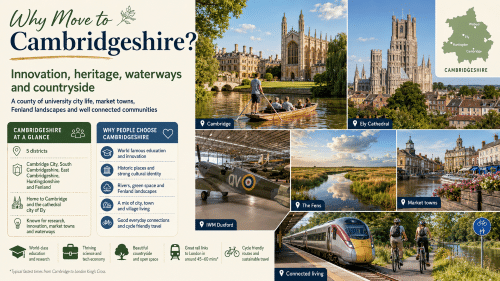
Why move to Cambridgeshire? Because where you live can shape far more than your address. It can affect your work, your commute, the schools your family can access, the type of home you can afford, and the pace of everyday life.
Cambridgeshire offers several very different versions of that future.
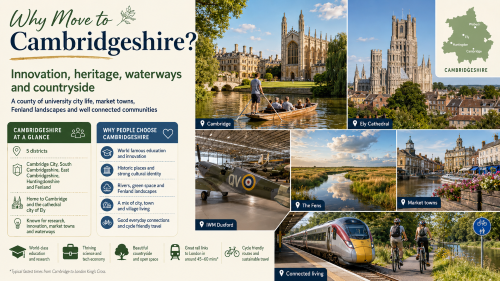
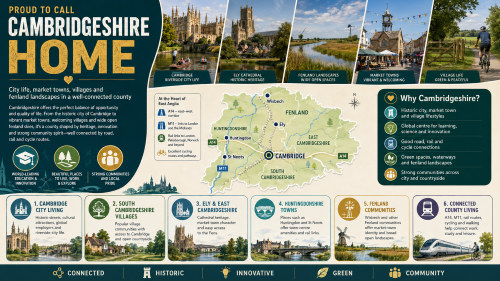
Cambridge is internationally known for education, science and technology. Ely offers historic city living on a smaller scale. Market towns such as St Ives, Huntingdon, March and Wisbech bring a different balance of community, space and value, while South Cambridgeshire contains sought-after villages with strong connections to Cambridge.
The county also stretches into the Fens, where landscape, housing and daily life can feel very different from Greater Cambridge.
That variety is one of the strongest reasons to consider Cambridgeshire. The question is not simply whether the county works for you. It is which part of Cambridgeshire best fits the life you want to build.
When that decision starts becoming a mortgage question, you can explore Mortgage Brokers in Cambridgeshire through the Connect Experts location pages.
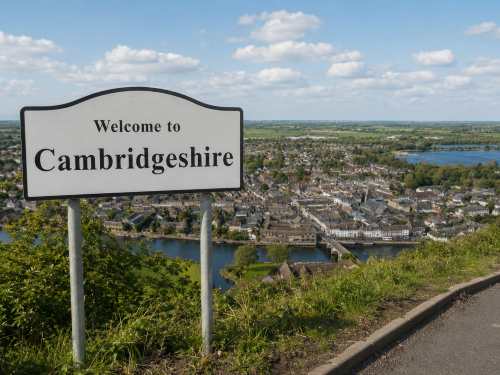
City, Market Town or Village: Cambridgeshire Gives You Choice
Cambridgeshire isn’t just one type of place.
Cambridge offers a compact city centre, university colleges, established residential areas, modern developments and easy access to major research and employment sites.
Ely provides a smaller cathedral city setting with rail connections, period housing and newer development.
Huntingdon and St Ives can appeal to people looking for market-town living with access towards Cambridge and the wider region.
March and Wisbech offer a different property market in the county’s north, with generally lower average housing costs than Cambridge and South Cambridgeshire.
South Cambridgeshire also contains villages where buyers may prioritise access to Cambridge, schools, green space and a quieter setting.
This matters because two households moving to Cambridgeshire can have completely different priorities.
One may want to cycle into central Cambridge.
Another may prefer a larger home outside the city.
A third may be relocating for work but want more space and a slower pace.
The county gives buyers several ways to make that choice.
Housing in Cambridgeshire: Very Different Markets Within One County
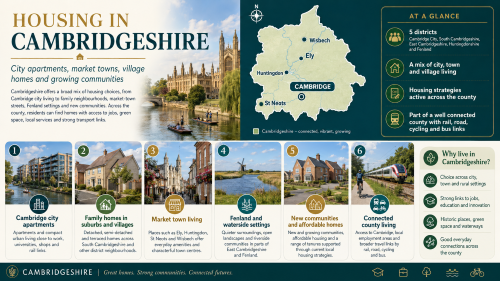
One of the most important reasons to research why to move to Cambridgeshire is that housing costs vary considerably depending on where you look.
ONS data shows that the average house price in Cambridge was £475,000 in July 2026. First-time buyers in Cambridge paid an average of £398,000, while homes bought with a mortgage averaged £470,000.
In South Cambridgeshire, the average house price was £440,000 in July 2026, with first-time buyers paying £349,000 on average.
By comparison, East Cambridgeshire recorded an average house price of £346,000 in July 2026, with first-time buyers paying an average of £301,000. Office for National Statistics
These figures show why a single county average can be misleading.
A buyer may be comparing:
- a flat or terraced home in Cambridge;
- a family house in a South Cambridgeshire village;
- a period property in Ely;
- a market-town home in Huntingdon or St Ives;
- a larger property further north in the county.
Property type can also influence lender assessment.
Older buildings, listed homes, converted properties, rural homes, leasehold flats, new builds, and properties close to waterways may all require different underwriting or valuation considerations.
Where you buy in Cambridgeshire can therefore influence both the price and the mortgage options available.
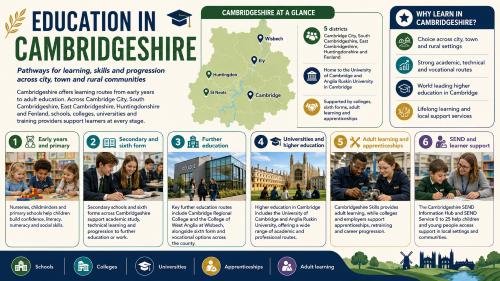
Education in Cambridgeshire Can Shape a Family Move
Education is one of the strongest reasons some families consider Cambridgeshire.
The county is home to the University of Cambridge and has a broad mix of state schools, sixth-form colleges and independent education.
For some households, the move may be influenced by access to schools in or around Cambridge, Ely, Huntingdon or other established communities.
Where independent education forms part of the plan, school fees can affect disposable income and longer-term borrowing decisions.
That does not mean education should dominate a mortgage application, but lenders may include regular school costs in their affordability assessment.
Families may therefore want to consider:
- school location;
- journey times;
- childcare;
- transport arrangements;
- school fees where applicable;
- whether both parents need to commute;
- how those costs may change over time.
For households planning independent education alongside a home move, Education Finance may also be relevant to the wider financial picture.
The key point is simple: choosing a home and choosing how a family will live in that home are often part of the same decision.
Transport and Commuting Across Cambridgeshire
Cambridgeshire works well for people whose work is spread across several locations. Cambridge is connected by rail towards London, while Ely, Huntingdon and other locations provide wider regional connections.
The M11 provides access south from Cambridge towards London, while the A14 is a major east-west route across the county.
For some people, commuting into Cambridge is just as important as travelling out of it.
Major employment sites are spread across Greater Cambridge and the surrounding area.
For example, someone working near the Cambridge Biomedical Campus may prioritise a very different location from someone working near the Science Park, in the city centre, or further west.
Cambridgeshire is also known for its cycling culture, particularly in and around Cambridge.
The official Visit Cambridge site highlights the city’s extensive cycle network and the ability to explore both the city and surrounding areas by bicycle.
For anyone considering a move, it is worth thinking beyond the distance on a map.
The more useful questions are:
- How long will the daily journey really take?
- Is rail practical?
- Can part of the commute be cycled?
- Will parking be required?
- Could hybrid working change the locations you consider?
A cheaper property further away may not always feel cheaper once time and travel costs are included.
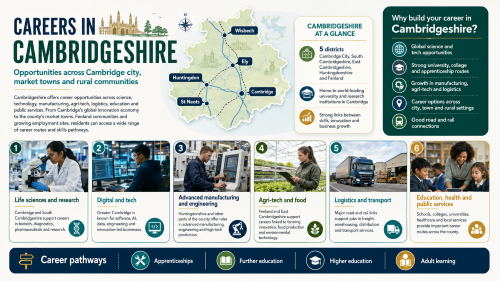
Employment, Science and Technology Are Major Reasons to Move
Cambridgeshire has a particularly distinctive employment profile.
Cambridge and the surrounding area have internationally significant clusters in:
- life sciences;
- healthcare;
- digital technology;
- advanced manufacturing;
- agri-tech;
- green technology;
- defence;
- research and development.
Cambridgeshire County Council describes Greater Cambridge as internationally competitive in science and technology, with specialist clusters spanning life sciences, agriculture, advanced manufacturing, digital technologies, defence and clean technologies.
The Cambridgeshire Chamber of Commerce also describes the area as home to major activity in life sciences, digital technology, green technology, advanced manufacturing and agri-tech.
That employment base creates several different types of mortgage applicants.
Some borrowers will have conventional salaries.
Others may have:
- bonuses;
- share awards;
- restricted stock;
- consultancy income;
- company-director income;
- retained profits;
- contract income;
- income from several sources.
Those situations can make lender selection more important.
For people relocating for work, a suitable mortgage adviser should understand both the borrowing requirements and how the income is structured.
Cambridge Is Famous, but Cambridgeshire Is Much Bigger
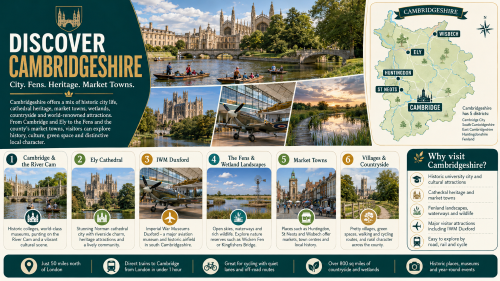
It is easy to think of Cambridgeshire as Cambridge alone.
That misses much of what the county offers.
Beyond the city, Cambridgeshire includes waterways, fenland landscapes, market towns, villages, nature reserves and historic centres.
Visit Cambridge highlights the wider county for its waterways, countryside, market towns, villages, museums, cycling routes and nature.
For everyday life, this can create very different options.
Someone might choose Cambridge for walkability and access to work.
Another household may choose Ely for a smaller city environment.
Others may prefer St Ives, Huntingdon or a South Cambridgeshire village.
Further north, areas around March and Wisbech offer another style of living altogether.
The strongest relocation decision is often not about choosing the best-known place.
It is about choosing the place where work, housing, travel and lifestyle fit together most naturally.
Eating Out, Culture and Everyday Life
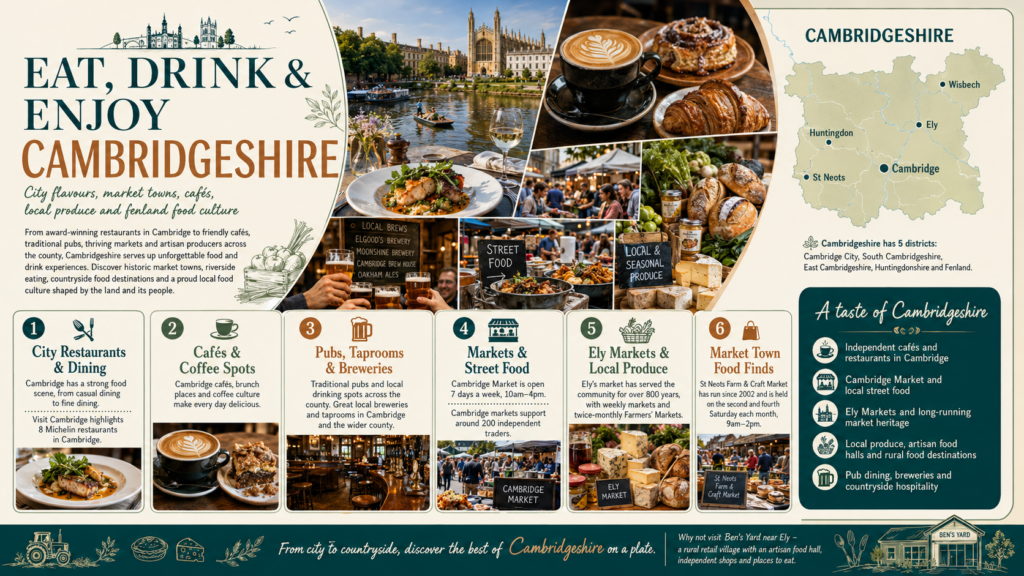
Cambridge provides the largest concentration of restaurants, cafés, pubs and cultural venues in the county, but the wider area has its own local centres.
Ely, St Ives, Huntingdon and other towns have established high streets and independent businesses.
The county also has strong links to agriculture and food production, particularly across its rural and fenland areas.
Cambridgeshire County Council notes that the county plays a nationally important role in food production and contains a significant proportion of England’s Grade 1 agricultural land.
That agricultural character is part of the wider county identity.
For someone deciding whether to move, these details may seem less important than house prices or commuting.
Yet they shape everyday life after the mortgage has completed.
The place where you shop, walk, eat, meet people and spend weekends often becomes just as important as the property itself.
Mortgage Considerations When Moving to Cambridgeshire
A move becomes more practical when the property search and mortgage planning happen together.
Cambridgeshire contains both higher-value and more accessible housing markets.
That can affect:
- deposit requirements;
- loan-to-value;
- affordability;
- mortgage size;
- property valuation;
- lender criteria.
The mortgage needs of someone buying in central Cambridge may be very different from those of a buyer in March or Wisbech.
Likewise, a buyer purchasing an older village property may face different lender questions from someone buying a modern city apartment.
If you are comparing locations, a Find a Mortgage Adviser by Location search can help identify advisers who cover the part of Cambridgeshire you are considering.
The useful question is not simply:
“How much can I borrow?”
It is:
“What level of borrowing still allows the rest of my life to work?”
That is particularly important where the move involves higher commuting costs, childcare, school fees or a larger property.
Higher-Value Homes and Complex Income in Cambridgeshire
Cambridge and parts of South Cambridgeshire contain significantly higher-value homes.
The ONS recorded an average price of £475,000 in Cambridge and £440,000 in South Cambridgeshire in July 2026. Detached homes in Cambridge averaged substantially more than the overall city figure.
Larger borrowing requirements can sometimes coincide with more complex income.
This may include:
- bonuses;
- investment income;
- restricted shares;
- retained company profits;
- partnership income;
- several income sources.
In these circumstances, the most relevant adviser may not simply be the nearest one.
Experience with High Net Worth Mortgage Brokers may be useful where borrowing requirements, assets or income fall outside straightforward lender criteria.
This link is particularly relevant to Cambridgeshire because of the concentration of higher-value property and specialist employment around Cambridge and its surrounding villages.

Later-Life Moves in Cambridgeshire

Not everyone moving to Cambridgeshire is moving for work or schools.
Some households may be downsizing, moving closer to family or planning for retirement.
Ely, market towns and rural communities can appeal to people looking for a different pace of life while remaining connected to larger centres.
For older homeowners, the financial questions may include:
- whether to sell and downsize;
- whether to retain an existing mortgage;
- how retirement income affects borrowing;
- whether property wealth should form part of longer-term planning.
Where equity release is being considered, it should be treated as a separate specialist decision rather than an ordinary mortgage.
Homeowners can explore Equity Release Advisers in Cambridgeshire where later-life borrowing is relevant.
Why Cambridgeshire Can Work for Different Stages of Life
One reason why move to Cambridgeshire remains a useful question is that the answer can change with age and circumstances.
A graduate may be drawn by Cambridge’s research and technology sector.
A first-time buyer may look beyond Cambridge towards Ely, Huntingdon or other areas for different housing options.
A growing family may prioritise schools, space and village life.
A senior professional may be looking for a larger home within reach of Cambridge.
Someone approaching retirement may want a smaller city, market town or rural community.
Cambridgeshire does not offer one single lifestyle.
Its strength is that people can often change where they live within the county as their priorities change, without necessarily giving up access to the employment, education and transport links that brought them there in the first place.
Browse Our Advisers in Cambridgeshire





People who found this page helpful also explored these related topics:

Mortgage Broker in Route: Clear Expert Mortgage Advice

Mortgage Broker in Grantchester: Smart CB3 Expert Advice

Mortgage Broker in Trumpington: HNW Mortgage Advice

Mortgage Broker in Great Shelford: Expert HNW Advice

Mortgage Broker in Milton: Expert Advice Near Cambridge

Mortgage Broker in Chesterton: Trusted Expert Advice UK
FAQs: Why Move to Cambridgeshire?
Why do people move to Cambridgeshire?
People move to Cambridgeshire for employment, education, transport links and its range of housing environments. Cambridge attracts people working in science, technology, healthcare and education, while towns and villages across the wider county offer different combinations of space, value and lifestyle.
Is Cambridgeshire expensive to live in?
Housing costs vary considerably. Cambridge and South Cambridgeshire are among the county’s more expensive areas, while other districts offer lower average prices. In July 2026, the average house price was £475,000 in Cambridge, £440,000 in South Cambridgeshire and £346,000 in East Cambridgeshire.
Where should I live if I work in Cambridge?
That depends on budget, commuting preference and property type. Some people choose Cambridge itself, while others consider villages in South Cambridgeshire, Ely, St Ives, Huntingdon, or other locations with suitable road or rail access. The best choice balances travel time with housing costs and everyday life.
Is Cambridgeshire suitable for families?
Cambridgeshire suits families looking for schools, green space, established towns, and employment opportunities. Families should compare school journeys, childcare, commuting costs and housing budgets before choosing an area, because these vary significantly across the county.
How can I find a mortgage adviser in Cambridgeshire?
Use the Connect Experts directory to compare mortgage advisers by location, experience, and area of specialism. A suitable adviser can consider your income, deposit, property type, borrowing requirements, and lender criteria before you apply.