
Why Move to Lincolnshire?
Lincolnshire offers space, history, coast, countryside, and market-town living. It is one of England’s most distinctive counties. It is known for Lincoln Cathedral, Lincoln Castle, the Lincolnshire Wolds, seaside towns, farming, local food, and RAF heritage.
The county gives buyers a wide choice of places to live. Lincoln offers city life and historic streets. Stamford, Grantham, Louth, Sleaford, Boston, Spalding, Gainsborough, Skegness, Mablethorpe, and Market Rasen all offer different lifestyles.
Lincolnshire is also famous for its food and farming. Greater Lincolnshire has a strong agri-food sector, with a major role in farming, food manufacturing, storage, and distribution. The area also has strengths in manufacturing, visitor economy, energy, health and care, ports and logistics, and defence.
For lifestyle, Lincolnshire offers a rare mix. Residents can enjoy Lincoln’s historic quarter, the Lincolnshire Wolds National Landscape, traditional seaside resorts, market towns, country walks, and wide rural views. Visit Lincoln describes the city as home to Lincoln Cathedral, Lincoln Castle, Steep Hill, independent shops, food, culture, and events.
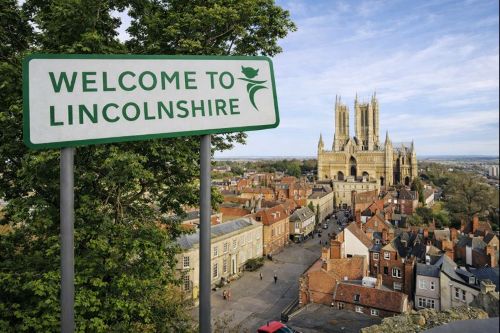
Why Move to Lincolnshire - What to Expect
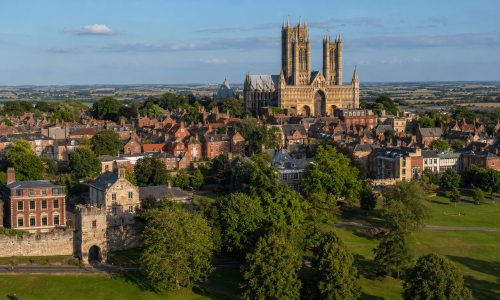
Lincolnshire offers more space than many urban areas. It suits families, first-time buyers, commuters, retirees, students, and landlords.
The county has several clear lifestyle zones. Lincoln offers a cathedral city setting. Stamford and Louth offer heritage streets and independent shops. Grantham and Newark routes support commuters. Boston, Spalding, and Holbeach sit close to the agricultural heartland. Skegness, Mablethorpe, Sutton-on-Sea, and Cleethorpes offer coastal living.
The Lincolnshire Wolds add a strong countryside appeal. The official National Landscape site describes the Wolds as an Area of Outstanding Natural Beauty, with rolling hills, hidden valleys, gentle streams, villages, woodland, grassland, rare flowers, and wildlife.
Meanwhile, the Lincolnshire coast gives residents access to beaches and seaside towns. Visit Lincs Coast describes the coast as stretching from the Humber to The Wash, with seaside towns, traditional attractions, and natural beaches.
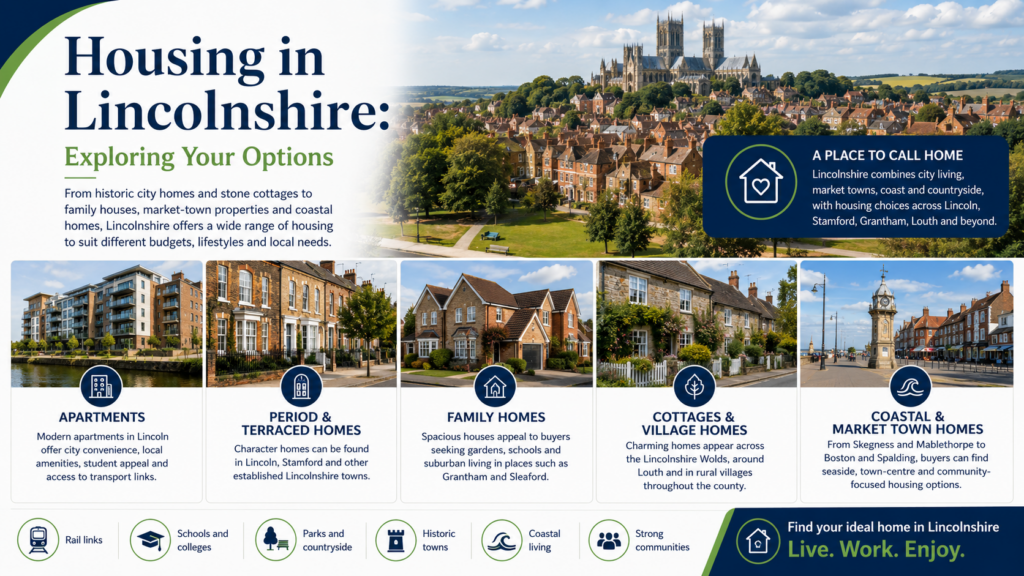
Housing in Lincolnshire: Exploring Your Options
Lincolnshire has a broad property market. Buyers can find city apartments, terraced homes, period houses, family semis, detached homes, cottages, farmhouses, new-build estates, and coastal properties.
Prices vary by town and district. In February 2026, the average house price was £185,000 in Lincoln. It was £217,000 in East Lindsey, £208,000 in West Lindsey, £242,000 in North Kesteven, and £253,000 in South Kesteven. These figures show the range across city, coast, villages, and commuter areas.
Rents also vary. In March 2026, the average private rent was £946 in Lincoln, £678 in East Lindsey, £857 in North Kesteven, and £835 in South Kesteven. This can help landlords and tenants compare local demand.
Different areas suit different buyers. Lincoln may suit students, professionals, and city buyers. Stamford and Louth may appeal to buyers who want character homes. Grantham works well for rail commuters. Boston, Spalding, and Holbeach may suit buyers linked to food, farming, and logistics. Coastal towns may appeal to downsizers, holiday-let investors, and lifestyle buyers.
A mortgage adviser can help you check lender rules. This matters for older homes, rural homes, non-standard construction, coastal properties, and buy-to-let cases.
Education in Lincolnshire: A Hub of Learning
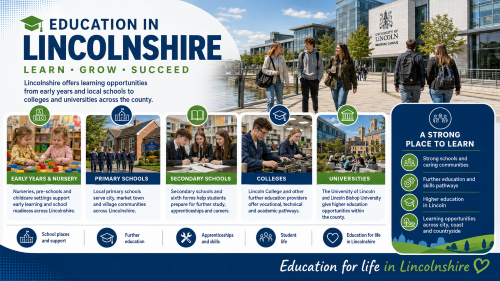
Lincolnshire supports learning from early years to university level. Families can access nurseries, primary schools, secondary schools, special schools, colleges, and higher education.
Lincolnshire County Council provides local school and education information. This includes admissions, school transport, school meals, SEND support, childcare, term dates, and school attendance guidance.
The county also has further education options. Lincoln College offers career-focused courses from its Lincoln campus. It serves school leavers, adults, apprentices, and professional learners.
Higher education is also available in Lincoln. The University of Lincoln has campuses at Brayford, Riseholme Park, and Holbeach. Lincoln Bishop University is based in the historic heart of Lincoln and has educated students for more than 160 years.
This makes Lincolnshire practical for families and students. It also supports people who want to study close to home.
Why Move to Lincolnshire - Employment Opportunities
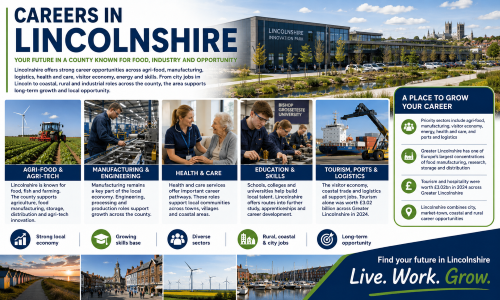
Lincolnshire has a varied economy. It is known for agriculture, food production, tourism, manufacturing, logistics, defence, and energy.
Agri-food is one of the county’s biggest strengths. Greater Lincolnshire has an international reputation for food, fish, farming, agri-tech, and supply chains. It also has one of Europe’s largest concentrations of food manufacturing, research, storage, and distribution areas.
The wider economy has other strong sectors too. Greater Lincolnshire LEP lists agri-food, manufacturing, visitor economy, energy, health and care, ports and logistics, and defence and security as priority sectors.
Lincolnshire County Council also highlights agriculture and horticulture as important to the county’s economy and to national food security. This supports jobs in farming, food production, logistics, engineering, machinery, research, and rural services.
Tourism also matters. Lincoln Cathedral, Lincoln Castle, the Wolds, seaside resorts, aviation heritage, market towns, and local food all support visitor jobs. Visit Lincolnshire’s tourism business site says the visitor economy was worth £3.02 billion in Greater Lincolnshire in 2024.
Why Move to Lincolnshire - Transport Links
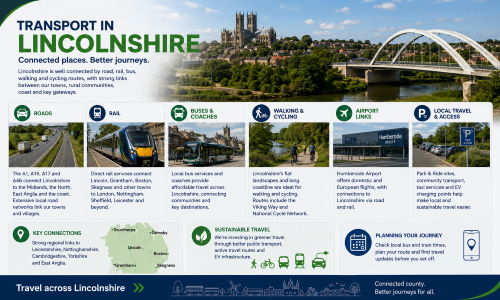
Lincolnshire is a large county, so travel needs vary by location. Some towns have strong rail links. Rural areas often need more car use.
Lincolnshire County Council provides road and transport information across the county. This includes roads, parking, public transport, bus passes, highways, roadworks, and active travel.
Rail can be useful in key towns. Lincoln, Grantham, Newark, Sleaford, Boston, Spalding, Skegness, Market Rasen, Gainsborough, and Stamford connect residents to local and regional routes. Grantham is a strong choice for London rail access, due to its position on the East Coast Main Line.
Bus services also support local travel. LincsBus is Lincolnshire County Council’s transport information platform. It helps users plan journeys, check timetables, use Callconnect, and find bus information.
Road links depend on the area. Important routes include the A1 near Grantham and Stamford, the A46 near Lincoln, the A15, A16, A17, A52, and A158. These routes link towns, villages, coastal areas, and employment sites.
Exploring Attractions in Lincolnshire
Lincolnshire has strong heritage, countryside, coast, and family attractions. This gives residents plenty to explore close to home.
Lincoln is one of the county’s main draws. Visit Lincoln says the city is home to Lincoln Cathedral, Lincoln Castle, Steep Hill, cobbled streets, independent shops, food, culture, and events.
Lincoln Castle is a major historic site. It houses one of only four surviving original copies of Magna Carta. It is also the only place in the world where an original 1215 Magna Carta and 1217 Charter of the Forest can be seen side by side.
Lincoln Cathedral is another major landmark. Visit Lincoln says it has stood over the city since 1092 and was once the tallest building in the world.
Beyond Lincoln, the county offers the Lincolnshire Wolds, Belton House, Tattershall Castle, Belvoir Castle, Doddington Hall, aviation museums, nature reserves, and coastal days out. The Lincolnshire Coast includes traditional seaside resorts such as Skegness, Cleethorpes, and Mablethorpe, along with quieter natural coast areas.
Dining Out: The Best Places to Dine in Lincolnshire
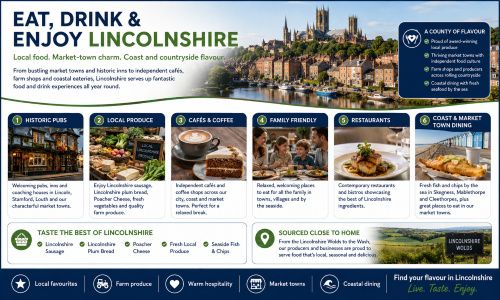
Lincolnshire has a strong food identity. It is known for local produce, farm shops, cafés, pubs, restaurants, and traditional county specialities.
The county is famous for Lincolnshire sausage. It is also known for Lincolnshire Plum Bread, Poacher Cheese, haslet, local meats, fish, vegetables, and farm produce. Visit Lincoln says Lincolnshire Plum Bread was first created in 1901 by Lincolnshire baker Charles Myers. It is often served with cheese or toasted with butter.
Local food is closely linked to the landscape. Visit Lincolnshire notes that the county is famous for food and drink because so much produce is homegrown and reared there.
Dining choices vary by area. Lincoln offers restaurants, cafés, pubs, and independent food spots around the Bailgate, Steep Hill, Brayford Waterfront, and city centre. Louth, Stamford, Woodhall Spa, Grantham, Boston, and Spalding also offer cafés, pubs, restaurants, markets, and local shops.
The coast adds another food angle. Skegness, Mablethorpe, Cleethorpes, Sutton on Sea, and Chapel St Leonards offer fish and chips, cafés, ice cream, pubs, and seaside dining.
Mortgage Brokers in Lincolnshire: Securing a Home
Buying in Lincolnshire can involve different property types. Your mortgage route will depend on income, deposit, credit profile, property type, location, and future plans.
A local mortgage broker can help you compare lenders. This can be useful if you are buying your first home, remortgaging, moving house, buying a rural property, or purchasing a buy-to-let.
Lincolnshire has several property markets. A city flat in Lincoln may involve different checks from a village cottage near Louth. A coastal property near Skegness may also raise questions for different lenders. Meanwhile, rural homes near Grantham, Horncastle, Market Rasen, or the Wolds may need extra checks on access, acreage, construction, or outbuildings.
Connect Experts already has a Lincolnshire mortgage broker page. It lists advisers for Lincolnshire and states that the directory helps people find FCA-approved mortgage support across Lincoln, Boston, Skegness, and beyond.

Why Lincolnshire is the Perfect Place to Call Home
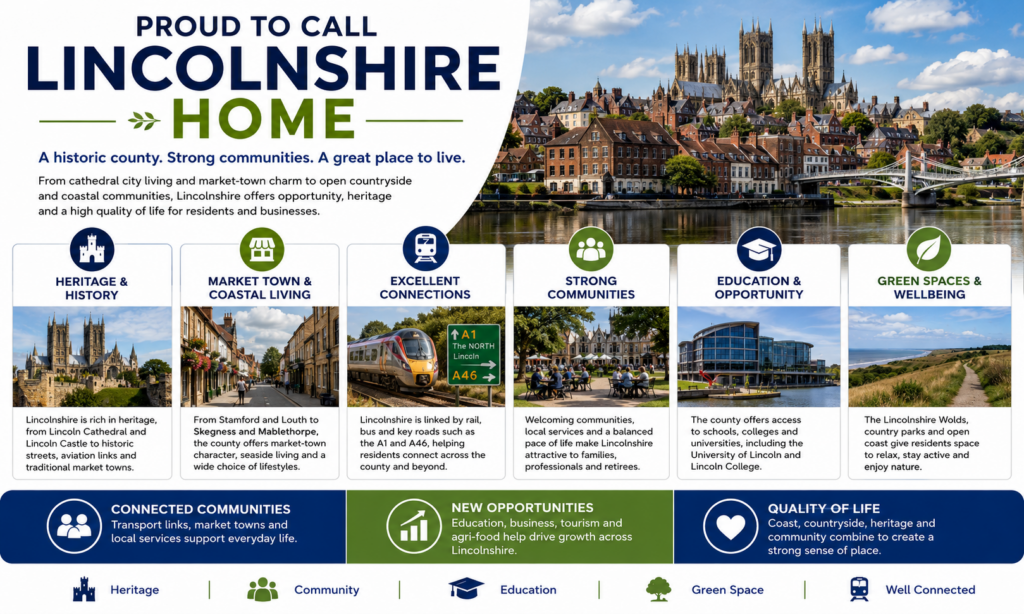
Lincolnshire offers space, history, coast, countryside, and community. It also gives buyers a wide range of homes to choose from.
The county suits many lifestyles. Families can look for schools, parks, the coast, and space. First-time buyers can compare towns with different budgets. Commuters may prefer Lincoln, Grantham, Stamford, Newark, or the border areas. Retirees may prefer market towns, villages, or coastal communities.
Lincolnshire also has a strong sense of place. Lincoln Cathedral, Lincoln Castle, the Magna Carta, the Wolds, farming, food, RAF heritage, and seaside towns all shape its identity.
For many movers, the main appeal is balance. Lincolnshire offers more space than many cities. Yet it still provides education, employment, transport, culture, coast, and countryside.
Browse Our Advisers in Lincolnshire




People who found this page helpful also explored these related topics:
If you are Looking for a Mortgage Network
“Hi, I’m Liz Syms, Chief Executive Officer and founder of Connect Experts, Connect Mortgages, and Connect for Intermediaries.
If you are a UK mortgage broker based in Lincolnshire, joining our mortgage network can help you increase your visibility to clients actively searching for trusted, FCA-authorised advice. Brokers featured on our Lincolnshire mortgage brokers page are matched with clients who value clear communication and professional guidance, including those who prefer advice in a specific language.
Our platform is designed to support compliant, client-focused advisers and help you connect with the right audience across Lincolnshire.”
Choose the option that suits you best:
Option 1: Schedule a call with our Business Recruitment Manager
Option 2: Complete our contact form
Option 3: Call us

Why Move to Lincolnshire - What to Expect
Why Move to Lincolnshire
| Question | Answer |
|---|---|
| Why is Lincolnshire a great place to live? | Lincolnshire offers a blend of countryside charm, affordable housing, and a slower pace of life compared to larger UK cities. You’ll find beautiful coastlines, market towns, and a strong sense of community — all within easy reach of Nottingham, Sheffield, and Peterborough. |
| Are house prices in Lincolnshire affordable? | Yes. Property prices in Lincolnshire are significantly below the national average, making it an ideal area for first-time buyers, families, and retirees. You can get more space for your money without sacrificing access to good schools and transport links. |
| What are the best areas to live in Lincolnshire? | Popular locations include Lincoln, Stamford, Grantham, and Louth. Each offers unique appeal — from Lincoln’s historic cathedral quarter to Stamford’s Georgian architecture and thriving local culture. |
| Is Lincolnshire good for families? | Absolutely. Lincolnshire boasts excellent schools, low crime rates, and open spaces perfect for outdoor living. The county’s rural setting means children enjoy a safe environment with plenty of community events and family-friendly attractions. |
| What job opportunities are available in Lincolnshire? | The region is strong in sectors like agriculture, manufacturing, engineering, education, and healthcare. Many residents also work remotely or commute to nearby cities thanks to improving rail and road connections. |
| What makes Lincolnshire appealing for retirees? | Peaceful surroundings, affordable homes, and a welcoming community make Lincolnshire a top choice for retirees. The coast and countryside offer relaxation, while towns provide modern amenities and healthcare facilities. |
| Are there good transport links in Lincolnshire? | Yes. While it’s largely rural, Lincolnshire has strong road networks connecting to the A1 and M1, plus rail links to London and major cities. The county’s location makes it easy to reach both the Midlands and the East Coast. |
| Does Lincolnshire have good amenities and things to do? | From seaside towns like Skegness to walking routes in the Lincolnshire Wolds, there’s plenty to explore. Lincoln city itself offers shopping, restaurants, and heritage attractions such as Lincoln Cathedral and Castle. |
| Is Lincolnshire good for property investment? | Yes. The combination of affordable housing, regeneration projects, and growing commuter links has made Lincolnshire increasingly attractive to property investors and buy-to-let landlords. |