
Why move to Denbighshire? Because where you live should do more than give you an address. It should make everyday life work.
For some people, that means waking up close to the North Wales coast. For others, it means a market town, Welsh-speaking community, open countryside or enough space to make a different pace of life possible.
Denbighshire brings several versions of that future together.
Rhyl and Prestatyn provide coastal living and rail connections. Denbigh and Ruthin offer historic market-town settings. St Asaph combines a small city environment with access to employment and the A55. Llangollen and Corwen sit closer to the Dee Valley and the dramatic landscapes of inland North Wales.
The county also includes the Vale of Clwyd and much of the Clwydian Range and Dee Valley National Landscape, giving some communities a distinctly rural character.
The useful question is therefore not simply whether Denbighshire is a good place to live.
It is which part of Denbighshire best fits the life you want after the boxes have been unpacked.
When that decision becomes financial, you can explore Mortgage Brokers in Denbighshire and compare advisers across the county.
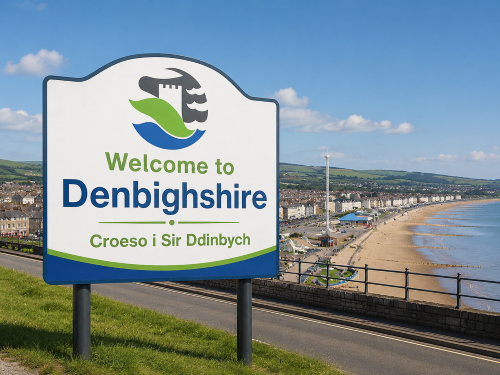
Coastal Town, Market Town or Countryside: Denbighshire Gives You Choice
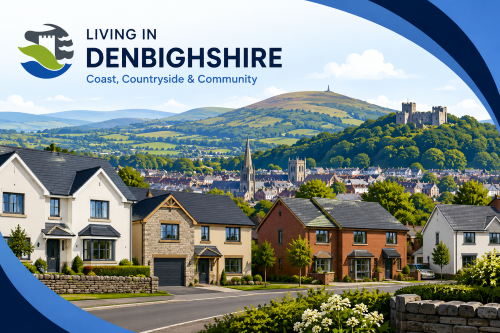
Denbighshire does not offer one single style of living.
Rhyl is the county’s largest coastal town, with beaches, leisure facilities, shops and rail connections along the North Wales Coast Line.
Prestatyn combines coastal access with a more compact town centre and rail services towards Chester, North Wales and destinations beyond. Transport for Wales confirms that Prestatyn sits on the North Wales Coast Line.
Denbigh has a strong historic identity and acts as an important centre for the Vale of Clwyd.
Ruthin offers a traditional market-town setting, independent shops and access to surrounding countryside.
St Asaph is smaller, with its cathedral, riverside setting, and proximity to the A55 and St Asaph Business Park.
Further south, Llangollen has a very different character, shaped by the River Dee, surrounding hills, tourism and access towards Wrexham and the English border.
That variety matters because two households asking why move to Denbighshire may be looking for completely different things.
One may want a coastal flat.
Another may want a detached home with more outdoor space.
A third may want a bilingual community or a home within reach of Chester or Wrexham.
Denbighshire gives buyers several different ways to make that choice.
Housing in Denbighshire: Coast, Market Towns and Rural Homes
Housing in Denbighshire varies significantly depending on whether you look to the coast, the Vale of Clwyd, or the county’s more rural south.
The latest ONS figures show that the average house price in Denbighshire was £201,000 in July 2026, up 3.6% from a year earlier. First-time buyers paid an average of £176,000, while mortgage buyers averaged £200,000.
Property type also changes the picture:
- Detached homes averaged £270,000
- Semi-detached homes averaged £184,000
- Terraced homes averaged £149,000
- Flats and maisonettes averaged £96,000
Those averages provide context, but they don’t describe every Denbighshire market.
A buyer could be comparing:
- a flat or terrace in Rhyl;
- a coastal home in Prestatyn;
- a period property in Denbigh;
- a family home in Ruthin;
- a riverside or hillside property around Llangollen;
- a rural home in the Vale of Clwyd;
- a property with land or outbuildings further inland.
That variety matters to mortgage planning.
Older stone properties, rural homes, flats, properties with acreage, and homes using private drainage or access arrangements may require closer consideration during underwriting and valuation.
For first-time buyers, the lower county average may look attractive compared with some neighbouring regions, but affordability should still include the deposit, monthly repayments, commuting, and broader household spending.
A first-time buyer mortgage guide can help explain how deposits, affordability and lender criteria fit together.
Education, Language and Family Life in Denbighshire

Education plays a distinctive role in Denbighshire because families can choose English-medium, Welsh-medium, or dual-language education.
Denbighshire County Council confirms that the county includes Welsh-medium, English-medium and dual-language schools, alongside faith schools and provision for additional learning needs.
For a family relocating from another part of the UK, that creates questions which may not arise in every county:
- Is Welsh-medium education important to us?
- Which school is closest to the home?
- Does school transport apply?
- How will the school journey fit around work?
- Will childcare arrangements change?
- Are we considering independent education?
School transport can also affect location decisions. Denbighshire’s current guidance says eligible secondary pupils may receive free transport if the nearest suitable school is more than three miles from home or if no safe walking route exists.
The county also has an established independent-school option.
Ruthin School, on Mold Road in Ruthin, is an independent day and boarding school for pupils aged 11 to 18.
For families considering independent education, school fees can form a significant part of future household expenditure. That can matter when deciding how much mortgage borrowing remains comfortable.
Where this forms part of the household plan, Education Finance may be relevant alongside wider mortgage planning.
Education is not simply about choosing a school.
For many families, it affects where they live, how they travel and how the household budget works for years afterwards.
Employment in Denbighshire Is Broader Than Tourism
Tourism is an important part of Denbighshire, but the county’s economy is more varied than a visitor might initially assume.
Denbighshire County Council’s Economic Strategy 2025 to 2035 identifies opportunities around entrepreneurship, local businesses, green industries, tourism and innovation. It also highlights the optics and photonics cluster around St Asaph Business Park and the OpTIC Technology Centre as a key knowledge-economy asset.
That gives the county an unusual employment mix.
Residents may work in areas including:
- health and care;
- education;
- tourism and hospitality;
- public services;
- agriculture and food;
- retail;
- small businesses;
- technology;
- optics and photonics;
- professional services.
Other households may live in Denbighshire while working elsewhere in North Wales or across the border.
That can create different mortgage profiles.
Some applicants will have straightforward salaries.
Others may receive:
- company-director income;
- dividends;
- seasonal income;
- overtime;
- bonuses;
- self-employed profit;
- contract income;
- income from several sources.
The way income is earned can sometimes matter just as much as the amount earned.
Mortgage Considerations When Moving to Denbighshire
Eventually, a lifestyle decision becomes a financial one.
The mortgage requirements of someone buying a £150,000 terrace in one town can differ considerably from those of someone buying a detached rural home elsewhere in the county.
A lender may consider:
- deposit;
- loan-to-value;
- income structure;
- existing borrowing;
- dependants;
- property construction;
- valuation;
- acreage;
- outbuildings;
- lease terms;
- credit history;
- future affordability.
A rural property can also raise questions that may not arise with a conventional town-centre home.
For example, lenders may want to understand how much land comes with the property, whether any buildings have commercial use and whether access is private or shared.
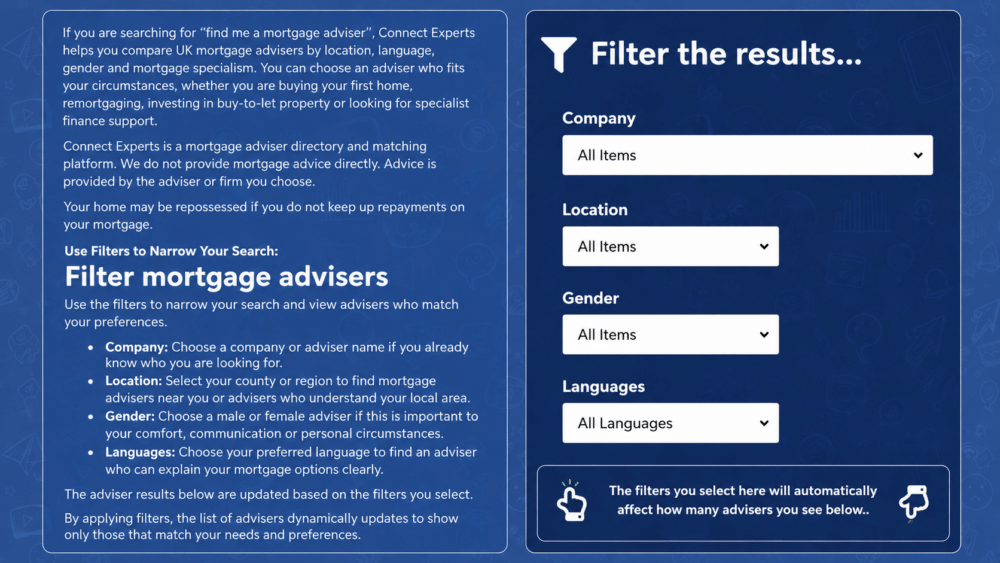
If you are still deciding between areas, Find a Mortgage Adviser by Location can help you compare advisers covering the area you are considering.
If speaking Welsh or another language would make detailed mortgage conversations easier, the Connect Experts directory also lets you search for Bilingual Mortgage Brokers.
The better question is rarely just:
“How much could I borrow?”
It is:
“What level of borrowing leaves enough room for the life I moved here to have?”
Higher-Value Homes and Complex Income in Denbighshire

Denbighshire should not be described as a uniformly high-value county.
However, some parts of the county sit noticeably above the county-wide average.
Recent Land Registry data show a median sale price of around £285,000 in Ruthin in the 12 months to July 2026, compared with about £185,000 in Rhyl and £190,000 in Prestatyn. Llangollen was around £247,000, while St Asaph was approximately £258,750.
That does not make every property in Ruthin, Llangollen or St Asaph high-net-worth.
It does show why county-wide averages can hide local differences.
Larger detached homes, rural properties, period houses and homes with land can also create borrowing requirements that sit outside a straightforward residential mortgage application.
The borrower may have equally complex finances.
Income can include:
- company-director salary and dividends;
- retained profits;
- partnership income;
- bonuses;
- investment income;
- income from several businesses;
- agricultural or land-based income;
- rental income.
Where borrowing is larger, or the financial picture is more complex, experience with High Net Worth Mortgage Brokers may be relevant.
The important point is not whether someone fits a particular label.
It is whether the adviser understands how the property, borrowing requirement and income structure fit together.
Later-Life Moves in Denbighshire

Not everyone researching why to move to Denbighshire is relocating for work or school.
Some people may be:
- downsizing;
- moving closer to family;
- leaving a higher-cost area;
- looking for a smaller town;
- seeking easier access to countryside or coast;
- planning for retirement.
Denbighshire’s mix of coastal towns, market towns, and rural communities offers several options at this stage of life.
For homeowners approaching retirement, the financial questions may also change.
They may need to consider repaying an existing mortgage, moving to a less expensive property, or using some of the value held in their home.
If equity release is part of that discussion, consider it separately from an ordinary residential mortgage because it can affect inheritance, future choices, and entitlement to means-tested benefits.
Homeowners can explore Equity Release Adviser in Denbighshire for later-life lending.
Transport: Denbighshire Connects North Wales With the North West
Denbighshire’s transport picture depends heavily on which part of the county you choose.
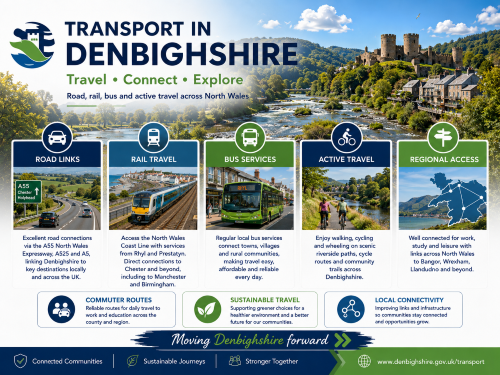
The A55 is particularly important across the north, connecting communities towards Chester and the wider North Wales coast.
For rail travel, Rhyl and Prestatyn sit on the North Wales Coast Line.
Current Transport for Wales services from Rhyl connect to places including Prestatyn, Flint, Chester, Wrexham, Liverpool, and destinations further across Wales.
This can make northern Denbighshire relevant to people whose work or family life extends beyond the county.
Inland areas work differently.
Residents around Ruthin, Denbigh, Corwen, and smaller villages may rely more on road travel or bus services. Denbighshire County Council provides local bus, station and journey-planning information for travel across the county.
That makes the commute an important part of the property decision.
A lower purchase price may look attractive, but it is worth asking:
- How long will the journey actually take?
- Will two cars be necessary?
- Is rail practical from this location?
- How much will commuting cost each month?
- Could hybrid working make a more rural location realistic?
- How will children get to school?
The property price is only one part of what it costs to live somewhere.
Exploring Attractions in Denbighshire

Denbighshire offers a strong mix of heritage, coast, countryside, and cultural attractions. The county includes five rural towns, two coastal towns, and the city of St Asaph, alongside castles, historic sites, and access to the Clwydian Range and Dee Valley National Landscape.
For coastal days out, Rhyl and Prestatyn offer beaches, family attractions, Marine Lake, Rhyl Miniature Railway, Pavilion Theatre, and access to walking routes such as the Wales Coast Path and Offa’s Dyke Path National Trail. Visit Wales highlights Rhyl and Prestatyn’s beaches as having wide open sandy spaces suitable for families and coastal walks.
History lovers can explore Denbigh Castle, Ruthin Gaol, Nantclwyd y Dre, Plas Newydd in Llangollen, and local museums. Denbigh itself is known for its castle, town walls, historic architecture, and views over the Vale of Clwyd.
Llangollen is another major draw, known for its location in the Dee Valley and its connection with the Llangollen International Musical Eisteddfod. The county is also close to the Pontcysyllte Aqueduct and Canal World Heritage Site, which adds to the area’s cultural and visitor appeal.
Dining Out: The Best Pubs for Sunday Lunch in Denbighshire
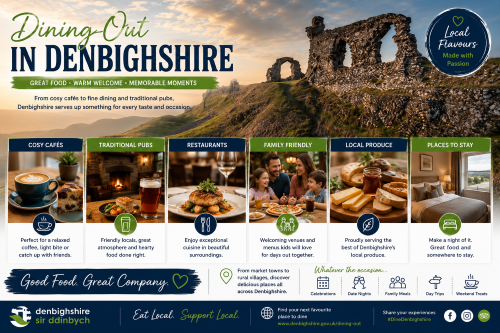
Denbighshire has a strong food and drink identity, shaped by traditional pubs, local markets, countryside producers, coastal dining, and Welsh ingredients. Visit Wales notes that Corwen, Rhuddlan, and Llangollen host food festivals, while Denbigh, Ruthin, and Llangollen hold regular food markets. The Vale of Clwyd is also associated with local produce including yoghurt, cheese, ice cream, cider, Welsh lamb, and the Vale of Clwyd Denbigh Plum.
For Sunday lunch, buyers moving to Denbighshire can expect a mix of traditional pubs, country inns, town-centre restaurants, and family-friendly dining options. Areas such as Ruthin, Denbigh, Llangollen, Rhuddlan, Prestatyn, and Rhyl all provide places to eat, drink, and meet locally.
Whether you prefer a countryside pub after a walk in the Clwydian Range, a town-centre roast in Denbigh or Ruthin, or a coastal meal near Rhyl or Prestatyn, Denbighshire offers plenty of choice for relaxed weekends and local dining.
Why Denbighshire Can Suit Different Stages of Life
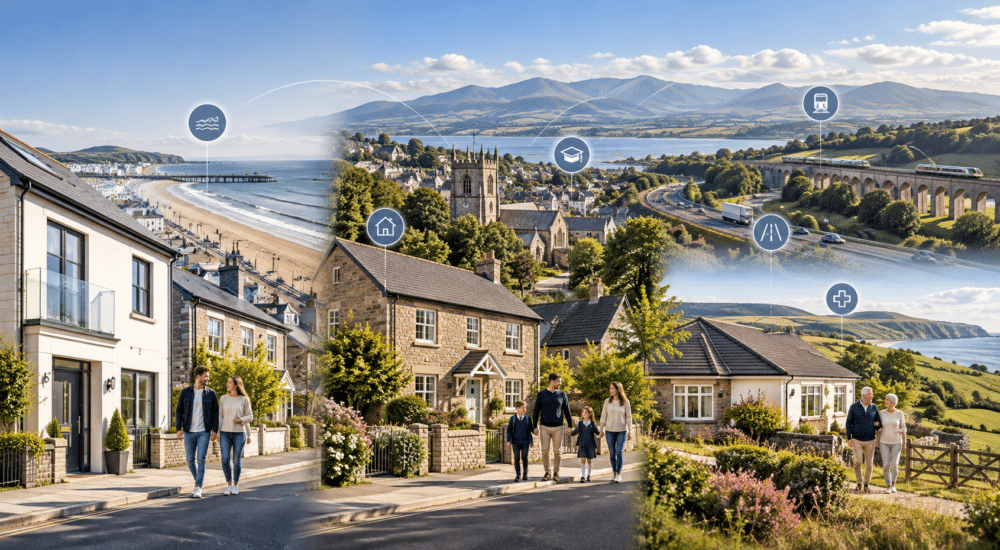
The answer to why move to Denbighshire can change as life changes.
A first-time buyer may look to Rhyl, Prestatyn, or other areas where entry prices are lower than in some inland markets.
A family may prioritise Ruthin, Denbigh, St Asaph or surrounding villages because of schools, space and access to local services.
Someone whose work reaches beyond the county may focus more on the A55, rail connections, or access to Chester and Wrexham.
A buyer wanting countryside may prefer the Vale of Clwyd, Corwen or communities around the Clwydian Range and Dee Valley.
Later in life, priorities may shift again towards:
- a smaller home;
- easier maintenance;
- proximity to family;
- access to healthcare;
- coastal or countryside living;
- lower monthly housing costs;
- retirement planning.
That range is one reason Denbighshire cannot be reduced to one type of location.
The same county includes the coast, historic towns, rural communities, and cross-border connections. right move should therefore do more than work on completion day.
It should continue to make sense if work changes, children grow older, commuting becomes less important or retirement starts to shape the financial picture.
Browse Our Advisers in Denbighshire
Once you have narrowed down where you want to live, the next question is whether your mortgage fits the property and the circumstances behind the move.
Connect Experts lets you choose mortgage advisers by location and other relevant preferences.
Compare advisers based on the decision you need to make, not just the closest postcode.
Use the Connect Experts adviser directory to compare advisers rather than choosing solely by distance.
Connect Experts is a mortgage adviser directory and matching platform. It does not provide mortgage advice directly. Mortgage advice is provided by the adviser or firm you choose.

People who found this page helpful also explored these related topics:
Neighbouring Counties
FAQs: Why Move to Denbighshire?
Is Denbighshire worth considering for a first-time buyer?
It can be. ONS data shows first-time buyers in Denbighshire paid an average of £176,000 in July 2026, below the county average of £ 201,000. However, prices vary by town and property type, so buyers should compare the location, deposit requirement and ongoing costs rather than rely on the county average alone.
Can I live in Denbighshire and commute to Chester?
Yes, this can be practical from some parts of the county. Rhyl and Prestatyn have rail connections towards Chester, while the A55 is important for road travel across northern Denbighshire. Journey times vary significantly from inland and southern parts of the county, so the daily commute should be checked before choosing an area.
Where should I look if I want countryside rather than the coast?
Ruthin, Denbigh, Corwen, the Vale of Clwyd and communities closer to the Clwydian Range or Dee Valley offer a different environment from Rhyl and Prestatyn. The right choice depends on how much rural living you want and how much you rely on schools, public transport, or larger employment centres.
Does the Welsh language affect school choice in Denbighshire?
It can. Denbighshire has English-medium, Welsh-medium and dual-language schools, so families should consider their preferred language of education when researching both schools and residential locations. Admissions and transport arrangements can also vary depending on the nearest suitable school.
What should I check before buying a rural home in Denbighshire?
Alongside a survey and legal checks, buyers may need to consider construction, land, outbuildings, access, private drainage or water arrangements and how the property will be valued by a lender. Discussing unusual property features with a mortgage adviser before choosing a lender can reduce the risk of discovering a criteria issue later.