Why Move to Devon?
Devon is one of England’s most attractive counties for home movers. It offers two coastlines, historic cities, market towns, national parks, beaches, villages, universities, and strong transport links.
The county includes Exeter, Plymouth, Torbay, Barnstaple, Tiverton, Newton Abbot, Totnes, Tavistock, Bideford, Exmouth, Sidmouth, and many rural communities. As a result, buyers can compare city living, coastal homes, countryside villages, and moorland towns.
Devon suits families, professionals, retirees, first-time buyers, landlords, and people who want more space. It also appeals to buyers who value access to the coast, countryside, schools, universities, and regional employment.
The local housing market varies by area. In March 2026, ONS data showed average house prices of £217,000 in Plymouth, £222,000 in Torbay, £286,000 in Exeter, £343,000 in East Devon, and £347,000 in South Hams. Local values should always be checked before making an offer, as Devon covers many different property markets.
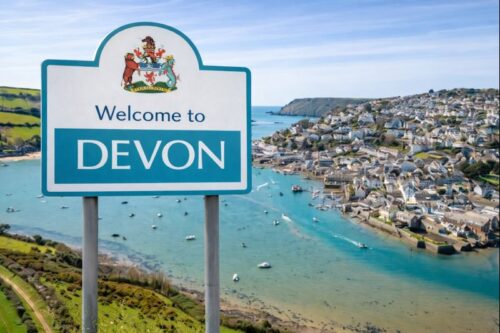
Why Move to Carmarthenshire - What to Expect
Living in Devon can feel very different depending on where you settle.
Exeter offers city living, employment, rail links, shopping, restaurants, schools, and access to the M5. Plymouth offers a coastal city lifestyle, maritime history, universities, healthcare, retail, and access to Cornwall.
Torbay includes Torquay, Paignton, and Brixham. It suits buyers who want seaside living, harbours, beaches, tourism, and local amenities. South Hams attracts buyers looking at Dartmouth, Kingsbridge, Salcombe, Totnes, Ivybridge, and nearby villages.
North Devon offers Barnstaple, Ilfracombe, Braunton, Bideford, and Great Torrington, as well as access to beaches, surf communities, and Exmoor. East Devon includes Exmouth, Sidmouth, Seaton, Honiton, Axminster, and Ottery St Mary.
Devon also has two national parks within or partly within the county. Dartmoor is known for open moorland, tors, valleys, wildlife, and historic settlements. Exmoor reaches into North Devon and offers moorland, wooded valleys, coastline, and walking routes.
For buyers who need mortgage advice in another language, Connect Experts also offers a Find a Broker by Language service.
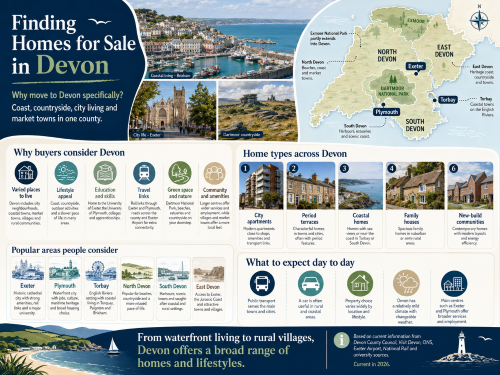
Housing in Devon: Exploring Your Options
Housing in Devon is varied. Buyers may find city flats, Victorian terraces, modern apartments, seaside homes, rural cottages, farmhouses, new-build estates, and larger detached homes.
Exeter often appeals to buyers who want city amenities, rail access, university links, and strong employment options. Plymouth can offer more affordable city living than many parts of South Devon.
Coastal towns often attract strong demand for lifestyle. Areas such as Exmouth, Sidmouth, Torquay, Brixham, Dartmouth, Salcombe, Ilfracombe, and Woolacombe can appeal to buyers who want sea views, beaches, harbours, or tourism-linked locations.
In March 2026, ONS data showed Plymouth’s average house price at £217,000. Torbay was £222,000. North Devon was £280,000. Exeter was £286,000. West Devon was £306,000. East Devon was £343,000. South Hams was £347,000.
Rental costs also vary. In April 2026, average monthly rents were £837 in West Devon, £851 in North Devon, £901 in Torbay, £970 in East Devon, £989 in Plymouth, £998 in South Hams, and £1,313 in Exeter.
This range gives Devon broad appeal. First-time buyers may compare Plymouth, Torbay, North Devon, or parts of Mid Devon. Buyers seeking prime coastal homes may look at South Hams or East Devon. Rural buyers may explore villages in West Devon, Torridge, or Dartmoor.
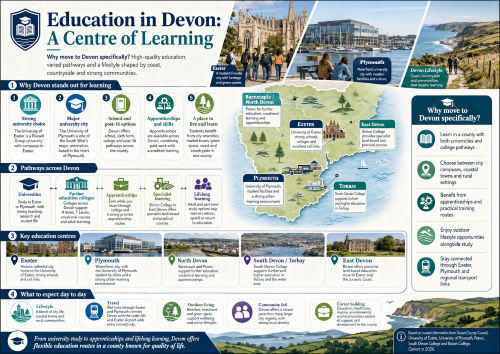
Education in Carmarthenshire: A Centre of Learning
Devon offers education from early years through to higher education. Families should check admissions, catchment areas, school transport, Ofsted reports, and local authority guidance before choosing an area.
Devon County Council provides school admissions guidance for parents and carers. It also explains the admission process for community and voluntary-controlled schools in its area.
Higher education is a major part of Devon’s appeal. The University of Exeter is ranked 155th in the QS World University Rankings 2026. It is also ranked 11th in the Complete University Guide 2026.
The University of Plymouth is another major institution in the county. It supports higher education, research, healthcare, science, engineering, business, and marine-related studies.
Further education options include Exeter College, City College Plymouth, South Devon College, Petroc, and other local providers. These support A Levels, apprenticeships, vocational routes, adult learning, and professional training.
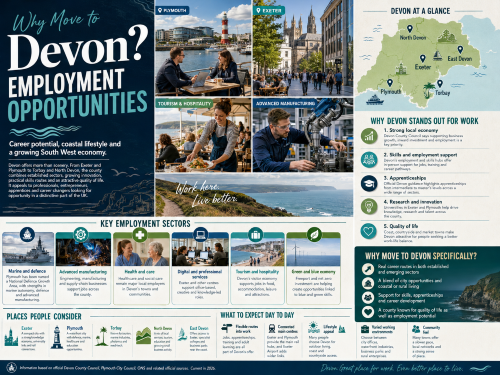
Why Move to Devon - Employment Opportunities
Devon has a broad economy. It includes healthcare, education, tourism, retail, construction, agriculture, marine industries, public services, technology, and professional services.
The Devon and Torbay Local Growth Plan states that visitor economy, agri-food, health and social care, construction, education, and retail are key bedrock sectors. These sectors provide 212,000 jobs, 47% of employment in Devon and Torbay, and £8.7 billion in GVA each year.
Exeter supports professional services, public services, education, technology, retail, healthcare, and regional administration. Plymouth supports marine, defence, healthcare, higher education, retail, tourism, and waterfront regeneration.
The Exeter and East Devon Enterprise Zone supports four major commercial sites. It is positioned close to Exeter, transport links, Exeter Airport, and the Devon coast and countryside.
Tourism remains important across Devon. Visit Devon highlights beaches, food, towns, villages, family attractions, historic sites, and outdoor activities as part of the county’s visitor appeal.
Key Employment Sectors in Devon
Healthcare, Public Services, and Education
Hospitals, councils, schools, universities, colleges, care providers, and public bodies support many jobs across Devon. Exeter, Plymouth, Torbay, Barnstaple, and Newton Abbot all provide important local employment.
Tourism, Hospitality, and Retail
Devon’s beaches, national parks, holiday towns, heritage sites, restaurants, cafés, and visitor attractions support tourism and hospitality. This creates seasonal and year-round roles.
Agriculture, Food, and Rural Enterprise
Devon has a strong rural economy. Farming, food production, local produce, farm shops, markets, and rural businesses all play a role.
Marine, Defence, and Advanced Industries
Plymouth has strong links with marine activity, defence, science, engineering, and higher education. Exeter and East Devon also support growth in technology, science, logistics, and business services.
Construction, Property, and Trades
Housing demand, infrastructure work, tourism investment, and commercial development support jobs in construction and skilled trades.
Selecting the Right Expert Brokers in Devon
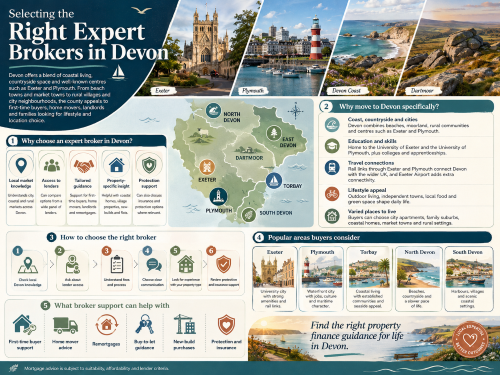
Choosing the right mortgage broker in Devon can make your move easier. Local markets differ across Exeter, Plymouth, Torbay, North Devon, East Devon, South Hams, West Devon, Teignbridge, Mid Devon, and Torridge.
At Connect Experts, brokers can help with:
- Local market knowledge: Advisers understand different property types across cities, coastal towns, rural villages, and moorland areas.
- Access to multiple lenders: Brokers can compare lenders based on your income, deposit, credit profile, and property type.
- Personalised mortgage support: Advice can help first-time buyers, movers, landlords, remortgage clients, and self-employed applicants.
- Protection advice: Your mortgage is a major commitment. Protection advice can help you plan for illness, injury, or loss of income.
- Clear communication: If language support matters, you can search for bilingual mortgage brokers.
For protection advice in Devon, Daiel Stanbury is a relevant local profile. His Connect Experts page describes him as an expert mortgage and protection broker in Cullompton, Devon. It also states that he provides clear advice on mortgages and protection.
You can also browse mortgage brokers in Devon through the Connect Experts directory. The Devon page covers advisers who understand local property markets across Exeter, Plymouth, Torquay, Barnstaple, and nearby towns.
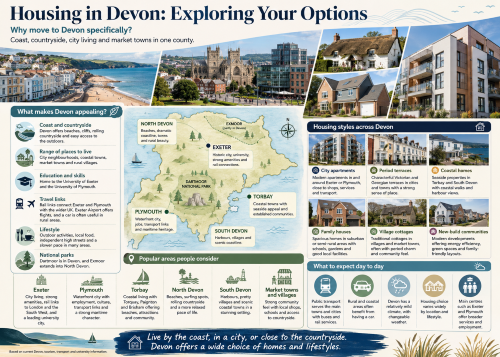
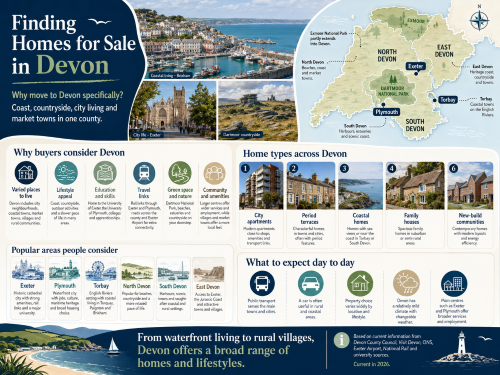
Finding Homes for Sale in Devon
Devon offers homes for many types of buyers. However, each area has its own market.
In Exeter, buyers often look at St Leonards, Heavitree, St Thomas, Pennsylvania, Alphington, Topsham, and the city centre apartments. The city can suit commuters, students, families, and professionals.
In Plymouth, buyers may compare Plymstock, Peverell, Stoke, Mutley, Mannamead, Devonport, Crownhill, and the waterfront. Plymouth can appeal to first-time buyers, families, students, and investors.
In Torbay, buyers often look at Torquay, Paignton, and Brixham. These areas suit people who want coastal living, local amenities, and access to beaches.
In South Hams, Dartmouth, Kingsbridge, Salcombe, Totnes, Ivybridge, and nearby villages can attract buyers seeking coast, countryside, and lifestyle value. Prices can be higher in sought-after coastal locations.
In North Devon, Barnstaple, Braunton, Ilfracombe, Bideford, and Woolacombe offer access to the coast, surf, countryside, and Exmoor. These areas may suit families, remote workers, retirees, and investors.
Landlords can also explore buy-to-let mortgage brokers for rental property advice.
Mortgage Brokers in Devon: Securing a Home
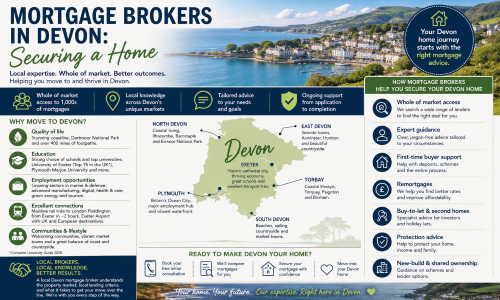
Buying property in Devon can raise different lender questions. A city flat, a coastal cottage, a listed building, a rural home, a holiday let, a buy-to-let, or a self-employed application may all need careful review.
A mortgage broker in Devon can help first-time buyers, home movers, remortgage clients, landlords, contractors, and applicants with complex income.
A broker can also help you compare lenders, prepare documents, assess affordability, review mortgage types, and understand property-specific risks.
This can be useful in Devon, where property types and values differ across coastal, rural, city, and moorland areas.
For broader support, users can also explore the “Find Local Mortgage Brokers” and “Find a Broker by Location” pages. These pages help users compare advisers by area and expertise.
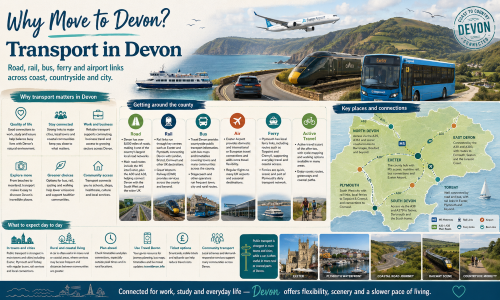
Why Move to Devon - Transport in Devon
Devon has strong transport links, but access varies by location.
The M5 connects Devon with Somerset, Bristol, the Midlands, and the wider motorway network. The A30 and A38 support travel across the county and into Cornwall.
Rail links are also important. Great Western Railway lists services from London, Bristol, and Taunton to Exeter, Torbay, and Plymouth. It also lists Devon branch routes, including Exmouth, Paignton, Okehampton, Barnstaple, and Gunnislake.
Travel Devon states that regular local train services link many parts of Devon. It also highlights the Riviera Line from Exeter to Paignton via Dawlish, Teignmouth, Newton Abbot, and Torquay.
Exeter Airport offers flights to the UK, Europe, and holiday destinations. Its current destination list includes routes such as Alicante, Amsterdam, Belfast, Dublin, Edinburgh, Faro, Jersey, Malaga, and Tenerife.
Rural and coastal areas may need more car use. Therefore, buyers should check commuting routes, school runs, rail access, and seasonal traffic before choosing a home.
Dining Out: The Best Places to Dine in Devon
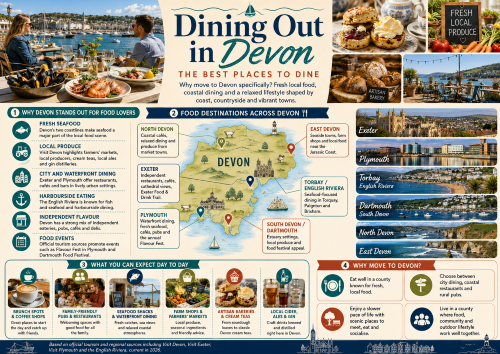
Devon has a strong food scene. It is known for seafood, cream teas, farm produce, local ales, cider, farmers’ markets, cafés, pubs, and coastal restaurants.
Visit Devon describes the county’s food scene as including fresh seafood, award-winning restaurants, cream teas, local ales, gin distilleries, and farmers’ markets.
South Devon offers seafood, waterside dining, country pubs, local wines, ice cream, and beach cafés. Brixham is especially known for its fishing harbour. Dartmouth, Salcombe, and Kingsbridge also attract diners who enjoy coastal food.
Exeter has city restaurants, cafés, pubs, student-friendly venues, and food markets. Plymouth offers waterfront dining, independent cafés, seafood restaurants, and eateries around the Barbican and Royal William Yard.
North Devon has beach cafés, village pubs, farm shops, and restaurants near Barnstaple, Braunton, Ilfracombe, Croyde, and Woolacombe.
For residents, this means plenty of choice. You can enjoy a cream tea in a village, seafood by a harbour, Sunday lunch near Dartmoor, or casual dining by the coast.
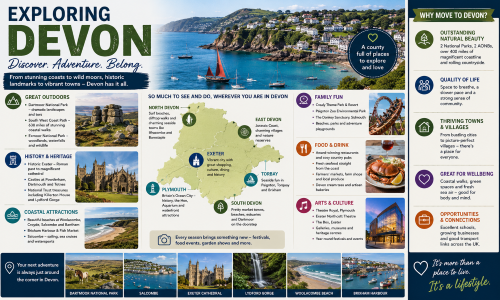
Exploring Attractions in Devon
Devon offers beaches, national parks, historic towns, family attractions, harbours, gardens, museums, coast paths, and countryside walks.
Dartmoor National Park is one of Devon’s most famous landscapes. The official Dartmoor site describes it as wild, open moorland with deep river valleys, history, and rare wildlife.
Exmoor also adds major lifestyle value for North Devon. Visit Devon describes Exmoor as a place for beaches, surfing, moorland, relaxation, golf, and outdoor activities.
The Jurassic Coast begins in East Devon. Visit South Devon describes the Devon section as part of a UNESCO World Heritage Site that stretches from Exmouth to Seaton and beyond to Dorset. It reflects 185 million years of Earth’s history.
Other popular attractions include Exeter Cathedral, Plymouth Hoe, the Barbican, Royal William Yard, Brixham Harbour, Dartmouth Castle, Salcombe, Clovelly, RHS Garden Rosemoor, Woolacombe Beach, Croyde Bay, and the South West Coast Path.
Families can also enjoy zoos, aquariums, steam railways, adventure parks, beaches, castles, and rainy-day attractions across the county.
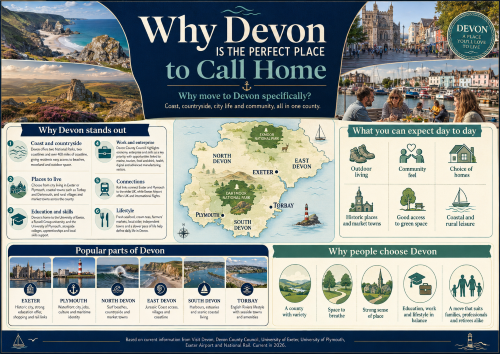
Why Devon is the Perfect Place to Call Home
Devon is appealing because it offers choice. You can live in a city, beside the sea, near moorland, in a market town, or within a rural village.
The county combines coastal scenery, national parks, education, healthcare, transport links, employment, food culture, and a wide range of homes. This makes it suitable for many stages of life.
However, buyers should compare areas carefully. Prices, rents, transport links, schools, property types, flood risk, second-home demand, and lender criteria can vary widely.
A local mortgage broker can help you understand affordability, documents, lender requirements, and property-specific points before you make an offer.
Browse Our Advisers That Covers Devon



People who found this page helpful also explored these related topics:
Mortgage Broker St Ives TR26: Advice by Expert Advice

Truro Mortgage Guide: Clear Advice for Confident Decisions
Make a Smarter Mortgage Move in St Austell
Redruth Mortgage Advice: Confidence Before Commitment

Penzance Mortgage Advice: Strong Choices Start With Questions
Padstow Mortgage Advice: Think Beyond the Interest Rate
FAQ: Why Move to Devon
| Question | Answer |
|---|---|
| What makes Devon an attractive place to live? | Devon offers a rare mix of coast, countryside, and community. With two national parks, miles of beaches, and vibrant market towns, it balances rural tranquillity with modern living. The pace is relaxed, yet there are excellent schools, local businesses, and transport links to London, Bristol, and Exeter. |
| Is Devon suitable for families? | Yes. Families are drawn to Devon for its excellent primary and secondary schools, outdoor lifestyle, and safe communities. Popular areas like Exeter, Totnes, and Tavistock combine good education with access to parks, beaches, and cultural activities. |
| Are property prices affordable in Devon? | Devon remains more affordable than many southern counties. While areas such as Exeter and Salcombe are premium markets, there are many towns and villages offering spacious homes and great value compared to cities like London or Oxford. |
| What are the job opportunities like in Devon? | Devon’s economy is diverse, with growing opportunities in digital technology, healthcare, renewable energy, and tourism. Exeter in particular is a regional hub for education, business, and government services. Remote working options also make it easier to live in Devon while working for national employers. |
| How is the lifestyle in Devon different from city living? | Life in Devon feels more balanced. Residents enjoy less traffic, cleaner air, and access to some of the UK’s best walking and surf spots. There’s a strong sense of local community, regular farmers’ markets, and plenty of independent cafés and shops. |
| What are the transport connections like? | Devon is well-connected by road and rail. The M5 links the county to Bristol and the Midlands, while trains from Exeter St Davids reach London Paddington in around two hours. Exeter Airport also provides domestic and European flights. |
| Is Devon good for retirement? | Absolutely. Many retirees move to Devon for its natural beauty, peaceful pace of life, and strong local healthcare network. Coastal areas like Sidmouth and Dartmouth are especially popular for downsizing and enjoying an active retirement. |
If you are Looking for a Mortgage Network
“Hi, I’m Liz Syms, Chief Executive Officer and founder of Connect Experts, Connect Mortgages, and Connect for Intermediaries.
If you are a UK mortgage broker based in Devon, joining our mortgage network can help you increase your visibility to clients actively searching for trusted, FCA-authorised advice. Brokers featured on our Devon mortgage brokers page are matched with clients who value clear communication and professional guidance, including those who prefer advice in a specific language.
Our platform is designed to support compliant, client-focused advisers and help you connect with the right audience across Devon.”
Choose the option that suits you best:
Option 1: Schedule a call with our Business Recruitment Manager
Option 2: Complete our contact form
Option 3: Call us