
Why move to Essex? Because choosing where to live ultimately depends on the life you want your home to support.
Essex can mean a London commute from Brentwood or Shenfield, city living in Chelmsford or Colchester, a home close to Epping Forest, or waking up near the coast in Leigh-on-Sea, Frinton-on-Sea or Maldon. North Essex brings market towns and open countryside, while the Thames Estuary connects communities with logistics, ports and major employment areas.
That variety makes Essex difficult to define with one description. Its appeal comes from being several things at once: connected without being entirely urban, coastal without losing its countryside, and close to London while maintaining towns and communities with identities of their own.
For anyone already turning the idea of moving into a financial plan, Mortgage Brokers in Essex can help you compare advisers across the county.
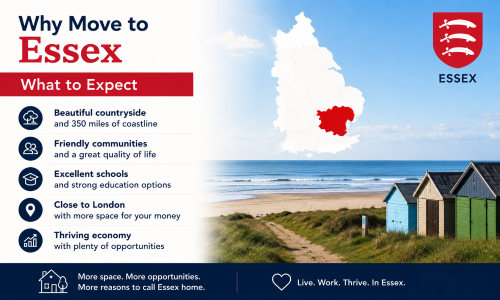
What to Expect When Living in Essex
Where you live in Essex can completely change how the county feels.
Chelmsford provides city-centre amenities, established residential areas and rail connections towards London. Colchester combines Roman heritage, a university population and access to villages across north-east Essex.
Closer to London, Brentwood, Epping, Loughton and Chigwell suit people who prioritise commuting and access to the capital.
Further east, the character changes again. Maldon, Burnham-on-Crouch, Brightlingsea, Frinton-on-Sea and Mersea Island bring estuaries, sailing, beaches and coastal communities into everyday life.
Visit Essex describes a county with around 350 miles of coastline, including seaside resorts, estuaries, saltmarshes and smaller coastal towns. Inland, residents can also reach landscapes such as Epping Forest and Dedham Vale.
So the question is not simply whether Essex is suitable.
It is whether your part of Essex supports how you expect to work, travel, spend time, and live.
Housing in Essex: One County, Very Different Markets
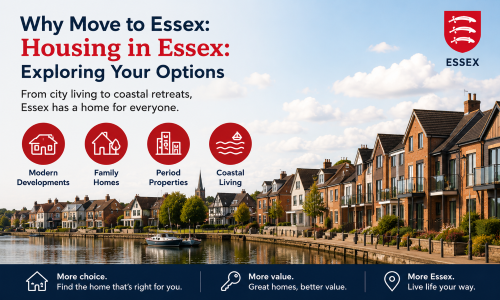
Essex does not have a single housing market.
The difference between its local areas is substantial.
Latest ONS figures show that in July 2026:
- the average property price in Epping Forest was £526,000;
- Brentwood averaged £514,000;
- Chelmsford averaged £378,000;
- Colchester averaged £298,000;
- Tendring averaged £260,000.
That range illustrates why a county average can hide more than it reveals.
The type of home also changes by area. Essex includes:
- Victorian and Edwardian commuter properties;
- modern city apartments;
- suburban family houses;
- rural cottages;
- listed and period homes;
- new-build developments;
- coastal flats and houses;
- larger detached properties;
- homes close to woodland and agricultural land.
For first-time buyers, the differences can be particularly significant. ONS data shows first-time buyers paid an average of £407,000 in Epping Forest in July 2026 compared with £221,000 in Tendring.
A lower purchase price does not automatically make one location the better choice. Commuting, property condition, service charges, transport costs and future plans all need to fit the household budget.
Education and Family Life in Essex
For families, a move can become an education decision long before you start a mortgage application.
Essex has primary and secondary schools, academies, colleges, grammar schools and independent education. Essex County Council is responsible for school places, admissions, and home-to-school transport within its area.
Different parts of the county can therefore appeal for different reasons.
Chelmsford and Colchester provide larger education networks. Areas around Brentwood and west Essex can combine schools with commuter access, while north Essex offers market-town and village choices.
Essex also has independent education options. Families considering private schooling should look beyond the headline annual fee. Transport, siblings attending at different stages, fee increases, and how long fees may be payable can all affect household finances.
In Leigh-on-Sea, independent schools such as St Michael’s School help attract families to the area. St Michael’s School is an independent nursery and preparatory school based in the heart of Leigh-on-Sea. Since 1922, it has provided small class sizes and a first-class education, inspiring a love of learning and emphasising traditional values. Schools like this often decide whether families choose to stay long-term in a specific location.
If independent education is part of your longer-term plan, our guide to Education Finance explains some of the financial considerations.
The important point is simple: the cost of the house and the cost of family life should be considered together.

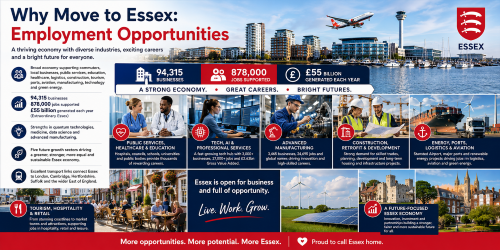
Employment Opportunities Across Essex
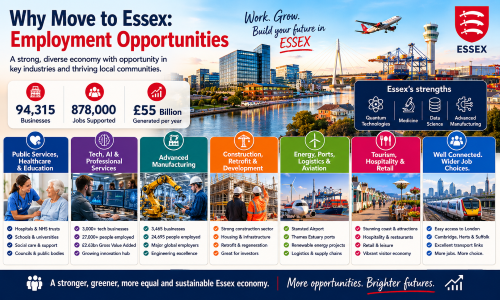
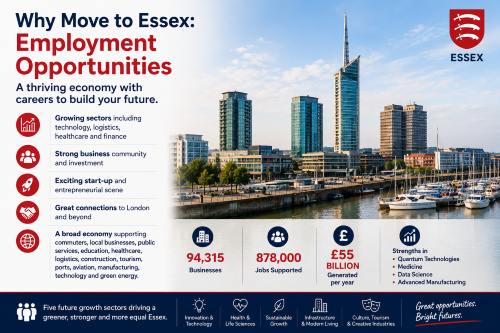
Not everyone who moves to Essex works in London.
Essex has its own employment centres, and the nature of work varies across the county.
Chelmsford supports professional services, healthcare, education, retail, technology and public-sector employment.
Colchester combines healthcare, education, tourism, military connections and the University of Essex.
Stansted and Uttlesford have aviation and airport-related employment.
The Thames Estuary supports logistics, distribution, ports, construction and infrastructure.
Basildon and surrounding areas also have established commercial and industrial employment, while coastal areas support tourism, hospitality, marine businesses and local services.
For buyers, employment matters for more than where they commute to.
It can also influence a mortgage application.
A lender may assess:
- basic salary;
- overtime;
- bonuses or commission;
- contracting income;
- self-employed profits;
- dividends;
- retained company profits;
- multiple jobs or income sources.
Someone relocating for work may also need to consider whether their employment changed immediately before applying for a mortgage.
That makes timing part of the financial decision as well as the lifestyle decision.
Selecting the Right Expert Brokers in Essex
Choosing the right mortgage broker in Essex can make your move easier. Local property markets vary between Chelmsford, Colchester, Basildon, Brentwood, Harlow, Epping, Southend-on-Sea, Maldon, Braintree, and Tendring.
At Connect Experts, brokers can help with:
- Local market knowledge: Advisers understand different Essex property types, from commuter homes to coastal flats.
- Access to multiple lenders: Brokers can compare lenders based on your income, deposit, credit profile, and property type.
- Personalised mortgage support: Advice can help first-time buyers, movers, remortgage clients, landlords, and self-employed applicants.
- Protection advice: Your mortgage is a major commitment. Protection advice can help you plan for illness, injury, or loss of income.
- Clear communication: If language support matters, you can search for bilingual mortgage brokers.
For protection advice in Essex, Ahmad Zahid, Protection Broker in Thurrock, is a relevant local profile. His page says he provides advice on life, critical illness, and income protection. It also says he supports clients across Essex.
You can also explore Protection Mortgage Brokers for wider guidance on life insurance, critical illness cover, income protection, and mortgage payment protection.

Coast, Countryside and Outdoor Life in Essex

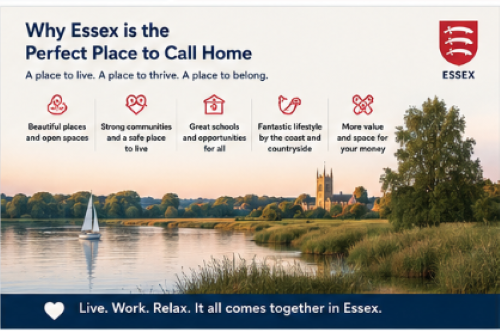
Essex’s image is often shaped by its proximity to London, but much of the county’s character sits in the opposite direction.
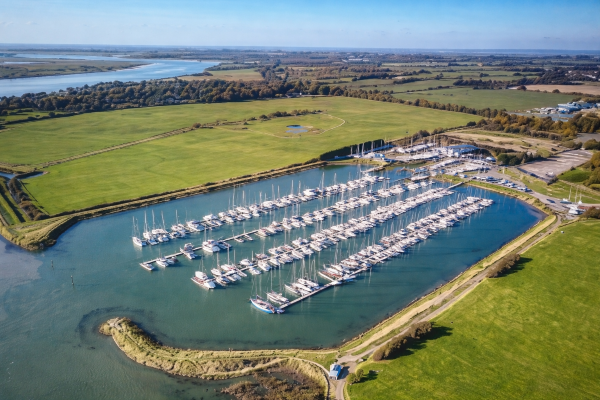
The coastline includes Mersea Island, Maldon, Burnham-on-Crouch, Brightlingsea, Frinton-on-Sea, Walton-on-the-Naze, Clacton-on-Sea and Southend-on-Sea.
Visit Essex describes about 350 miles of coastline, from traditional seaside resorts to saltmarshes, creeks, and wildlife habitats.
Further inland, Epping Forest offers ancient woodland near London, while Dedham Vale provides open countryside associated with Constable Country.
This variety can influence where people choose to settle.
Someone who needs regular access to London might favour Brentwood or Epping. A household prioritising sailing or coastal walks might compare Maldon or Burnham-on-Crouch. Buyers wanting a traditional seaside setting could consider Frinton-on-Sea or Leigh-on-Sea.
The practical point is that lifestyle and property requirements often meet.
A coastal home, listed building, rural cottage or unusual property may require different consideration during valuation and mortgage underwriting than a conventional modern house.
Mortgage Considerations When Moving to Essex
The mortgage should support the move rather than dictate it.
Someone buying in Brentwood may face a very different borrowing requirement from a first-time buyer in Tendring. A company director moving to Chelmsford may need different lender criteria from an employed applicant buying in Colchester.
A mortgage adviser may consider:
- deposit size;
- affordability;
- loan-to-value;
- income structure;
- existing borrowing;
- credit history;
- property type;
- mortgage term;
- future plans.
If communicating in another language would make those discussions clearer, you can also explore Bilingual Mortgage Brokers.
The aim should not be to find the adviser nearest to your new home at any cost. Instead, find an adviser whose permissions and experience match the mortgage you actually need.

Transport and Commuting in Essex

Transport is one of Essex’s defining advantages, but connections vary widely by location.
Rail routes connect many parts of the county towards London, including stations serving:
- Brentwood;
- Shenfield;
- Chelmsford;
- Witham;
- Colchester;
- Southend;
- Basildon;
- Harlow;
- Epping.
The Elizabeth line serves Brentwood and Shenfield, strengthening connections through central London.
Road users can access major routes including the A12, A13, and M11, while the M25 provides connections around the edge of Greater London.
London Stansted Airport sits in north-west Essex, and Harwich provides international ferry connections.
For commuters, though, the fastest train shouldn’t be the only factor.
Consider:
- season-ticket or travel costs;
- parking charges;
- distance from home to the station;
- frequency of services;
- hybrid-working patterns;
- school and childcare arrangements;
- how often the commute will actually be made.
A cheaper home further from London may offer more space, but you need to weigh that saving against the time and cost of travelling.
Food, Markets and Local Essex Character
Food can say more about a place than statistics can.
The Essex coast has strong connections with seafood. Mersea oysters are closely associated with Mersea Island, while Maldon is known internationally for its sea salt.
Tiptree gives Essex another widely recognised food connection, and rural parts of the county include farm shops, markets, vineyards and village pubs.
Different towns provide different experiences.
Chelmsford and Colchester offer a wide range of city dining options. Leigh-on-Sea has a strong seafood connection around Old Leigh, while Maldon and Burnham-on-Crouch pair food with waterfront settings.
Visit Essex highlights locally sourced seafood, vineyards, farm shops, markets and regional produce as part of the county’s identity.
For someone thinking about moving, this may seem less important than property price or commuting.
Yet everyday quality of life is built from small things: where you walk, shop, eat, meet people and spend weekends.
Those are often the things that eventually turn an address into a home.

History, Culture and Things to Do in Essex

Living somewhere is different from visiting it, but access to things you enjoy can still shape whether a move works over the long term.
Essex has a particularly varied historic identity.
Colchester reflects its Roman past through the city and Colchester Castle.
Saffron Walden retains the character of a historic market town and is close to Audley End House and Gardens.
Hylands Estate provides parkland and events near Chelmsford.
Along the coast, Southend combines the seafront with its well-known pier, while Maldon and Harwich retain strong maritime identities.
Other family and outdoor destinations include Colchester Zoo, RHS Garden Hyde Hall and Epping Forest. Visit Essex also highlights the county’s heritage sites, waterways, parks and coastal activities.
What matters to a prospective resident may be less about having one famous attraction nearby and more about having enough choice for ordinary weekends.
That is an important distinction when deciding whether somewhere feels suitable to visit or suitable to call home.
Later-Life Moves in Essex
Moving later in life can involve a different set of priorities.
Some homeowners may want to downsize. Others may move closer to family, choose a coastal location or look for a home that is easier to maintain.
The decision can also involve existing mortgage borrowing, retirement income and the equity already held in a property.
For some homeowners aged 55 or over, equity release may form part of the discussion. It is not suitable for everyone and can affect inheritance, entitlement to means-tested benefits and future options.
Where relevant, homeowners can explore Equity Release Advisers in Essex before deciding whether this type of later-life lending should be considered.

Higher-Value Homes and Complex Mortgage Needs in Essex

Essex should not be treated as uniformly high-value.
However, certain parts of the county clearly operate at a different price level.
The ONS reported an average house price of £526,000 in Epping Forest and £514,000 in Brentwood in July 2026. Detached properties averaged £1.004 million in Epping Forest and £987,000 in Brentwood.
Individual areas such as parts of Epping, Loughton, Chigwell, Brentwood, and other desirable commuter locations can therefore require substantial borrowing.
Price is only one part of that picture.
Higher-value borrowers may also receive income through:
- bonuses;
- dividends;
- retained company profits;
- partnership income;
- investments;
- property portfolios;
- several income streams.
Where the borrowing requirement or income structure becomes more complex, experience with High Net Worth Mortgage Brokers may be more useful than simply choosing the closest adviser.
Why Essex Can Work at Different Stages of Life
The reason someone chooses Essex at 25 may not be the reason they stay at 55.
A first-time buyer may prioritise affordability and a railway station.
A family may start thinking about schools, bedrooms and outside space.
A professional may need access to London or one of Essex’s own employment centres.
Someone working remotely may value the countryside or coast more.
Later in life, proximity to family, amenities and the type of property may become more important than the morning commute.
That adaptability is one of Essex’s more interesting qualities.
The county doesn’t require everyone to live the same way.
It gives people the opportunity to change where and how they live without necessarily leaving Essex altogether.
Browse Our Advisers Based in Essex
Once you have narrowed down where you want to live, the next question is whether your mortgage fits the property and the circumstances behind the move.
Connect Experts lets you choose mortgage advisers by location and other relevant preferences.
Compare advisers based on the decision you need to make rather than simply choosing the closest postcode.
Connect Experts is a mortgage adviser directory and matching platform. It does not provide mortgage advice directly. Mortgage advice is provided by the adviser or firm you choose.








People who found this page helpful also explored these related topics

Mortgage Advice in Dagenham: A Smarter Way to Move Forward

Mortgage Broker in Horkesley: The Advice You Need

Find a Trusted Mortgage Broker in Saffron Walden

Find a Trusted Mortgage Adviser in Frinton-on-Sea

Mortgage Broker in Billericay – Trusted Expert Advice for You

Mortgage Broker in Loughton – Trusted Guidance in IG10
Neighbouring Counties
FAQs: Why Move to Essex?
Is moving further into Essex always cheaper than living near London?
No. Property prices vary considerably within Essex. In July 2026, ONS data showed average prices of £526,000 in Epping Forest and £514,000 in Brentwood, compared with £298,000 in Colchester and £260,000 in Tendring. Buyers should compare property costs with commuting, transport, and household expenses rather than looking only at the purchase price.
Where in Essex could suit someone who wants both London access and countryside?
West and central Essex offer different combinations. Epping offers access to Epping Forest and connections to London, while Brentwood and Shenfield combine rail services with nearby villages and countryside. The right choice depends on commuting frequency, budget and the type of home required.
What should I consider before buying near the Essex coast?
Consider the property’s construction, condition, insurance requirements, and location, as well as the lifestyle benefits. Coastal and estuary communities can differ considerably, so buyers should review the property’s survey, valuation and any relevant flood information rather than assuming all coastal homes present the same risks.
Could school fees affect how much I can borrow in Essex?
Potentially. Mortgage affordability assessments consider regular financial commitments, including education costs. Families planning independent education should therefore consider school fees alongside mortgage payments, childcare, other borrowing and normal household expenditure.
Which parts of Essex may involve larger mortgage requirements?
Higher-value borrowing can arise in areas such as Epping Forest and Brentwood, although the individual property and borrower matter more than the postcode alone. ONS figures for July 2026 show detached properties averaging more than £1 million in Epping Forest and close to £1 million in Brentwood.