
Why move to Merseyside? Because choosing a place to live is really a decision about what you want close enough to become part of everyday life.
For some people, that means a city with employment, universities, music, sport and nightlife. For others, it means waking up closer to the coast, having more room for family life or finding a home where the budget stretches differently.
Merseyside offers all those choices within one county.
Liverpool provides the largest urban centre. Wirral combines established towns, villages and coastline. Sefton stretches from communities close to Liverpool towards Crosby, Formby and Southport. Knowsley provides suburban and commuter locations, while St Helens has its own town centre, employment base and links across the North West.
The more useful question, therefore, is not simply why move to Merseyside, but which part of Merseyside fits the life you expect once the boxes are unpacked.
When that decision shifts from lifestyle to finance, you can explore Mortgage Brokers in Merseyside and compare advisers covering different parts of the county.
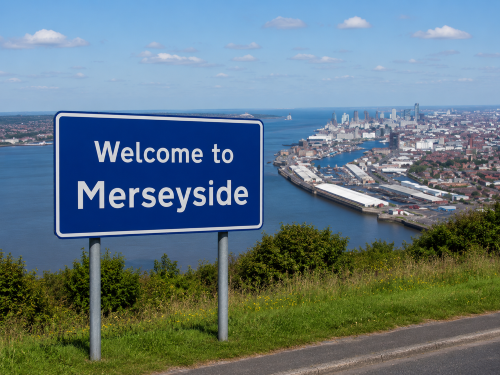
City Energy, Coastal Space and Communities With Their Own Identity
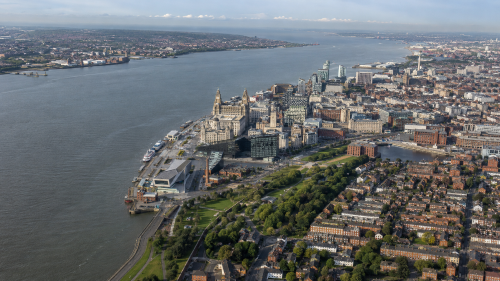
Merseyside cannot be explained through Liverpool alone.
Liverpool brings city-centre apartments, Victorian terraces, established suburbs, universities, hospitals, major employers and one of Britain’s best-known waterfronts.
Cross the River Mersey and Wirral feels very different. Areas such as West Kirby, Heswall, Bebington and New Brighton offer a mix of suburban housing, coast, green space and access back to Liverpool.
Sefton changes again. Crosby provides coastal living within commuting distance of the city, Formby combines established housing with woodland and beach access, while Southport has the character of a traditional coastal town.
Knowsley includes communities such as Huyton, Prescot and Kirkby, with access towards Liverpool and the wider motorway network.
St Helens offers another option for households that want a town setting with connections to Liverpool, Warrington and Greater Manchester.
This variety is central to why move to Merseyside. Two households can choose the same county for completely different reasons.
One may want to walk to work in Liverpool.
Another may want weekends on the Wirral coast.
A third may prioritise a family home over a city-centre postcode.
Merseyside allows those choices to exist relatively close together.
Merseyside Housing: Five Boroughs, Very Different Budgets
A single Merseyside house-price figure would hide more than it explains.
Latest ONS figures for July 2026 show clear differences between the five metropolitan boroughs:
- Liverpool: £189,000
- Knowsley: £189,000
- St Helens: £185,000
- Wirral: £222,000
- Sefton: £224,000
First-time buyer averages also varied. First-time buyers paid around £169,000 in St Helens, £174,000 in Liverpool and Knowsley, £190,000 in Wirral, and £192,000 in Sefton.
You can explore the underlying figures through the.
Those differences create very different property searches.
A buyer may be comparing:
- a city apartment in Liverpool;
- a Victorian terrace in an established suburb;
- a family home in Wirral;
- a coastal property around Crosby or Formby;
- a house in Southport;
- a suburban home around Prescot or Huyton;
- a property in St Helens where the same budget may buy something different again.
Property type matters alongside price.
Leasehold apartments, converted buildings, waterfront developments, older terraces, new-build homes and properties close to the coast can all raise different questions around valuation, construction, service charges, lease terms and lender criteria.
The question should therefore be more detailed than, “Can I afford Merseyside?”
It should be, “What does my budget buy in the part of Merseyside that actually suits my life?”

Education Can Shape the Move Long Before a Mortgage Application

For households with children, location decisions often start years before moving day.
Merseyside provides state schools, further education, universities and independent education across the county.
Liverpool has a substantial higher-education presence through the University of Liverpool, Liverpool John Moores University and Liverpool Hope University. Further education is available across Liverpool, Wirral, Sefton, Knowsley and St Helens.
Independent education is also available in the wider area, including schools in Liverpool, Crosby, Wirral, and surrounding communities.
The practical question for families is not simply which schools exist.
It is how education fits around the rest of family life.
Consider:
- journey times between home and school;
- school transport;
- childcare arrangements;
- where parents work;
- whether the move changes commuting costs;
- school fees where applicable;
- extracurricular travel;
- the effect of regular expenditure on disposable income.
Where independent education forms part of the longer-term plan, Education Finance may help households consider those costs alongside wider financial commitments.
A house and a school may look like two separate decisions on paper.
For a family budget, they rarely are.
Employment Can Bring People Into Merseyside, Not Just Take Them Out
Not everyone living in Merseyside needs to commute elsewhere to build a career.
Liverpool City Region has identified advanced manufacturing, life sciences, creative industries, digital and technology as priority sectors, supported by financial, professional and business services.
Liverpool itself supports substantial employment across healthcare, universities, professional services, public administration, culture, hospitality, digital businesses and the visitor economy.
The area’s maritime heritage also continues to influence its economy.
Wirral has activity across maritime, manufacturing, healthcare and professional services. Knowsley has long-standing employment in industry and logistics. St Helens has manufacturing, healthcare and service-sector activity. Sefton combines local employment with tourism, hospitality, healthcare and access towards Liverpool.
Liverpool City Council’s latest indicators put Liverpool’s GDP at approximately £21.8 billion, with almost 15,000 enterprises recorded in the city.
Different careers can also create different mortgage applications.
Income may include:
- salary;
- overtime;
- commission;
- bonuses;
- contracting income;
- company-director remuneration;
- dividends;
- retained profits;
- income from several sources.
For someone moving for work, lender criteria may depend as much on how that income is earned as on the postcode of the property being purchased.

Transport Changes What Counts as “Close” in Merseyside
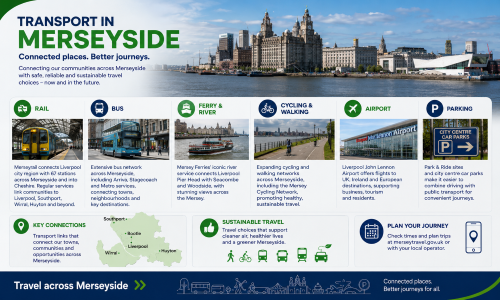
The River Mersey divides parts of the county geographically, but the transport network connects many of its major communities.
Merseyrail links Liverpool with substantial parts of Wirral and Sefton, while local rail services also support journeys towards St Helens and surrounding areas.
Road travel is supported by routes including the M62, M57 and M58. The Queensway and Kingsway tunnels connect Liverpool and Wirral.
And then there is something few UK counties can claim as part of an everyday transport identity: the Mersey Ferry.
Merseytravel covers bus, rail, ferry, tunnels and active travel across Liverpool City Region. You can check current journeys through
Transport should still be considered part of household affordability, not just a line on a map.
Before choosing an area, think about:
- station distance;
- ticket costs;
- tunnel charges where relevant;
- parking;
- school journeys;
- shift patterns;
- hybrid working;
- peak-time travel;
- how frequently the commute will actually happen.
A cheaper property may not always create a cheaper lifestyle if getting to work becomes substantially more expensive.
Music, Football, Waterfront and Coast Are Part of Everyday Life
There are places where attractions mainly belong to visitors.
Merseyside is different because many of its best-known cultural assets also shape local identity.
Liverpool’s music history is inseparable from The Beatles and the Cavern Quarter. The Royal Albert Dock, Museum of Liverpool, galleries and waterfront add another layer.
Football is equally embedded in the area’s identity through Liverpool and Everton.
But the county’s appeal stretches well beyond Liverpool city centre.
Crosby Beach is known for Antony Gormley’s Another Place. Formby combines coastline, woodland and dunes. New Brighton provides a different Wirral waterfront experience, while Southport offers its own seaside identity.
Knowsley Safari adds a major family attraction outside the city, while parks including Sefton Park and Birkenhead Park provide everyday green space rather than occasional day trips.
VisitLiverpool’s regional guide highlights beaches, parks, museums, galleries, sport, and cultural attractions across Liverpool City Region, rather than focusing only on the city centre.
These things can appear secondary when you are comparing mortgage payments.
Once you live somewhere, they become part of weekends, school holidays and ordinary life.

Food, Neighbourhoods and the Places You Return To

A good place to live needs more than attractions people visit once.
It needs places people want to return to.
Liverpool has a broad independent food and drink scene across neighbourhoods such as the Baltic Triangle, Bold Street, Georgian Quarter, Castle Street and Lark Lane.
Wirral has its own restaurants, cafés, pubs and coastal venues around areas including West Kirby, Heswall and New Brighton.
Sefton adds Southport, Crosby and Formby, each with their own high streets and local hospitality.
Prescot, St Helens and other communities across Knowsley and St Helens create a different, more local rhythm.
Merseyside’s food identity also has its own history, including Scouse, the dish whose name became associated with Liverpool itself.
Why does that matter when deciding where to move?
Because a location’s quality is often measured in ordinary routines.
Where do you meet friends?
Where can you walk for coffee?
Where do you take children on Saturday morning?
What can you reach without planning an entire day around it?
Those details rarely appear on a mortgage illustration, but they often determine whether a place actually feels like home.
Your Mortgage Should Fit the Move, Not Just the Purchase Price
A property search becomes more useful when mortgage planning happens alongside it.
The relative affordability of some Merseyside areas does not mean every mortgage application is straightforward.
A lender may need to consider:
- deposit size;
- loan-to-value;
- affordability;
- credit commitments;
- property construction;
- lease terms;
- service charges;
- employment history;
- variable income;
- existing mortgages;
- the amount being borrowed.
A waterfront apartment in Liverpool may create different questions from a detached home in Formby.
An older property in Wirral may be assessed differently from a modern development around Knowsley.
A buyer moving into St Helens may also have very different financial objectives from someone buying close to the coast in Sefton.
If you are comparing several areas, Find a Mortgage Adviser by Location can help narrow the search by geography.
But geography should only be the start.
The more important question is whether the adviser’s experience reflects the borrower, property and mortgage decision involved.

Larger Homes and More Complex Finances Need Their Own Context

Merseyside should not be labelled as one high-net-worth property market.
The local data does not support that.
However, parts of the county do contain substantially higher-value property than borough averages suggest.
Locations such as Formby, parts of Crosby, Heswall, Caldy, West Kirby and selected south Liverpool neighbourhoods can include larger or higher-value homes.
This can create a different borrowing requirement.
A borrower may have substantial assets while their taxable income appears less straightforward. Others may receive:
- company profits;
- dividends;
- investment income;
- partnership income;
- bonuses;
- commissions;
- property income;
- overseas income;
- income through several businesses.
In these circumstances, the closest mortgage adviser isn’t necessarily the most appropriate.
Experience with HNW Mortgage Brokers may be relevant where borrowing size, assets or income structure require a more specialist assessment.
The point is not that a particular postcode makes someone high-net-worth.
The mortgage needs to reflect the complete financial picture.
Different Stages of Life Can Lead to Different Parts of Merseyside
Moving home isn’t always about climbing the property ladder.
For some households, the question of why move to Merseyside changes later in life.
A homeowner might be:
- downsizing;
- moving closer to children;
- relocating towards the coast;
- reducing household running costs;
- looking for a more manageable property;
- paying off an existing mortgage;
- considering how property wealth fits into retirement.
Coastal areas such as Southport, Formby, West Kirby and New Brighton may appeal for different reasons than Liverpool’s urban neighbourhoods or communities further inland.
The financial questions change too.
Someone approaching retirement may need to consider pension income, existing borrowing, property value and whether moving releases enough capital to support future plans.
If you’re considering equity release, treat it as a separate specialist decision rather than a standard residential mortgage.
Homeowners can explore Equity Release Advisers in Merseyside where later-life borrowing becomes relevant. The current Connect Lifetime page specifically covers homeowners across Liverpool, Wirral, Formby, Crosby, Southport and St Helens.

Different Stages of Life Can Lead to Different Parts of Merseyside
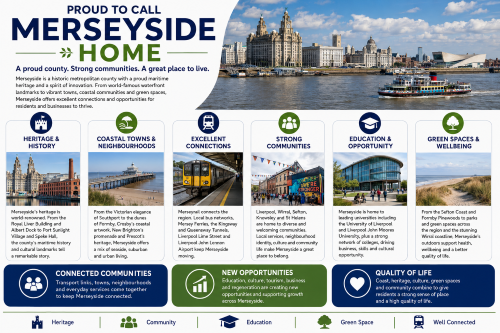
One reason why move to Merseyside remains an interesting question is that the answer can change with age and priorities.
A graduate may choose Liverpool for work, universities, and city life.
A first-time buyer may compare Liverpool with Knowsley or St Helens to see how far their deposit can stretch.
A household with young children may look towards established suburbs, Wirral, Crosby, Formby or parts of Sefton.
Someone whose career is centred on Liverpool may prioritise Merseyrail access rather than living closest to the city centre.
A later-life mover may value the coast, a smaller property or proximity to family more than commuting.
There is no single “best” part of Merseyside because no single type of person moves there.
That is its advantage.
A successful move should work not only when you collect the keys, but once work changes, children grow up, priorities shift, and the property becomes part of ordinary life.
Browse Our Advisers in Merseyside
Once you have narrowed down where you want to live, the next question is whether your borrowing fits the property and your circumstances.
Connect Experts lets users compare advisers by location and stated areas of expertise.
The existing Merseyside directory includes advisers covering the county, including Southport, Formby, and Crosby.
Use it to compare advisers based on the decision you need to make rather than simply choosing the nearest postcode.
Connect Experts is a mortgage adviser directory and matching platform. It does not provide mortgage advice directly. Mortgage advice is provided by the adviser or firm you choose.






People who found this page helpful also explored these related topics:

Mortgage Broker in Wallasey: Trusted Expert Advice 2026

Mortgage Broker in Birkenhead: Expert Mortgage Guidance

Mortgage Broker in Allerton: Expert, Trusted Advice

Mortgage Broker in Woolton: Whole of Market Adviser 2026

Mortgage Broker in Gayton: Proven Advice for Clients in CH60

Mortgage Broker in Caldy: Expert Advice for CH48 Buyers
Neighbouring Counties
FAQs: Why Move to Merseyside?
Which parts of Merseyside offer coastal living without losing access to Liverpool?
Wirral and Sefton provide some of the clearest choices. Crosby and Formby combine coastal access with routes towards Liverpool, while West Kirby and New Brighton offer Wirral locations connected through the local rail network. Southport sits further north and has a more distinct seaside-town character. The right choice depends on how often you need the city, the type of property you want and your travel budget.
How much do house prices differ across Merseyside?
Quite considerably. In July 2026, average prices ranged from £185,000 in St Helens to £224,000 in Sefton. Liverpool and Knowsley averaged £189,000, while Wirral averaged £222,000. Individual neighbourhoods can differ substantially from borough averages, so local property type and postcode remain important.
Could Merseyside work for a first-time buyer who still wants access to a major city?
Potentially. Liverpool, Knowsley, St Helens, Wirral, and Sefton offer different combinations of property prices and access to employment and transport. First-time buyer averages in July 2026 ranged from £169,000 in St Helens to £192,000 in Sefton. Buyers should compare deposit requirements, travel costs, and property type rather than relying on price alone.
What should I check before choosing to live on one side of the River Mersey?
Consider where you work, which transport routes you will use, how often you cross the river and the cost of those journeys. Rail, road tunnels, and ferry connections make cross-river travel practical for many households, but a geographically short journey can feel different at peak times. School travel and family commitments should also be included.
Is Merseyside relevant for people working in digital, life sciences or advanced industries?
Yes. Liverpool City Region identifies digital and technology, life sciences, creative industries, and advanced manufacturing as priority economic sectors. Professional and business services also contribute to the regional economy. Mortgage applicants in these sectors may have conventional salaries or more complex income, including bonuses, contracting, or company remuneration.
What should I compare before deciding where in Merseyside to live?
Compare the total lifestyle rather than only the purchase price. Consider housing type, mortgage costs, schools, commuting, transport, childcare, access to green or coastal space, local services, and how much money you have left after regular commitments. Liverpool, Wirral, Sefton, Knowsley and St Helens each offer a different balance.