Why Move to West Midlands?
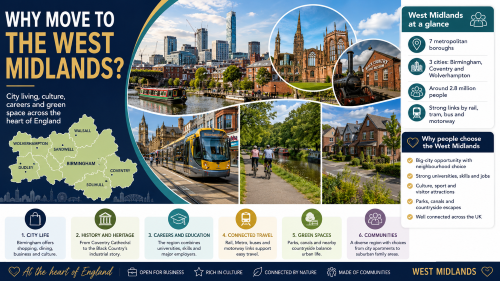
The West Midlands is one of England’s most important urban regions. It offers city living, family suburbs, historic towns, universities, major employers, green spaces, and strong transport links.
This page focuses on the West Midlands metropolitan county. That includes Birmingham, Coventry, Dudley, Sandwell, Solihull, Walsall, and Wolverhampton. The West Midlands Combined Authority area has a population of about 2.9 million people.
For home movers, this gives the area wide appeal. Birmingham offers city jobs, shopping, universities, nightlife, hospitals, culture, and major regeneration. Coventry offers heritage, education, business parks, and strong access to Warwickshire. Solihull offers green space, family homes, and access to Birmingham Airport.
The Black Country also adds character and value. Dudley, Sandwell, Walsall, and Wolverhampton offer industrial heritage, local communities, commuter routes, and a wide range of property types.
The West Midlands can suit first-time buyers, families, professionals, landlords, students, and retirees. However, each area feels different. Buyers should compare prices, schools, transport, rental demand, and property types before choosing where to live.
Why Move to West Midlands - What to Expect
Living in the West Midlands can feel very different by location.
Birmingham offers a major city lifestyle. Buyers can find apartments, terraces, suburban homes, and larger family properties. Popular areas include the city centre, Jewellery Quarter, Harborne, Edgbaston, Moseley, Sutton Coldfield, and Kings Heath.
Coventry has a strong mix of heritage, universities, business parks, and commuter access. Areas such as Earlsdon, Tile Hill, Allesley, Binley, and Finham may appeal to buyers seeking different budgets and lifestyles.
Solihull often attracts families and professionals. It offers parks, schools, rail links, shopping, and access to the M42, M40, and Birmingham Airport.
Dudley, Sandwell, Walsall, and Wolverhampton can offer better value than parts of Birmingham and Solihull. These areas also provide strong links to the Black Country, local employment, and historic communities.
For buyers who need advice in another language, Connect Experts also offers a Find a Broker by Language service.
Education in West Midlands: A Centre of Learning
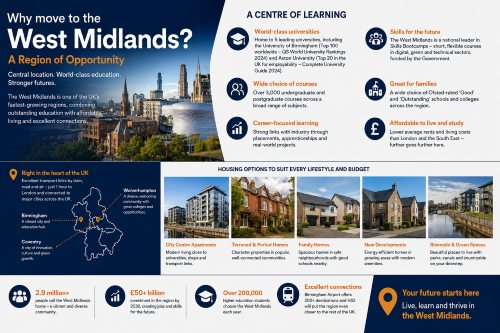
Housing in the West Midlands is varied. Buyers can find city apartments, Victorian terraces, semi-detached homes, new-build estates, family houses, converted flats, and buy-to-let properties.
Prices vary by local authority. ONS data for March 2026 shows an average house price of £233,000 in Birmingham, £220,000 in Coventry, £229,000 in Dudley, £210,000 in Sandwell, £330,000 in Solihull, £212,000 in Walsall, and £212,000 in Wolverhampton.
Rental costs also vary. ONS data for April 2026 shows average monthly private rents of £1,086 in Birmingham, £1,019 in Coventry, £847 in Dudley, £939 in Sandwell, £1,259 in Solihull, £906 in Walsall, and £931 in Wolverhampton.
This range gives buyers choice. Birmingham and Solihull may suit people who want major amenities and strong commuter links. Coventry may appeal to professionals, students, and families. Dudley, Sandwell, Walsall, and Wolverhampton may suit buyers seeking value and space.
Landlords should compare tenant demand, rental yield, licensing rules, property condition, and lender criteria. For specialist support, buyers can explore buy-to-let mortgage brokers.
Housing in West Midlands: Exploring Your Options
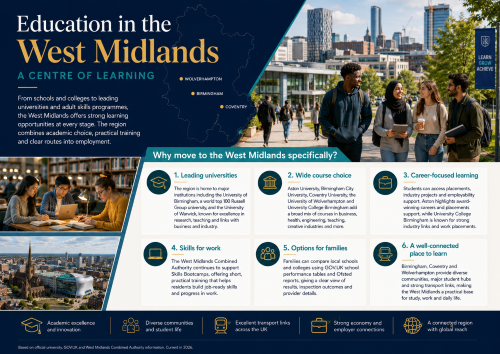
The West Midlands has a strong education network. Families can find nursery, primary, secondary, grammar, independent, special, college, and university options.
School admissions sit with local councils. Therefore, families should check catchments, admissions rules, transport, SEND support, and term dates before moving.
Higher education is a major strength. Birmingham City University, Coventry University, and the University of Wolverhampton work together through West Midlands Combined Universities. The group supports regional priorities and works with local authorities, industry, and government.
The wider region also includes the University of Birmingham, Aston University, University College Birmingham, Newman University, and other specialist providers.
Students help support local economies. They also create steady rental demand in parts of Birmingham, Coventry, and Wolverhampton. However, landlords should still check lenders’ rules, licensing requirements, and local rental conditions.
Why Move to West Midlands - Employment Opportunities
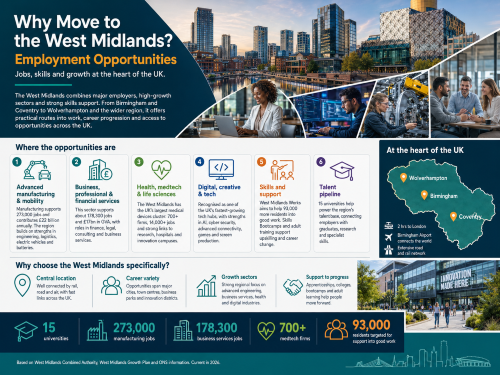
The West Midlands has a broad economy. Major sectors include public services, healthcare, education, manufacturing, transport, logistics, financial services, professional services, digital, creative industries, construction, and retail.
The West Midlands Growth Plan sets out a long-term vision for the regional economy to 2035. It aims to improve living standards, support good jobs, raise productivity, reduce poverty, and support net zero progress.
Birmingham is a major business centre. It supports finance, law, professional services, retail, healthcare, education, and technology.
Coventry has strong links to automotive, advanced manufacturing, engineering, logistics, research, and higher education.
The Black Country supports manufacturing, construction, logistics, public services, retail, and local enterprise.
Solihull benefits from business parks, transport links, Birmingham Airport, retail, professional services, and nearby automotive employment.
Key Employment Sectors in the West Midlands
Public Services, Healthcare, and Education
Hospitals, councils, universities, schools, and public bodies provide large-scale employment. These roles support stability across the region.
Advanced Manufacturing and Engineering
The West Midlands has deep manufacturing roots. Automotive, aerospace, engineering, battery technology, and clean tech remain important growth areas.
Finance, Professional Services, and Business Support
Birmingham has a strong professional services base. This includes law, finance, accounting, consulting, insurance, and business support.
Digital, Creative, and Media
Birmingham, Coventry, and Digbeth support creative, digital, gaming, media, design, and tech businesses. As a result, the area can appeal to graduates and career changers.
Retail, Hospitality, Tourism, and Leisure
Shopping centres, restaurants, hotels, museums, arenas, theatres, sports venues, and visitor attractions all support local jobs.
Selecting the Right Expert Brokers in West Midlands
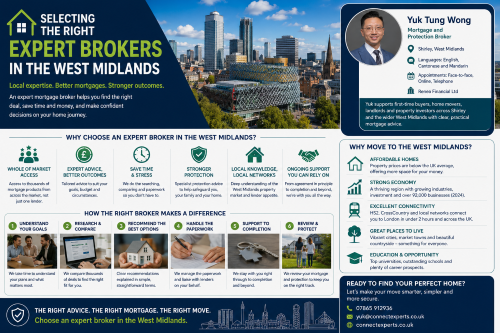
Choosing the right mortgage broker in the West Midlands can make your move easier.
Local property markets vary across Birmingham, Coventry, Solihull, Wolverhampton, Dudley, Sandwell, and Walsall. A city flat, family house, older terrace, new-build home, or rental property may each raise different lender questions.
At Connect Experts, brokers can help with:
- Local market knowledge across West Midlands towns and cities
- Access to a wide range of lenders
- First-time buyer, home mover, remortgage, and landlord support
- Self-employed and complex income applications
- Protection advice for life cover, critical illness cover, and income protection
- Clear communication, including support from bilingual mortgage brokers
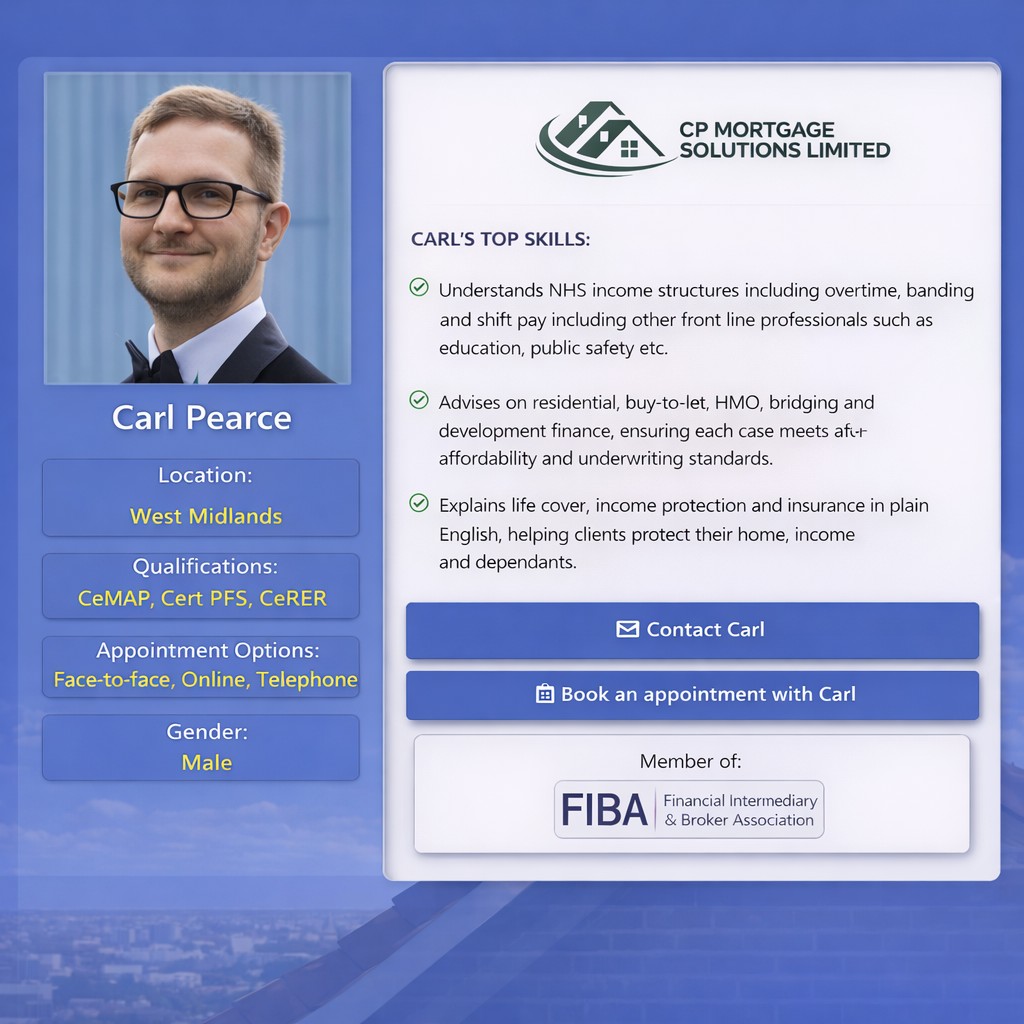
For protection advice in the area, Amir Din is a relevant local profile. His Coventry, West Midlands profile covers residential, commercial, buy-to-let, bridging finance, protection, and general insurance.
You can also explore mortgage brokers in West Midlands for wider local adviser options.
Finding Homes for Sale in West Midlands
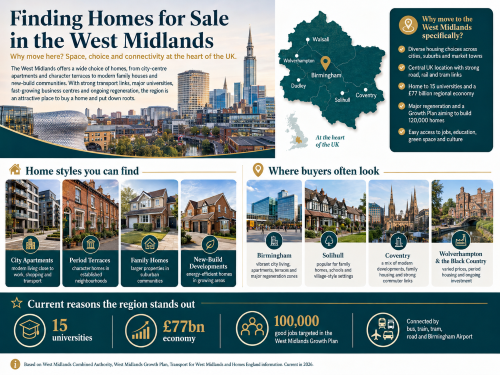
The West Midlands offers many housing choices.
In Birmingham, buyers may consider city flats, Jewellery Quarter apartments, Victorian terraces, suburban semis, and larger homes. Areas such as Harborne, Edgbaston, Moseley, Kings Heath, Sutton Coldfield, and Erdington all serve different budgets.
In Coventry, buyers often compare Earlsdon, Finham, Allesley, Binley, Tile Hill, Stoke, and Coundon. The city can suit students, families, professionals, and commuters.
In Solihull, buyers may look at Shirley, Knowle, Dorridge, Olton, Castle Bromwich, and central Solihull. These areas often appeal to families and commuters.
In Dudley, Sandwell, Walsall, and Wolverhampton, buyers can find more value in many neighbourhoods. These areas may suit first-time buyers, landlords, and families seeking more space.
However, buyers should check more than price. Property condition, lease length, service charges, construction type, local demand, transport, schools, and survey results all matter.
First-time buyers can also review the first-time buyer guide before viewing homes.
Mortgage Brokers in West Midlands: Securing a Home
Buying in the West Midlands can involve different lender checks.
A Birmingham apartment may raise questions about service charges or the lease. A Solihull family home may involve a larger loan size. A Black Country terrace may need more attention to the property condition. A Coventry buy-to-let may need a rental income review.
A mortgage broker in the West Midlands can help first-time buyers, home movers, remortgage clients, landlords, contractors, self-employed applicants, and buyers with complex income.
A broker can also help you compare lenders, prepare documents, review affordability, and understand fixed or variable rate options.
This can be useful across a wide range of areas. Prices, property types, rental demand, and transport links differ by town, postcode, and street.
Buyers using short-term funding can also review the bridging loan guide.
Why Move to West Midlands - Transport in West Midlands
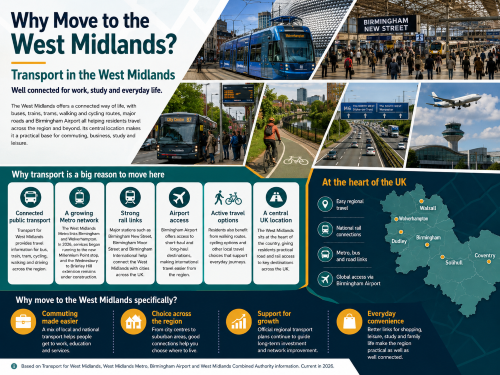
Transport is one of the region’s main strengths.
The West Midlands has rail, tram, bus, road, cycling, walking, park and ride, and journey planning services through Transport for West Midlands.
Birmingham New Street, Birmingham Moor Street, Birmingham Snow Hill, Coventry, Wolverhampton, Walsall, and Solihull provide rail links across the region and beyond.
The West Midlands Metro connects Birmingham and Wolverhampton. The Metro site describes it as the tram network that connects Birmingham to Wolverhampton.
Recent rail investment has also improved local access. Willenhall and Darlaston stations opened to the public on 19 March 2026. Pineapple Road, Kings Heath, and Moseley Village stations opened on 7 April 2026.
Road links are also strong. The M5, M6, M40, M42, A38, A45, and A41 support travel across the region.
However, commuting times vary. Buyers should test journeys at peak times before choosing an area.
Exploring Attractions in West Midlands
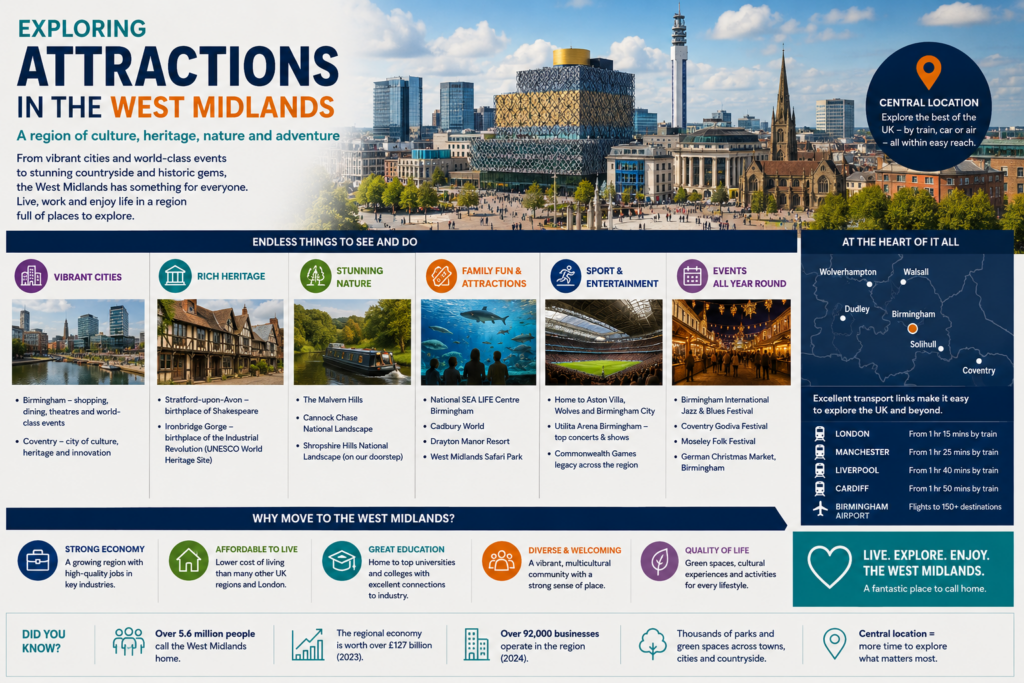
The West Midlands offers major attractions, museums, shopping, parks, sport, music, theatres, heritage sites, and family days out.
VisitEngland highlights Coventry cathedrals, Cadbury World, Michelin-star cuisine, and the Black Country Living Museum as part of the West Midlands visitor offer.
The Black Country Living Museum in Dudley explores more than 250 years of regional history. Its site describes the attraction as covering the Industrial Revolution through to post-war prosperity.
Cadbury World in Bournville is another well-known family attraction. Its visitor information describes a chocolate-themed day out in Birmingham.
Other popular places include Coventry Cathedral, Birmingham Museum and Art Gallery, Library of Birmingham, Symphony Hall, Utilita Arena Birmingham, Wolverhampton Art Gallery, Walsall Arboretum, Sutton Park, Dudley Zoo and Castle, and the region’s canal network.
Dining Out: The Best Places to Dine in West Midlands
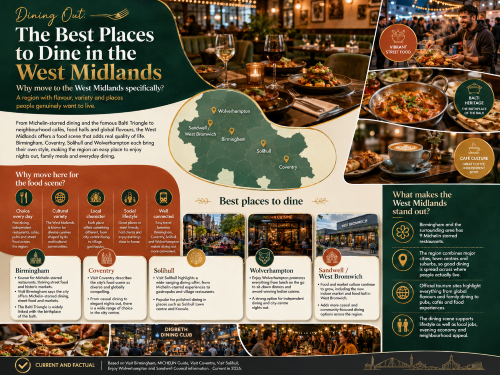
The West Midlands has a varied food scene.
Birmingham offers casual dining, street food, fine dining, cafés, global restaurants, food halls, pubs, and independent venues. Visit Birmingham highlights afternoon tea, craft beer, street food in Digbeth, and global cuisine in the Jewellery Quarter.
The city is also known for the Balti Triangle, creative food venues, and a strong independent dining culture.
Coventry offers restaurants, cafés, markets, bars, and student-friendly food spots. Wolverhampton, Walsall, Dudley, Sandwell, and Solihull also provide pubs, family restaurants, independent cafés, and local food venues.
For residents, this means strong choice. You can enjoy food in Birmingham city centre, a meal in Solihull, a café in Coventry, a pub in the Black Country, or street food in Digbeth.
Why West Midlands is the Perfect Place to Call Home
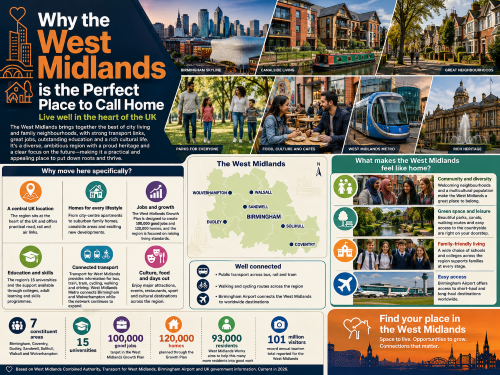
The West Midlands stands out because it offers choice.
You can live in a major city, a family suburb, a historic town, a student area, a commuter location, or a better-value neighbourhood.
The region offers strong employment, major universities, transport links, visitor attractions, dining, shopping, healthcare, and a wide range of homes.
However, buyers should compare locations carefully. Affordability, school access, commute times, rental demand, property type, and lender criteria can vary.
A local mortgage broker can help you understand your options before you make an offer.
Browse Our Advisers in the West Midlands



People who found this page helpful also explored these related topics:

Mortgage Broker in Southwater: Advice for Local Buyers

Mortgage Broker in Westergate: Smart Local Advice Today

Mortgage Broker in Selsey: Smart Coastal Mortgage Guide

Mortgage Broker in Southwick: Local Advice That Matters

Mortgage Broker in Hurstpierpoint: BN6 Mortgage Advice

Mortgage Broker in Burgess Hill: Expert Adviser Search
FAQ: Why Move to the West Midlands
| Question | Answer |
|---|---|
| Why is the West Midlands a great place to live? | The West Midlands offers a balanced lifestyle with thriving cities, scenic countryside, and affordable housing. You can enjoy urban energy in Birmingham or Coventry while staying close to peaceful rural areas in Staffordshire and Worcestershire. |
| What are the main job opportunities in the West Midlands? | The region has a strong economy led by engineering, manufacturing, finance, and digital sectors. Major employers like Jaguar Land Rover, HSBC UK, and the NHS create thousands of jobs every year, while Birmingham’s growing tech scene attracts new startups. |
| How affordable is housing in the West Midlands? | Property prices are generally lower than in London and the South East. You can find modern apartments in Birmingham city centre or family homes in suburbs like Solihull and Sutton Coldfield at far better value per square foot. |
| What transport links make the West Midlands convenient? | The area is one of the most connected in the UK. The M6 and M42 link to national motorways, and Birmingham New Street Station provides direct trains to London, Manchester, and Bristol. Birmingham Airport also connects residents to major European and international destinations. |
| Are there good schools and universities in the region? | Yes. The West Midlands is home to top-rated schools and respected universities such as the University of Birmingham, Aston University, and Coventry University. Many areas also offer Ofsted ‘Outstanding’ primary and secondary schools. |
| What leisure and cultural attractions can residents enjoy? | From world-class theatres and galleries in Birmingham to historic sites like Warwick Castle and Ironbridge Gorge, the West Midlands is rich in culture. The region also offers excellent shopping at the Bullring and Mailbox and beautiful countryside walks in the Malvern Hills. |
| Is the West Midlands a good place for families? | Absolutely. Family-friendly neighbourhoods, strong community spirit, great schools, and spacious parks make it an ideal region to raise children. Towns like Solihull, Sutton Coldfield, and Stourbridge are especially popular with families. |
| What makes property investment attractive in the West Midlands? | The combination of rising property demand, infrastructure projects like HS2, and a growing young population make the region a top choice for buy-to-let investors. Rental yields in Birmingham and Coventry remain among the best outside London. |
If you are Looking for a Mortgage Network
“Hi, I’m Liz Syms, Chief Executive Officer and founder of Connect Experts, Connect Mortgages, and Connect for Intermediaries.
If you are a UK mortgage broker based in the West Midlands, joining our mortgage network can help you increase your visibility to clients actively searching for trusted, FCA-authorised advice. Brokers featured on our West Midlands mortgage brokers page are matched with clients who value clear communication and professional guidance, including those who prefer advice in a specific language.
Our platform is designed to support compliant, client-focused advisers and help you connect with the right audience across the West Midlands.”
Choose the option that suits you best:
Option 1: Schedule a call with our Business Recruitment Manager
Option 2: Complete our contact form
Option 3: Call us