Bridging the Gap: Property transactions do not always happen in a convenient order.
A new purchase may need completing before an existing property is sold. An auction deadline may arrive before standard mortgage funds are available. A property may also need repairs before a long-term lender will accept it.
Short-term property finance may bridge that timing or funding gap. However, it is not intended to replace a suitable long-term mortgage.
Its purpose is temporary. Therefore, the repayment plan matters as much as the initial loan.
At a Glance
A bridging loan is short-term finance secured against property.
It may help when a purchase, sale, refurbishment or refinance cannot happen at the same time.
Before proceeding, borrowers should understand:
- how the loan will be repaid;
- the gross and net loan amounts;
- the loan-to-value;
- how interest will be charged;
- lender, valuation, legal and adviser fees;
- whether the loan is regulated;
- what happens if the exit is delayed.
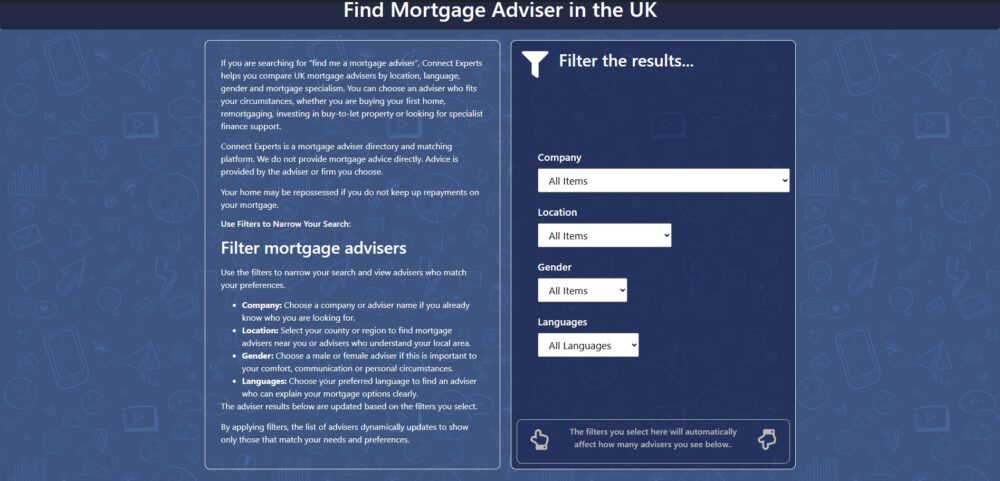
Connect Experts is a directory of mortgage advisers. You can use it to find and compare advisers with relevant experience in bridging finance.
What Financial Gap Does Bridging Finance Cover?
A financial gap exists when money is required before another expected source becomes available.
For example, a buyer may need funds to complete a purchase before receiving proceeds from another property sale.
A property investor may need to complete an auction purchase before arranging a long-term buy-to-let mortgage.
A property may also be unsuitable for standard mortgage lending until repairs have been completed.
Bridging finance may provide temporary funding during these periods.
However, the gap must have a defined end. A short-term loan without a credible repayment route can become an expensive long-term problem.
How Does Short-Term Property Finance Work?
A bridging loan is normally secured against a property or several properties.
The lender considers the security, purpose of the borrowing, loan-to-value ratio, and proposed exit strategy.
Unlike a standard repayment mortgage, the capital is typically repaid at the end of the loan term.
The repayment source might be:
- the sale of a property;
- refinancing onto a residential mortgage;
- refinancing onto a buy-to-let mortgage;
- business funds;
- investment proceeds;
- another verified source.
Terms vary between lenders and individual cases. Borrowers should not assume that a particular loan size, term or completion date will be available.
A bridging-loan mortgage broker can assess the proposed transaction and identify lenders that consider such cases.
Common Gaps Bridging Finance May Cover
Buying Before Selling
A homeowner may find a suitable new property before their existing home has sold.
Temporary financing may allow the purchase to be completed before the sale proceeds become available.
However, the borrower must consider what happens if the original property takes longer to sell.
The expected sale value should also allow for estate agency fees, legal costs and any existing mortgage.
Breaking a Property Chain
A delayed buyer can place an entire property chain at risk.
Bridging finance may allow one transaction to proceed while another remains incomplete.
This does not remove the underlying sale risk. It transfers the timing risk into a short-term secured loan.
Auction Purchases
Auction contracts often require completion within a fixed period.
A standard mortgage may not complete within that timescale. The property may also require work before meeting ordinary lender criteria.
Short-term finance can sometimes support the purchase while a longer-term solution is prepared.
Legal checks should begin promptly because auction contracts are typically binding upon successful bid.
Refurbishment Before Refinancing
Some properties cannot immediately support a standard residential or buy-to-let mortgage.
Possible concerns include:
- missing kitchens or bathrooms;
- structural problems;
- extensive damp;
- unsafe electrics;
- major roof damage;
- incomplete conversions;
- properties considered uninhabitable.
Bridging finance may fund the purchase or works before refinancing.
Where the project involves substantial construction, conversion or staged works, a development finance adviser may be more suitable.
Rental Property Purchases
Landlords may use temporary finance to purchase, repair or stabilise a rental property.
The planned exit may be a sale or refinance onto a buy-to-let mortgage.
A realistic rental valuation and refinance assessment should be completed before relying on this route.
Borrowers can find buy-to-let bridging loan brokers for cases involving rental property.
Why Is the Exit Strategy So Important?
The exit strategy explains how the bridging loan will be repaid.
It is one of the lender’s central considerations because the loan is not designed to continue indefinitely.
A credible exit should be specific, evidenced and achievable within the proposed term.
For a sale exit, the adviser and lender may consider:
- the current property value;
- the proposed asking price;
- local demand;
- existing secured borrowing;
- expected selling costs;
- how long similar properties take to sell.
For a refinance exit, they may consider:
- future property value;
- expected rental income;
- borrower income;
- mortgage affordability;
- property condition after works;
- likely long-term lender criteria.
A hoped-for increase in property value is not the same as a confirmed repayment plan.
The exit should also include a contingency if the sale, works or refinance takes longer than expected.
Gross Loans and Net Loans
The amount offered by a bridging lender may not equal the cash received.
The gross loan is the total borrowing before deductions.
The net loan is the amount available after deducting or retaining costs.
Deductions may include:
- arrangement fees;
- retained interest;
- legal costs;
- valuation costs;
- administration charges;
- existing secured debt being repaid.
Borrowers should ask for both figures in writing.
A loan may appear large enough when viewed gross, yet provide insufficient net funds for the intended transaction.
How Can Bridging Interest Be Paid?
Bridging interest can be structured in several ways.
Monthly Serviced Interest
The borrower pays interest each month.
This may preserve more of the initial loan for the property transaction. However, the borrower must support the monthly payments.
Retained Interest
The lender calculates and deducts an agreed amount of interest when the loan completes.
This reduces the net funds received.
Any unused retained interest may be treated in accordance with the lender’s terms upon repayment of the loan.
Rolled-Up Interest
Interest is added to the balance and repaid at the end.
The balance grows during the term. Therefore, the total repayment amount will exceed the initial advance.
The adviser should explain how the chosen structure affects the net loan, final balance and loan-to-value.
What Costs Should Be Considered?
The monthly interest rate is only one part of the cost.
| Possible cost | What it may cover |
|---|---|
| Lender arrangement fee | Setting up the loan |
| Valuation fee | Assessing the security property |
| Legal costs | Lender and borrower legal work |
| Adviser fee | Research, advice and application support |
| Administration fee | Processing or account management |
| Exit fee | A charge applied by some lenders |
| Extension charge | Continuing beyond the agreed term |
| Default interest | A higher rate following a breach |
| Transfer costs | Sending loan funds |
Some charges may be added to the loan. Others must be paid separately.
Adding costs to the loan can increase the balance and reduce the available equity.
Borrowers should request a complete cost illustration rather than comparing headline interest rates alone.
What Does Loan-to-Value Mean?
Loan-to-value ratio compares the amount borrowed to the property’s value.
For example, a £300,000 loan secured against a £500,000 property represents 60% loan-to-value before other considerations.
However, bridging calculations can be more complex.
The lender may consider:
- the current market value;
- the purchase price;
- the value after works;
- existing mortgages;
- retained interest;
- fees added to the loan;
- whether several properties provide security.
The lender may use the lower purchase price rather than an expected future value.
An adviser can explain which valuation basis is likely to apply.
First-Charge and Second-Charge Bridging Loans
A first-charge bridging loan is normally the main secured loan against the property.
A second-charge bridging loan sits behind an existing first mortgage.
The existing lender may need to consent to a second charge. The available equity must also support both loans.
Second-charge borrowing can be useful when replacing the existing mortgage would incur penalties or result in the loss of a valuable rate.
However, the combined borrowing and repayment risk must be assessed carefully.
Regulated and Unregulated Bridging Finance
A bridging loan may be regulated or unregulated.
The classification depends on matters including:
- who is borrowing;
- how the property will be used;
- who will occupy it;
- the purpose of the funds;
- the security being offered.
A loan involving a home occupied by the borrower or a close family member may fall within regulated mortgage rules.
Business, investment and certain buy-to-let transactions may be treated differently.
The FCA’s regulated mortgage guidance explains that bridging loans may fall within the definition of a regulated mortgage contract. Specific circumstances and exemptions also apply.
Borrowers should ask an authorised adviser to explain the likely classification before proceeding.
Is Bridging Finance the Only Option?
Bridging finance should be compared with other possible routes.
| Option | May be considered when |
| Standard mortgage | The property and timescale meet ordinary lender criteria |
| Further advance | An existing lender permits additional borrowing |
| Second charge mortgage | Equity is available and the first mortgage should remain |
| Buy-to-let mortgage | The property is suitable for letting and lender rules are met |
| Development finance | The project involves substantial or staged construction |
| Commercial mortgage | Long-term business property finance is required |
| Bridging finance | A temporary timing or property-condition gap exists |
The fastest available option is not automatically the most suitable.
A lower-cost route may be preferable when the transaction has enough time and meets standard lender requirements.
What Information Should You Prepare?
Before speaking to an adviser, gather the following information:
- the required loan amount;
- the property address and type;
- the purchase price;
- the estimated current value;
- details of existing mortgages;
- the reason for borrowing;
- the required completion date;
- the preferred loan term;
- the proposed repayment route;
- refurbishment estimates, where relevant;
- evidence supporting the exit strategy;
- personal or company borrowing details.
For an auction purchase, provide the legal pack and auction conditions.
For refurbishment, include a schedule of works, budget and expected completion date.
For refinance, provide realistic information about the intended long-term mortgage.
Questions to Ask a Bridging Finance Adviser
Ask the adviser:
- Do you regularly handle cases like mine?
- Is this likely to be regulated or unregulated?
- Which property values will lenders use?
- What is the gross loan?
- What is the expected net advance?
- How will interest be charged?
- What fees apply?
- What evidence supports the exit?
- What could delay completion?
- What happens if the exit is late?
- Which alternatives should also be considered?
Answers should be clear enough for you to understand the cost, timing and repayment risk.
Frequently Asked Questions
What does “bridging the gap” mean in property finance?
It means using temporary finance between two financial events.
For example, funds may be required before a property sale or long-term mortgage completes.
How long does a bridging loan last?
Terms depend on the lender and transaction.
The proposed term should allow enough time to complete the planned sale, works or refinance.
Can a bridging loan complete quickly?
It may complete faster than a standard mortgage.
However, timing depends on valuation, legal work, lender checks, documentation and the complexity of the property.
No completion date should be treated as guaranteed.
Do I need a repayment plan?
Yes.
The lender will normally require a clear exit strategy showing how the capital, interest and charges will be repaid.
Can bridging finance be used before selling a home?
It may be considered when purchasing another property before an existing home is sold.
The costs and risks of a delayed sale should be assessed before proceeding.
Can I use bridging finance for an unmortgageable property?
It may be possible where the property condition prevents standard mortgage lending.
The lender will assess the security, proposed works, experience and repayment strategy.
Is bridging finance expensive?
It commonly costs more than standard long-term mortgage borrowing.
The total cost can include interest, lender fees, valuation charges, legal costs and adviser fees.
Can I repay a bridging loan early?
Many lenders permit early repayment.
However, minimum interest periods or other conditions may apply. These should be checked before accepting the loan.
What happens if the exit strategy is delayed?
The borrower may face extra interest, extension fees or default charges.
The lender may also take recovery action if the loan is not repaid under the agreed terms.
How do I find a suitable bridging loan adviser?
Use Connect Experts to compare advisers by expertise, location, language and appointment type.
Review the adviser’s profile before making contact and explain the required deadline at the beginning.
How to Find a Bridging Finance Adviser
Connect Experts helps users search for mortgage advisers by expertise, location, language and appointment preference.
Connect Experts does not provide the mortgage advice itself. Advice is provided by the adviser or firm selected through the directory.
When comparing advisers, review:
- their stated bridging finance experience;
- the property types they cover;
- whether they handle residential or investment cases;
- the appointment methods offered;
- their location;
- additional languages;
- professional information shown on their profile.
You can search for residential short-term bridge loan advisers when the transaction concerns residential property.
For a broader comparison, use the UK mortgage broker directory and select an adviser whose experience matches the proposed transaction.