UK Mortgage Guide for Yiddish and German Speakers: A UK mortgage application depends on accurate information, clear evidence and a suitable lender.
For Yiddish and German-speaking clients, discussing the process in a preferred language may make complex terms easier to understand.
However, language support is only one part of the decision.
The adviser must also understand the required mortgage type, income structure, deposit, property and lender criteria.
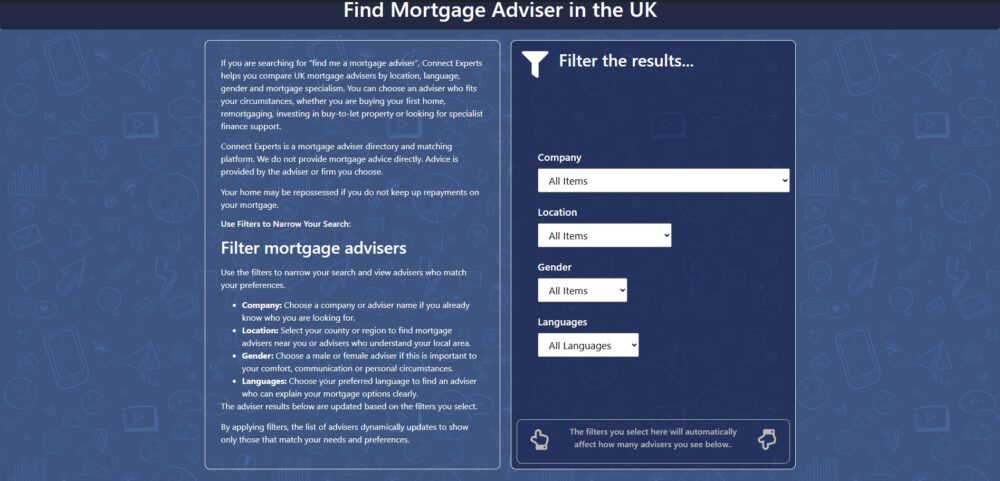
Connect Experts helps users search for mortgage advisers by language, location and mortgage experience. It is a directory and matching platform. Mortgage advice is provided by the adviser or firm selected.
At a Glance
- Mortgage advice may be discussed in Yiddish, German or English where an adviser offers those languages.
- Formal lender, legal and mortgage documents will usually remain in English.
- Lenders assess income, expenditure, credit commitments, deposit evidence and property acceptability.
- Self-employed, overseas-income and buy-to-let applications may require further evidence.
- Customers should check the adviser or firm on the FCA Financial Services Register.
- Connect Experts lets users compare advisers by language, location and mortgage type.
Why Language Matters During a Mortgage Application
A mortgage is a long-term financial commitment.
Applicants need to understand the interest rate, monthly payments, fees, repayment method and possible early repayment charges.
A shared language may help a customer ask detailed questions and explain their circumstances accurately.
This can be useful when discussing:
- Income from employment or self-employment
- Savings and deposit sources
- Existing loans or credit commitments
- Monthly household spending
- Property plans
- Rental income
- Mortgage fees
- Fixed, variable or tracker rates
- Repayment and interest-only options
Clear communication does not guarantee approval. The lender will still apply its own affordability and underwriting rules.
Mortgage Advice in Yiddish or German
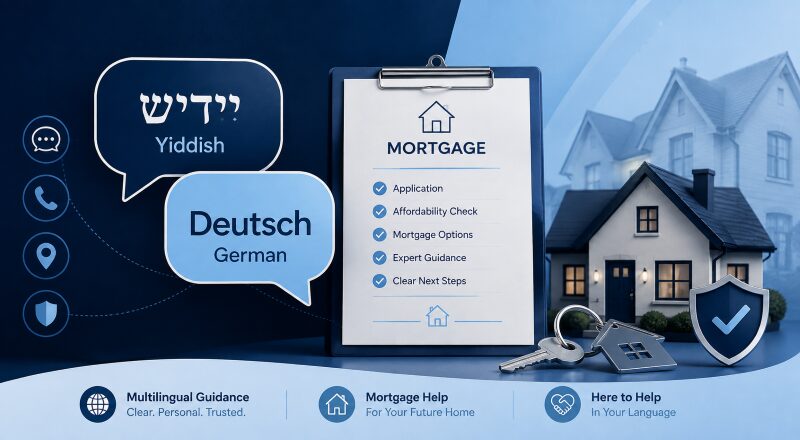
A multilingual mortgage adviser may explain UK mortgage terminology in Yiddish or German.
The adviser may also collect information and discuss suitable options in the customer’s preferred language.
Customers looking specifically for advice in Yiddish can search for Yiddish-speaking mortgage brokers.
Customers who prefer German can compare German-speaking mortgage brokers.
Language availability should be confirmed directly with the adviser before an appointment.
Will Mortgage Documents Be Provided in Yiddish or German?
Formal mortgage and legal documents will usually be issued in English.
These may include:
- The mortgage illustration
- The application declaration
- Valuation reports
- Solicitor correspondence
- The mortgage offer
- The mortgage deed
- Insurance documents
- Completion statements
An adviser may explain the mortgage terms in another language. However, the official meaning comes from the original documents.
Customers should ask questions whenever a term, cost or obligation remains unclear.
Independent legal advice may also be required for certain transactions or ownership arrangements.
How UK Mortgage Affordability Is Assessed
Lenders assess whether the proposed mortgage appears affordable now and in the future.
The assessment may consider:
- Basic salary
- Overtime, bonuses or commission
- Self-employed earnings
- Rental income
- Pension income
- Benefits accepted by the lender
- Loans and credit cards
- Childcare and maintenance costs
- Household expenditure
- The proposed mortgage term
- The interest rate and repayment method
A high income does not automatically produce a larger mortgage.
Regular commitments, dependants, credit history and the chosen property can affect the result.
Online calculators provide estimates only. A lender’s full assessment may produce a different figure.
Documents Commonly Requested by Mortgage Lenders
Preparing documents early may reduce avoidable delays.
An employed applicant may need:
- Recent payslips
- Recent bank statements
- Proof of deposit
- Identification
- Proof of address
- A P60
- Evidence of bonuses or commission
A self-employed applicant may need:
- Finalised accounts
- Tax calculations
- Tax year overviews
- Business bank statements
- Accountant details
- Evidence of ongoing contracts
- Company accounts where relevant
Requirements vary between lenders.
Customers with business income can also search for self-employed mortgage brokers with experience assessing complex earnings.
Identification, Names and Translated Evidence
The name used on the mortgage application should match the supporting identification.
Differences in spelling may arise where names have been transliterated between alphabets or recorded differently on older documents.
Applicants should tell the adviser about:
- Previous names
- Alternative spellings
- Dual nationality
- More than one passport
- Differences between bank and identity records
A lender may request certified translations for documents that are not written in English.
Translation rules differ between lenders. Applicants should confirm the required format before paying for translation services.
Can Overseas Income Be Used for a UK Mortgage?
Some lenders may consider income earned outside the UK.
Their assessment may depend on:
- The country where the income is earned
- The payment currency
- Employment status
- Contract length
- Tax arrangements
- Exchange-rate risk
- UK residency status
- The intended property use
A lender may reduce the income used in its calculation to allow for currency movements.
Applicants may also need foreign bank statements, employment contracts, tax documents or certified translations.
Not every lender accepts every currency or country. A suitable adviser can identify likely requirements before an application is submitted.
Deposit Evidence and Gifted Deposits
A lender and solicitor must understand where the deposit came from.
Acceptable sources may include:
- Personal savings
- Sale proceeds
- Investments
- Inheritance
- A gift from a family member
- Equity from another property
Gifted deposits usually require written confirmation.
The person providing the gift may need to confirm that the money is not a loan. Identification and bank statements may also be requested.
Large or recent transfers should be explained clearly.
These checks support fraud prevention and anti-money laundering requirements.
First-Time Buyer Mortgage Considerations
First-time buyers often need help understanding the order of the purchase process.
Typical stages include:
- Reviewing affordability and the available deposit
- Obtaining an agreement in principle where appropriate
- Finding a property
- Making an offer
- Submitting the full mortgage application
- Completing lender valuation and underwriting
- Receiving the mortgage offer
- Completing the legal work
- Exchanging contracts
- Completing the purchase
An agreement in principle is not a mortgage guarantee.
The lender can still assess the property, evidence and full application before issuing an offer.
Users beginning their first purchase can compare first-time buyer mortgage advisers.
Buy-to-Let Mortgages for Yiddish and German-Speaking Clients
Buy-to-let affordability is often assessed differently from residential borrowing.
The lender may consider:
- Expected monthly rent
- Rental coverage calculations
- The applicant’s tax status
- Deposit size
- Landlord experience
- Property type
- Existing rental properties
- Personal or limited company ownership
- Houses in multiple occupation
- The applicant’s personal income
Some buy-to-let mortgages are not regulated in the same way as residential mortgages.
The adviser should explain the regulatory position and the lender’s assessment method.
Landlords can search for buy-to-let mortgage brokers with experience in rental property finance.
Property Checks Still Apply
A mortgage lender assesses both the borrower and the property.
A strong income does not make every property acceptable.
The lender may review:
- Construction type
- Property condition
- Valuation
- Lease length
- Ground rent provisions
- Commercial use nearby
- Number of bedrooms
- Occupancy arrangements
- Planning permission
- Title restrictions
Unusual properties may need a specialist lender.
Applicants should provide accurate details at the beginning. Missing information can lead to delays or a declined application.
Mortgage Costs to Discuss Before Applying
The headline interest rate does not show the total cost.
Applicants should ask about:
- Product fees
- Adviser fees
- Valuation fees
- Legal costs
- Survey costs
- Broker commission
- Early repayment charges
- Higher lending charges
- Insurance requirements
- Transfer fees
Some fees may be added to the mortgage.
Adding a fee means interest may be charged on that amount throughout the mortgage term.
The adviser should explain their fees and commission before the customer proceeds.
How to Check a Mortgage Adviser
Before sharing financial documents, customers should check the adviser or firm.
The FCA Financial Services Register can be used to check regulatory status and permissions.
Customers should confirm:
- The firm’s registered name
- Its reference number
- Its current status
- Relevant mortgage permissions
- The adviser’s connection with the firm
- The firm’s official contact details
Customers should avoid sending bank statements or identification to an unverified person.
Questions to Ask a Multilingual Mortgage Adviser
A first conversation should establish both language support and mortgage experience.
Useful questions include:
- Which languages can you use throughout the process?
- Do you advise on my required mortgage type?
- Which lenders can you consider?
- What documents will I need?
- How will my income be assessed?
- Are any documents likely to need translation?
- What fees will I pay?
- How are you paid?
- Who will update me during the application?
- Will official documents remain in English?
- Is my mortgage regulated by the FCA?
- What could prevent the application from proceeding?
Good mortgage advice should make the risks, limitations and costs clear.
Frequently Asked Questions
Can I receive UK mortgage advice in Yiddish?
Yes, some UK mortgage advisers speak Yiddish. Availability should be confirmed before the appointment.
Can I discuss a UK mortgage application in German?
Some advisers can discuss mortgage options and application stages in German. Official lender documents will normally remain in English.
Does using a multilingual adviser improve my approval chances?
Not automatically. Approval depends on affordability, credit history, evidence, lender criteria and property acceptability.
Can an adviser translate my mortgage offer?
An adviser may explain the offer in another language. They are not necessarily providing a certified legal translation.
Will a lender accept documents written in German?
Possibly, but certified English translations may be required. The lender should confirm its requirements before translations are ordered.
Are Yiddish-speaking mortgage advisers FCA-authorised?
Regulatory status depends on the individual and firm. Customers should check the FCA Financial Services Register before proceeding.
Can I use income earned in euros?
Some lenders consider euro income. They may apply exchange-rate deductions and request further evidence.
Can a multilingual adviser help with buy-to-let finance?
Yes, where the adviser has the required permissions and relevant buy-to-let experience.
Finding an Adviser by Language and Mortgage Type
Speaking the same language can support understanding. Relevant mortgage experience remains equally important.
A first-time buyer, landlord, company director, and overseas earner may each need different knowledge of lenders.
Connect Experts allows users to find a mortgage adviser by language and compare available profiles.
Users should review:
- Languages spoken
- Adviser location
- Mortgage permissions
- Specialist experience
- Appointment method
- Firm details
- Regulatory information
The final choice should reflect the customer’s financial circumstances and required mortgage type.