
Mortgage Adviser in Bristol BS1 – Discover Living in Bristol Guide. Bristol is the largest city in South West England and a major centre for housing, business, education, culture, and transport. Bristol City Council states that the local authority area was projected to exceed 500,000 people in mid-2025.
The city sits beside the River Avon and includes well-known areas such as Clifton, Redland, Southville, Bedminster, Bishopston, Cotham, Easton, Fishponds, St George, Horfield, Brislington, and Westbury-on-Trym.
Bristol has a strong local identity shaped by maritime history, universities, independent businesses, green spaces, creative industries, and major regeneration projects.
The city centre includes Broadmead, Cabot Circus, Quaker’s Friars, The Arcade, and The Galleries. Visit Bristol describes the Bristol Shopping Quarter as home to high street shops, designer names, independent boutiques, restaurants, cinemas, and bars.
Bristol also has major landmarks and cultural areas. These include Bristol Harbourside, Clifton Suspension Bridge, St Nicholas Market, Bristol Cathedral, Park Street, College Green, and the Old City.
Green space is also important in Bristol. Residents have access to The Downs, Brandon Hill, Ashton Court Estate, Castle Park, Victoria Park, Blaise Castle Estate, Eastville Park, and many smaller neighbourhood parks. Bristol City Council confirms that many parks and green spaces are managed under local open space byelaws.
Property in Bristol
Bristol offers a varied property market, with options for first-time buyers, home movers, families, landlords, and investors.
Buyers may find:
- Georgian townhouses
- Victorian terraced homes
- Edwardian houses
- 1930s semi-detached properties
- Detached family homes
 Modern city apartments
- Harbourside flats
- Converted warehouses
- Student rental properties
- Professional rental properties
- HMOs
- New-build developments
- Period homes in conservation areas
- Commercial premises
- Semi-commercial premises
- Homes close to parks and green space
- Properties near Bristol Temple Meads
- Homes near the University of Bristol
- Homes near the University of the West of England
- Properties in nearby commuter areas
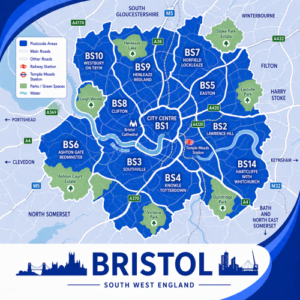
Property styles vary across Bristol. Clifton and Redland include many period homes and flats. Southville and Bedminster offer terraced housing and access to North Street. Harbourside and Temple Quarter can suit buyers seeking apartments near the centre. Bishopston, Horfield, Henleaze, and Westbury-on-Trym are often considered by families.
Easton, Fishponds, St George, Brislington, and Totterdown offer different budgets, property types, and transport options. Lenders assess applications by income, credit history, deposit size, affordability, property type, lease details, and property condition.
Flats, leasehold homes, new builds, HMOs, mixed-use buildings, and refurbishment properties may need additional lender checks.
Meet Sarah Fox-Clinch: Mortgage Broker for Bristol
Sarah Fox-Clinch provides specialist mortgage advice for Bristol. Her Connect Experts profile says she supports clients across Somerset and advises on commercial mortgages, semi-commercial mortgages, buy-to-let, HMOs, bridging finance, limited company mortgages, and general insurance.
Sarah has worked in the mortgage industry for more than 20 years. Fox Davidson states that she has experience with complex lending situations and clients with complex income streams. Each case is reviewed around the client’s income, deposit, credit profile, property type, borrowing needs, and lender criteria.
This helps ensure mortgage recommendations reflect the applicant’s circumstances and the Bristol property being purchased or refinanced.
Find Sarah on: the Connect Expert Directory
Living in Bristol: What to Expect
Bristol offers city living with access to green space, culture, employment, universities, transport links, and neighbourhood communities. The city has a strong independent character. Areas such as Gloucester Road, North Street, Wapping Wharf, Stokes Croft, Clifton Village, and Easton support local shops, cafés, restaurants, and creative businesses.
Bristol Harbourside is another important part of daily life. The University of Bristol describes the Harbourside as the cultural heart of the city, with food markets, restaurants, attractions, and the Bristol Harbour Festival.
Bristol can suit:
- First-time buyers
- Families
- Commuters
- Students
- Landlords
- Professionals
- Business owners
- Medical professionals
- Creative workers
- Buyers seeking South West property options
- Investors comparing rental demand
- Buyers wanting city and green space access
The city is large enough to offer varied lifestyles. A flat in BS1 may feel very different from a house in Bishopston, Clifton, Southville, or Fishponds.
Education and Schools in Bristol
Bristol is served by primary schools, secondary schools, sixth forms, colleges, independent schools, and two major universities. Families moving to Bristol may consider school catchments, admissions rules, Ofsted ratings, transport, childcare, and after-school care. Bristol City Council publishes information on secondary school admissions. The 2026 data includes planned admission numbers, age ranges, applications, and priority areas for many schools.
Popular family areas can include Bishopston, Redland, Henleaze, Westbury-on-Trym, Southville, Bedminster, Horfield, St Andrews, Brislington, and Fishponds. Suitability will depend on budget, school preference, commuting needs, and property type.
Families considering a move to Bristol should assess:
- Distance to schools
- Admissions criteria
- Catchment areas
- Priority areas
- Transport options
- Local amenities
- Nurseries
- After-school care
- School performance information
- Future education needs
- Sixth-form options
- University access
- Walking and cycling routes
School admissions rules can change. Buyers should confirm details with schools and Bristol City Council before relying on catchment information.
Amenities and Everyday Convenience
Bristol offers a wide range of everyday amenities across the city centre and local neighbourhoods. Residents have access to supermarkets, pharmacies, banks, gyms, cafés, restaurants, salons, healthcare services, libraries, markets, and leisure facilities.
Key retail and leisure areas include:
- Cabot Circus
- Broadmead
- Quakers Friars
- The Arcade
- The Galleries
- Park Street
- Queen Road
- Clifton Village
- Gloucester Road
- North Street
- Wapping Wharf
- St Nicholas Market
- Bristol Harbourside
- Cribbs Causeway nearby
Cabot Circus is one of Bristol’s main shopping destinations. Bristol Shopping Quarter also includes Broadmead, The Arcade, The Galleries, and Quakers Friars. For food and drink, Bristol offers restaurants, pubs, bars, cafés, food markets, takeaways, and independent venues.
Clifton, Southville, Bedminster, Wapping Wharf, Gloucester Road, Easton, and the city centre all offer different local scenes.
Social Life and Local Lifestyle in Bristol
Bristol has a varied social scene shaped by students, professionals, families, artists, local businesses, and long-term residents. The city is known for music, street art, festivals, theatres, museums, restaurants, bars, and independent venues.
Cultural and leisure destinations include:
- Bristol Harbourside
- Bristol Old Vic
- Bristol Beacon
- M Shed
- Watershed
- Arnolfini
- St George’s Bristol
- Clifton Suspension Bridge
- Ashton Court Estate
- The Downs
- St Nicholas Market
- Wapping Wharf
- Gloucester Road
- North Street
Clifton Suspension Bridge is one of Bristol’s best-known landmarks. The Clifton Suspension Bridge Trust describes it as a special part of Bristol’s heritage. Bristol may appeal to people who want an active city lifestyle with access to parks, independent shops, and strong local identity.
Transport Links in Bristol
Bristol is well placed for travel across the South West, South Wales, London, and wider UK routes. Bristol Temple Meads is the city’s main railway station. GWR lists routes linking Bristol with London, Bath, Cardiff, Weston-super-Mare, Taunton, Exeter, Plymouth, Gloucester, Cheltenham, and Portsmouth.
This makes Bristol practical for people travelling to:
- Bath
- Cardiff
- London
- Exeter
- Taunton
- Gloucester
- Cheltenham
- Weston-super-Mare
- South Wales
- Devon and Cornwall
- Wider South West routes
Bristol also has Bristol Parkway station in the north of the city. This can suit commuters in areas such as Stoke Gifford, Filton, Bradley Stoke, Horfield, and nearby South Gloucestershire. Local transport includes buses, park-and-ride services, Metrobus routes, cycling routes, walking routes, and harbour ferry services. Travelwest describes Metrobus as a modern public transport system for the greater Bristol area. It uses cashless ticketing and limited stops at key destinations.
Road links include the M32, M4, M5, A4, A38, and A4174 ring road. Bristol Airport also provides flight information, live arrival and departure details, destinations, parking, and travel information on its official website.
Buyers who rely on public transport should check current timetables, journey times, and service availability before choosing a property.
Why Bristol Appeals to Buyers
Bristol attracts buyers because it offers a variety of property, employment, universities, transport, green space, culture, and strong neighbourhood identities.
The area offers:
- City centre apartments
- Harbourside flats
- Georgian homes
- Victorian terraces
- Family houses
- Suburban homes
- Period conversions
- New-build developments
- Student rental opportunities
- Professional rental opportunities
- Commercial property options
- Semi-commercial property options
- Homes near parks
- Homes near rail stations
- Homes near major employers
- Homes near universities
Bristol may appeal to:
- First-time buyers seeking city access
- Families wanting schools and parks
- Commuters travelling by rail or road
- Students living near universities
- Landlords considering rental demand
- Business owners looking at commercial property
- Professionals working in Bristol
- Buyers wanting South West connections
- Home movers looking for more space
- Investors comparing city property options
The city’s variety means buyers should compare areas carefully.
A flat near Harbourside may suit different needs from a house in Bishopston. A home in Clifton may be assessed differently from one in Fishponds, Brislington, or St George. Mortgage affordability will depend on income, deposit, credit history, commitments, property type, and lender criteria. Buyers should also consider legal fees, survey costs, moving costs, insurance, valuation fees, and stamp duty where applicable.
Those researching relocation may also wish to read “Why Move to Bristol” to understand the city’s wider housing and lifestyle appeal.
Living in Bristol
Bristol offers a strong mix of property choice, culture, education, transport, green space, retail, and employment. It is a practical option for buyers who want access to a major South West city with its own identity. From city apartments and Harbourside flats to terraced homes, family houses, and suburban properties, Bristol offers a wide choice.
For buyers, landlords, and business owners, the local market can create opportunities. Mortgage suitability will still depend on lender criteria and personal circumstances. For tailored mortgage advice in Bristol, Sarah Fox-Clinch can help review your options, explain lender requirements, and support your application from early planning through to completion.