A mortgage in New Southgate begins with more than a property price.
The lender must also examine income, expenditure, deposit, credit history and the property itself. These factors determine whether the borrowing remains affordable and suitable.
A Mortgage Broker in New Southgate can assess these details before an application reaches a lender. This can reduce avoidable enquiries, unsuitable applications and unnecessary delays.
New Southgate is closely associated with the N11 postcode district. Its housing includes flats, converted properties, terraced homes and larger family houses. Each property type can raise different lending questions.
The purpose of advice is not simply to obtain borrowing. It is to understand the structure, cost and consequences of that borrowing.
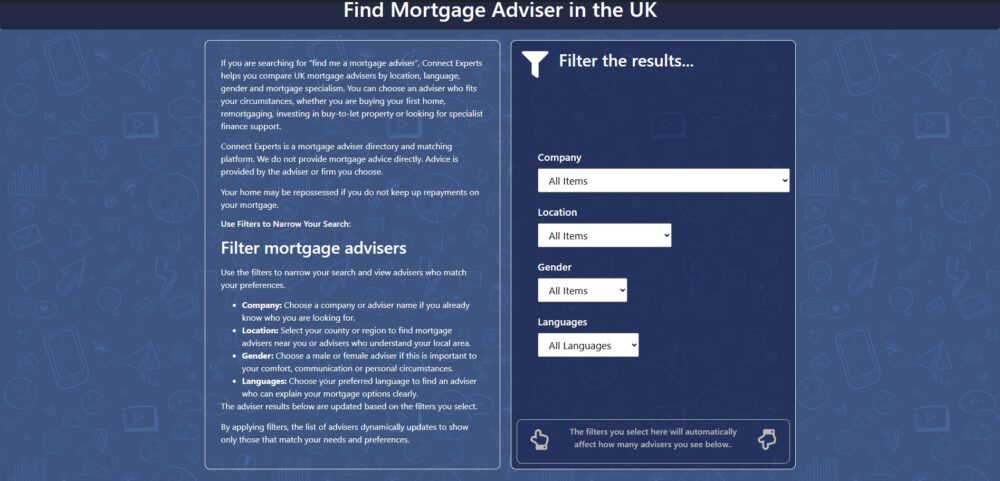
Find a mortgage adviser
Use our mortgage broker directory to search by location, mortgage type, language and specialist experience.
Start your adviser search
Mortgages in New Southgate N11
- Lenders assess income, spending, credit commitments and future affordability.
- Deposit size can affect the available mortgage range and interest rate.
- Flats may require checks concerning lease length, service charges and building construction.
- Self-employed applicants usually need evidence of income and business documents.
- Landlords may be assessed based on rent, property type, and their wider portfolio.
- A broker can compare relevant lender criteria before submitting an application.
- Advice should account for the mortgage cost, the property, and the applicant together.
What Does a Mortgage Broker in New Southgate Do?
A mortgage broker reviews your circumstances and identifies lenders whose criteria may fit you.
This work can include:
- calculating affordable borrowing;
- reviewing income and regular expenditure;
- assessing deposit or available equity;
- checking lender credit requirements;
- examining the proposed property;
- comparing mortgage products and fees;
- preparing the mortgage application;
- communicating with the lender during underwriting.
A broker should also explain why a recommendation may suit your stated needs.
The lowest initial rate is not always the lowest overall cost. Arrangement fees, valuation costs, incentives and early repayment charges can change the result.
You can read our UK mortgage guide before beginning your adviser search.
How Mortgage Affordability Is Assessed
Mortgage affordability is based on more than a simple income multiple.
A lender may consider:
- basic salary;
- overtime, bonuses or commission;
- self-employed earnings;
- pension or investment income;
- loans and credit card balances;
- childcare and maintenance payments;
- household expenditure;
- the proposed mortgage term;
- anticipated interest-rate changes.
Lenders must assess whether mortgage repayments are affordable now and could remain affordable later.
The Financial Conduct Authority’s mortgage information explains the importance of present and future affordability.
Different lenders may treat the same income differently. For example, one lender may accept regular commission while another uses only part of it.
This is why a reliable affordability assessment should happen before property commitments become difficult to reverse.
Buying a Home in New Southgate
Applicants buying in New Southgate may encounter several property types.
These can include:
- purpose-built flats;
- converted flats;
- Victorian or Edwardian terraces;
- semi-detached houses;
- newer residential developments;
- properties above or near commercial premises.
The lender will assess both the applicant and the security being offered.
A financially strong applicant may still face restrictions if the property does not meet the lender’s requirements.
Property details lenders may examine
The assessment can include:
- construction type;
- property condition;
- remaining lease term;
- ground rent provisions;
- service charges;
- number of storeys;
- access arrangements;
- commercial activity nearby;
- planning permissions;
- previous structural changes.
These checks matter because the property supports the mortgage debt.
A home is both a place to live and an asset securing long-term borrowing. Responsible lending must consider both roles.
First-Time Buyer Mortgages in New Southgate
First-time buyers should establish their complete buying budget before arranging viewings.
The deposit is only one part of the cost.
Other possible expenses include:
- conveyancing fees;
- property searches;
- surveys;
- mortgage arrangement fees;
- valuation costs;
- removals;
- initial repairs;
- Stamp Duty Land Tax where applicable.
The amount of tax depends on the purchase circumstances and current rules. Buyers can review the official Stamp Duty Land Tax guidance.
An Agreement in Principle may indicate how much a lender could consider. It is not a final mortgage offer.
The property, evidence and full application must still pass underwriting.
Our first-time buyer guide explains deposits, documents, affordability and the usual buying stages.
Mortgages for Flats and Leasehold Properties
Flats form an important part of London’s housing supply. However, leasehold properties can require further lender checks.
A lender may review:
- the unexpired lease term;
- ground rent;
- service charge history;
- major planned works;
- building insurance;
- management arrangements;
- cladding or external wall information;
- restrictions within the lease.
A shorter lease can reduce the number of lenders willing to consider the property.
High service charges may also affect affordability. They become part of the applicant’s continuing monthly expenditure.
Buyers should therefore examine the lease and financial commitments early. Discovering a restriction after applying can cost time and money.
Remortgaging a Property in New Southgate
Remortgaging means replacing an existing mortgage, usually with a new product or lender.
Common reasons include:
- an existing rate is ending;
- the borrower wants greater payment certainty;
- the property value has changed;
- additional funds are required;
- debts are being reviewed;
- the mortgage term needs adjustment;
- circumstances have changed.
A new lender will normally complete fresh affordability, credit and property checks.
Borrowers should also check:
- early repayment charges;
- exit fees;
- legal costs;
- valuation requirements;
- product fees;
- the total cost over the comparison period.
Remaining with the current lender through a product transfer may involve fewer checks. However, it may not provide the widest available comparison.
The right decision depends on cost, eligibility, timing and future plans.
Buy-to-Let Mortgages in New Southgate
Buy-to-let lending uses different criteria from standard residential borrowing.
The lender may assess:
- expected monthly rent;
- rental coverage calculations;
- borrower income;
- deposit size;
- property type;
- tenancy arrangements;
- landlord experience;
- existing mortgaged properties;
- personal or limited company ownership.
Some properties require specialist consideration. Examples can include houses in multiple occupation, flats above commercial units or properties needing substantial work.
Prospective landlords should also budget for periods without rent, repairs, insurance, tax and management costs.
Our buy-to-let mortgage brokers page explains how specialist advice can support landlords and property investors.
Some buy-to-let mortgages are not regulated by the Financial Conduct Authority.
Self-Employed Mortgage Applications
Self-employed applicants can obtain mortgages, but income evidence may require more interpretation.
Depending on the business structure, a lender may request:
- tax calculations;
- tax year overviews;
- company accounts;
- business bank statements;
- personal bank statements;
- accountant details;
- evidence of current contracts;
- details of retained profits.
Lenders differ in how they assess sole traders, company directors, contractors and business owners.
Some use salary and dividends. Others may consider a share of the company’s retained profits where their criteria permit.
The figures used for tax planning are not always the figures a lender uses for affordability. Early document preparation can therefore be particularly valuable.
Credit History and Mortgage Applications
A lower credit score does not explain every lending decision.
Lenders may examine the complete credit record, including:
- missed payments;
- defaults;
- county court judgments;
- debt arrangements;
- credit utilisation;
- recent applications;
- electoral roll information;
- the age and value of any adverse entries.
The date, reason and current status can all matter.
Applicants should obtain their credit reports before applying. Errors should be challenged through the relevant credit reference agency.
Repeated mortgage applications can create further searches without resolving the underlying issue. A more considered lender selection may reduce that risk.
Later-Life Mortgage Options in London
Older homeowners may be considering a standard mortgage, a retirement interest-only mortgage, or a lifetime mortgage.
The suitable route depends on income, age, property, future plans and estate considerations.
Homeowners considering lifetime lending can read about Equity Release Advisers in London.
Equity release can reduce the value of an estate. It may also affect entitlement to means-tested benefits.
It should be considered alongside alternatives, including downsizing, savings and standard mortgage borrowing.
Documents to Prepare Before Speaking to a Broker
Preparing documents early can reveal issues before a lender requests them.
Common evidence includes:
- photographic identification;
- proof of address;
- recent payslips;
- bank statements;
- deposit evidence;
- proof of bonuses or commission;
- existing mortgage statements;
- tax records for self-employed applicants;
- details of loans and credit commitments;
- property information where available.
Gifted deposits require evidence of the source and donor.
Large recent bank transactions may also require an explanation.
The purpose of documentation is not bureaucracy alone. It allows the lender to verify that the proposed borrowing is supportable and legitimate.
Choosing a Mortgage Adviser in New Southgate
A suitable adviser should be able to explain:
- which mortgage areas they cover;
- whether advice is regulated;
- which lenders they can consider;
- how they are paid;
- what fees may apply;
- what documents they require;
- how they will manage the application.
You should receive clear information before agreeing to proceed.
A local address alone does not establish suitability. Relevant experience, regulatory status and access to appropriate lenders are more important.
Search for a mortgage adviser in London who covers your mortgage type and circumstances.
Mortgage Broker in New Southgate: Frequently Asked Questions
How much deposit do I need to buy in New Southgate?
The required deposit depends on the lender, mortgage type, property and applicant.
A larger deposit can reduce the loan-to-value ratio and may provide access to a broader mortgage range.
Can a broker guarantee that my mortgage will be approved?
No. The lender makes the final decision after completing its affordability, credit and property checks.
A broker can assess criteria and prepare an application, but cannot guarantee acceptance.
Can I get a mortgage for a New Southgate flat?
Potentially, yes.
The lender may assess the lease, service charges, construction, building height and any commercial use near the property.
Does an Agreement in Principle secure a mortgage?
No. It is an initial indication based on limited information.
A full application remains subject to underwriting, valuation and document checks.
Can self-employed applicants obtain a mortgage?
Yes. Lenders commonly consider self-employed applicants.
The evidence and income calculation will depend on the lender and business structure.
Should I use a local broker or an online adviser?
The method of communication is less important than relevant knowledge and regulatory status.
Many advisers can support clients by telephone, video call, email or face-to-face meetings.
How long does a mortgage application take?
Timescales vary according to the lender, property, valuation and complexity of the application.
Complete documents and accurate information can help reduce avoidable delays.
Find a Mortgage Broker in New Southgate
A mortgage affects monthly spending, future choices and the security attached to a home.
Good advice should therefore examine more than today’s interest rate. It should consider the complete cost, lender requirements and the borrower’s longer-term position.
Search Connect Experts to find a mortgage broker covering New Southgate and N11.
Find a mortgage adviser