Six Months Before Your Mortgage Rate Ends: A mortgage review should begin before the final monthly payment under your current deal.
Starting several months early gives you time to:
- Confirm the exact end date.
- Check any early repayment charge.
- compare product transfers and remortgage options.
- Review your property value and remaining balance.
- Prepare income and expenditure evidence.
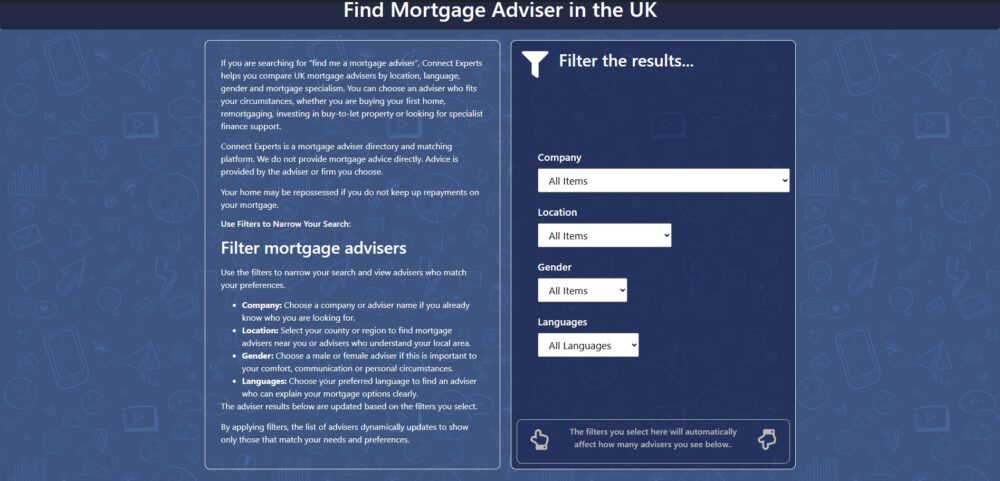
- Find a suitable mortgage adviser through Connect Experts.
An early review does not mean you must change your mortgage immediately. It creates time to make a considered decision.
Why six months can matter
A mortgage rate ending is a date with financial consequences.
When a fixed, discounted or tracker deal expires, the mortgage may move onto the lender’s reversion rate. This is often called a standard variable rate.
That change can affect the monthly payment without changing the amount originally borrowed.
The practical question is not only, “What rate can I obtain?”
It is also:
- When can a new deal be reserved?
- When would an early repayment charge stop applying?
- How long will an application remain valid?
- Could the lender withdraw or replace a product?
- Will the mortgage complete on the correct date?
Timing links all these questions together.
MoneyHelper advises borrowers with six months or less remaining to begin checking available options. However, lender rules and offer periods differ.
A mortgage adviser can explain which timescales apply to your circumstances.
Use the mortgage rate ending adviser directory to compare advisers before your current deal expires.
Six months before the end date
Begin by finding your mortgage offer, annual statement or online account.
Record:
- The product end date.
- The remaining mortgage balance.
- The current interest rate.
- The mortgage term remaining.
- Any early repayment charge.
- Your current monthly payment.
- Your lender’s expected reversion rate.
The product end date and early repayment charge end date may not always be expressed in the same way.
Do not assume that a new mortgage should complete immediately.
Completing too soon could trigger an early repayment charge. Completing too late could leave a period on the lender’s reversion rate.
Your adviser will need the exact dates before comparing the timing of different options.
Five months before the end date
Review what has changed since the mortgage began.
Relevant changes can include:
- A new job.
- Self-employment.
- Reduced or increased income.
- Maternity or parental leave.
- New loans or credit cards.
- Missed payments.
- A change in household costs.
- Planned home improvements.
- A change in the property’s use.
- Plans to move home.
A mortgage obtained several years ago reflected your circumstances at that time.
A new lender will assess your current position.
This distinction matters. The property may be the same, but the lending decision is new.
People whose earnings have changed may benefit from speaking with a self-employed mortgage adviser or another adviser with relevant case experience.
Four months before the end date
Compare the available routes.
The main choices may include:
Product transfer
A product transfer means selecting another mortgage product from the current lender.
It may involve less administration than moving to another lender. However, the lender’s available range could be limited.
Remortgage
A remortgage usually means replacing the mortgage with a new deal from another lender.
The new lender may require:
- An affordability assessment.
- Income evidence.
- A credit search.
- A property valuation.
- Legal work.
- Proof of identity and address.
Remaining on the reversion rate
Doing nothing may place the mortgage on the lender’s standard variable rate or another reversion rate.
This might offer flexibility in some cases. However, the interest rate and monthly payment could change.
The right route depends on total cost, eligibility and future plans.
Three months before the end date
Examine the complete cost rather than the headline rate alone.
A mortgage with a lower interest rate may include:
- A product fee.
- A valuation fee.
- Legal costs.
- An adviser fee.
- A mortgage exit fee.
- A higher early repayment charge.
- Restrictions on overpayments.
A fee added to the mortgage also attracts interest.
The comparison should therefore consider the expected cost during the period you intend to hold the new deal.
An adviser may use the mortgage balance, proposed term and fees to compare the alternatives on a like-for-like basis.
You can read more about how broad lender access works through the whole-of-market mortgage broker guide.
Two months before the end date
Check that the proposed mortgage still fits your plans.
Ask:
- Could I move home during the new deal?
- Do I expect to borrow more?
- Might I make large overpayments?
- Will my income change?
- Do I need payment certainty?
- Could I reduce the mortgage term?
- Would an early repayment charge restrict me?
A mortgage product is not suitable because it looks attractive today.
Its conditions must also remain workable tomorrow.
A longer fixed period may offer greater payment certainty. However, it could create a longer early repayment charge period.
A shorter fixed period may provide earlier flexibility. It also means reviewing the mortgage again sooner.
One month before the end date
Confirm the completion plan.
Check:
- Whether the mortgage offer remains valid.
- Whether any information has changed.
- Whether legal work is complete.
- Whether the valuation has been accepted.
- Whether outstanding conditions have been satisfied.
- Whether the new deal starts after the old charge ends.
- What payment will be collected next.
Do not cancel a direct debit unless the lender or solicitor confirms that you should.
The final payment under the old mortgage and the first payment under the new one may differ from the usual monthly amount.
Ask for an explanation before completion.
What if rates change after you reserve a product?
Some lenders may permit a borrower to move to a different product before completion. Others may apply different rules.
A lower rate appearing elsewhere does not automatically mean switching is sensible.
The adviser should check:
- Whether the new product is available to you.
- Whether changing it will delay completion.
- Whether another application is required.
- Whether the product fee differs.
- Whether the new product changes other conditions.
A mortgage review is therefore a process, not a single search.
How to choose an adviser before your rate ends
Compare more than distance.
Look for an adviser who can explain:
- Product transfers and remortgages.
- Early repayment charges.
- Affordability requirements.
- Product fees and total cost.
- Mortgage offer periods.
- Your preferred communication method.
- Any relevant income or credit complexity.
You can find a broker by expertise and review individual profiles before making contact.
Connect Experts does not provide mortgage advice directly. Advice is provided by the adviser or firm you select.
Frequently asked questions
Must I wait until my mortgage rate ends?
No. You can review your position before the end date.
However, completing a new mortgage too early could create an early repayment charge.
Does starting early guarantee a better mortgage rate?
No. Starting early creates time to compare available options.
Rates and lender criteria can change before completion.
Can I remain with my current lender?
Possibly. Your lender may offer a product transfer.
It should still be compared with other suitable routes where appropriate.
Will a remortgage require a new affordability check?
A new lender will normally assess affordability and eligibility.
The exact process depends on the lender and application.
Where can I find independent guidance?
MoneyHelper provides guidance on getting help with mortgage payments and reviewing an ending deal.
Find an adviser before your mortgage rate ends
Early preparation does not remove uncertainty from mortgage rates.
It changes uncertainty into a series of practical checks.
Use Connect Experts to compare advisers by location, mortgage experience, language and contact preference before your current rate expires.