A self-employed mortgage application often begins with a question about income rather than interest rates.
You may earn a reliable living, but your income might not appear on a straightforward payslip.
For lenders, understanding how the money is earned can be as important as the amount itself.
This is where preparation and relevant mortgage adviser experience become valuable.
At a Glance: What Documents Might You Need?
Self-employed mortgage applicants may need:
- SA302 tax calculations and tax year overviews.
- Recent business accounts.
- Evidence of salary and dividends.
- Contractor agreements or business income records.
- Personal or business bank statements.
- Evidence of the deposit and existing financial commitments.
Requirements vary by lender, employment structure and individual circumstances.
Preparing these documents can make your first adviser conversation more useful.
Why Self-Employed Mortgage Income Needs Careful Assessment
Being self-employed does not prevent you from applying for a residential mortgage.
However, lenders may assess different forms of income in different ways.
Someone working as a sole trader may declare taxable business profits.
A company director might receive a mixture of salary and dividends.
A contractor could work through several agreements with different payment arrangements.
Two people earning similar amounts may therefore present very different income evidence.
The adviser needs to understand those differences before discussing suitable lending routes.
Sole Traders: Understand What Your Accounts Show
For a sole trader, lenders may assess declared profits rather than the total money the business receives.
Revenue and profit are not interchangeable.
Business expenditure, trading history and changes in earnings may affect the income calculation.
For example, strong turnover does not always produce a high level of declared taxable profit.
A mortgage adviser may review your tax calculations, trading pattern and available supporting documents.
They can then explain how different lenders may approach the information.
Company Directors: Salary Is Not Always the Whole Picture
Limited company directors may receive income through several routes.
Salary and dividends are common examples.
Some businesses also retain profit rather than distributing all available earnings.
However, lenders do not necessarily assess retained profit in the same way.
Eligibility can depend on the lender’s criteria, the company structure and the applicant’s financial circumstances.
An adviser familiar with company director mortgages may help explain which evidence is relevant.
The objective is to present an accurate financial picture, not to make earnings appear higher than they are.
Contractors and Freelancers: Explain How Work Is Structured
Contractor income can vary according to the type and length of an agreement.
A contractor might have a current contract, previous assignments and a record of regular earnings.
Another applicant may work through a limited company or an umbrella company.
Lenders can have different requirements for these arrangements.
Therefore, prepare information about your contracts, payment history and working structure.
Ask your adviser how these details could affect the application.
Where Can You Find Your SA302?
An SA302 is a tax calculation that can help demonstrate declared income.
HMRC explains how eligible taxpayers can obtain SA302 tax calculations and tax year overviews.
You can normally access calculations for the previous four years after submitting the relevant Self Assessment returns.
You may also need matching tax year overviews.
However, having these documents does not mean every lender will calculate your mortgage affordability the same way.
Check the required evidence with your adviser before applying.
What Should You Ask a Self-Employed Mortgage Adviser?
A useful first conversation should explain how your earnings might be assessed.
Consider asking these questions:
- Do you regularly work with borrowers who have my income structure?
- Which income figures are relevant to my mortgage application?
- What documents should I prepare before approaching a lender?
- How might recent changes in trading income affect the assessment?
- Which lenders could consider my circumstances?
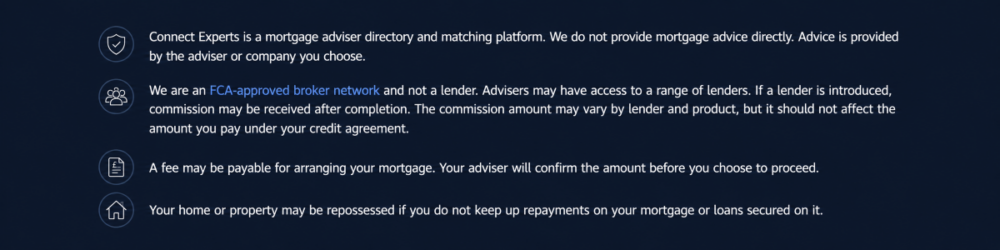
- What fees will I pay, and when would they become due?
The answers should help you understand the process before making a formal application.
They should not guarantee a borrowing amount or a mortgage offer.
Why an Individual Adviser’s Experience Matters
A mortgage adviser may have broad residential lending experience without regularly handling every form of self-employment.
That distinction is worth exploring.
For example, Tushar Kukadia, a mortgage adviser in Iver, Buckinghamshire, describes experience supporting self-employed applicants with complex income.
His profile also covers residential mortgages, buy-to-let, specialist finance and protection.
The profile provides useful background before you make contact.
However, you should still confirm whether an adviser can assist with your specific income circumstances.
Compare Advisers Before Choosing
Relevant experience matters, but so do communication and service arrangements.
Consider whether you want local, telephone or online advice.
Ask about lender access, fees and the services included.
MoneyHelper explains the differences between mortgage advice services, including lender restrictions and charges.
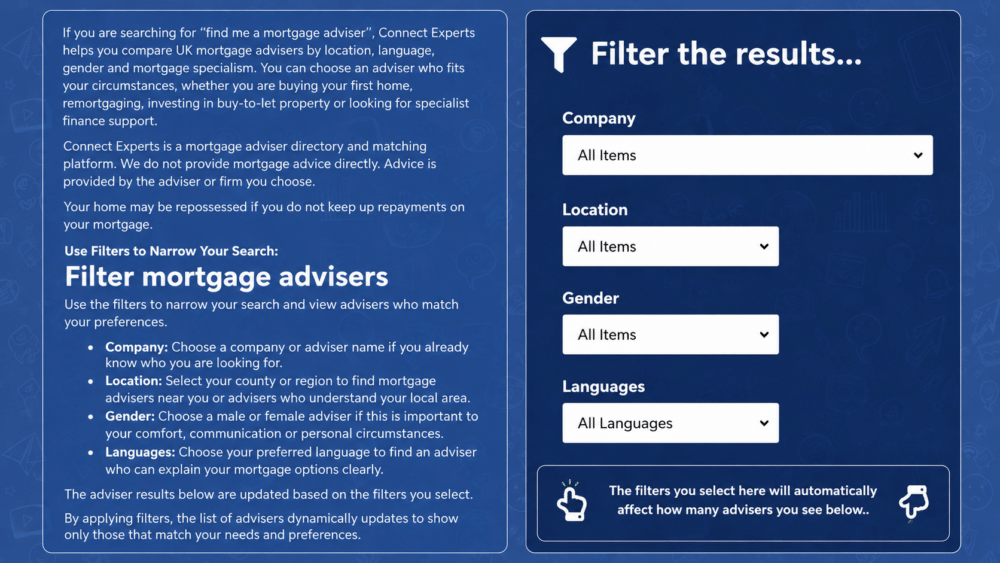
You can then use Connect Experts to find mortgage advisers for self-employed applicants.
Review the profiles and identify advisers whose experience appears relevant.
Alternatively, search the wider UK mortgage adviser directory to compare location, language and other preferences.
Your Income Tells a Story. Make Sure It Is Understood.
A mortgage application should reflect the reality of your finances.
For self-employed borrowers, that reality can involve more than one income source or several years of business activity.
Prepare accurate evidence. Explain your employment structure. Then choose an adviser familiar with your circumstances.
The aim is not simply to find a lender willing to consider an application.
It is to understand whether the proposed mortgage is affordable and appropriate for your needs.