A BTL portfolio landlord usually owns four or more mortgaged buy-to-let properties.
That number changes how many lenders assess an application. The proposed property may still matter, but it is no longer the whole case. A lender may examine every mortgaged rental property, the total borrowing, rental income and future plans.
A portfolio is therefore more than a collection of addresses. It is one connected financial position. A weak property, a high borrowing level, or an incomplete record can affect an otherwise strong application.
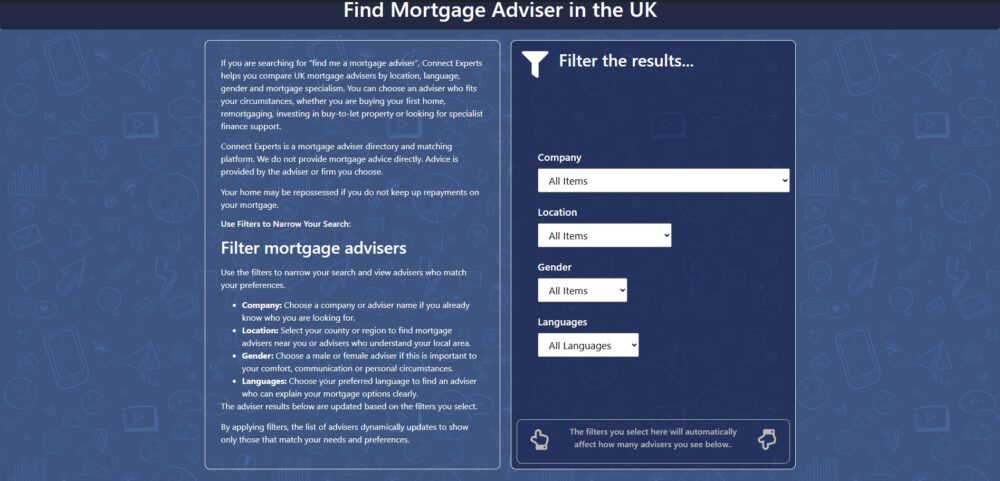
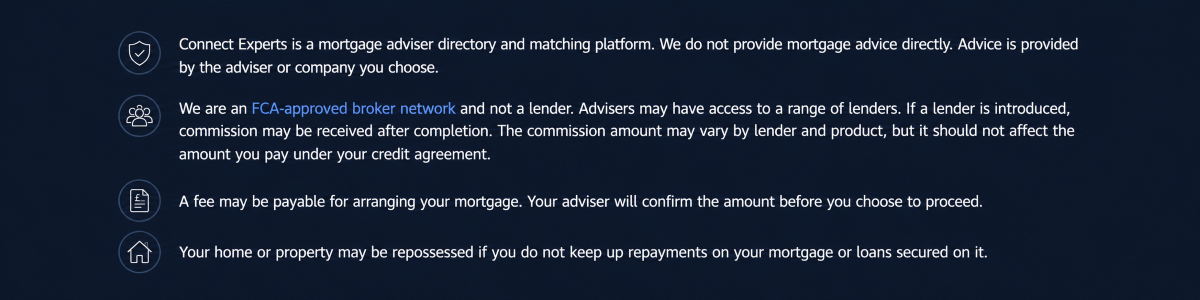
Connect Experts helps landlords find mortgage advisers by specialism, location, language and communication preference. The directory does not provide mortgage advice directly. Advice is provided by the adviser or firm selected.
Find a portfolio landlord mortgage adviser
At a Glance
- A portfolio landlord generally has four or more mortgaged buy-to-let properties.
- Lenders may assess the entire portfolio rather than one property alone.
- Common checks include rental income, mortgage balances, loan-to-value and property type.
- Applicants are usually asked for a complete portfolio schedule.
- Limited company, HMO and mixed-property portfolios can require specialist lender criteria.
- Interest coverage calculations and stress rates vary between lenders.
- Tax, ownership and mortgage advice should be treated as separate professional disciplines.
- Connect Experts helps landlords search for advisers with relevant portfolio experience.
What Is a BTL Portfolio Landlord?
The Prudential Regulation Authority treats a borrower with four or more distinct mortgaged buy-to-let properties as a portfolio landlord.
The properties may be held:
- In one person’s name
- Jointly with another person
- Through one or more limited companies
- Across several mortgage lenders
- Through a mixture of personal and company ownership
The lender will decide how each property and ownership interest is counted.
Owning four properties does not automatically make every mortgage application unsuitable or complex. However, it usually leads to a more detailed underwriting process.
An adviser should therefore establish how the chosen lender defines a portfolio before an application is submitted.
Do Unmortgaged Properties Count?
The formal portfolio-landlord definition centres on mortgaged buy-to-let properties.
However, a lender may still request details of unencumbered properties. These properties can affect the borrower’s assets, rental income and wider financial position.
An unencumbered property may strengthen the overall balance sheet. Nevertheless, it does not guarantee approval. The lender will still consider the proposed loan, rental coverage and portfolio risks.
How Portfolio Landlord Mortgages Differ
A standard buy-to-let assessment often concentrates on the property being financed.
A portfolio application can involve two separate reviews:
- The new purchase or remortgage
- The performance of the background portfolio
| Assessment area | What a lender may review | Why it matters |
|---|---|---|
| Portfolio size | Number of mortgaged rental properties | Establishes whether portfolio underwriting applies |
| Rental income | Current rent for each property | Shows whether the portfolio supports its borrowing |
| Mortgage balances | Outstanding debt by property | Reveals overall leverage and lender exposure |
| Property values | Current estimated or evidenced values | Supports loan-to-value calculations |
| Property type | Standard lets, HMOs or multi-unit buildings | Specialist properties may need different criteria |
| Ownership | Personal, joint or company ownership | Affects documents and available lenders |
| Product end dates | When current mortgage deals expire | Identifies future payment and refinancing risks |
| Landlord experience | Time and experience managing properties | Can affect eligibility for specialist property types |
| Future plans | Purchases, sales and refinancing | Helps the lender understand likely future borrowing |
The principle is simple. A lender needs to know whether one new loan will remain sustainable within the wider portfolio.
Portfolio Stress Testing and Rental Coverage
Lenders commonly compare rental income with stressed mortgage interest.
This calculation is often called an interest coverage ratio. It measures expected rent against a theoretical interest cost.
The calculation may consider:
- The mortgage balance
- Expected monthly rent
- The applicant’s tax position
- The mortgage product
- The lender’s stressed interest rate
- Whether the property is held personally or through a company
- The type and location of the property
Not all lenders use the same percentage or stressed rate. Their policies can also change.
A rent figure that satisfies one lender may not satisfy another. Furthermore, some lenders assess each property separately, while others also review the portfolio in aggregate.
An online calculator can provide an initial indication. It cannot reproduce every lender’s portfolio rules.
What Is Aggregate Portfolio Assessment?
Aggregate assessment combines the principal figures across the whole portfolio.
For example, the lender may total:
- All relevant property values
- All outstanding mortgage balances
- All monthly rental income
- All stressed mortgage commitments
This produces a wider view of leverage and rental coverage.
A strongly performing property may support the overall portfolio. Conversely, one highly leveraged or weakly rented property may reduce the combined result.
That is why portfolio records should be reviewed before the next purchase or remortgage begins.
What Is a Portfolio Schedule?
A portfolio schedule is a structured record of every property in the landlord’s portfolio.
It allows an adviser and a lender to see the full position without having to reconstruct it from separate mortgage statements.
A useful schedule should include:
- Full property address
- Ownership name
- Property type
- Current estimated value
- Mortgage lender
- Outstanding mortgage balance
- Current interest rate
- Monthly mortgage payment
- Product end date
- Monthly rent
- Tenancy type
- Loan-to-value
- HMO licence details, where relevant
The figures should agree with bank statements, mortgage statements, tenancy documents and company records.
Consistency matters. Conflicting balances or rent figures can cause questions and delays.
Documents a Portfolio Landlord May Need
Requirements vary, but applicants may be asked for:
- A completed portfolio schedule
- Current mortgage statements
- Tenancy agreements
- Bank statements showing rent
- Personal and business bank statements
- Tax calculations and tax-year overviews
- Company accounts
- Proof of personal income
- Limited company details
- Details of directors and shareholders
- Proof of deposit
- HMO licences
- Planning or lawful-use documents
- A business plan or cashflow forecast
- Evidence of experience for specialist properties
Preparing these documents early does not guarantee approval. It does give the adviser a clearer starting point.
Personally Owned and Limited Company Portfolios
Portfolio landlords may hold properties personally, through a limited company, or through both routes.
The mortgage and tax effects are not interchangeable.
A lender considering a company application may review:
- The company’s activity
- The company classification
- Directors and shareholders
- Personal guarantees
- Existing company borrowing
- Rental income
- Accounts and bank statements
- The wider property portfolio
Moving an existing property into a company is not a simple administrative change. It may involve a sale, a new mortgage, a valuation, legal work, and tax consequences.
Mortgage advice should be obtained before changing your borrowing arrangements. Independent tax and legal advice should also be taken.
Landlords researching company borrowing can use the limited company BTL adviser search.
HMO and Multi-Unit Portfolios
Houses in multiple occupation can involve additional mortgage requirements.
A lender may examine:
- Number of bedrooms
- Number of households
- Licensing requirements
- Planning status
- Tenancy structure
- Property management experience
- Valuation method
- Expected rental income
Not every lender that accepts standard buy-to-let properties will accept HMOs. Some also restrict large HMOs or properties with particular planning classifications.
Landlords can search separately for an HMO mortgage adviser.
Remortgaging a Property Portfolio
Portfolio remortgaging is not always one transaction covering every property.
A landlord may instead review each mortgage according to:
- Product end date
- Early repayment charge
- Current loan-to-value
- Rental performance
- Available equity
- Future investment plans
- Current lender exposure
Some properties may be suitable for a product transfer. Others may benefit from a wider lender comparison.
The order of transactions can matter. Raising capital from one property may alter the portfolio figures used for a later application.
A planned sequence is usually more useful than reacting to every mortgage expiry separately.
Releasing Equity for Another Purchase
A landlord may consider releasing equity from an existing property to support another purchase.
The lender will consider whether the increased borrowing remains affordable. It may also ask how the released funds will be used.
Possible purposes include:
- Funding a deposit
- Refurbishing another property
- Paying for essential works
- Supporting a future auction purchase
- Restructuring existing borrowing
Available equity does not automatically equal sensible borrowing capacity. The resulting payment, rental coverage and portfolio leverage still matter.
Bridging Finance and Portfolio Growth
Short-term bridging finance may be considered when a landlord needs to:
- Purchase at auction
- Complete before a standard mortgage is available
- Refurbish an unsuitable property
- Resolve a broken property chain
- Refinance within a defined period
Bridging loans usually require a credible exit strategy. That exit may be a sale, a longer-term mortgage or another documented source of funds.
The future mortgage should not be assumed. The property and borrower must still satisfy the intended lender’s criteria when the bridge ends.
Landlords considering short-term borrowing can search for a buy-to-let bridging loan adviser.
Tax and Regulatory Considerations
Residential property finance costs for individual landlords are subject to specific tax rules. Company-owned property is treated differently.
A mortgage adviser can explain borrowing options. However, the adviser does not replace a qualified tax professional.
Before purchasing, transferring or restructuring property, landlords should consider:
- Income Tax
- Corporation Tax
- Capital Gains Tax
- Stamp Duty Land Tax
- Ownership shares
- Inheritance planning
- Company extraction of income
- Legal transfer costs
HMRC provides guidance on residential landlord finance-cost tax relief.
Buy-to-let regulation also depends on the nature of the transaction. Some business buy-to-let mortgages are not regulated in the same way as residential mortgages. Consumer buy-to-let cases can fall within a separate regulatory framework.
The adviser or firm should explain which rules apply to the proposed transaction.
Landlord Responsibilities Beyond the Mortgage
Mortgage approval does not confirm that a property meets letting, safety or licensing requirements.
Landlords remain responsible for matters such as:
- Property safety
- Repairs and maintenance
- Deposit protection
- Gas and electrical requirements
- Energy documentation
- Right-to-rent checks where applicable
- HMO licensing
- Local authority licensing schemes
- Tenancy documentation
Requirements can differ by nation and local authority. Landlords in England can review the government’s current landlord responsibilities guidance.
Legal and compliance advice should be obtained where the position is unclear.
When Should a Portfolio Landlord Speak to an Adviser?
An adviser review may be useful before:
- Making an offer on another property
- Refinancing a property
- Releasing equity
- Buying an HMO
- Applying through a limited company
- Purchasing at auction
- Changing ownership arrangements
- Reaching four mortgaged properties
- Approaching a lender’s exposure limit
- Starting a large refurbishment
- Selling part of the portfolio
- Allowing several fixed rates to expire together
Early review creates time to correct records, gather documents and compare lender criteria.
The purpose is not merely to find a mortgage rate. It is to present the portfolio as one understandable financial position.
How to Choose a Portfolio Landlord Mortgage Adviser
Relevant questions include:
- How often do you handle portfolio-landlord applications?
- Do you work with personally owned and company-owned portfolios?
- Can you assess aggregate portfolio rental coverage?
- Do you handle HMOs or multi-unit properties?
- Which documents should I prepare?
- How will you compare product transfers and remortgages?
- What fees may apply?
- Is the adviser or firm appropriately authorised?
- Will tax or legal advice be required separately?
The right conversation should make the case clearer before an application is made.
Frequently Asked Questions
How many properties make someone a portfolio landlord?
The industry definition generally applies when a borrower has four or more mortgaged buy-to-let properties. The lender will decide how jointly owned and company-owned properties are counted.
Does a main residence count towards the four properties?
The formal definition concerns mortgaged buy-to-let properties. However, lenders may still consider residential mortgage commitments during their wider assessment.
Will a lender assess every rental property?
Many lenders request details of the full portfolio. They may assess each property and then examine the portfolio in aggregate.
Can one poorly performing property affect a new application?
It can. Low rent, high leverage or mortgage arrears may weaken the wider portfolio assessment.
Do all lenders use the same stress test?
No. Interest coverage ratios, stressed rates and tax assumptions vary between lenders.
Can portfolio landlords borrow through a limited company?
Potentially. The lender may assess the company, its directors, shareholders, rental income and existing borrowing. Tax advice should be obtained separately.
Can portfolio landlords obtain HMO mortgages?
Potentially. HMO lending can involve licensing, planning, valuation and landlord-experience requirements.
What should be included in a portfolio schedule?
It should include each property’s address, value, rent, mortgage balance, lender, ownership, product end date and property type.
Does Connect Experts provide mortgage advice?
No. Connect Experts helps users find advisers. Mortgage advice is provided by the adviser or firm selected.
How can I check a mortgage adviser?
Check the adviser’s profile and confirm the relevant firm’s permissions on the Financial Services Register before proceeding.
Finding an Adviser Through Connect Experts
Connect Experts is a mortgage adviser directory and matching platform.
Users can search by:
- Mortgage specialism
- Location
- Language
- Gender
- Adviser name
- Company name
- Preferred communication method
The directory does not provide mortgage advice or recommend a mortgage product. Advice is provided by the adviser or firm selected.
A landlord can review profiles before deciding whom to contact. This helps distinguish general buy-to-let experience from regular portfolio-landlord work.
Search portfolio landlord mortgage brokers