Commercial short-term bridging loans are temporary finance secured against property or land.
It may help when a commercial transaction cannot wait for a standard mortgage. Common examples include auctions, urgent purchases, refurbishment and short-term refinancing.
The loan still needs a credible repayment plan. Speed should support a clear strategy, rather than replace one.
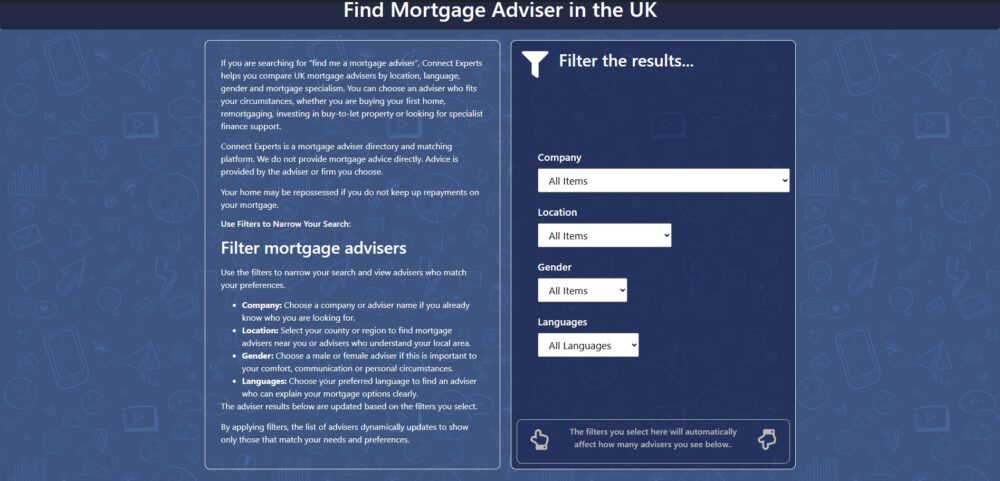
Connect Experts helps you search for advisers with experience in commercial bridging finance. The directory does not provide mortgage advice directly. Advice comes from the adviser or firm you select.
Search for a commercial bridging loan adviser
At a Glance
- Commercial bridging provides short-term funding secured against property.
- It may support auctions, refurbishments, refinancing and urgent commercial purchases.
- Lenders usually assess the property, loan purpose, borrower and exit strategy.
- Interest and fees can make bridging more expensive than longer-term finance.
- A clear sale or refinance plan is normally essential.
- Commercial bridging is not always regulated by the Financial Conduct Authority.
- Connect Experts helps you compare advisers before deciding who to contact.
What is a commercial short-term bridging loan?
A commercial bridging loan provides temporary funding against commercial, semi-commercial or business-related property.
It is designed to bridge a defined funding gap. The loan is normally repaid through a property sale, business asset sale or longer-term refinance.
Unlike a standard commercial mortgage, bridging finance is usually arranged for a shorter period. Lenders may also place greater weight on the security and repayment strategy.
The word “short-term” matters. A bridge should connect one realistic financial position to another.
When might commercial bridging finance be considered?
Commercial bridging may be considered when timing, property condition or transaction complexity prevents immediate use of longer-term finance.
Common uses include:
- Buying commercial property at auction
- Completing a purchase before long-term finance is ready
- Refurbishing a vacant or unsuitable property
- Refinancing an existing short-term facility
- Raising capital against commercial property
- Resolving a temporary break in a property chain
- Buying a mixed-use or semi-commercial building
- Funding urgent repairs before a refinance
- Completing a time-sensitive business property transaction
Bridging finance is not automatically suitable because a transaction is urgent. The costs and repayment route must remain workable.
How does a commercial bridging loan work?
The lender takes security over property or land.
The borrower receives an agreed loan, subject to valuation, legal work, underwriting and lender conditions. Interest may be paid monthly, retained at completion or added to the balance.
The loan is then repaid by the agreed exit date.
A typical process may include:
- An initial review of the property and funding purpose.
- Evidence of the proposed repayment strategy.
- A lender decision in principle.
- Property valuation and legal due diligence.
- A formal offer subject to conditions.
- Completion and release of funds.
- Sale or refinance before the loan expires.
Timescales vary between cases. Valuation issues, title problems and missing documents can cause delays.
What is an exit strategy?
The exit strategy explains how the bridging loan will be repaid.
Common exit routes include:
- Selling the security property
- Selling another property or business asset
- Refinancing onto a commercial mortgage
- Refinancing onto a buy-to-let mortgage
- Using completed development finance
- Receiving funds from a documented business transaction
A lender may assess whether the exit route is credible within the proposed term.
For a refinance exit, the future property condition, rental income and lender criteria may matter. For a sale exit, the expected sale price and marketing period may be important.
An exit strategy should include a fallback plan. Property sales, legal work and refinancing can take longer than expected.
What will commercial bridging lenders assess?
Every lender uses its own criteria. However, the assessment may include the following factors.
| Assessment area | What the lender may consider |
|---|---|
| Property | Type, location, value, condition and market demand |
| Loan | Amount, purpose, term and loan-to-value ratio |
| Borrower | Experience, credit history and financial position |
| Business | Trading history, accounts and future plans |
| Exit strategy | Sale, refinance, timescale and supporting evidence |
| Tenancy | Lease terms, tenant quality and rental income |
| Works | Scope, cost, permissions and completion schedule |
| Legal position | Ownership, title, charges and planning restrictions |
Commercial bridging cases are often assessed individually. Two lenders can reach different decisions on the same property.
What property types may be considered?
Depending on lender criteria, commercial bridging may be available against:
- Offices
- Retail units
- Warehouses
- Industrial buildings
- Hotels and guest accommodation
- Restaurants and licensed premises
- Care facilities
- Places of worship
- Mixed-use buildings
- Semi-commercial property
- Development sites
- Vacant commercial property
- Land with or without planning permission
Specialist property can require a more detailed valuation. The lender may also consider how easily the asset could be sold.
Commercial bridging versus a commercial mortgage
A commercial mortgage normally provides longer-term finance for business or investment property.
Commercial bridging provides temporary funding for a defined gap.
| Commercial bridging | Commercial mortgage |
| Short-term borrowing | Longer-term borrowing |
| Often used for speed or property issues | Often used for stable property finance |
| Exit strategy is central | Repayment affordability remains central |
| Interest may be retained or rolled up | Monthly payments are more common |
| Costs can be higher | Costs may be lower over a longer term |
| May finance property before improvement | Usually requires property to meet lender criteria |
Borrowers seeking stable, longer-term property funding can compare commercial mortgage brokers.
Commercial bridging versus development finance
Commercial bridging may suit a purchase, light refurbishment or short funding gap.
Development finance is generally more suited to construction, major conversion or heavy refurbishment. Funds may be released in stages as work progresses.
Development lenders may examine:
- Purchase price
- Build costs
- Planning permission
- Professional experience
- Project timetable
- Contingency allowance
- Gross development value
- Loan-to-cost position
- Loan-to-gross-development-value position
- Sale or refinance strategy
Projects involving substantial building work may require a development finance mortgage broker.
How much can be borrowed?
The available amount depends on the property, borrower, loan purpose and proposed exit.
Lenders may calculate borrowing against the property’s current value. Some may consider its expected value after works, subject to their criteria.
The lender may also deduct retained interest and fees from the gross loan. Therefore, the amount received can be lower than the headline loan figure.
Borrowers should distinguish between:
- Gross loan
- Net loan
- Loan-to-value ratio
- Total repayment balance
- Funds required to complete
- Personal funds needed for fees and works
An adviser can help establish whether the net advance meets the actual funding requirement.
What does commercial bridging finance cost?
The interest rate is only one part of the total cost.
Possible costs include:
- Monthly interest
- Arrangement fee
- Valuation fee
- Legal fees
- Broker fee
- Administration fee
- Telegraphic transfer fee
- Asset management fee
- Exit fee, where charged
- Early repayment charge, where applicable
- Default interest for late repayment
Interest may be serviced monthly, retained from the advance or rolled into the loan.
Retained or rolled-up interest reduces immediate monthly commitments. However, it can increase the final repayment balance.
Compare the total financial cost rather than focusing only on the stated monthly rate.
What documents may be required?
Preparing documents early can reduce avoidable delays.
A lender or adviser may request:
- Proof of identity and address
- Details of the borrowing entity
- Company accounts
- Business bank statements
- Personal bank statements
- Asset and liability information
- Property details
- Existing mortgage statements
- Lease or tenancy documents
- Purchase memorandum
- Auction legal pack
- Schedule of works
- Planning documents
- Building quotations
- Valuation information
- Evidence supporting the exit strategy
- Proof of deposit or additional funds
- Details of previous property experience
Requirements depend on the proposed structure and lender.
Can a limited company apply?
Commercial bridging may be available to individuals, limited companies, partnerships and other legal entities.
The available structure depends on the lender’s policy, property use, and transaction purpose.
A lender may review the company, directors, shareholders and any associated businesses. Personal guarantees may also be required.
Tax treatment can differ between ownership structures. Specialist tax advice should be obtained where necessary.
Are commercial bridging loans regulated?
Some commercial bridging loans are not regulated by the Financial Conduct Authority.
Regulation depends on factors including the borrower, the security property, the occupancy, and the purpose of the borrowing.
A loan may qualify for a regulated category if the residential property is occupied by the borrower or certain family members. The exact position depends on the case.
The FCA guidance on regulated mortgage contracts explains the regulatory framework.
Your adviser should explain whether the proposed loan is regulated and what protections apply.
What are the main risks?
Commercial bridging can provide speed and flexibility. However, it also carries material risks.
These can include:
- Higher costs than longer-term borrowing
- Delays to the planned property sale
- Failure to obtain the expected refinance
- Property values falling
- Refurbishment costs increasing
- Planning or licensing delays
- Legal complications
- Interest increasing the repayment balance
- Default charges
- Enforcement against the secured property
Property used as security may be at risk if the loan is not repaid.
A borrower should test the repayment strategy against delay, lower sale proceeds and higher project costs.
How can a commercial bridging adviser help?
An adviser with relevant experience may help you:
- Review the purpose and proposed structure
- Identify lenders interested in the property type
- Compare rates, fees and lending conditions
- Calculate the likely net advance
- Prepare the supporting documents
- Explain interest payment options
- Review the exit strategy
- Coordinate with the lender, valuer and solicitor
- Identify possible risks before submission
- Explain whether the case may be regulated
The adviser does not make the lending decision. The lender remains responsible for its valuation, underwriting and formal offer.
For broader bridging requirements, see bridging-loan mortgage brokers.
Questions to ask before choosing an adviser
Before making contact, consider asking:
- Do you regularly handle commercial bridging cases?
- Have you arranged finance for this property type?
- Which costs may apply?
- How will you assess the exit strategy?
- What information should I prepare?
- Are any deadlines unrealistic?
- Is the proposed finance regulated?
- What happens if the exit is delayed?
- What broker fee will be charged?
- When does the fee become payable?
Clear questions improve the quality of the initial conversation.
Frequently asked questions
What is a commercial short-term bridging loan?
It is temporary finance secured against commercial, semi-commercial or business-related property. It is normally repaid through a sale or refinance.
How quickly can commercial bridging finance complete?
Completion times vary. The property, valuation, legal title, borrower documents and lender conditions can all affect the timetable.
Can commercial bridging be used at auction?
Yes, it may support an auction purchase. However, the completion deadline and legal pack should be reviewed before bidding.
Can interest be added to the loan?
Some lenders allow interest to be retained or rolled into the balance. This increases the amount due when the loan ends.
Can commercial bridging fund refurbishment?
It may fund some refurbishment projects. Heavy works or staged construction may require development finance instead.
Do I need an exit strategy?
Lenders normally require a clear and credible repayment route. Common exits include a property sale or longer-term refinance.
Is commercial bridging finance regulated?
Some cases are regulated and others are not. The position depends on the borrower, property use, security and loan purpose.
Can adverse credit be considered?
Some lenders may consider adverse credit. The decision depends on its severity, age, explanation and the wider strength of the case.
What happens if the loan is not repaid on time?
Extra interest, default charges or enforcement action may follow. Contact the lender and adviser before the term ends if delays arise.
How do I find a commercial bridging adviser?
Use Connect Experts to compare advisers with relevant commercial bridging experience. Check their profile, services and contact options before proceeding.
Find a commercial bridging loan adviser
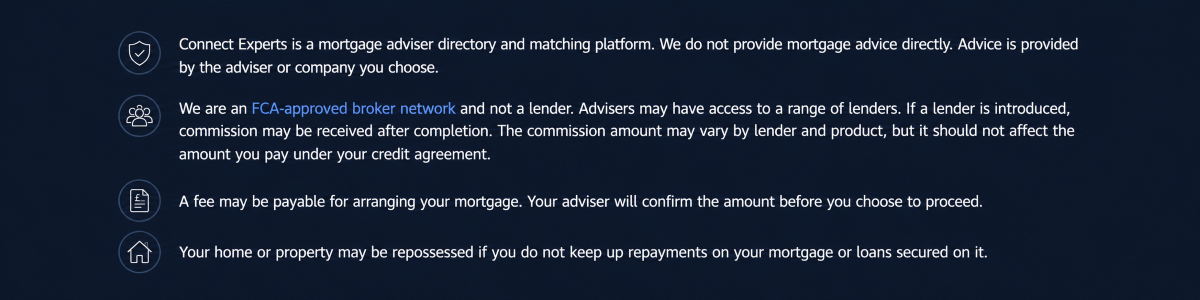
Connect Experts is a UK mortgage adviser directory and matching platform.
You can compare advisers by expertise, location, language and other preferences. Review each profile before deciding who to contact.
Connect Experts does not provide advice or lend money. Advice is provided by the adviser or firm you choose.
Find an adviser for commercial short-term bridging finance