Consumer buy-to-let mortgages may be suitable when someone becomes a landlord without initially intending to run a property business.
This can happen after inheriting a property or moving home and renting out the previous residence.
The classification matters because consumer buy-to-let lending is subject to a different regulatory framework from ordinary business buy-to-let lending.
A mortgage adviser can help establish how lenders may classify the application. Connect Experts lets users compare advisers by location, language and mortgage experience.
What is a consumer buy-to-let mortgage?
A consumer buy-to-let mortgage relates to certain rental properties owned by people who are not acting mainly for business purposes.
It is not simply another name for every buy-to-let mortgage.
A standard buy-to-let applicant usually buys or owns property as part of a planned rental business. A consumer landlord may instead have entered the rental market through personal circumstances.
Common examples include:
- inheriting a property which is later rented;
- moving home and retaining the previous residence;
- renting a property previously occupied by the owner;
- becoming responsible for a property following a family change;
- letting a property without an established investment strategy.
The circumstances surrounding the property can therefore matter as much as its intended rental use.
Why does the classification matter?
Mortgage labels influence how a lender and adviser handle an application.
Some buy-to-let lending is treated as commercial activity. Consumer buy-to-let operates within a separate legislative framework.
The FCA guidance on buy-to-let lending explains the relevant regulatory position.
Applicants should not assume that their mortgage automatically falls into either category.
The adviser may need to establish:
- how the property was acquired;
- whether it was previously the applicant’s home;
- why it is being rented;
- whether the applicant owns other rental properties;
- whether the activity forms part of a wider property business;
- how much involvement the applicant has in managing the property.
A clear account at the beginning can reduce confusion later.
How do lenders assess consumer buy-to-let?
Lender requirements differ. However, the assessment may include both the property and the applicant.
Checks may cover:
- expected monthly rent;
- rental coverage;
- property value;
- mortgage balance;
- available equity;
- personal income;
- credit history;
- existing financial commitments;
- tenancy arrangements;
- landlord experience;
- property condition.
The expected rent may need to exceed a stressed mortgage interest calculation.
A lender may also require a minimum personal income. Others place more weight on the property’s rent.
Consent to let or a new mortgage?
A homeowner who wants to rent their current property may first consider consent to let.
Consent to let is permission from the existing residential lender. It does not permanently convert the mortgage into a buy-to-let mortgage.
The lender may:
- approve letting for a limited period;
- charge a fee;
- increase the interest rate;
- apply tenancy restrictions;
- refuse the request.
Renting a property without the required permission could breach the mortgage terms.
A permanent letting plan may require a consumer buy-to-let or ordinary buy-to-let remortgage.
Costs beyond the mortgage
The mortgage payment is only one part of landlord ownership.
An applicant should also consider:
- legal fees;
- valuation fees;
- adviser fees;
- lender charges;
- landlord insurance;
- safety inspections;
- repairs;
- letting-agent costs;
- empty periods;
- tax reporting;
- tenancy compliance.
Landlords in England should review the current government guidance for private landlords.
Mortgage advisers do not replace solicitors, accountants or tax advisers. Each professional addresses a different part of the decision.
Documents to prepare
An adviser may ask for:
- identification;
- proof of address;
- payslips or accounts;
- bank statements;
- current mortgage statement;
- property valuation;
- estimated rental assessment;
- tenancy agreement;
- evidence of deposit or equity;
- details of other properties;
- credit commitments.
Earlier preparation can help prevent avoidable delays.
Consumer buy-to-let FAQs
Is every accidental landlord a consumer buy-to-let borrower?
No. The classification depends on the applicant’s circumstances and the nature of the rental activity.
Can I retain my residential mortgage when renting my home?
Only where the lender permits it. You may need consent to let or a different mortgage.
Is consumer buy-to-let regulated?
It operates under a specific legislative framework. An adviser can explain how that framework may apply.
Does rental income determine the mortgage amount?
Rental income is important, but lenders may also review personal income, credit history and available equity.
Can Connect Experts recommend a particular mortgage?
Connect Experts helps users find advisers. The selected adviser provides any mortgage recommendation.
Why speak with a consumer buy-to-let adviser?
Not every adviser handles consumer buy-to-let cases regularly.
An adviser with relevant experience can help:
- establish the likely mortgage classification;
- check whether consent to let may be relevant;
- compare lender criteria;
- test the expected rental income;
- identify required documents;
- explain mortgage costs;
- prepare the application;
- avoid approaching unsuitable lenders.
The purpose is not to make property ownership appear simple. It is to identify the correct route before submitting an application.
Use the Buy-to-Let Mortgage Advisers directory to compare advisers who may support landlord mortgage enquiries.
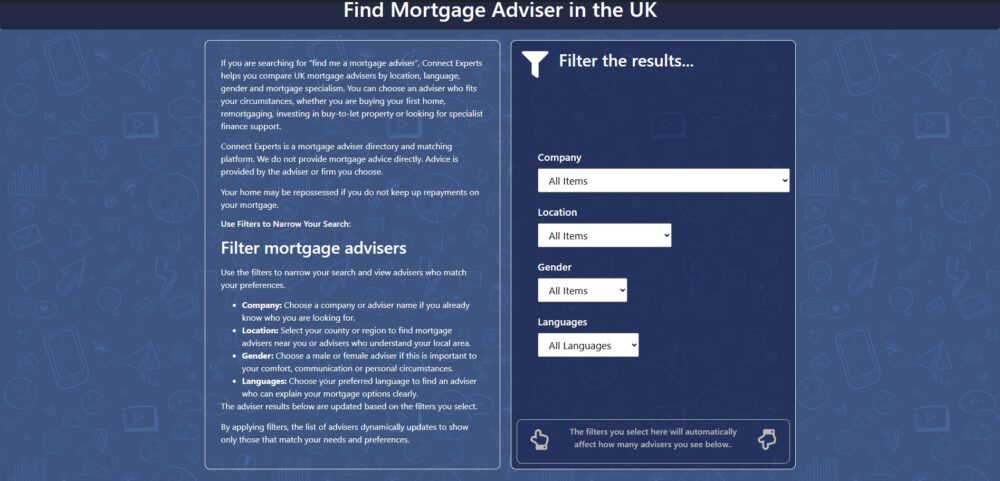
Connect Experts is a directory of mortgage advisers. Mortgage advice is provided by the adviser or firm selected.