Mortgage Advice in Your First Language: Mortgage advice should explain the proposed product, costs, risks and application process in terms you understand.
Speaking with an adviser in your preferred language can help you discuss detailed circumstances and ask precise questions. However, language ability should be considered alongside the adviser’s qualifications, permissions and relevant mortgage experience.
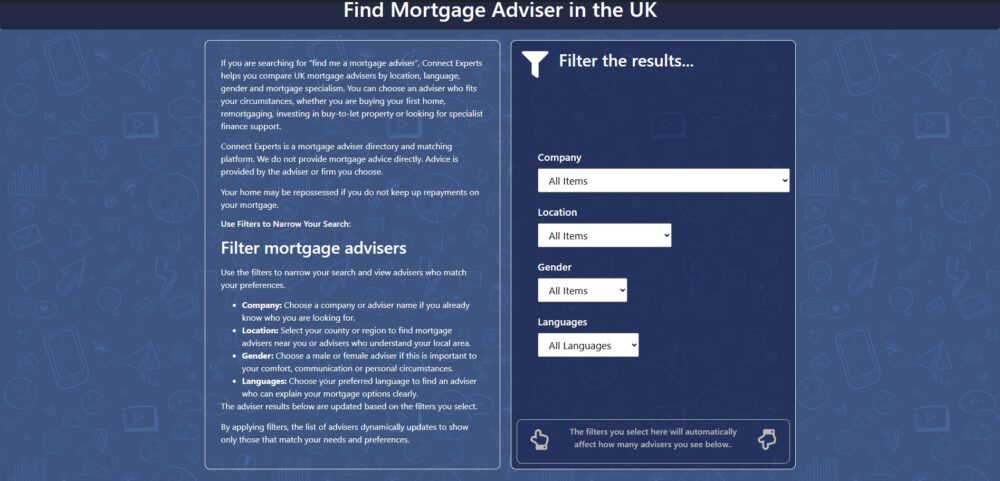
Connect Experts helps you find a mortgage broker by language and review available advisers before making contact.
Understanding Comes Before Commitment
A mortgage can affect a household’s finances for many years. Therefore, understanding the proposed arrangement is not a minor service feature. It is an important part of making an informed decision.
An applicant may speak conversational English confidently but prefer another language for financial discussions. Mortgage conversations can involve unfamiliar terms, future costs and legal commitments.
Good communication should make the consequences of each choice clear. It should not merely translate individual words.
The Financial Conduct Authority’s Consumer Duty requires regulated firms to support consumer understanding. Firms should provide communications that help customers make properly informed decisions.
This principle applies regardless of the language used during the conversation.
What Should Your Mortgage Adviser Explain?
Before you proceed, the adviser should explain the proposed mortgage and why it may suit your circumstances.
The discussion should normally cover:
- The mortgage type
- The initial interest rate
- Whether the rate is fixed or variable
- The monthly payment
- The mortgage term
- The overall borrowing amount
- Product and arrangement fees
- Valuation and legal costs
- Early repayment charges
- Changes that could affect future payments
- Important conditions attached to the offer
- The consequences of missed payments
The explanation should distinguish between the initial deal and the mortgage’s longer-term cost.
For example, a low initial rate may include a fee. Another product may have a higher rate but lower upfront costs. A meaningful comparison should consider the applicant’s borrowing amount, expected mortgage term and future plans.
Mortgage Terms That Need Clear Explanations
Mortgage terminology can be difficult even when English is someone’s main language.
Terms that should be explained include:
Loan-to-value
Loan-to-value compares the mortgage amount with the property’s value. It is commonly shown as a percentage.
A lower loan-to-value may provide access to different lender products. However, product availability will depend on the wider application.
Affordability
Affordability is not based only on salary. Lenders may consider income, regular expenditure, credit commitments, dependants and possible changes to mortgage payments.
Different lenders can interpret the same financial information differently.
Mortgage illustration
A mortgage illustration presents important information about a proposed product. It may include payments, fees, rates, charges and potential future costs.
The applicant should have time to review this document and raise questions.
Early repayment charge
An early repayment charge may apply when a borrower repays or changes a mortgage during a specified period.
This can matter if the applicant expects to move, refinance or make substantial overpayments.
Standard variable rate
A lender’s standard variable rate may apply after an introductory product ends. It can change and may produce different monthly payments.
The adviser should explain what happens when the initial deal finishes.
Your Circumstances Must Also Be Understood
Communication works in both directions.
The adviser needs accurate information about your:
- Income
- Employment
- Business interests
- Existing debts
- Credit history
- Deposit
- Property plans
- Household expenditure
- Dependants
- Future financial changes
Using your preferred language may help you explain unusual or detailed circumstances more precisely. This can be particularly useful for self-employed applicants, contractors and company directors.
Applicants with business income can also review self-employed mortgage brokers who regularly work with accounts, tax calculations, dividends and other income structures.
A language match can improve the discussion. However, the information submitted to the lender must remain complete and accurate.
Does an Adviser Translate Mortgage Documents?
An adviser can explain the meaning and practical effect of mortgage documents. However, this does not always mean the adviser is providing a certified translation.
Formal translations may sometimes need to be completed by an independent translator. The lender, solicitor or conveyancer should confirm what is acceptable.
Applicants should ask:
- Which documents will be issued in English?
- Can the adviser explain each section?
- Does the lender require certified translations?
- Who is responsible for arranging those translations?
- Will the solicitor provide separate advice?
- Which version will be legally relied upon?
The answers may depend on the lender, the document, and the transaction.
Can a Family Member Translate?
Some applicants ask a relative to join the conversation. This may provide reassurance, but it can create practical limitations.
The adviser must still establish the applicant’s own understanding, instructions and consent. A family member should not answer important suitability questions on the applicant’s behalf.
There may also be privacy concerns when discussing:
- Credit problems
- Income
- Personal expenditure
- Health-related protection needs
- Family finances
- Previous borrowing
Where independent language support is needed, the adviser should explain the available arrangements.
Language Ability Is Only One Selection Factor
An adviser who speaks your preferred language may not provide every type of mortgage advice.
Before making contact, check whether the adviser works with your particular requirement. This could include:
- First-time buyer mortgages
- Residential remortgages
- Buy-to-let mortgages
- Limited company borrowing
- Commercial finance
- Bridging finance
- Adverse credit
- Protection
- Later-life lending
Applicants with previous credit problems can compare adverse credit mortgage brokers with relevant experience.
Language can improve communication. Relevant technical knowledge helps ensure the discussion addresses the right lending criteria.
Questions to Ask Before Proceeding
Ask the adviser:
- Can you conduct the full advice meeting in my preferred language?
- Do you advise on the mortgage type I need?
- Which firm are you connected to?
- Can I check the firm on the Financial Services Register?
- What fees may apply?
- How will you explain the mortgage recommendation?
- Can another person attend the meeting?
- Which documents may need formal translation?
- Will meetings be available online or in person?
- Who provides the final regulated advice?
Clear answers allow you to assess the service before sharing detailed financial information.
Frequently Asked Questions
Can I receive regulated mortgage advice in another language?
Some advisers can conduct advice meetings in languages other than English. Check the adviser’s profile and confirm the available service before proceeding.
Will my mortgage offer be issued in my preferred language?
Mortgage offers and legal documents are usually produced using the lender’s standard documentation. Ask whether an explanation or formal translation will be required.
Does speaking another language change lender criteria?
No. The lender will assess the application under its usual criteria. Language support helps the applicant understand and communicate during the process.
Should I choose an adviser based only on language?
No. Check the adviser’s mortgage experience, firm, permissions, fees and service format as well.
Can my relative attend the mortgage appointment?
Possibly. The adviser should explain consent, privacy and identity requirements before the meeting.
A Clear Conversation Supports a Better Decision
The purpose of language support is not to make a mortgage sound simple. It is to make the real terms, risks and responsibilities understandable.
A mortgage remains a significant financial commitment in every language.
The right adviser should understand your preferred language, your financial circumstances and the technical requirements of your application. Those three elements create a stronger basis for informed mortgage decisions.