Mortgage Broker in Central London: A Central London mortgage often begins with an unusual combination of property, income and timing.
The property may be a leasehold flat above commercial premises. The applicant may receive bonuses, dividends or income from several countries. The purchase could also involve a short lease, substantial service charges or a high deposit.
These factors do not automatically prevent borrowing. However, they can influence which lenders will consider the application.
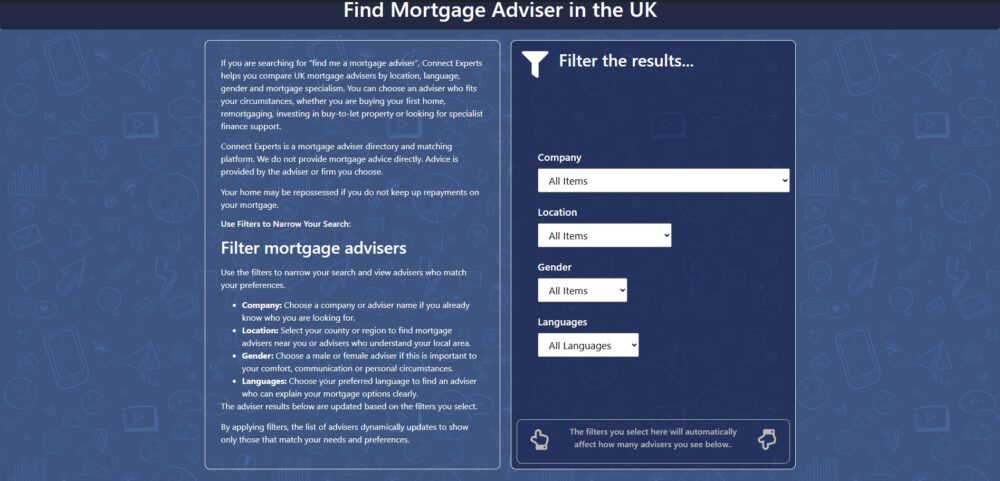
Connect Experts helps you search for FCA-authorised mortgage advisers covering Central London. You can compare advisers by location, mortgage expertise, language and gender.
Connect Experts is a directory of mortgage advisers. It does not provide mortgage advice directly. Any advice is provided by the adviser or firm you select.
Start your mortgage adviser search and compare professionals who cover Central London.
Find a mortgage adviser covering Central London
- Central London mortgages may involve high property values and substantial deposits.
- Flats are often leasehold, making lease terms and service charges important.
- Bonuses, dividends and overseas income may require extra evidence.
- Lenders assess both the applicant and the property being offered as security.
- A broker can identify lenders whose criteria fit the case.
- Always confirm the adviser’s regulatory status and any fees before proceeding.
What does a Central London mortgage broker do?
A mortgage broker assesses your circumstances before recommending mortgage products that may meet your needs.
This usually includes reviewing:
- Your income and employment structure.
- Your deposit or available equity.
- Existing credit commitments.
- The property’s value and construction.
- Leasehold or freehold status.
- Your intended use of the property.
- Your preferred repayment structure.
The broker may then approach suitable lenders, explain available products and support the application process.
No broker can guarantee approval. The lender makes the final decision after completing its affordability, credit and property assessments.
What makes Central London mortgages different?
Central London contains some of the country’s most varied residential property.
A single street may include purpose-built flats, converted period buildings, new developments and mixed-use premises. Each can raise different lending questions.
Common considerations include:
- Higher purchase prices.
- Larger loan amounts.
- Leasehold ownership.
- Service charges and ground rent.
- Buildings above shops or restaurants.
- Studio flats and smaller internal floor areas.
- Listed or non-standard buildings.
- New-build incentives.
- Short remaining lease terms.
- Overseas buyers or income.
- Investment property demand.
A lender does not assess location alone. It considers whether the property offers acceptable security for the requested mortgage.
The central lesson is simple. A valuable property is not automatically a straightforward property to finance.
Central London flats and leasehold mortgages
Many homes in Central London are flats held under long leases.
A lender may review:
- The remaining lease term.
- Ground-rent provisions.
- Current service charges.
- Planned major works.
- Building insurance arrangements.
- The identity of the freeholder.
- Restrictions within the lease.
- Cladding or building-safety documentation.
A short lease may affect value, resale prospects and lender acceptance. The precise definition of a short lease can vary between lenders.
Applicants should obtain legal advice about the lease. A mortgage adviser can explain how known lease details may affect lender selection.
Mortgages for high-value Central London property
Higher property prices can create more detailed underwriting.
The lender may consider:
- The requested loan size.
- Loan-to-value ratio.
- Applicant income.
- Available financial reserves.
- Property demand and resale prospects.
- Exposure to one building or development.
- Whether specialist valuation is required.
Some lenders apply different criteria above certain loan sizes. Others may use separate underwriting teams for high-value borrowing.
A larger income does not remove the need for affordability evidence. The lender must still assess whether repayments appear sustainable.
Income considered by mortgage lenders
Central London applicants may have less conventional income structures.
These can include:
- Annual or quarterly bonuses.
- Commission.
- Overtime.
- Company dividends.
- Partnership income.
- Contractor income.
- Foreign-currency earnings.
- Rental income.
- Income from several employments.
Each lender decides which income it accepts and how much it uses.
For example, one lender may average bonuses over two years. Another may use only a proportion. Foreign income may be reduced to reflect exchange-rate risk.
Applicants with company or freelance income can search for self-employed mortgage brokers who understand accounts, tax calculations and retained profits.
Buying your first Central London property
First-time buyers in Central London may need to balance property type, location, deposit and monthly affordability.
Before viewing properties, consider:
- Your available deposit.
- Purchase costs.
- Legal fees.
- Survey costs.
- Service charges.
- Moving costs.
- A reasonable emergency reserve.
A mortgage agreement in principle can indicate how much a lender might consider. It is not a guaranteed mortgage offer.
Search for first-time buyer brokers who can explain deposit requirements and lender criteria.
Remortgaging a Central London property
Remortgaging can involve replacing an existing mortgage or borrowing more against the property.
Common reasons include:
- Reaching the end of a fixed rate.
- Changing the mortgage term.
- Reviewing repayment arrangements.
- Raising funds for permitted purposes.
- Moving from an existing lender.
- Restructuring personal borrowing.
A remortgage application normally includes updated affordability checks and a property valuation.
Existing borrowers should begin reviewing their position before the current deal ends. This provides time to compare options and gather documents.
You can search for remortgage mortgage brokers through the directory.
Buy-to-let mortgages in Central London
Central London buy-to-let applications are usually assessed using rental income, property value and the applicant’s wider circumstances.
Lenders may consider:
- Expected monthly rent.
- Interest coverage calculations.
- Applicant tax status.
- Existing property commitments.
- Property type.
- Tenancy arrangements.
- Lease restrictions.
- Whether the applicant uses a limited company.
Central locations do not guarantee lender acceptance or rental performance.
Investors should assess service charges, maintenance, void periods and tax costs. These expenses can affect the property’s practical return.
Search for buy-to-let mortgage brokers who can discuss individual and limited-company applications.
Areas covered by Central London mortgage advisers
Central London does not have one fixed legal boundary.
For this directory, the term can include advisers serving:
- The City of London.
- Westminster.
- Bloomsbury.
- Holborn.
- Clerkenwell.
- Fitzrovia.
- Marylebone.
- Mayfair.
- Soho.
- Covent Garden.
- Victoria.
- Belgravia.
- Knightsbridge.
- South Bank.
- Parts of Islington and Camden.
Relevant postcode areas can include EC1, EC2, EC3, EC4, WC1, WC2, W1, SW1 and parts of SE1.
For wider coverage across the capital, visit our Mortgage Adviser in London page.
How to compare mortgage brokers in Central London
The nearest adviser is not always the most appropriate adviser.
Compare brokers using factors that affect the quality and suitability of the service.
Check regulatory status
Confirm the adviser or firm through the Financial Services Register.
Ask about mortgage experience
Check whether the adviser regularly handles your mortgage type, income structure and property.
Understand lender access
Ask whether the adviser works with a broad lender range or a restricted panel.
Confirm fees
Some advisers charge fees. Ask what is payable, when it becomes due and whether any further fee applies later.
Discuss communication
Confirm whether appointments are available by telephone, video or in person.
Prepare your documents
Providing accurate information early can reduce delays and unnecessary lender enquiries.
What documents might you need?
Requirements differ, but advisers commonly request:
- Proof of identity.
- Proof of address.
- Recent payslips.
- Bank statements.
- Evidence of deposit.
- Details of existing credit.
- Latest accounts or tax documents.
- Bonus or commission evidence.
- Current mortgage statements.
- Property or tenancy details.
Overseas income, gifted deposits and company applications may require further evidence.
Documents should reflect the source and sustainability of the funds involved. A mortgage application is not only a search for credit. It is also an evidence-based explanation of the proposed transaction.
How the mortgage process usually works
1. Search for an adviser
Use the directory to identify advisers covering Central London.
2. Discuss your circumstances
Explain your income, deposit, property plans and expected timescale.
3. Review possible lenders
The adviser assesses lender criteria and suitable mortgage products.
4. Obtain an agreement in principle
A lender provides an initial borrowing indication, subject to further assessment.
5. Submit the mortgage application
The lender reviews affordability, credit history, documents and property details.
6. Complete valuation and legal work
The lender values the property while your solicitor handles the legal process.
7. Receive and review the mortgage offer
Read the offer carefully before proceeding. Your solicitor and adviser can explain their respective areas of responsibility.
Later-life property finance in London
Older homeowners may wish to compare standard remortgaging, retirement interest-only mortgages and lifetime mortgages.
These products work differently and can affect future equity, inheritance and benefit entitlement.
For specialist later-life guidance, visit Equity Release Advisers in London.
Frequently asked questions
Is it worth using a mortgage broker in Central London?
A broker can be useful where the property, income or borrowing requirement needs careful lender selection. Suitability depends on your circumstances and the service offered.
Does a broker need to be based in Central London?
No. An adviser can cover Central London while working elsewhere. Telephone and video appointments can make location less important.
Can I get a mortgage on a Central London flat?
Potentially. The lender will assess affordability and the flat’s suitability. Lease length, building type and service charges may affect the decision.
Can lenders use bonus income?
Some lenders accept bonus income. Their calculation methods differ. Evidence and payment history are usually important.
Can I get a mortgage using foreign income?
Some lenders consider foreign income. They may restrict accepted currencies or apply an exchange-rate reduction.
Can a broker help with a short-lease property?
A broker can identify lenders whose criteria may permit the remaining lease term. You will also need appropriate legal advice.
Are Central London buy-to-let mortgages assessed differently?
Buy-to-let lenders usually consider expected rent, interest coverage and the applicant’s wider position. Criteria vary by lender and property.
Will using a broker guarantee approval?
No. The lender makes the final decision after completing its checks.
How much does a mortgage broker charge?
Charges vary. The adviser should explain all fees before you commit to the service.
Find a mortgage broker in Central London
Central London property can combine opportunity with technical detail.
Good mortgage planning begins by identifying the facts that matter. These include the applicant’s income, the property’s construction, its lease and the intended use.
Use Connect Experts to compare advisers who cover Central London and understand your mortgage requirements.