Mortgage Broker in Greenwich: A Greenwich property can appear straightforward yet pose complex questions for a mortgage lender.
The purchase price is only one part of the decision. Lenders may also examine the property, lease, building, income, deposit and applicant’s credit position.
A mortgage broker in Greenwich can explain how these factors may affect a residential, remortgage or property investment application.
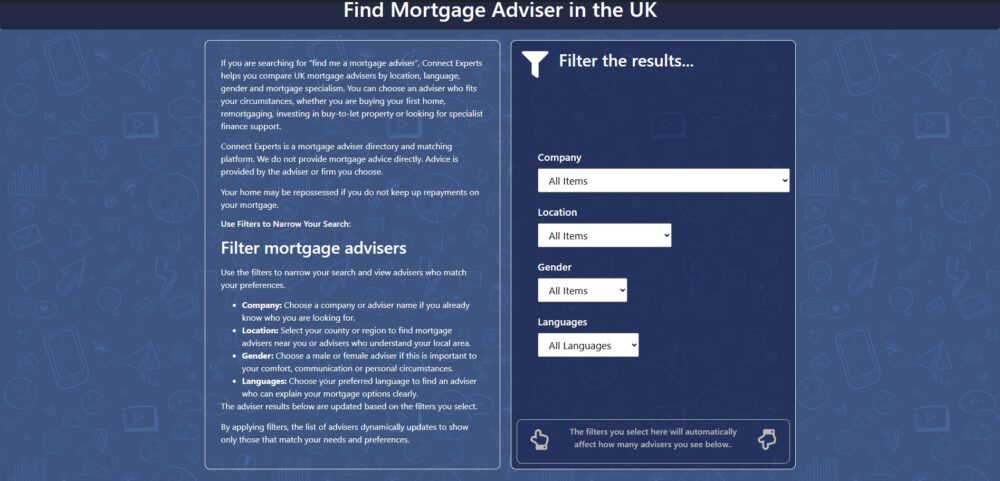
Connect Experts helps you search for advisers covering Greenwich. You can compare advisers by mortgage expertise, location, language and communication preference.
Connect Experts is a mortgage adviser directory and matching platform. It does not provide mortgage advice directly. Advice is provided by the adviser or firm you choose.
At a Glance
- Greenwich mortgage applications may involve flats, houses, converted properties and new-build developments.
- Lease terms, service charges and building information can affect some flat applications.
- Lenders assess affordability, income, deposit, credit history and property suitability.
- Buy-to-let lenders usually consider expected rent and property type.
- Bridging finance requires a credible repayment plan.
- Connect Experts lets you compare mortgage advisers covering Greenwich.
- Always check that the chosen firm has the required regulatory permissions.
Understanding the Greenwich Mortgage Market
Greenwich includes established residential streets, riverside developments, period properties and purpose-built flats.
Each property can create different lending questions. A lender may be comfortable with one building type but require more evidence for another.
Current housing data also provides useful context.
The Office for National Statistics reported a provisional average Greenwich house price of £463,000 in May 2026. The average paid by first-time buyers was £410,000. Average monthly private rent reached £1,967 in June 2026. These are borough-wide figures rather than valuations for individual properties. Review the latest Greenwich housing figures.
Market statistics can describe an area. However, mortgage decisions remain personal.
A lender assesses the applicant and the property together. A strong income does not automatically make every property acceptable. Equally, an unusual income structure does not always prevent borrowing.
The purpose of mortgage advice is to test both sides before an application is submitted.
What Does a Mortgage Broker in Greenwich Do?
A mortgage broker gathers information about your circumstances and intended property transaction.
The broker may then compare your case with available lender criteria.
This could include:
- Your income and employment structure.
- Your available deposit or property equity.
- Your credit commitments and payment history.
- The property type and condition.
- The remaining lease term.
- Service charges and ground rent.
- Your expected completion date.
- Rental income for buy-to-let applications.
- Your repayment plan for short-term finance.
A broker cannot guarantee mortgage approval. The lender makes the final decision after its assessment, valuation and legal checks.
However, preparing the case carefully can reduce avoidable applications to unsuitable lenders.
Greenwich Property Factors That May Affect a Mortgage
A local search should consider more than the Greenwich postcode.
The physical and legal characteristics of the property can be just as important.
Leasehold flats
Many flats are sold on a leasehold basis.
Lenders may review:
- The remaining lease length.
- Current service charges.
- Planned major works.
- Ground rent provisions.
- Building insurance arrangements.
- Management company information.
- Any restrictions within the lease.
A short lease or unusual ground rent clause may reduce the available lender choice.
Your solicitor examines the legal terms. Your mortgage adviser considers whether the case fits lender requirements.
Flats in larger buildings
Some lenders request additional information for flats in taller or more complex buildings.
Questions may cover construction, fire safety, external walls and building management. The exact evidence depends on the property and lender.
These checks can affect valuation and processing times. Therefore, gather building documents early where possible.
New-build properties
A lender may use different loan-to-value limits for a new-build flat or house.
Reservation deadlines can also create pressure. Buyers should understand how long their mortgage offer remains valid and whether an extension is possible.
Developer incentives must be disclosed. They may affect how the lender values the transaction.
Converted and period properties
Greenwich contains properties from several construction periods.
Converted buildings may require checks concerning planning consent, access, leases and building layout. Older properties may raise questions about condition or construction.
A mortgage valuation is for the lender’s security. It is not a detailed structural survey.
Ex-local authority properties
Some lenders consider ex-local authority flats and houses. However, criteria may differ.
The lender may review the building, location, construction type and proportion of privately owned homes. Higher-rise flats can receive closer assessment.
Mortgage Advice Needs in Greenwich
First-time buyer mortgages
First-time buyers often need help understanding deposits, affordability and application evidence.
A broker may explain:
- Agreement in principle checks.
- Gifted deposit requirements.
- Income assessment.
- Credit commitments.
- Mortgage term choices.
- Product fees.
- Valuation and legal stages.
A decision should not begin with the maximum available loan. It should begin with a sustainable monthly commitment.
You can review related information through the UK Mortgage Guides.
Moving home
Moving home can involve two connected transactions.
The existing property may need to sell before the new purchase completes. Your current mortgage could also contain repayment charges.
A broker can assess whether the existing mortgage may be transferred and whether further borrowing is required.
Porting a mortgage does not guarantee acceptance. The lender normally reassesses the application.
Remortgaging
A remortgage may be considered when:
- A fixed or discounted rate is ending.
- The borrower wants to change the mortgage term.
- Capital needs to be raised.
- The property value has changed.
- The borrower wants to review another lender.
- Personal or employment circumstances have changed.
The lowest displayed rate is not always the lowest overall cost.
Arrangement fees, valuation costs, legal work and early repayment charges should form part of the comparison.
Buy-to-let mortgages
Buy-to-let lending usually relies on both borrower and property information.
Lenders may examine:
- Expected monthly rent.
- Rental coverage calculations.
- Deposit size.
- Property type.
- Landlord experience.
- Personal or limited company ownership.
- Existing portfolio commitments.
- Licensing requirements.
Greenwich rental figures can provide broad context. However, lenders usually require a property-specific rental assessment.
Tax treatment depends on personal circumstances. Obtain tax advice before deciding how to own an investment property.
Bridging finance
Bridging finance is short-term funding secured against property.
It may be considered for an auction purchase, chain break or property requiring work before refinancing.
The central question is not simply how quickly funds can be arranged. It is how the loan will be repaid.
A lender may review:
- Property value.
- Loan-to-value.
- Borrowing purpose.
- Proposed works.
- Interest treatment.
- Completion deadline.
- Sale or refinance strategy.
- Evidence supporting the exit.
Read the Bridging Loan Guide before comparing suitable advisers.
Bridging finance can cost more than a standard mortgage. Delays to the repayment strategy can increase that cost.
If you are 55+ and need equity release advice, visit our Equity Release Advisers in London page.
What Greenwich Mortgage Lenders May Assess
Mortgage criteria vary between lenders.
The assessment may include:
Income
Employed applicants may need payslips, bank statements and evidence of bonuses or overtime.
Self-employed applicants may need accounts, tax documents and business bank statements. Company directors can be assessed differently across lenders.
Deposit
The deposit affects the loan-to-value ratio.
The source must usually be evidenced. This includes savings, gifts, inheritance and proceeds from another property.
Credit history
Lenders may consider missed payments, defaults, county court judgments and current debt.
Recent credit issues can have a different effect from older events. The amount and reason may also matter.
Affordability
Affordability is not based on income alone.
Lenders may review loans, credit cards, childcare, dependants, student loans and other regular spending.
Property
The property must provide acceptable security for the mortgage.
A lender may reject a property even when the applicant passes the initial affordability assessment.
Documents to Prepare
Preparing documents early can reduce delays.
You may need:
- Proof of identity.
- Proof of address.
- Recent bank statements.
- Payslips or self-employed income evidence.
- Deposit evidence.
- Details of existing credit commitments.
- Current mortgage statements.
- Property particulars.
- Lease and service charge information.
- Expected rent for buy-to-let cases.
- Details of any gifted deposit.
Do not alter or hide financial information. Differences between documents can cause questions and delays.
How to Choose a Mortgage Broker in Greenwich
The right adviser should understand the type of mortgage you require.
Before proceeding, ask:
- Does the adviser handle this type of application?
- Which lender range can the adviser consider?
- What fees could apply?
- How will the adviser communicate with me?
- What documents should I prepare?
- What property issues could restrict lender choice?
- Who will manage the application after submission?
- How will commission be explained?
You can also find a broker by expertise before choosing an adviser.
Check whether the firm is authorised and has permission to provide the required service via the FCA Firm Checker.
Find a Mortgage Adviser Covering Greenwich
Connect Experts lets you compare advisers who cover Greenwich and the wider London area.
You can search using:
- Location.
- Mortgage type.
- Adviser expertise.
- Preferred language.
- Gender preference.
- Telephone, online or face-to-face availability.
You remain responsible for deciding which adviser to contact.
For a wider geographical search, visit Mortgage Adviser in London.
Start Your Greenwich Adviser Search
A mortgage is a long-term commitment attached to a specific person and property.
Good advice should test the details before urgency controls the decision.
Use Connect Experts to compare mortgage advisers covering Greenwich. Review their expertise, communication options and regulatory information before making contact.
Find a mortgage broker in Greenwich based on your mortgage needs and personal preferences.
Frequently Asked Questions
What does a mortgage broker in Greenwich do?
A mortgage broker reviews your circumstances and compares them with mortgage lender criteria. The adviser may help prepare and submit an application.
Does Connect Experts provide mortgage advice?
No. Connect Experts is a directory and matching platform. Mortgage advice comes from the adviser or firm selected by the user.
Can a broker guarantee my mortgage will be approved?
No. Approval remains subject to lender criteria, affordability checks, credit assessment, valuation and legal work.
Can I get a mortgage on a Greenwich flat?
Potentially. The lender may review the lease, service charges, construction, building height and property value before deciding.
Can self-employed applicants obtain a mortgage in Greenwich?
Potentially. Lenders may assess accounts, tax calculations, business performance, retained profit or contract income. Requirements vary between lenders.
Do buy-to-let lenders use local rent figures?
Lenders normally require a property-specific rental assessment. General borough rental data cannot confirm the rent accepted for mortgage purposes.
How much does a Greenwich mortgage broker charge?
Fees vary between advisers and firms. The adviser should explain any fee and commission arrangement before you proceed.
Is a local Greenwich adviser necessary?
Not always. Many advisers work by telephone or video. However, some borrowers value local knowledge or prefer a face-to-face meeting.
Your home or property may be repossessed if you do not keep up repayments on your mortgage or any loan secured against it.
A fee may be payable for mortgage advice or arrangement. Your chosen adviser will explain the amount before you decide whether to proceed.