A Mortgage Broker in Hope Mansell can help when the home you want does not fit neatly into a standard lending box. In a rural community, mortgage decisions are often shaped by more than income and deposit. The building itself, its history, access, land and services can matter just as much.
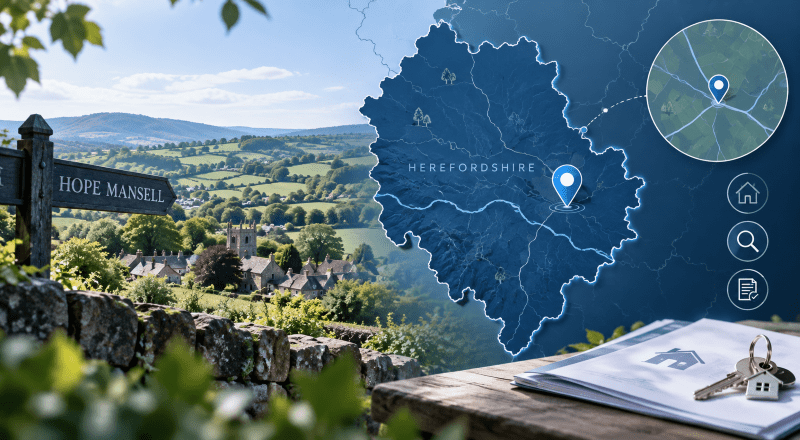
Hope Mansell is a small, dispersed parish in south-east Herefordshire, near Gloucestershire and the Forest of Dean. Its rural character is part of its appeal, but it can also make careful mortgage preparation particularly valuable.
At a Glance
Hope Mansell’s rural housing can involve older homes, barn conversions, land, private services and detailed planning histories. These features may affect mortgage valuation and lender criteria. Suitable mortgage advice can help you understand how both your finances and the property are likely to be assessed before you submit an application.
Why Mortgages in Hope Mansell Can Need a Different Approach
Hope Mansell is not a large housing market, so hundreds of similar properties don’t provide straightforward comparisons.
Local homes can differ considerably in age, construction, acreage and previous use. Herefordshire Council’s planning records illustrate this variety. Recent applications within Hope Mansell include house extensions and agricultural buildings being converted into residential accommodation.
That matters because mortgage lenders do not assess the borrower in isolation. They also need the property to provide acceptable security for the loan.
A lender or valuer may therefore look more closely at:
- construction type and condition
- whether a building has been converted from agricultural use
- planning permissions and building regulations
- access arrangements and rights of way
- private drainage or water supplies
- the amount and use of accompanying land
- outbuildings and ancillary accommodation
- previous extensions or alterations
- whether any part of the property is used commercially
- the property’s likely resale market
None of these factors automatically prevents a mortgage. They can, however, influence which lender is appropriate.
You can review relevant planning information through Herefordshire Council’s planning search before committing to a purchase.
What Are House Prices Like Around Hope Mansell?
Transaction numbers in a small parish can be too limited to create a dependable standalone monthly average. County-level figures therefore provide more useful background than presenting a misleading Hope Mansell average.
According to the Office for National Statistics, the average Herefordshire home cost approximately £290,000 in July 2026, up 1.8% from July 2025. Detached homes averaged approximately £446,000, while the average home purchased with a mortgage was approximately £282,000.
The ONS also warns that local housing data can fluctuate because it includes fewer transactions than national statistics. Hope Mansell buyers should therefore treat county averages as context rather than a valuation of a particular home.
You can review the current figures through the ONS Herefordshire housing-price data.
For mortgage purposes, the lender’s valuation of the specific property remains important.
Rural Valuations and Lender Criteria
Two houses with the same asking price do not necessarily represent the same mortgage risk.
A conventional modern house with mains drainage, standard construction, and many comparable nearby sales may be relatively simple for a lender to assess.
A converted barn with land, private drainage and several outbuildings can require much more consideration.
The valuer may comment on issues such as marketability, construction, access and comparable sales. The lender then applies its own policy.
This creates an important distinction:
A property being worth the purchase price does not automatically mean every mortgage lender will accept it as security.
That is where suitable mortgage advice can become particularly useful. An adviser can consider the property details before recommending where to place an application.
Barn Conversions and Former Agricultural Buildings
Conversions are a particularly relevant subject in Hope Mansell.
Herefordshire Council records show planning activity involving agricultural buildings being converted into residential dwellings within the parish.
Mortgage lenders can consider barn conversions, but criteria vary.
Questions may include:
- Has residential planning permission been established?
- Is the conversion complete?
- Is there appropriate building-regulation documentation?
- What materials and construction methods have been used?
- Does the property have conventional residential access?
- Are utilities shared with another property?
- How much land accompanies the dwelling?
- Are there agricultural restrictions or occupancy conditions?
- Is any building still used for farming or commercial purposes?
A recently completed conversion may also have fewer directly comparable local sales than a conventional house.
For that reason, a buyer considering an unusual rural home may benefit from discussing the property with a mortgage adviser before paying significant valuation, legal or survey costs.
Mortgages for Self-Employed Buyers in Hope Mansell
A rural location does not change how income is assessed, but the borrower’s circumstances may add another layer to the application.
Self-employed applicants could include sole traders, company directors, contractors or people receiving income from several sources.
Different lenders may calculate usable income differently.
Evidence can include:
- company accounts
- SA302 calculations or tax calculations
- tax-year overviews
- salary and dividends
- retained profit where the lender’s criteria permit
- business bank statements
- contracts
- personal bank statements
Someone whose income doesn’t fit a conventional monthly salary can use the Connect Experts self-employed mortgage adviser search to find advisers who work with these applications.
The useful question is not simply, “Can a self-employed person obtain a mortgage?” Many can.
The more important question is which lender assesses that person’s particular income structure appropriately.
Land, Outbuildings and Rural Mortgage Applications
The amount of land attached to a property can sometimes change the lender search.
A large garden is normally straightforward. Several acres, paddocks, substantial barns or buildings used commercially may require more investigation.
Lenders can differ over:
- acceptable acreage
- equestrian use
- agricultural activity
- commercial buildings
- letting of land
- separate titles
- public or private access
- rights affecting the title
Buyers should make the adviser aware of the property’s full extent, not just the main dwelling.
This helps reduce the risk of reaching valuation stage before discovering that the lender’s property policy does not fit.
Private Services and Access
Rural homes can sometimes rely on services that are less common in urban areas.
Examples can include septic tanks, private drainage, oil heating, LPG, private water arrangements or access over privately maintained roads.
These features are not inherently unsuitable for mortgage lending.
However, the lender, solicitor or valuer may want confirmation that the arrangements are adequate and legally documented where relevant.
Access can be especially important. If a property is reached across land belonging to somebody else, the conveyancer may need to confirm an enforceable right of access.
For a rural purchase, it is therefore sensible to establish early:
- how the property is accessed
- who maintains that access
- what drainage system is used
- which utilities are mains-connected
- whether neighbouring properties share any services
- whether there are restrictions affecting the land
Clear answers can make the mortgage and legal process easier to manage.
Renovation, Extensions and Planning History
Planning history is particularly relevant where a rural property has evolved over time.
Hope Mansell planning records include extensions, converted outbuildings and changes involving agricultural buildings.
When buying an altered property, the solicitor and lender may need to establish whether necessary permissions and approvals were obtained.
This does not mean every historic alteration creates a lending problem.
It means you should understand the paperwork.
Potential issues can include:
- extensions without clear approval
- converted garages or barns
- annexes
- substantial outbuildings
- alterations to protected buildings
- recent conversions
- changes of use
Where renovation work is incomplete, a standard residential mortgage may not always be suitable. The appropriate route depends on the property’s condition and the work still required.
Finding a Mortgage Adviser for Hope Mansell
The right adviser does not necessarily need an office within the parish.
What matters more is whether the adviser understands the type of borrower and property involved.
The Connect Experts mortgage adviser directory lets users search for advisers by location, mortgage requirements, and expertise.
For a Hope Mansell purchase, useful questions to ask an adviser include:
- Have you arranged mortgages on rural or converted properties?
- What details should I provide before applying?
- Could the acreage affect lender choice?
- How might a barn conversion be assessed?
- Will private drainage or access need further evidence?
- How will my income be calculated?
- What deposit or loan-to-value might be appropriate?
- Are there lenders I should avoid applying to because of the property type?
Mortgage advice is most valuable when it identifies potential problems before the application reaches underwriting.
Remortgaging a Rural Home
Existing Hope Mansell homeowners may also need specialist consideration when remortgaging.
A property may have changed since the original mortgage was completed.
You may have:
- extended the house
- converted an outbuilding
- created an annexe
- acquired adjoining land
- started working from home
- changed employment status
- become self-employed
- increased or reduced borrowing requirements
A new lender normally assesses the property under its current criteria, rather than simply accepting the previous lender’s assessment.
The mortgage balance, estimated value, loan-to-value, income and purpose of any additional borrowing can all affect the available options.
Later-Life Mortgage Decisions in Herefordshire
Some homeowners may reach a point where the question is no longer simply whether to remortgage.
Retirement income, remaining mortgage debt, the desired mortgage term and plans for the home can all affect the decision.
For borrowers considering specifically later-life lending, information from Equity Release Advisers in Herefordshire may provide a separate route to specialist advice.
Equity release is not the same as a conventional residential mortgage and will not be appropriate for everyone. Consider alternatives and long-term consequences carefully.
Protecting the Mortgage and Household Income
Securing the mortgage is one decision. Considering what happens if household circumstances change is another.
Life cover, critical illness cover, income protection and buildings insurance can each address different risks.
This may be particularly relevant for households relying heavily on one person’s earnings or for self-employed borrowers who do not receive the same employment benefits as salaried workers.
Connect Experts provides access to specialist protection advisers who can explain the available forms of cover and how they may relate to a mortgage.
Protection should reflect individual circumstances rather than be treated as an automatic addition to a mortgage.
Find a Mortgage Adviser in Hope Mansell
Buying or refinancing a rural home can involve questions that extend well beyond the mortgage rate.
The property’s construction, planning history, land, access and services may all matter alongside your income, deposit and credit profile.
Connect Experts can help you find a mortgage adviser whose experience matches the type of home and borrowing circumstances involved in your Hope Mansell plans.