Mortgage Broker in Manchester searches often begin with a property, but the more important question is whether the property, borrower and lender criteria fit together.
Manchester illustrates this particularly well. A city-centre apartment, Victorian terrace, suburban family house, and newly built property can each raise different questions about valuation, lease terms, service charges, affordability, and lender appetite.
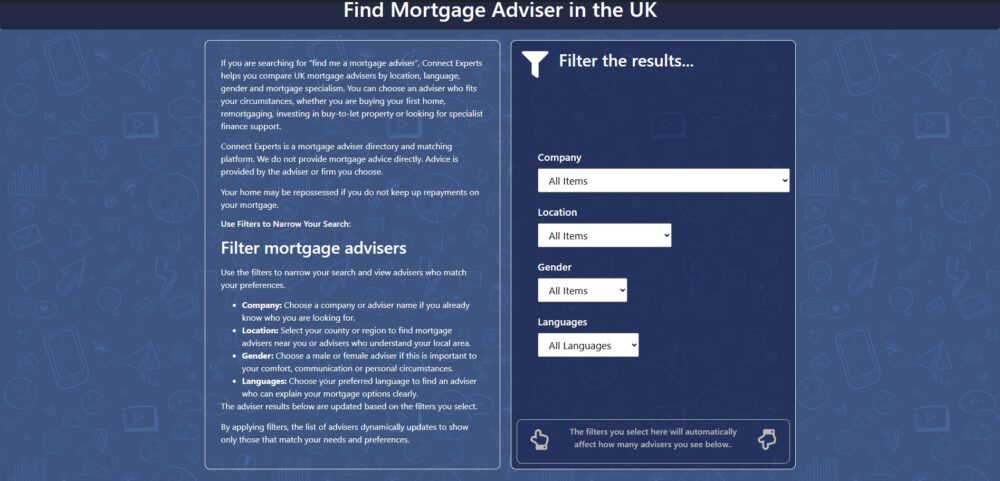
Connect Experts helps you compare mortgage advisers in Manchester based on the type of mortgage support you need.
Manchester Mortgage Market at a Glance
Manchester has one of the more varied housing markets in the North West.
According to the Office for National Statistics Manchester housing data, the average Manchester property price was £252,000 in July 2026, compared with £249,000 a year earlier.
Property type made a substantial difference:
- Detached homes: £480,000
- Semi-detached homes: £330,000
- Terraced homes: £255,000
- Flats and maisonettes: £195,000
First-time buyers paid an average of £237,000, while mortgage purchases averaged £259,000.
Those figures are citywide averages. Prices, property types and lender considerations can differ substantially between central Manchester, south Manchester and neighbourhoods further from the city centre.
That distinction matters. Mortgage underwriting looks beyond the postcode to the property being offered as security and the applicant’s finances.
What Could Affect a Mortgage in Manchester?
A Manchester mortgage application may be affected by more than the purchase price.
City-centre flats and leasehold property
Manchester has substantial apartment development around the city centre and nearby regeneration areas.
With a leasehold apartment, lenders may consider matters including:
- Remaining lease length.
- Ground rent provisions.
- Service charges.
- Building construction.
- Building height.
- Cladding or building-safety documentation where applicable.
- Whether the development contains substantial commercial space.
- Concentration of investor-owned properties.
A lower purchase price does not automatically make an apartment easier to mortgage. Property acceptability remains part of the lender’s decision.
Terraced and family housing
Manchester also contains extensive terraced and semi-detached housing.
These properties can suit first-time buyers, home movers and landlords, although valuation, condition and location remain important.
Older properties may require closer consideration if they have unusual construction methods, substantial alterations, or significant renovation work.
New-build homes
Manchester City Council continues to oversee significant housing delivery.
The Manchester Housing Strategy targets 36,000 new homes by 2032.
New-build lending can differ from lending on established homes. A lender may consider:
- Whether the property is a house or flat.
- The required deposit.
- Incentives offered by the developer.
- Valuation.
- Remaining development work.
- Warranty arrangements.
- Exposure to other properties within the same development.
It can therefore be useful to discuss the property before making assumptions based only on an advertised mortgage rate.
First-Time Buyers in Manchester
Manchester remains relevant to first-time buyers because the market ranges from apartments and smaller terraces to houses further from the city centre.
The ONS recorded an average price of £237,000 for Manchester first-time buyers in July 2026.
However, affordability depends on the applicant, not the local average.
Lenders can consider:
- Gross income.
- Regular expenditure.
- Deposit.
- Existing credit commitments.
- Student loans.
- Childcare.
- Credit history.
- Employment status.
- Mortgage term.
- Interest-rate stress testing.
Someone buying their first property can use Connect Experts to search for first-time buyer mortgage advisers who can explain how lender criteria may apply to their circumstances.
The important figure is not simply what a Manchester property costs. It is what the household can sustainably borrow while retaining enough room for the other costs of home ownership.
Manchester’s Rental Market and Buy-to-Let
Manchester also has a substantial private-rented sector.
Census 2021 recorded 32.3% of Manchester households as privately rented, compared with 28.4% in 2011.
More recent ONS data recorded average Manchester private rent at £1,373 per month in August 2026, although rental values varied significantly by property type and bedroom count.
That doesn’t mean every Manchester property is a suitable investment.
Buy-to-let lenders may examine:
- Expected rental income.
- Interest coverage requirements.
- Loan-to-value.
- Property type.
- Applicant tax position.
- Existing mortgage commitments.
- Portfolio size.
- Whether ownership will be personal or through a limited company.
- Whether the property is an HMO.
- Minimum property values or rental requirements.
Landlords considering Manchester property can search for a buy-to-let mortgage adviser through Connect Experts.
Existing landlords with several mortgaged properties may instead need someone experienced with portfolio landlord mortgage requirements.
Rental demand may matter commercially, but lender underwriting still determines whether a specific property and borrowing structure are acceptable.
Regeneration Is Changing Parts of Manchester
Housing development is an important part of Manchester’s current property story.
Manchester City Council reported 4,766 new homes completed in the most recent year, while more than 7,800 were under construction as of July 2026.
Victoria North is particularly significant. Plans cover approximately 15,000 new homes across seven neighbourhoods on land north-east of Manchester city centre.
For buyers, regeneration can create opportunities, but it can also introduce mortgage questions.
A valuer or lender may consider:
- The maturity of the surrounding development.
- Comparable sales evidence.
- Volume of similar apartments.
- Construction progress.
- Commercial use nearby.
- Future phases of the scheme.
- Marketability if the property later needs to be sold.
Regeneration changes places gradually. Mortgage decisions still need to be based on the property that exists today and the lender’s current criteria.
Self-Employed and Complex Income in Manchester
Manchester’s economy includes employees, company directors, contractors, freelancers and business owners.
For a self-employed applicant, headline income alone may not show what a lender will use for affordability.
Depending on the lender and business structure, underwriting may consider:
- Salary.
- Dividends.
- Net profit.
- Share of company profit.
- Retained profit.
- Latest accounts.
- SA302s and tax year overviews.
- Trading history.
- Recent business performance.
Applicants whose income does not fit a straightforward employed model can search for a self-employed mortgage adviser.
Different lenders may interpret the same set of accounts differently. This makes lender selection especially important where income comes from a company, partnership or several sources.
Finding a Mortgage Adviser in Manchester
A local postcode can help, but specialist experience may matter more than physical distance.
Connect Experts allows you to find a mortgage adviser by location and compare profiles before deciding who to contact.
When comparing advisers, consider whether their experience matches:
- Your mortgage purpose.
- Your employment structure.
- The type of Manchester property.
- Your deposit.
- Your credit history.
- Your timescale.
- Whether you prefer face-to-face, telephone or online advice.
A suitable adviser can then assess whether your circumstances are likely to fit mainstream lending criteria or whether specialist lenders may need to be considered.
Mortgage Advice in Your Preferred Language
Manchester’s population is notably diverse.
Census 2021 found that 20.9% of Manchester residents identified within the Asian, Asian British or Asian Welsh category, while 11.9% identified within Black, Black British, Black Welsh, Caribbean or African groups.
For some households, discussing detailed mortgage terminology in a preferred language can clarify the process.
Connect Experts allows users to find a mortgage broker by language, including advisers listing languages such as Urdu, Punjabi, Hindi, Bengali, Polish and Arabic.
Language preference does not alter lender criteria, but clearer communication can make documentation, affordability discussions and mortgage responsibilities easier to understand.
Independent Schools and Household Affordability
Manchester and the surrounding area include established independent schools, including Withington Girls’ School and other fee-paying schools across south Manchester.
For households choosing independent education, school fees can become a significant long-term commitment.
Mortgage lenders may factor regular school fees into expenditure and affordability assessments.
Families considering whether existing property wealth could support longer-term school-fee planning can read more about Education Finance.
Borrowing secured against a home increases the total mortgage commitment, so suitability, affordability, interest costs and the effect on household finances all require careful consideration.
Protection and the Mortgage Commitment
Buying a Manchester property creates more than a monthly mortgage payment.
Homeowners may also want to consider what could happen to that commitment following death, serious illness or a prolonged loss of income.
A specialist protection adviser can discuss options such as life cover, critical illness insurance and income protection where appropriate.
Protection needs depend on the household, mortgage balance, income, dependants, savings and existing benefits. Cover should therefore be considered according to individual circumstances rather than treated as a standard addition to every mortgage.
Later-Life Property Decisions in Greater Manchester
Some Manchester homeowners eventually reach a different question.
Rather than purchasing their next home, they may be considering whether their existing property could support later-life plans.
That might involve downsizing, remortgaging or investigating equity release.
Homeowners who want information specific to the wider region can find Equity Release Advisers Greater Manchester.
Equity release is not suitable for everyone and can reduce an estate’s value. Consider alternatives and long-term implications carefully.
Find a Mortgage Adviser in Manchester
Manchester contains everything from central apartments and regeneration schemes to Victorian terraces and established family neighbourhoods.
Your address tells only part of the story.
Income, deposit, property type, lease terms, existing borrowing and future plans can all influence which lenders may be suitable.
Connect Experts lets you compare advisers across Manchester by mortgage expertise, location, and language before deciding who you want to contact.