Mortgage Broker in North London

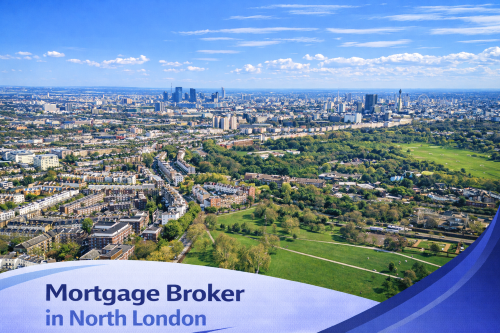
Bright summer aerial view of North London featuring residential streets, large green parkland and the London skyline in the distance under a clear blue sky, with a white and blue curved banner displaying the text “Mortgage Broker in North London”.

Mortgage Broker in North London and discover why live in North London.

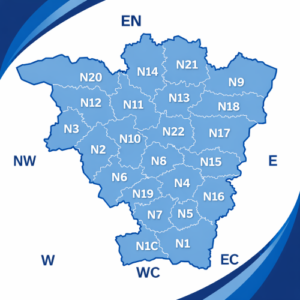
North London is known for its cultural diversity, historic architecture, and vibrant communities. The area includes well-recognised districts such as Camden, Islington, Highgate, Finchley, and Muswell Hill. Landmarks including Alexandra Palace, Hampstead Heath, Emirates Stadium, and Camden Market attract visitors year-round. North London combines established residential streets map graphic in blue branded colours showing the Greater London area divided into postcode regions labelled N1 to N22 and N1C. Each region is filled in light blue with white internal borders and darker blue outer borders. Region labels appear in bold white text. Surrounding compass-style labels EN, NW, W, WC, EC and E are shown around the map. The background features curved layered blue shapes in the corners for branding.with modern developments, green open spaces, and strong transport connections to Central London.
Property demand remains consistent due to proximity to the City, major universities, business hubs, and extensive public transport links. Buyers range from first-time purchasers and professionals to established homeowners and portfolio landlords.

Meet James Bellew: Mortgage Broker in North London

Mortgage Broker in North London: James Bellew is a mortgage broker based in North London, providing structured, tailored mortgage advice through Connect Experts. A key area of his work focuses on medium- to large-buy-to-let portfolios, where careful planning and lender selection are essential for sustainable long-term growth.

He supports landlords with portfolio expansion, restructuring existing borrowing, and reviewing overall lending exposure across multiple properties. This includes guidance on title splits, refinancing strategies, and the incorporation of properties into limited company structures where appropriate. Each recommendation is assessed against current UK tax considerations, lender portfolio rules, and affordability requirements.

Portfolio landlords are subject to specialist underwriting. Lenders assess aggregate borrowing, rental stress testing across the entire portfolio, background assets and liabilities, and overall risk concentration. James prepares detailed portfolio schedules, reviews rental coverage calculations, and ensures documentation meets current Prudential Regulation Authority standards for portfolio applications.

Every case is reviewed in line with up-to-date affordability standards. Verified income, deposit evidence, credit history, and existing financial commitments are carefully assessed before submission.

James manages the full mortgage process from initial enquiry through to completion. He liaises with lenders, solicitors, accountants, and managing agents where required, helping landlords and homeowners structure borrowing efficiently while remaining aligned with current UK lending regulations. Clear communication and practical guidance are provided at every stage. If you would like to speak with James or compare advisers, he can be found on the Connect Experts directory.

Understanding the North London Property Market

North London offers a broad mix of housing, from Victorian and Edwardian terraces to post-war developments and modern apartment blocks. Areas such as Highgate and Hampstead include period homes and conservation streets, while districts like Colindale and Tottenham feature new-build developments.

Property values vary significantly depending on postcode, transport links, and school catchments. Proximity to Underground and Overground stations can influence demand. Lenders assess affordability carefully, especially in higher-value areas where loan sizes are larger.

Mortgage providers review:

  • Verified income and employment type
  • Deposit source and loan-to-value ratio
  • Credit profile and financial conduct
  • Ongoing financial commitments
  • Property type and construction

Higher interest rates require detailed affordability checks. Buyers and investors must demonstrate sustainability under lender stress testing rules. Those researching relocation may also wish to read about why move to London to understand the wider county’s housing and lifestyle appeal.

Living in North London – Transport, Amenities and Attractions

North London benefits from extensive Underground, Overground, and National Rail services. Key Underground lines include the Northern, Piccadilly, Victoria, and Central lines. Major road routes such as the A1, A406 North Circular, and M1 provide wider access across London and beyond.

The area offers a wide range of amenities, including:

  • Independent shops and high street retailers
  • Restaurants, cafés, and markets
  • Primary and secondary schools
  • Private and state healthcare facilities
  • Parks and green spaces, including Hampstead Heath and Finsbury Park
  • Leisure centres and private gyms

School catchment areas and local authority planning policies can influence property decisions. Buyers should always review the most recent local authority information before committing to a purchase.

Property Considerations When Buying in North London

When purchasing in North London, it is important to assess:

  • Deposit size and borrowing capacity
  • Stamp Duty implications
  • Leasehold versus freehold ownership
  • Service charges on flats and apartments
  • New build lender restrictions
  • Buy-to-let rental calculations
  • Energy performance requirements

Mortgage approval remains subject to status, affordability, and lender criteria. Product availability and rates can change.

Areas Near North London Worth Exploring

When reviewing property options in and around North London, buyers often compare neighbouring districts based on affordability, commuting routes, school catchments, and long-term investment potential. Below are six locations frequently considered by purchasers and investors.

Islington

Islington is one of North London’s most established and centrally positioned boroughs. It is known for Georgian and Victorian terraces, garden squares, and converted flats. Upper Street offers a wide range of restaurants, independent shops, and cultural venues.

Transport links are strong, with Angel and Highbury and Islington stations providing access to the Northern Line, Victoria Line, and London Overground. This connectivity makes the area popular with professionals working in the City and Central London.

Property prices are typically higher than in outer North London areas. Flats, leasehold properties, and ex-local authority buildings are common. Lenders will carefully assess service charges, lease length, and building construction before approving financing.

Barnet

Barnet, located further north, offers a more suburban environment. The area includes High Barnet, New Barnet, and East Barnet, each with access to green spaces and family housing. Properties range from 1930s semi-detached houses to modern developments.

High Barnet Underground station sits on the Northern Line, offering direct access to Central London. Road connections via the A1 and M25 are convenient for commuters travelling outside the capital.

Buyers often consider Barnet for larger homes and access to reputable schools. Mortgage lenders will review affordability closely, especially for higher-value detached properties. New-build estates may also have specific loan-to-value restrictions.

Enfield

Enfield offers a combination of period homes, post-war properties, and newer developments. Areas such as Enfield Town, Palmers Green, and Southgate attract families seeking more space while maintaining access to London.

Rail services from Enfield Town and Southbury connect to Liverpool Street, while Southgate Underground station provides Piccadilly Line access. This balance of rail and road links supports consistent housing demand.

Property prices can be more accessible than in inner boroughs. Lenders will still carefully assess income sustainability and credit history, particularly where buyers are stretching affordability to secure larger homes.

Haringey

Haringey includes neighbourhoods such as Crouch End, Muswell Hill, and Tottenham. The area offers a mix of Edwardian homes, converted flats, and regeneration zones. Alexandra Palace and Finsbury Park are well-known local landmarks.

Transport links vary by postcode. Tottenham Hale provides Victoria Line and National Rail services, while Hornsey offers direct trains to Moorgate. Regeneration projects in parts of Tottenham have influenced buyer interest in recent years.

Mortgage lenders may apply additional scrutiny to high-rise flats or properties within large developments. Buyers should review lease terms and service charges in detail before committing.

Camden

Camden is recognised for its markets, music venues, and period architecture. Housing ranges from Georgian terraces and mansion blocks to modern apartments. The area remains popular with professionals and investors due to its central location.

Camden Town Underground station connects via the Northern Line, while Euston provides national rail services. Proximity to universities and commercial centres supports rental demand.

Property prices are typically above the London average. Buy-to-let investors must meet lender rental stress-testing rules, and leasehold properties require careful review of the remaining lease term.

Hackney

Hackney has seen substantial regeneration over the past decade. Areas such as Stoke Newington and Clapton offer Victorian terraces and warehouse conversions. The borough combines residential streets with independent retailers and open spaces such as London Fields.

Hackney benefits from London Overground services connecting to Liverpool Street and Stratford. While it does not have Underground access throughout, strong Overground links maintain demand.

Buyers should be aware of varying property types, including ex-local authority flats and converted buildings. Lenders assess the construction type, building height, and service charge levels when reviewing applications.

Each of these locations presents different pricing levels, property types, and lender considerations. Deposit size, employment structure, credit history, and property construction will all influence available mortgage options. Reviewing these factors carefully before submitting an application can help avoid delays and ensure the property is suitable under current UK lending criteria.

Start Your Mortgage Journey in North London

North London remains one of the most sought-after areas in the capital due to its transport infrastructure, green spaces, and established residential communities. Professional mortgage advice can help structure an application correctly and avoid unnecessary delays.

James Bellew provides tailored mortgage guidance to first-time buyers, home movers, landlords, and those looking to refinance.

If you would like to speak with James Bellew or review his full profile, you can visit the Connect Experts directory to access verified details and arrange an enquiry.

James Bellew

Thank you for reading our publication “Mortgage Broker in North London | Amenities and Attractions.” Stay “Connect“-ed for more updates soon!