A Mortgage Broker in Woodstock may need to look beyond the amount you want to borrow, because in this Oxfordshire market the property itself can be just as important as the applicant.
Woodstock has a strong historic identity, a designated conservation area and housing ranging from flats and modern developments to traditional cottages and substantial detached homes. That variety creates an important mortgage principle: two buyers with similar incomes and deposits can face very different lending questions when the properties they choose are different.
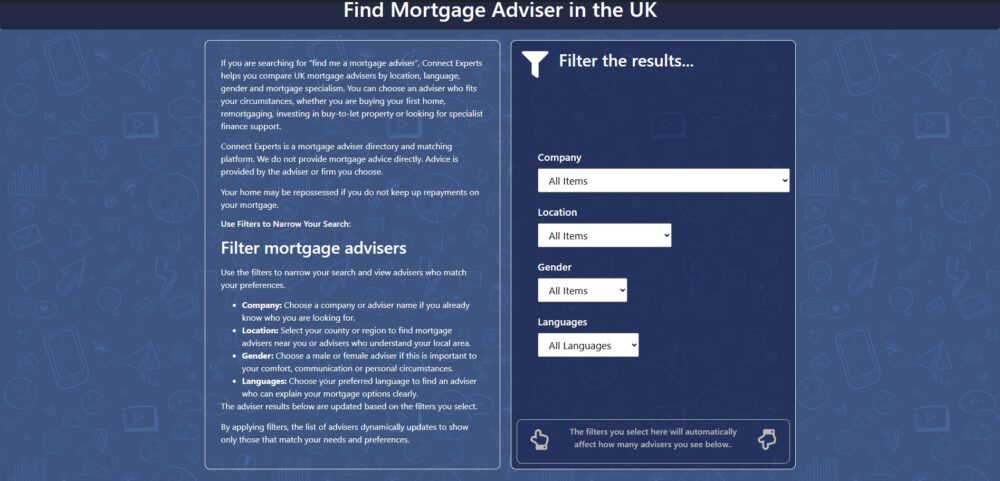
Connect Experts helps you find mortgage advisers by location, mortgage requirement, and other preferences. It is a mortgage adviser directory and matching platform. Mortgage advice comes from the adviser or firm you choose.
At a Glance
Woodstock’s mortgage market is shaped by more than its postcode. Historic buildings, a designated conservation area and relatively high property values can make valuation, property condition and lender criteria particularly important. First-time buyers may face a sizeable affordability challenge, while some higher-value purchases may require more detailed underwriting. Connect Experts helps you find advisers whose experience fits the property and borrowing involved.
In Woodstock, the building can influence the mortgage
Woodstock is one of West Oxfordshire’s designated conservation areas. West Oxfordshire District Council explains that conservation areas protect places of particular architectural or historic interest and can place additional controls on alterations that might otherwise fall under permitted development rights.
That matters when buying because character is not only an aesthetic consideration.
A lender still needs to be satisfied that the property provides acceptable security for the mortgage.
Depending on the home, questions could arise around:
- age and construction;
- roof or structural condition;
- previous alterations;
- listed status;
- planning or listed-building consent;
- valuation;
- marketability;
- insurance;
- substantial renovation plans.
West Oxfordshire also contains more than 3,000 listed buildings across the district, including a significant range of traditional residential buildings. Listed-building controls can apply to both internal and external alterations.
You can check Woodstock’s conservation-area information through the West Oxfordshire District Council conservation area guidance.
Don’t confuse a mortgage valuation with a structural survey. The lender’s valuation principally considers whether the property is suitable security for its loan. A buyer considering an older or altered Woodstock property may therefore decide to arrange a more detailed survey separately.
Woodstock property values change the affordability conversation
Official house-price data is published at West Oxfordshire level rather than specifically for Woodstock.
In July 2026, the provisional average West Oxfordshire house price was £419,000. First-time buyers paid an average £337,000, while home movers paid an average £501,000.
Detached homes across West Oxfordshire averaged £660,000.
Woodstock itself sits above that broader district picture in recent commercial sold-price datasets. Rightmove reports an overall average of approximately £586,000 over the previous year.
These are market averages, not valuations of an individual Woodstock property.
Their usefulness lies elsewhere: they show why the relationship between deposit, income and required loan size deserves close attention here.
For example, moving from a £400,000 home to one costing £650,000 does not simply require another £250,000 of mortgage borrowing.
The calculation may also change because of:
- available equity from the existing home;
- Stamp Duty Land Tax;
- the mortgage term;
- existing debts;
- childcare or other household commitments;
- changes in income;
- the property’s valuation;
- the lender’s maximum loan-to-value.
This makes adviser selection particularly important for home movers entering Woodstock from a lower-priced area.
You can explore advisers experienced in moving home mortgage cases if your current property is helping fund the next purchase.
When a Woodstock purchase becomes a higher-value mortgage case
Higher property values justify including high-net-worth lending on this page, but the terminology needs care.
Owning or buying an expensive Woodstock property does not automatically make someone a high-net-worth mortgage customer.
The Financial Conduct Authority definition used for certain mortgage provisions relates to financial circumstances, including specified income or net-asset thresholds. Connect Experts’ HNW guidance currently describes the FCA threshold as annual net income of at least £300,000 or net assets of at least £3 million.
However, Woodstock’s higher-value stock can create mortgage cases where many of the same underwriting issues become relevant.
A substantial purchase may involve:
- a larger mortgage requirement;
- significant equity or deposit;
- bonuses or investment income;
- company ownership;
- salary and dividends;
- retained company profits;
- multiple income streams;
- interest-only borrowing with an acceptable repayment strategy;
- assets held separately from regular earned income.
A buyer may therefore look financially strong while fitting poorly into a basic salary-multiple assessment.
Where the borrower genuinely meets the relevant criteria or has a large, complex mortgage requirement, a high-net-worth mortgage broker may be able to assess lenders that take a broader view of income, assets and repayment structure.
The point is not to label Woodstock as a high-net-worth town. It is to recognise that its upper end can produce borrowing requirements that need more detailed underwriting.

The first Woodstock purchase can require a different strategy
Higher local prices create a different challenge for people entering home ownership.
Across West Oxfordshire, first-time buyers paid an average of £337,000 in July 2026. That was substantially below the £501,000 average paid by home movers in the same local-authority area.
That gap illustrates something important.
A first-time buyer does not need to compete across every part of the Woodstock market. The more practical task is to establish which properties fit the combination of deposit, borrowing capacity and monthly budget.
Mortgage affordability may take account of:
- basic income;
- regular overtime or bonus income where accepted;
- outstanding loans and credit;
- dependants;
- committed expenditure;
- deposit size;
- mortgage term;
- loan amount.
Property type then adds another layer.
A smaller flat may have leasehold considerations. An older cottage could raise construction or valuation questions. A newer home could be assessed under a lender’s new-build criteria.
Someone purchasing their first Woodstock property can use Connect Experts to find a first-time buyer mortgage adviser whose experience reflects both the borrower and the property.
A Woodstock address can also influence the decision to improve rather than move
Historic towns create an interesting financial choice.
Sometimes the question is not whether you can afford another property. It is whether moving is preferable to changing the one you already own.
For Woodstock homeowners, that decision may need to take account of conservation-area restrictions or listed-building controls before assuming an extension, conversion or other alteration will be possible.
Planning permission and mortgage lending are separate issues.
A lender considering additional borrowing will normally focus on matters such as affordability, property value, existing mortgage balance and the purpose of the borrowing. Planning authorities consider whether proposed works meet the relevant planning and heritage requirements.
Knowing one side of the equation does not automatically answer the other.
This is particularly important with historic property, where planned alterations can affect costs well beyond the mortgage itself.
Remortgaging when a Woodstock home has changed in value
Homeowners approaching the end of a fixed or discounted mortgage deal have another calculation to make.
The property’s value today may differ from when the original mortgage began. So may the outstanding loan.
Together, these figures determine the current loan-to-value.
For example, a homeowner whose mortgage balance has decreased while their property has retained substantial equity may now fall into a different loan-to-value band. Conversely, assumptions about value should not replace a lender’s own valuation.
A mortgage review may consider:
- the existing balance;
- estimated current value;
- remaining mortgage term;
- early repayment charges;
- income and expenditure;
- plans to move;
- additional borrowing needs;
- whether remaining with the existing lender is an option.
If your existing deal is approaching its end, you can search for mortgage rate ending advisers and compare advisers before deciding who to contact.
Protecting a larger housing commitment
A higher mortgage payment or larger family home can increase the financial consequences of losing an income.
That does not mean every borrower needs the same insurance.
Protection should instead begin with the commitments that need protecting.
This could include the mortgage balance, monthly household costs, dependants, existing employer benefits and the proportion of income contributed by each person.
Life cover, critical illness cover and income protection serve different purposes and have different terms and exclusions.
Connect Experts has a separate route for finding protection mortgage brokers if protection needs to be considered alongside the mortgage.
Finding a mortgage adviser for Woodstock property
Woodstock demonstrates why finding an adviser solely by distance can be too narrow.
A nearby adviser may be useful. Relevant experience may matter more.
Someone buying a listed cottage may want a different conversation from someone purchasing a recently built family home. A first-time buyer may focus on deposit and affordability. A buyer with substantial assets or complex remuneration may require a lender capable of more individual underwriting.
Before choosing an adviser, consider the combination that defines your case:
the borrower + the property + the borrowing requirement.
Connect Experts lets you search and compare mortgage advisers by location, mortgage type, language and other preferences. The adviser or regulated firm you select then provides the mortgage advice.
For Woodstock, that means you can look beyond a generic local search and focus on an adviser whose background reflects the property and financial circumstances involved.
Explore Mortgage Advisers for Woodstock