Mortgage Documents Explained by Multilingual Brokers: Mortgage applications rely on accurate documentation. A multilingual broker can explain what documents are requested, why lenders need them and how they relate to the application.
However, an explanation is not automatically a certified translation. Applicants should confirm whether foreign-language documents need professional translation and whether the lender has specific requirements.
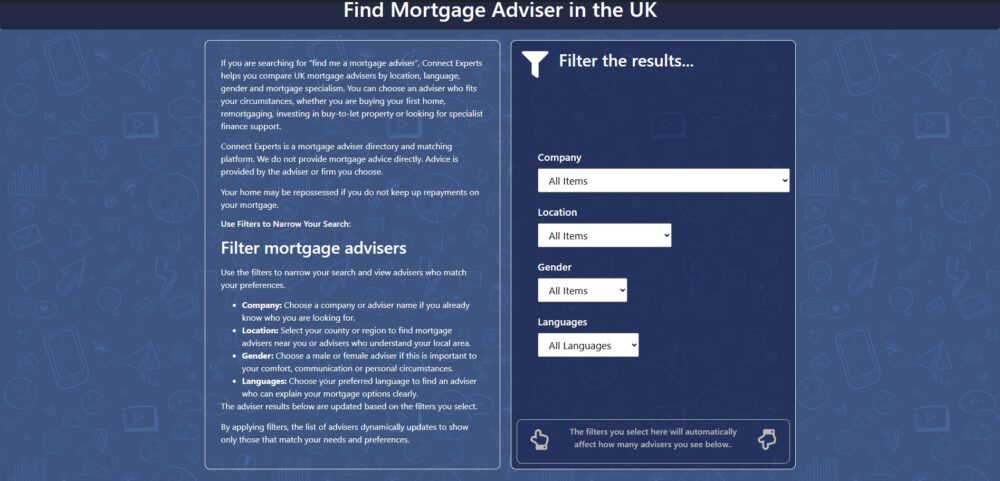
Use Connect Experts to find a mortgage broker by language before preparing your application.
Documents Tell the Financial Story
A mortgage application converts a person’s financial circumstances into evidence a lender can assess.
That process can become difficult when documents use unfamiliar financial terms. It may become more complex when income or financial records originate outside the UK.
A multilingual broker can explain the practical purpose of each request. They can also help the applicant identify missing information before the application reaches the lender.
However, the broker cannot change the underlying evidence. The documents must still satisfy the lender’s criteria.
Identification and Address Evidence
Lenders and regulated firms must confirm an applicant’s identity.
Requested evidence may include:
- Passport
- Driving licence
- Residence documentation
- Utility bill
- Council tax statement
- Bank statement
- Other accepted address evidence
The exact requirements can differ between firms.
Names and addresses should be consistent across the application. Differences caused by transliteration, abbreviations or previous addresses should be explained early.
An adviser can help identify a discrepancy. The lender or solicitor will decide what supporting evidence is acceptable.
Employed Income Documents
Employed applicants are commonly asked for evidence such as:
- Recent payslips
- Bank statements showing salary credits
- P60
- Employment contract
- Bonus or commission evidence
- Employer references in some cases
The lender may distinguish between basic salary and variable income.
Over time, commissions and bonuses may be averaged or assessed under specific rules. An adviser should explain that receiving income does not guarantee that every lender will use all of it.
Applicants should also disclose expected changes to their employment or income.
Self-Employed Income Evidence
Self-employed income may require a broader set of documents.
Depending on the business and lender, this may include:
- Tax calculations
- Tax year overviews
- Finalised accounts
- Accountant’s certificates
- Business bank statements
- Personal bank statements
- Contracts
- Salary and dividend evidence
- Partnership accounts
- Evidence of retained profit
Different lenders may assess the same business differently.
Some focus on taxable profit. Others may consider salary and dividends. Certain lenders may consider additional company information when their criteria permit.
A multilingual adviser can explain what each figure means. However, the accountant remains responsible for the accounts and tax records.
Applicants can search for mortgage advisers for company directors whose income comes from a limited company.
Bank Statements and Expenditure
Bank statements provide more than proof of income.
A lender may use them to review:
- Salary or business income
- Existing credit payments
- Regular household costs
- Overdraft use
- Returned payments
- Gambling transactions
- Transfers between accounts
- Deposit accumulation
- Undisclosed commitments
The adviser should explain the request without making assumptions about individual transactions.
Applicants should not alter, conceal or omit information. When a transaction requires context, a clear explanation may be necessary.
Deposit Evidence
The source of the deposit is an important part of the application and legal process.
Possible sources include:
- Personal savings
- Gift from a family member
- Sale of another property
- Inheritance
- Investment proceeds
- Business funds
- Equity from an existing home
A gifted deposit may require a declaration from the donor. The donor may also need to provide identification and evidence showing where the funds originated.
Money transferred from another country may create extra checks. The lender and conveyancer may ask for a clear history of the funds.
A verbal explanation is not a substitute for documentary evidence.
Credit Reports and Existing Commitments
Mortgage lenders may use information from credit reference agencies when assessing an application.
The report may show:
- Credit cards
- Personal loans
- Hire purchase
- Car finance
- Overdrafts
- Missed payments
- Defaults
- County court judgments
- Previous addresses
- Financial associations
A multilingual broker can explain how known credit events may affect lender selection.
However, no adviser can guarantee approval or remove accurate information from a credit report.
Applicants who have had a declined application can review specialist mortgage and protection brokers before making another application.
The Mortgage Illustration
A mortgage illustration contains core information about the proposed product.
It may show:
- Mortgage amount
- Term
- Interest rate
- Monthly payments
- Product fees
- Adviser fees
- Early repayment charges
- Total amount repayable
- What happens when the initial rate ends
- Risks linked to changing interest rates
The adviser should explain the document before the applicant commits.
Important figures should be discussed in context. A monthly payment alone does not show the full product cost.
Agreement in Principle
An agreement in principle is an initial indication based on selected information and, usually, a credit assessment.
It is not a mortgage offer.
The lender can still decline the full application after reviewing:
- Complete income evidence
- Bank statements
- Credit information
- Property valuation
- Deposit source
- Legal matters
- Undisclosed commitments
Applicants should avoid treating an agreement in principle as final approval.
Mortgage Offer
The mortgage offer sets out the lender’s proposed terms and conditions.
Applicants should check:
- Names and property address
- Mortgage amount
- Product and rate
- Mortgage term
- Repayment method
- Monthly payments
- Special conditions
- Offer expiry date
- Fees
- Early repayment charges
Questions should be raised before contracts are exchanged or the mortgage completes.
The solicitor or conveyancer handles the legal process. The mortgage adviser explains the mortgage recommendation and associated product information.
Foreign-Language Documents
Foreign-language evidence may need translation.
The lender may specify:
- Who can translate the document
- Whether certification is required
- Which credentials are accepted
- Whether the original must also be supplied
- How recently the translation must have been completed
The applicant should not assume that an informal translation will be accepted.
Ask the adviser to confirm the lender’s requirements before paying for translation services.
Explanation Is Not Legal Translation
A multilingual broker may explain a document during the advice process. That service is different from producing a certified translation.
This distinction matters because the lender, conveyancer and applicant may rely on different documents for different purposes.
The applicant should establish:
- Which document is legally authoritative?
- Does the lender need a certified translation?
- Does the conveyancer have separate requirements?
- Who will pay for translation?
- Who accepts responsibility for its accuracy?
- Can the adviser explain the mortgage terms independently?
These questions should be resolved before submission.
Prepare Before Applying
Good preparation reduces avoidable delays.
Before the first detailed meeting:
- Gather current documents
- Check names and addresses
- Review your credit records
- Identify the deposit source
- Explain unusual transactions
- Declare existing commitments
- Confirm any expected income changes
- Ask about foreign-language evidence
- Keep original documents available
- Avoid submitting altered copies
The purpose is not to create a perfect-looking application. It is to present an accurate and properly evidenced one.
Frequently Asked Questions
Can a multilingual mortgage broker translate my documents?
They may explain documents in another language. A lender may still require a certified translation from an accepted independent translator.
Do lenders accept overseas bank statements?
Some may, subject to their criteria and verification requirements. Translations or additional evidence may be needed.
Why does a lender need my bank statements?
Statements can help verify income, expenditure, credit commitments, deposit funds and general account conduct.
Is an agreement in principle a mortgage offer?
No. It is an initial indication and remains subject to the full application, underwriting and property assessment.
Must I disclose all existing debts?
Yes. The application should provide complete and accurate information about financial commitments.
Find a Mortgage Adviser by Your Preferred Language
Connect Experts lets you compare advisers by language, location, gender and mortgage expertise.
Start by selecting your preferred language. Then review each adviser’s profile before making contact.
Search the UK mortgage adviser directory