Mortgage When Moving Home: Moving home does not automatically transfer your mortgage to another property.
You may be able to port your current mortgage product. However, your lender will normally reassess your finances and the new property.
Another option is to repay the existing mortgage and apply for a different deal.
The right route depends on your mortgage terms, affordability, equity, property choice and moving timetable.
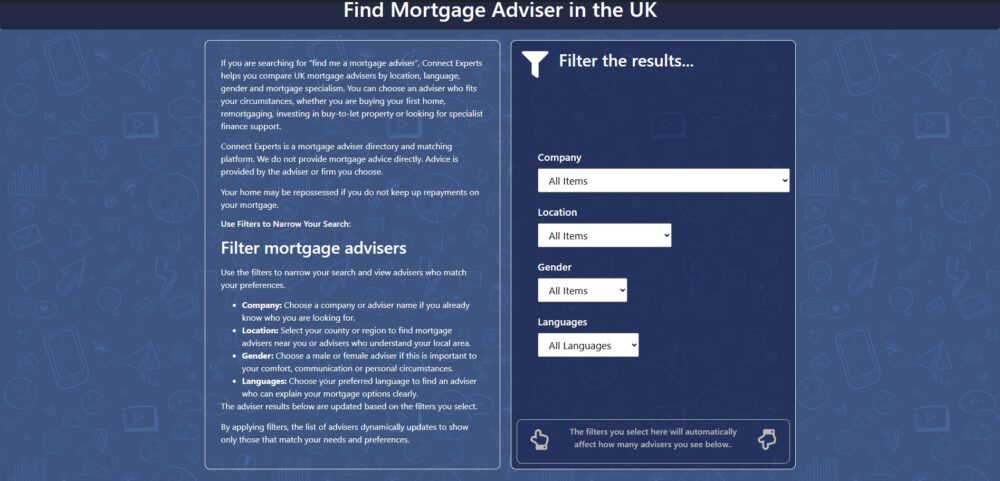
Connect Experts helps you find a mortgage adviser for moving home. It is a directory and matching platform. Mortgage advice is provided by the adviser or firm you choose.
At a Glance
- A portable mortgage product does not guarantee a new mortgage approval.
- Your lender may reassess your income, spending, debts and credit history.
- The new property must also meet the lender’s requirements.
- Early repayment charges may affect the cost of switching.
- Sale proceeds can usually provide the deposit for the next property.
- Moving dates, mortgage offer expiry dates and property chains must be coordinated.
- A mortgage adviser can compare the cost of porting against changing lender.
Can You Transfer Your Mortgage When Moving Home?
Many mortgage products are described as portable.
Porting normally means keeping an existing mortgage product when borrowing against a different property. The mortgage itself is not physically moved.
You usually repay the loan secured against your current home. The lender then creates a new mortgage secured against the property you are buying.
You must normally complete a new application.
The lender may review:
- Your current income.
- Regular household spending.
- Loans and credit commitments.
- Credit history.
- Employment status.
- Deposit or equity.
- The new property.
- The requested mortgage term.
Therefore, a portable product is an available feature rather than a guaranteed right.
When Porting May Be Worth Considering
Porting may be worth considering when your existing rate is lower than the rates available on a new mortgage.
It may also reduce or avoid an early repayment charge. This depends on the mortgage terms and completion dates.
However, the existing product may cover only part of the amount required.
For example, you may have a £180,000 mortgage but need £240,000 for the next home. The lender could place the extra £60,000 on a separate product.
The two parts may have:
- Different interest rates.
- Different product end dates.
- Separate early repayment charges.
- Different repayment calculations.
This arrangement can become more complicated when you remortgage later.
A lower rate on one part does not always produce the lowest total cost.
When Changing Mortgage May Be More Suitable
You may decide to repay your current mortgage and apply for a new product.
This could be considered when:
- Your mortgage is not portable.
- Another lender offers a more suitable arrangement.
- Your existing lender will not accept the new property.
- You need significantly more borrowing.
- Your financial circumstances have changed.
- You want a different mortgage term.
- You want to consolidate borrowing into a single product.
Changing lender can create extra costs. These may include an early repayment charge, an arrangement fee, a valuation cost, and legal fees.
A useful comparison considers the complete cost over the relevant period. It should not rely only on the advertised interest rate.
How Affordability Is Reassessed
A previous mortgage approval does not establish future affordability.
Lenders use current information when considering the new application. Changes since the original mortgage began can affect the result.
Relevant changes may include:
- A different salary.
- Self-employed income.
- Maternity or parental leave.
- Reduced working hours.
- New credit commitments.
- Childcare costs.
- School fees.
- Maintenance payments.
- A longer or shorter mortgage term.
- Retirement occurring during the term.
People with variable or business income may need an adviser who understands different lender methods. Connect Experts provides a separate search route for self-employed mortgage brokers.
Using Equity From Your Current Home
Equity is the difference between the sale value and the mortgage amount being repaid.
For example:
- Expected sale price: £350,000.
- Existing mortgage: £190,000.
- Estimated selling and legal costs: £8,000.
- Indicative equity remaining: £152,000.
This figure may contribute towards the deposit and buying costs.
However, estate agency charges, legal fees, mortgage charges and property taxes can reduce the available amount.
The final deposit cannot be confirmed until the sale price and redemption statement are known.
Moving to a More Expensive Property
Moving to a more expensive home may require:
- A larger mortgage.
- More cash deposit.
- Additional borrowing from the existing lender.
- A longer mortgage term.
- A different lender or mortgage product.
The lender will consider the requested loan-to-value ratio.
Loan-to-value compares the mortgage against the property value.
A £300,000 mortgage on a £400,000 property creates a 75% loan-to-value ratio.
The available product range and rate may change at different loan-to-value levels.
Downsizing to a Cheaper Home
Downsizing can reduce the mortgage required.
Some homeowners can repay their mortgage completely after selling. Others may retain a smaller loan.
An early repayment charge could still apply if the current mortgage is repaid during a fixed or discounted period.
Some lenders may refund part of that charge when a smaller mortgage is completed within their permitted porting period.
The exact treatment depends on the lender’s terms.
Older borrowers may also need to consider the maximum term, retirement income and later-life lending criteria.
What Happens When Completion Dates Do Not Match?
A mortgage is normally repaid when the existing property sale completes.
The new mortgage begins when the purchase completes.
When both transactions complete on the same day, the process may be straightforward.
Difficulties can arise when the sale and purchase complete on different dates.
Some lenders allow a limited period between redemption and completion. They may refund an early repayment charge after the new mortgage completes.
The conditions and timescales vary.
Do not assume the charge will be refunded without written confirmation.
Moving Home With Negative Equity
Negative equity exists when the mortgage balance exceeds the property’s sale value.
Selling may not provide enough money to repay the mortgage.
Options may be limited because the lender’s charge must usually be cleared before ownership transfers.
Possible considerations include:
- Paying the shortfall from savings.
- Delaying the move.
- Discussing the position with the lender.
- Reducing selling costs.
- Reviewing whether another borrowing arrangement is possible.
A lender is not required to transfer negative equity to another property.
Independent debt guidance may also be appropriate where the shortfall cannot be paid.
Mortgage Costs When Moving Home
Your mortgage comparison should include more than the monthly payment.
Possible mortgage costs include:
- Early repayment charges.
- Mortgage exit fees.
- Product fees.
- Valuation fees.
- Adviser fees.
- Legal costs.
- Electronic transfer charges.
- Higher lending charges where applicable.
Moving costs may also include estate agency fees, surveys, removals and property taxes.
In England and Northern Ireland, Stamp Duty Land Tax rules depend on the property price and your circumstances. Current thresholds and rates should be checked through GOV.UK residential property rates.
Scotland and Wales use different property tax systems.
How Long Does a Moving-Home Mortgage Offer Last?
Mortgage offers are issued for a defined period.
The exact period varies by lender, property and mortgage type.
A property chain can delay exchange or completion. A delayed completion could require an offer extension or a fresh assessment.
The lender may request:
- Updated payslips.
- New bank statements.
- Revised accounts.
- Another credit check.
- A new valuation.
- Confirmation that circumstances have not changed.
An extension is not automatic.
Applicants should track the offer expiry date throughout the transaction.
Protecting the New Mortgage
A larger mortgage or changed household budget may affect existing protection needs.
Moving home can be a suitable point to review:
- Life insurance.
- Critical illness cover.
- Income protection.
- Buildings insurance.
- Contents insurance.
Existing cover should not be cancelled before replacement terms are confirmed.
Users can search Connect Experts for protection mortgage brokers where a protection review is required.
How to Find a Mortgage Adviser for Moving Home
A moving-home application can involve an existing lender, a new property and fixed transaction dates.
The adviser should understand residential mortgages and the practical requirements of property chains.
Connect Experts allows users to compare residential mortgage advisers by location and other preferences.
Before choosing an adviser, ask:
- Does the adviser regularly handle moving-home cases?
- Can they compare porting with switching?
- Will they calculate the full cost of each route?
- Can they work with the estate agent and solicitor timetable?
- How will they communicate progress?
- What fees may apply?
Connect Experts does not provide mortgage advice directly. Advice comes from the selected adviser or firm.
Frequently Asked Questions
Can I keep my mortgage rate when moving home?
You may be able to keep the product if it is portable. You must still meet the lender’s current requirements.
Is porting a mortgage the same as transferring it?
Not exactly. The old mortgage is normally repaid. A new loan is secured against the property being purchased.
Can my lender refuse a mortgage port?
Yes. The lender may decline the application or reject the property, even when the product is described as portable.
Can I borrow more while porting?
Some lenders allow additional borrowing. The extra amount may use another product with a different rate and end date.
Will I pay an early repayment charge?
A charge may apply when the existing mortgage is repaid. Some lenders refund it after a qualifying port completes.
Can I change lender when moving house?
Yes, subject to eligibility. Compare the full cost of changing lender against porting the existing product.
When should I speak to an adviser?
Consider speaking to an adviser before making an offer. This provides time to assess affordability, costs and mortgage availability.
Find an Adviser for Your Home Move
A home move joins two decisions: choosing a property and deciding how to finance it.
The property may represent the destination. The mortgage determines whether the route remains affordable.
Use the Connect Experts directory to compare mortgage advisers by location, expertise, language, gender and contact preference.