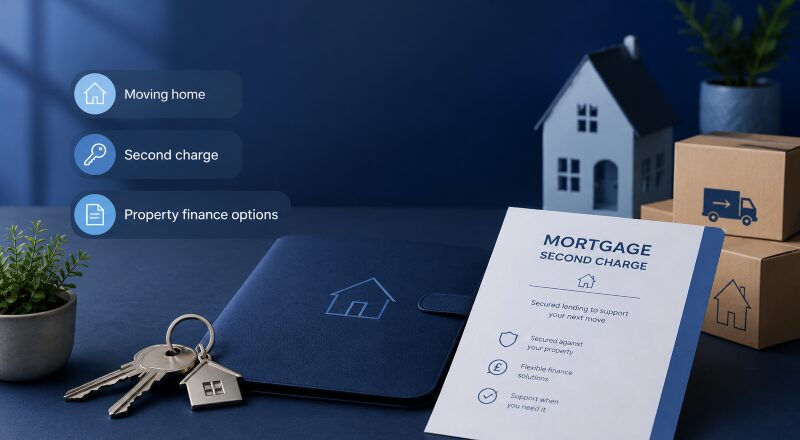
Second Charge Mortgage When Moving House: A second-charge mortgage usually needs attention when the property is sold.
It may need to be repaid from the sale proceeds. Porting may sometimes be possible, but it requires lender approval and a suitable new property.
Review the loan before marketing the home.
What Happens to a Second Charge Mortgage When You Move?
Moving home turns every secured loan into part of the sale calculation.
A second-charge mortgage is registered against the current property. Therefore, it cannot simply be ignored when ownership changes.
The solicitor will normally need redemption figures for both the first and second mortgages.
The sale proceeds repay the secured lenders in their legal order. Remaining funds can then contribute towards the next property.
This makes advance planning essential.
Will the second charge be repaid?
In many cases, the loan is repaid when the property is sold.
The borrower should request a redemption statement showing:
- Outstanding capital.
- Interest due.
- Early repayment charges.
- Administration fees.
- Legal charges.
- The date until which the figure remains valid.
The final amount may differ from the balance shown on an ordinary mortgage statement.
Can a second-charge mortgage be transferred?
Some products may be portable.
Porting means applying to move the borrowing to another property. It is not an automatic transfer.
The lender may reassess:
- Income.
- Expenditure.
- Credit history.
- New property value.
- New first mortgage.
- Combined loan-to-value.
- Property construction.
- Remaining mortgage term.
The new first mortgage lender may also need to accept the second charge behind its own security.
How can the loan affect the deposit?
Consider a property sale with proceeds remaining after estate agency and legal costs.
Both secured mortgages must normally be repaid before the borrower receives the remaining equity.
This can reduce the deposit available for the next purchase.
A smaller deposit may then affect:
- First mortgage loan-to-value.
- Available mortgage products.
- Interest rates.
- Monthly payments.
- Affordability.
- Stamp duty funding.
- Moving reserves.
The impact should be calculated before making an offer on another property.
What if the sale proceeds are insufficient?
Where the property value does not cover all secured borrowing and sale costs, the transaction becomes more complex.
The borrower should speak with the lenders and solicitor immediately.
Do not assume that a sale can complete where a secured debt remains unpaid.
Early advice may help establish whether:
- Additional funds are required.
- A lender will agree another arrangement.
- The sale should be delayed.
- The borrowing can be restructured.
- Independent debt advice is needed.
Should the loan be repaid before moving?
Early repayment may simplify the future sale. However, it could trigger charges or use savings needed for the move.
Compare:
- The redemption amount.
- Early repayment charges.
- Interest saved.
- Expected sale date.
- Available savings.
- Deposit requirements.
- Alternative borrowing costs.
The correct timing depends on the entire move, not one account.
How does this affect a future remortgage?
A second charge can also affect refinancing without a sale.
The borrower may need to:
- Repay the second charge.
- Retain it with lender consent.
- Ask the second lender to postpone its charge.
- Replace both mortgages.
- Select a first lender willing to accept the arrangement.
The FCA’s Mortgage Conduct of Business rules provide the regulatory framework applying to regulated mortgage activity.
Preparing before marketing the property
Gather:
- First mortgage statement.
- Second-charge statement.
- Redemption figures.
- Early repayment terms.
- Property valuation.
- Estimated sale costs.
- Expected deposit.
- New mortgage budget.
- Details of any portability feature.
Use Find Your Mortgage Broker to understand how adviser searches can be refined around the next transaction.
The second mortgage loan adviser page can help identify advisers who may review the existing secured loan.
Questions to ask an adviser
Ask:
- Must the second charge be repaid?
- Can it be ported?
- What is the current redemption figure?
- Are early repayment charges payable?
- How much equity will remain?
- Will the next first lender accept a second charge?
- Should both loans be replaced?
- How will the arrangement affect affordability?
FAQ
Can I sell a property with a second-charge mortgage?
Yes, but the secured borrowing normally needs to be repaid or otherwise resolved as part of the sale.
Does the second lender receive payment first?
The first-charge lender normally has priority. The second-charge lender follows.
Can I port the loan?
Possibly. Porting depends on the product, lender approval and the new property.
Will moving trigger an early repayment charge?
It may. Check the mortgage agreement and obtain a redemption statement.
Should I review the loan before listing the property?
Yes. Early calculations can reveal how much deposit may remain.
Next step
A property move should begin with an accurate equity calculation, not an assumption.
Find second-mortgage loan advisers who can assess the existing loan and its impact on the next mortgage.