Understanding Commercial Mortgages: A commercial mortgage is secured against property used for business or investment purposes.
Unlike a standard residential mortgage, the decision rarely depends on income alone. The lender considers the property, business, borrower, deposit and proposed repayment structure together.
This guide explains how commercial mortgages work in the UK. It also covers lender assessments, deposits, costs, documents and the application process.
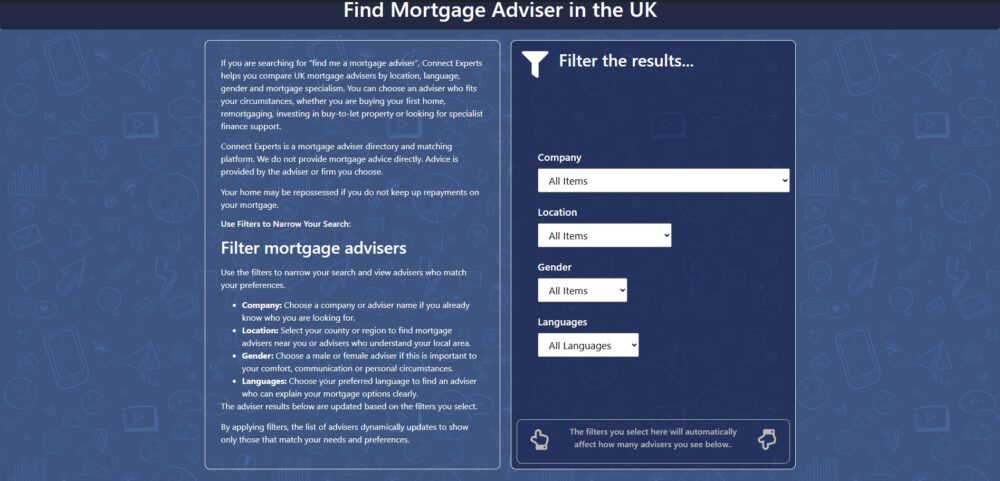
Connect Experts can help you find a commercial mortgage adviser. Connect Experts is a directory and does not provide mortgage advice directly.
Find a Commercial Mortgage Adviser
Commercial Mortgages Explained
- A commercial mortgage is secured against business or investment property.
- It can support a property purchase, refinancing or capital raising.
- Owner-occupied and commercial investment mortgages are assessed differently.
- Lenders consider the property, borrower, income, deposit and repayment plan.
- Rates and fees are often priced individually.
- Some commercial mortgages are regulated, while others are not.
- Strong documents can reduce questions and application delays.
- Connect Experts helps users find advisers who deal with commercial property finance.
What Is a Commercial Mortgage?
A commercial mortgage is a medium or long-term loan secured against commercial property.
It may be used to buy or refinance:
- offices;
- shops;
- warehouses;
- industrial units;
- workshops;
- restaurants;
- hotels;
- care premises;
- medical or dental practices;
- nurseries;
- mixed-use buildings;
- commercial investment property.
The building provides security for the loan. The lender may take possession if the borrower fails to make the agreed repayments.
Commercial mortgages may be available to sole traders, partnerships, limited companies, property companies, investors and landlords.
However, acceptance depends on the complete lending case. Owning a suitable property does not guarantee that the business can support the proposed debt.
How Does a Commercial Mortgage Work?
The lender advances money against an eligible commercial property.
The borrower typically contributes a deposit or existing property. The loan is then repaid over an agreed term.
Commercial mortgages may use:
- capital-and-interest repayments;
- interest-only payments;
- fixed interest rates;
- variable interest rates;
- rates linked to a lender’s base rate;
- rates linked to an external benchmark.
Available structures depend on the lender and the application.
The lender may place a first legal charge over the property. Some applications may also require personal guarantees, additional security or specific loan conditions.
Before proceeding, borrowers should understand the total commitment rather than focusing only on the initial interest rate.
A lower rate may not yield the lowest overall cost when arrangement fees, valuation costs, legal charges, and repayment restrictions are factored in.
Owner-Occupied and Commercial Investment Mortgages
Commercial mortgages are often divided into two broad categories.
Owner-occupied commercial mortgage
An owner-occupied commercial mortgage is used when a business buys or refinances premises from which it trades.
Examples include:
- a manufacturer buying a factory;
- a retailer purchasing a shop;
- a dental practice acquiring its surgery;
- a logistics company buying a warehouse;
- a professional firm purchasing an office.
The lender will usually consider the business’s ability to meet the mortgage payments.
This may involve reviewing accounts, management information, cash flow, existing debt and future trading expectations.
Commercial investment mortgage
A commercial investment mortgage applies when the borrower intends to let the property to another business.
The lender may examine:
- current or proposed rent;
- lease length;
- remaining lease term;
- tenant covenant strength;
- rent-review provisions;
- break clauses;
- vacancy risk;
- local demand;
- property condition;
- resale potential.
A strong tenant and sustainable lease can support an application. However, lenders still consider the borrower’s experience, deposit and wider financial position.
Semi-commercial property
A property with both residential and commercial elements may require a semi-commercial mortgage.
A common example is a shop with a flat above.
Access, planning use, rental arrangements and the proportion of residential space can affect lender selection. Read more about semi-commercial mortgages for buildings with mixed use.
What Can a Commercial Mortgage Be Used For?
A commercial mortgage may be considered when a borrower wants to:
- purchase premises for an existing business;
- stop renting and own business premises;
- move to a larger site;
- refinance an existing commercial loan;
- purchase a property occupied by commercial tenants;
- release equity from an existing property;
- repay short-term property finance;
- restructure business property debt;
- fund an eligible commercial property investment.
The purpose must be clear.
A lender will want to understand what the borrowing will achieve and how it will be repaid.
Borrowing can create opportunities, but it also creates a fixed obligation. A sound decision balances the value of owning the asset against the cost and risk of financing it.
How Commercial Mortgage Lenders Assess Applications
Commercial mortgage underwriting is based on several connected questions.
1. Is the property acceptable?
The lender will consider:
- property type;
- location;
- condition;
- marketability;
- planning use;
- construction;
- environmental risks;
- current occupation;
- alternative uses;
- resale demand.
Specialist buildings can present greater lending risk because they may appeal to fewer future buyers.
Examples can include care homes, petrol stations, public houses, purpose-built leisure facilities and properties with unusual construction.
This does not always prevent borrowing. It may reduce lender choice or change the deposit requirement.
2. Who is borrowing?
The applicant may be:
- an individual;
- a sole trader;
- a partnership;
- a limited company;
- a special-purpose property company;
- an established property investor.
Lenders may examine the applicant’s experience, financial conduct, credit history and existing commitments.
For company applications, they may also assess directors, shareholders and connected businesses.
3. Where will repayments come from?
For an owner-occupied property, repayments typically depend on the property’s cash flow.
For an investment property, repayments may depend mainly on rental income.
The lender may test whether income remains sufficient after:
- operating costs;
- tax;
- existing loan payments;
- expected maintenance;
- periods without a tenant;
- changes in interest costs.
This assessment is often more important than the headline property value.
4. How much is the borrower contributing?
A deposit reduces the lender’s exposure.
It also demonstrates how much capital the borrower is committing to the transaction.
The source of the deposit must normally be evidenced. Borrowed deposits, gifts, company funds and proceeds from another property may be treated differently.
5. What happens if the original plan changes?
The lender may consider an alternative repayment or exit route.
For example:
- Could the property be sold?
- Could another lender refinance it?
- Would the business remain viable if income fell?
- Is the property likely to attract another tenant?
- Does the borrower have other resources?
A credible exit plan does not replace affordability. It supports the wider lending decision.
How Much Deposit Is Needed?
Commercial mortgage deposits are normally higher than deposits for standard residential mortgages.
Many cases require a deposit of around 25% to 40%. Some applications may fall outside this range.
The required amount can depend on:
- property type;
- business sector;
- trading history;
- financial performance;
- applicant experience;
- credit profile;
- tenant quality;
- lease terms;
- loan size;
- property condition;
- lender appetite.
A lender may offer a lower loan-to-value ratio for a specialist or harder-to-sell property.
The valuation also matters. The lender will usually base its calculation on an acceptable valuation rather than the purchase price alone.
A larger deposit may improve lender choice. However, businesses should retain enough working capital to operate after completion.
Using every available pound as a deposit can leave a sound property purchase attached to a financially weak business.
How Commercial Mortgage Affordability Is Assessed
There is no single affordability calculation used across every commercial lender.
For an owner-occupied mortgage, the lender may review:
- annual turnover;
- gross profit;
- net profit;
- EBITDA;
- director remuneration;
- cash flow;
- existing borrowing;
- recent management accounts;
- projected performance;
- debt-service capacity.
For a commercial investment mortgage, the lender may focus more heavily on:
- annual rental income;
- interest coverage;
- lease length;
- tenant strength;
- vacancy assumptions;
- property expenses.
Some lenders stress-test repayments using a higher interest rate.
This asks whether the borrowing could remain manageable if finance costs rise.
The assessment may also distinguish between recurring income and one-off gains. A profitable year does not always prove that future mortgage payments are sustainable.
Commercial Mortgage Rates
Commercial mortgage rates are usually based on the risk and structure of the individual case.
Pricing may depend on:
- loan-to-value ratio;
- loan amount;
- property type;
- property use;
- business strength;
- tenant and lease quality;
- applicant experience;
- credit history;
- term;
- repayment basis;
- lender funding costs.
Some lenders offer fixed rates. Others provide variable or individually priced facilities.
A commercial mortgage comparison should include more than the nominal rate.
Compare:
- monthly payments;
- arrangement fees;
- valuation fees;
- legal costs;
- early repayment charges;
- rate-review provisions;
- exit fees;
- lender conditions;
- total cost across the expected holding period.
A short fixed rate may offer temporary certainty. A longer commitment may provide stability but restrict refinancing.
The most suitable structure depends on how long the borrower expects to retain the property and debt.
Commercial Mortgage Terms and Repayment Types
Commercial mortgage terms can vary significantly.
A longer term may reduce monthly payments. However, it can increase the total interest paid.
A shorter term may reduce total interest but create higher monthly commitments.
Capital-and-interest repayment
Each payment reduces the original loan and pays interest.
The balance should reduce over time, provided payments are maintained.
Interest-only repayment
Monthly payments cover interest rather than reducing the original loan.
The borrower needs a clear method for repaying the capital at the end.
Interest-only borrowing may help cash flow, but it leaves the original debt outstanding.
Part repayment and part interest-only
Some lenders may consider a mixed structure.
This can reduce the balance while keeping payments below those of a full repayment arrangement.
The lender will decide whether the proposed repayment method is acceptable.
Commercial Mortgage Fees and Costs
Commercial property finance can involve several charges.
| Cost | What it may cover |
|---|---|
| Lender arrangement fee | Setting up the mortgage |
| Valuation fee | Assessment of the property and security |
| Legal fees | The borrower’s and sometimes lender’s legal work |
| Adviser fee | Research, application preparation and case management |
| Survey costs | Structural or specialist property reports |
| Search fees | Local authority and property searches |
| Administration fees | Lender processing or account work |
| Insurance | Buildings or specialist business-property cover |
| Early repayment charge | Repaying or refinancing during a restricted period |
Some charges are payable before the lender makes a final decision.
This means a borrower may incur costs without completing the mortgage.
Ask which fees are refundable, when they become payable and whether they can be added to the loan.
Adding fees to the borrowing reduces the immediate cash requirement. However, interest may then be charged on those fees.
Commercial Mortgage Valuations
A commercial valuation usually considers more than the building’s physical condition.
Depending on the property, the valuer may assess:
- market value;
- vacant-possession value;
- rental value;
- comparable transactions;
- property condition;
- current use;
- alternative use;
- tenant and lease information;
- local commercial demand;
- saleability.
For a trading property, the valuation approach may also consider the business activity conducted from the premises.
The lender instructs the valuation for its own security purposes. It is not always a substitute for an independent survey commissioned by the buyer.
A valuation below the agreed purchase price can reduce the maximum loan. The borrower may then need a larger deposit or a revised transaction.
Documents Needed for a Commercial Mortgage
Requirements vary, but borrowers may be asked for:
Personal and company information
- proof of identity;
- proof of address;
- company details;
- director and shareholder information;
- group structure;
- evidence of relevant experience.
Financial evidence
- filed business accounts;
- recent management accounts;
- business bank statements;
- personal bank statements;
- tax calculations;
- tax-year overviews;
- existing loan statements;
- details of business liabilities;
- cash-flow forecasts.
Property evidence
- sales particulars;
- property address;
- purchase price;
- proposed use;
- lease agreements;
- tenancy schedule;
- rental statements;
- planning information;
- details of major repairs.
Transaction evidence
- proof of deposit;
- source-of-funds information;
- business plan;
- proposed ownership structure;
- details of professional advisers;
- explanation of the repayment strategy.
Well-prepared information will not guarantee approval. It can help the lender understand the case without repeated questions.
Incomplete or inconsistent evidence may delay underwriting.
The Commercial Mortgage Application Process
Step 1: Define the transaction
Confirm:
- what you are buying or refinancing;
- who will own the property;
- who will occupy it;
- how much you need;
- how much deposit is available;
- the required completion date.
Step 2: Review affordability and eligibility
An adviser may review the business, property, applicants and financial evidence.
The aim is to identify realistic lending routes before submitting an application.
Step 3: Compare possible lenders
Commercial lender criteria differ.
Some lenders prefer established owner-occupied businesses. Others specialise in investment property, mixed-use buildings or particular sectors.
Step 4: Obtain an agreement in principle
An agreement in principle may indicate whether the lender is prepared to consider the case.
It is not a final mortgage offer.
The decision can change after valuation, legal work, credit checks or full underwriting.
Step 5: Submit the full application
The lender receives the application, supporting documents and property information.
Further questions are common.
Step 6: Complete the valuation
The lender normally appoints a commercial valuer.
Specialist reports may also be required.
Step 7: Complete legal due diligence
Solicitors may review:
- legal title;
- searches;
- leases;
- planning use;
- access rights;
- environmental matters;
- lender security;
- company authorities.
Commercial legal work can take longer where the title, lease or property use is complex.
Step 8: Receive and review the offer
The offer should be checked carefully.
Review:
- loan amount;
- rate;
- repayment method;
- term;
- fees;
- guarantees;
- security;
- conditions;
- early repayment terms.
Step 9: Exchange and complete
Funds are released after the lender’s conditions and legal requirements are satisfied.
The transaction then completes and the mortgage begins.
How Long Does a Commercial Mortgage Take?
A commercial mortgage may take several weeks or longer.
Timing depends on:
- application quality;
- lender workload;
- valuation availability;
- legal complexity;
- property type;
- lease reviews;
- planning matters;
- company structure;
- speed of document production;
- completion deadlines.
Straightforward refinancing may complete faster than a purchase involving a specialist property and complex lease.
Borrowers should avoid setting an unrealistic completion date before the lender, valuer and solicitor have reviewed the case.
Where speed is essential, [commercial bridging finance] may sometimes provide a short-term route. However, short-term finance can carry higher costs and requires a credible repayment strategy.
Can a New Business Obtain a Commercial Mortgage?
Some lenders consider applications from new businesses.
However, fewer trading records can make future income harder to assess.
The lender may place greater weight on:
- the directors’ experience;
- previous employment or trading history;
- deposit size;
- personal financial position;
- sector knowledge;
- business plan;
- contracts or confirmed income;
- cash-flow forecasts;
- property quality.
A new company purchasing an established trading business may be treated differently from a completely new venture.
The strength of the applicants and transaction can sometimes offset limited company history. It does not eliminate the need for credible evidence of repayment.
Can a Limited Company Get a Commercial Mortgage?
A limited company may apply for a commercial mortgage.
The lender can assess:
- company accounts;
- trading activity;
- directors;
- shareholders;
- associated companies;
- existing borrowing;
- deposit source;
- property use;
- repayment capacity.
Some lenders may request personal guarantees from directors or shareholders.
A personal guarantee can make an individual liable for some or all of the company’s debt if the company does not repay it.
Independent legal advice may be required before a guarantee is accepted.
Borrowers should understand the legal and financial consequences before signing.
Can You Get a Commercial Mortgage With Adverse Credit?
Adverse credit can reduce lender choice, but it does not automatically prevent an application.
The lender may consider:
- the type of credit event;
- its value;
- how recently it occurred;
- whether it has been settled;
- the reason it happened;
- current financial conduct;
- available deposit;
- business performance;
- property strength.
An isolated historic issue may be treated differently from recent or repeated missed payments.
The application should disclose material credit information accurately. Undisclosed issues discovered later can undermine lender confidence.
Are Commercial Mortgages Regulated by the FCA?
Some commercial mortgages are not regulated by the Financial Conduct Authority.
The position depends on matters including:
- who is borrowing;
- why the money is being borrowed;
- how the property is occupied;
- whether residential accommodation is involved;
- the legal structure of the transaction.
The FCA expects firms to establish whether a proposed mortgage is a regulated mortgage contract before proceeding.
Read the FCA guidance on regulated mortgage contracts for the formal regulatory framework.
Your adviser should explain whether the proposed borrowing is regulated and which protections apply.
Connect Experts helps users find advisers. It does not itself make the regulatory determination or provide mortgage advice.
Commercial Mortgage or Another Type of Finance?
A commercial mortgage is generally designed for medium or long-term property borrowing.
Another form of finance may be considered where:
- the property is not yet mortgageable;
- completion is required quickly;
- refurbishment is needed;
- planning consent is outstanding;
- the loan is required for a short period;
- the borrowing is not mainly property-related.
Possible alternatives may include:
- commercial bridging finance;
- development finance;
- asset finance;
- business loans;
- invoice finance;
- property-backed business finance.
Each option has a different purpose, cost and risk profile.
GOV.The UK provides broader information on finance and support for businesses.
Short-term funding should not be chosen only because it completes faster. The borrower must understand how and when it will be repaid.
How to Find a Commercial Mortgage Adviser
Commercial mortgage criteria differ between lenders and property types.
An adviser can help you understand:
- which lenders may consider the property;
- how the application could be structured;
- what deposit may be required;
- what information the lender will need;
- how rates and fees compare;
- whether the proposed timescale is realistic;
- whether another finance type may be more suitable.
Before choosing an adviser, check whether they regularly deal with:
- owner-occupied commercial property;
- commercial investment mortgages;
- your business sector;
- your property type;
- limited-company applications;
- mixed-use property;
- refinancing;
- complex income;
- adverse credit.
You should also ask how the adviser is paid and when fees become due.
Connect Experts allows you to search for a commercial mortgage adviser based on your requirements.
You can also use the commercial mortgage search or find a mortgage adviser by location.
Connect Experts does not provide advice directly. The adviser or firm you select will assess your circumstances and explain the available options.
Questions to Ask Before Applying
Before committing to a commercial mortgage, ask:
- How much deposit and working capital will remain after completion?
- Can the business afford the payments if interest costs rise?
- Are the lender’s fees payable even if the application fails?
- Will personal guarantees be required?
- Does the rate change during the term?
- Are there early repayment charges?
- What valuation method will apply?
- Is the property acceptable in its current condition?
- What happens if the tenant leaves?
- Is the mortgage regulated?
- What evidence must be provided?
- Is the completion deadline realistic?
These questions help reveal the full commitment behind the advertised loan.
A commercial property can support a business for many years. The finance should be judged over the same horizon.
Frequently Asked Questions
What is a commercial mortgage?
A commercial mortgage is a loan secured against property used for business or commercial investment purposes.
Who can apply for a commercial mortgage?
Sole traders, partnerships, limited companies, property companies, investors and landlords may be able to apply. Acceptance depends on lender criteria.
What deposit is needed for a commercial mortgage?
Many cases require a deposit of around 25% to 40%. The requirement varies according to the property, borrower and transaction.
Can I buy my own business premises?
An owner-occupied commercial mortgage may be used to buy premises from which your business will trade.
Can I buy commercial property to rent out?
A commercial investment mortgage may be used to purchase property that will be let to a business tenant.
Do commercial mortgages offer fixed rates?
Some lenders offer fixed rates. Other products use variable or individually priced rates.
What documents are normally required?
Lenders may request accounts, bank statements, tax information, property details, leases, proof of deposit and a business plan.
How long does a commercial mortgage take?
Completion may take several weeks or longer. The property, lender, valuation, legal work and application complexity affect the timescale.
Can a start-up obtain a commercial mortgage?
Some lenders consider start-ups where the applicants have suitable experience, a credible business plan, adequate deposit and strong repayment evidence.
Are commercial mortgages FCA-regulated?
Some are regulated and others are not. The borrower, property use and loan structure determine the position.
Do I have to use a commercial mortgage broker?
No. However, an adviser may help identify suitable lenders, prepare documents and explain the application requirements.
How can Connect Experts help?
Connect Experts is a UK adviser directory. It allows users to search for commercial mortgage advisers by expertise, location, language and other preferences.
Find an Adviser for a Commercial Mortgage
Understanding a commercial mortgage begins with the property, but it does not end there.
The lender must also understand the borrower, the income and the proposed repayment plan.
Connect Experts helps you search for advisers who deal with commercial property finance. You can review available profiles and decide whom you wish to contact.
Find a Commercial Mortgage Adviser