First Meeting with a Mortgage Adviser: A good first impression with a mortgage adviser begins before any mortgage product is discussed.
It starts with clear communication, suitable preparation and realistic expectations. The adviser should explain the process. Equally, the client should provide accurate information and ask questions where anything remains unclear.
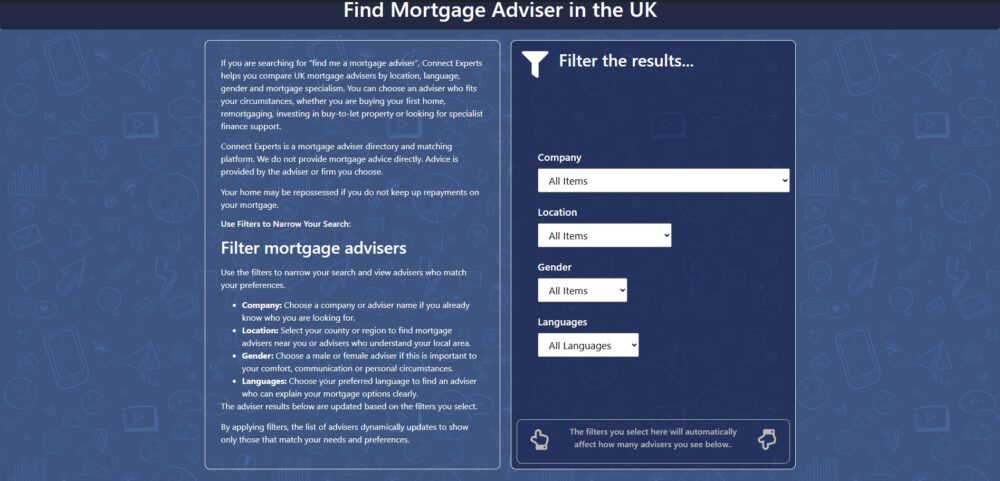
Connect Experts helps you find a mortgage adviser by location, language, gender and mortgage expertise. You can review adviser profiles before deciding whom to contact.
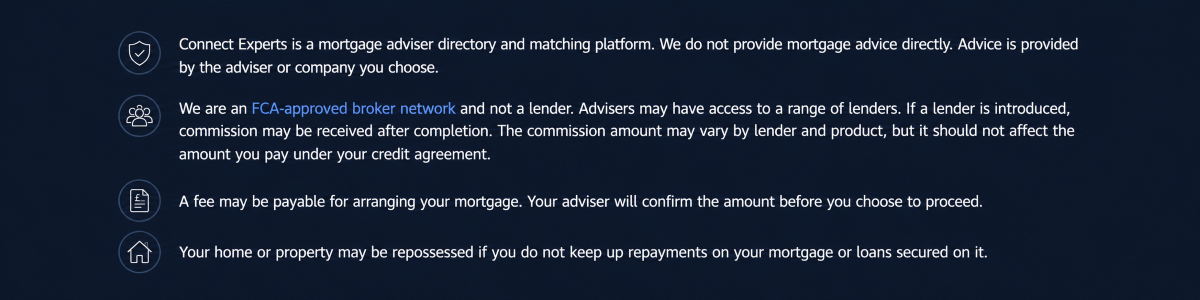
Connect Experts is a directory of mortgage advisers. It does not provide mortgage advice directly. Advice is provided by the adviser or firm you choose.
Important: Your home may be repossessed if you do not keep up repayments on your mortgage or another loan secured against it.
At a Glance
A productive first mortgage conversation should feel organised, clear and unpressured.
Before making contact:
- decide what you want help with;
- prepare basic financial and property information;
- review the adviser’s stated areas of expertise;
- ask how fees, advice and next steps will work;
- check the firm’s regulatory details;
- avoid withholding information that could affect your options.
Use the Connect Experts mortgage adviser directory to search and compare advisers before arranging your first conversation.
What Makes a Good First Impression in Mortgage Advice?
A good first impression is not created by confident sales language. It comes from whether the conversation helps both sides understand the situation.
The adviser should listen, explain the purpose of the meeting and set out what happens next. The client should feel able to discuss income, borrowing, credit history and future plans without being rushed.
A useful first conversation normally provides:
- a clear introduction;
- an explanation of the advice process;
- relevant questions about your circumstances;
- information about fees;
- realistic expectations;
- time for your questions;
- a defined next step.
An adviser cannot confirm a suitable mortgage without understanding the applicant, the property, and the intended borrowing.
The First Impression Starts with Choosing an Adviser
Your first experience begins when you search for help.
A directory profile should tell you enough to decide whether an adviser may be relevant. Look for information about location, qualifications, languages, permitted advice areas and contact methods.
Connect Experts lets you find a mortgage adviser by location. This may be useful when you prefer local knowledge or a face-to-face appointment.
Location should not be the only factor. The adviser must also have experience that relates to your mortgage requirements.
For example, someone buying their first home may need a different discussion from a portfolio landlord or business owner. The profile should make the adviser’s stated areas of work clear.
What Should You Prepare Before the First Conversation?
You may not need every document during an introductory call. However, preparing the main facts can make the discussion more useful.
Consider gathering information about:
- your employment or business status;
- annual income and regular earnings;
- existing credit commitments;
- available deposit or property equity;
- the proposed property;
- expected purchase price or mortgage balance;
- known credit issues;
- preferred monthly budget;
- intended completion or remortgage date.
Self-employed applicants may also be asked about trading history, accounts, tax calculations or retained profits. Landlords may need details about rent, property ownership and their existing portfolio.
Do not send sensitive documents until you understand how they will be handled and why they are required.
What Should a Mortgage Adviser Explain First?
The adviser should explain the purpose and limits of the initial conversation.
An introductory discussion may identify what help you need. It is not necessarily a full recommendation. A recommendation normally requires a fuller review of your circumstances and supporting evidence.
The adviser should make clear:
- Whether the conversation is introductory or part of the advice process.
- What information will be collected.
- Why that information is required.
- Whether a fee may apply.
- What mortgage areas the adviser can cover.
- What documents may be needed.
- What the next stage will be.
You should not leave the first conversation uncertain about what will happen next.
Signs That the First Conversation Is Working Well
A useful conversation is structured without feeling scripted.
| Positive sign | Why it matters |
|---|---|
| The adviser asks about your objectives | A mortgage should reflect more than the requested loan amount |
| Financial terms are explained clearly | You must understand costs, commitments and risks |
| Fees are discussed openly | This helps you judge the likely cost of advice |
| No product is promised immediately | Suitability depends on a complete assessment |
| Your questions are welcomed | Mortgage decisions require informed consent |
| Risks and restrictions are mentioned | Benefits should not be explained without limitations |
| Next steps are confirmed | You know what information or action is required |
A good first impression is therefore practical. It replaces uncertainty with a clear process.
Questions to Ask at Your First Mortgage Meeting
The questions you ask can reveal whether the adviser’s service fits your requirements.
Consider asking:
- Can you advise on my type of mortgage?
- How will you assess my circumstances?
- Which parts of the market can you consider?
- When will I receive information about your fees?
- What documents are likely to be required?
- How will you communicate with me?
- Who will handle my case after the first meeting?
- How long might each stage take?
- What could delay the application?
- How will any recommendation be explained?
You can also ask whether meetings are available by telephone, video or in person. A face-to-face meeting with a broker may suit clients who prefer to discuss documents and figures together.
Why Clear Communication Matters
Mortgage advice can involve unfamiliar language.
Terms such as loan-to-value, affordability assessment, product fee, early repayment charge and stress testing should be explained in context. Understanding a term is more important than simply hearing it.
For example, an adviser should not only say that a lender will assess affordability. They should explain that the lender may review income, committed spending, dependants, debts and the possible effect of future rate changes.
Clear communication is also important when English is not your preferred language. Connect Experts allows you to search for mortgage brokers by language.
Using a preferred language does not change lender criteria. However, it may help you discuss documents, costs and risks more clearly.
What Information Should You Share?
Mortgage advice depends on accurate information.
You should disclose relevant details about:
- your income;
- employment or business activity;
- debts and financial commitments;
- dependants;
- credit history;
- deposit source;
- property plans;
- existing mortgages;
- expected changes to your circumstances.
Leaving out important information can lead to unsuitable expectations or delays later.
A difficult financial detail does not automatically mean that no option exists. It does mean the adviser needs to understand the position before considering possible routes.
How to Check an Adviser or Firm
Before proceeding, confirm who will provide the advice and which regulated firm is responsible.
You can use the FCA Firm Checker to check whether a firm is authorised and has permission for the service being offered.
You should also:
- compare the firm name with the regulatory record;
- check contact details carefully;
- be cautious about unexpected requests for money;
- ask for written fee information;
- confirm how personal data will be used;
- avoid sending money to unverified bank details.
The adviser may operate as an appointed representative of another regulated firm. Where this applies, the profile and regulatory record should identify the responsible principal firm.
What Can Damage a First Impression?
Some behaviours should cause you to pause and ask further questions.
These include:
- promising approval before reviewing the case;
- avoiding questions about fees;
- placing pressure on you to proceed;
- dismissing your concerns;
- asking you to hide information;
- using technical language without explanation;
- failing to explain risks;
- offering advice outside the adviser’s stated permissions;
- requesting sensitive information through an insecure method.
One concern may result from poor communication rather than misconduct. However, you should not proceed until the point has been explained satisfactorily.
First Meetings for More Complex Mortgage Needs
Some applications require more detailed preparation.
This may apply when income is received through a company, partnership, contract, foreign source or several separate streams. It may also apply to unusual properties, portfolio borrowing or complex credit histories.
In these circumstances, the first conversation should establish:
- how income is structured;
- which documents are available;
- the intended property use;
- the proposed deposit source;
- existing borrowing;
- the required timescale;
- any known application difficulty.
The purpose is not to reach an instant answer. It is to determine what must be examined before advice can be provided.
Should Products and Rates Be Discussed Immediately?
An adviser may discuss the market in general terms during an early conversation. However, a specific recommendation requires more information.
Mortgage rates alone do not show the complete cost or suitability of a product. Relevant factors may include:
- product fees;
- valuation costs;
- early repayment charges;
- mortgage term;
- repayment method;
- loan-to-value;
- lender criteria;
- portability;
- overpayment rules;
- overall cost during the chosen period.
A low headline rate may not produce the lowest suitable overall cost.
Good advice begins with the borrower’s circumstances. The product comparison follows.
How Connect Experts Supports the First Step
Connect Experts helps consumers search for advisers rather than selecting one specific broker for them.
You can compare profiles using details such as:
- location;
- language;
- gender;
- mortgage expertise;
- contact information;
- stated service areas.
The directory does not guarantee that every adviser will be suitable for every case. Availability, regulatory permissions and relevant experience should be confirmed before advice begins.
Start by reviewing the A–Z mortgage broker directory. Read the available profiles and choose an adviser whose stated experience relates to your needs.
A Practical First-Meeting Checklist
Before making contact
- Define the mortgage help you need.
- Gather your main financial figures.
- Review the adviser’s profile.
- Check the stated mortgage expertise.
- Prepare three or four questions.
- Confirm your preferred appointment method.
During the conversation
- Explain your objective clearly.
- Give accurate information.
- Ask how advice and fees work.
- Request explanations for unfamiliar terms.
- Confirm what documents are needed.
- Take notes about the next stage.
After the conversation
- Review any written information.
- Check the adviser or firm’s regulatory details.
- Confirm fees before proceeding.
- Supply requested documents securely.
- Ask about anything you do not understand.
- Decide whether the communication style suits you.
The Philosophy Behind a Good First Impression
A mortgage conversation involves facts, but it also involves trust.
Trust should not mean accepting every statement without question. It should mean that questions are encouraged, limitations are explained and information can be checked.
The first meeting cannot establish the final mortgage outcome. It can establish whether the process appears clear, professional and suitable for further discussion.
A strong first impression is therefore not a performance. It is evidence that both parties are prepared to approach a significant financial decision carefully.
Frequently Asked Questions
What happens during a first meeting with a mortgage adviser?
The adviser will usually ask about your objectives, income, commitments, deposit, property plans and timescale. They should also explain their service, fees and next steps.
What should I bring to my first mortgage appointment?
You may need identification, income evidence, bank statements, deposit details and information about existing debts. Ask the adviser which documents are required before sending anything.
Should a mortgage adviser recommend a product immediately?
Usually, a specific recommendation should follow a detailed review of your circumstances. An adviser may discuss general possibilities during the initial conversation.
How do I know whether a mortgage adviser is regulated?
Check the adviser’s firm and regulatory details. The FCA Firm Checker can help you confirm whether a firm is authorised for the relevant service.
Should mortgage adviser fees be explained during the first meeting?
Yes. You should receive clear information about whether fees apply, when they become payable and what service they cover.
Can I choose an adviser who speaks my preferred language?
Yes. Connect Experts lets users search for advisers by language. Availability depends on the selected language, location and mortgage requirement.
Can Connect Experts recommend a mortgage product?
No. Connect Experts is a directory of mortgage advisers. Any regulated recommendation is provided by the adviser or firm selected by the customer.
What should I do if the first conversation feels pressured?
Do not proceed until you understand the advice process, fees and proposed next steps. You may compare other advisers in the directory before making a decision.
Find a Mortgage Adviser through Connect Experts
The right first conversation should help you understand your position and the next steps required.
Use Connect Experts to search by location, language, gender and mortgage expertise. Review the available information before choosing whom to contact.
Find a mortgage adviser through Connect Experts and prepare for your first conversation using the checklist above.