Mortgage Broker in Covent Garden WC2E: A property can occupy a prestigious address while still presenting difficult mortgage questions.
Covent Garden contains apartments, converted buildings and mixed-use properties within one of central London’s most established districts. Its housing is often very different from the standard houses found in wider residential areas.
A mortgage broker in Covent Garden, WC2E, can help buyers weigh both sides of the decision. The applicant must meet the lender’s financial criteria. The property must also provide acceptable security for the loan.
This distinction matters. A high income does not automatically make every property mortgageable.
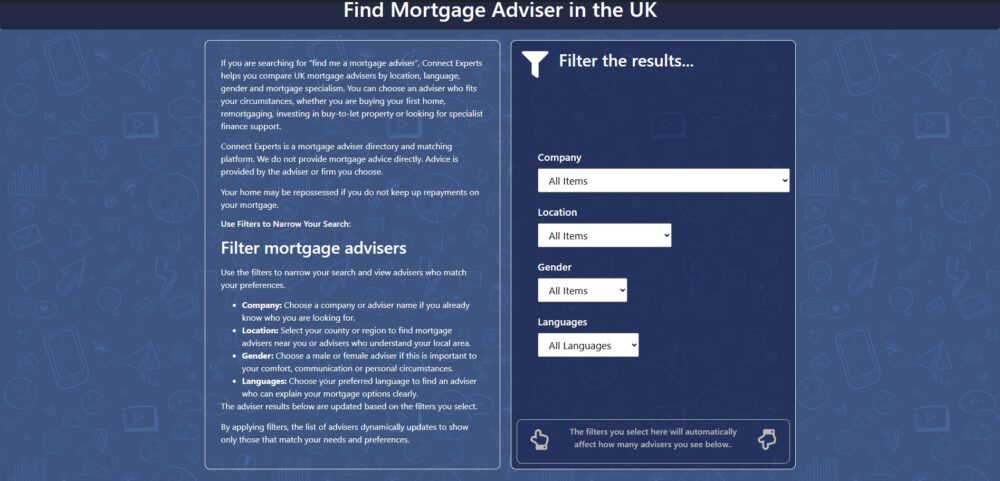
Connect Experts helps users search for mortgage advisers by location, expertise, language and personal preference. It is a directory and matching platform. Mortgage advice is provided by the selected adviser or their firm.
Find a mortgage adviser in Covent Garden
At a Glance
- WC2E includes many flats, conversions and properties near commercial premises.
- Lenders assess the borrower and the property separately.
- Lease length, service charges and building condition can affect mortgage availability.
- Flats above restaurants, bars or shops may require more specialised lender criteria.
- Buy-to-let applicants must consider rental calculations and property costs.
- A mortgage adviser can identify lenders whose criteria fit the proposed purchase.
- All mortgage applications remain subject to affordability, valuation and lender approval.
Mortgage Advice for Covent Garden Property
Covent Garden sits within London’s West End and covers streets around the Piazza, Strand, Long Acre and surrounding WC2E addresses.
The area’s property market is shaped by limited space and varied building use. Residential apartments may share buildings with shops, offices, restaurants or entertainment venues.
That combination creates practical mortgage questions that are less common in suburban areas.
A lender may consider:
- The applicant’s income and expenditure.
- Employment or self-employed status.
- Deposit size and source.
- Credit history.
- Intended property use.
- Lease length and lease terms.
- Service charges and ground rent.
- Building construction and condition.
- Commercial activity within the building.
- Resale demand shown by the valuation.
Applicants searching across the capital can also compare mortgage advisers in London.
Property Types Found in Covent Garden WC2E
Covent Garden is not defined by one standard property type. Buildings may have changed use several times during their history.
A buyer may encounter:
- Purpose-built apartments.
- Period mansion blocks.
- Apartments within converted commercial buildings.
- Flats above shops or restaurants.
- Modern developments with concierge services.
- Listed or locally protected buildings.
- Buildings with several residential and commercial occupiers.
- Short or unusual leases.
Each property type can produce different lender requirements.
A lender may accept one apartment within a building but decline another. The decision can depend on its position, access, lease and relationship with commercial units.
Therefore, buyers should avoid assuming that a nearby sale confirms mortgage availability.
Mortgages for Leasehold Flats in Covent Garden
Most central London flats are sold on a leasehold basis.
The buyer owns the right to occupy the property for the remaining lease term. The freeholder retains ownership of the land and building structure.
Before approving a mortgage, lenders may review:
- The remaining lease term.
- Ground-rent provisions.
- Service-charge history.
- Planned major works.
- Building insurance arrangements.
- Restrictions on letting or alterations.
- The freeholder and managing agent.
- Rights of access and maintenance obligations.
A shorter lease may reduce the number of available lenders. It can also affect valuation and future resale prospects.
Service charges deserve equal attention. They may cover building repairs, communal areas, insurance, staffing, lifts or shared facilities.
Buyers should examine the full annual housing cost, not only the mortgage payment. GOV.UK provides further information about leasehold service charges and other expenses.
Flats Above Shops, Restaurants and Commercial Premises
Covent Garden’s retail and hospitality activity means some flats sit above or beside commercial premises.
These properties are not automatically unsuitable for a mortgage. However, lender opinions can differ considerably.
A lender may consider:
- The type of business below.
- Opening and closing hours.
- Noise, cooking smells or deliveries.
- Separate access to the flat.
- Fire and safety arrangements.
- The concentration of commercial use.
- Future resale demand.
- The valuer’s comments.
A flat above a quiet office may be treated differently from one above a late-opening restaurant.
Where residential and commercial elements form part of the same purchase, the application may require semi-commercial finance. The semi-commercial mortgage guide explains how lenders may assess mixed-use property.
Affordability for a Covent Garden Mortgage
Mortgage affordability is not based on salary alone.
Lenders review income, financial commitments, household spending and the likely mortgage payment. They may also test whether payments remain manageable under different interest-rate assumptions.
Relevant income may include:
- Basic employment income.
- Bonuses and commission.
- Overtime.
- Self-employed profits.
- Contract income.
- Rental income.
- Pension income.
- Certain investment income.
Not every lender treats variable or overseas income in the same way.
Applicants may need payslips, bank statements, tax calculations, company accounts or employment contracts. The required evidence depends on the applicant’s circumstances.
Property costs can also affect the wider budget. Service charges, ground rent, insurance and maintenance may continue beside the mortgage payment.
The FCA requires mortgage lenders to consider whether repayments are affordable now and could remain affordable in future.
Deposits and Loan-to-Value Ratios
Loan-to-value compares the requested mortgage with the property’s assessed value.
For example, a £600,000 mortgage on a £750,000 property represents an 80% loan-to-value ratio.
A larger deposit may:
- Reduce the loan-to-value ratio.
- Increase the range of suitable products.
- Improve access to lower-rate product bands.
- Provide some protection against valuation differences.
- Help with properties outside standard lender criteria.
However, deposit size does not solve every property issue.
A lender may still decline a property because of lease terms, construction, condition or commercial surroundings.
The source of the deposit must also be documented. Gifted deposits, overseas funds and company-derived money may require further evidence.
First-Time Buyers in Covent Garden
Buying a first home in WC2E can involve a combination of high property values and complicated leasehold information.
A first-time buyer should consider more than the advertised purchase price.
The complete budget may include:
- Deposit.
- Stamp duty, where payable.
- Valuation or survey costs.
- Legal fees.
- Mortgage product fees.
- Moving costs.
- Initial service-charge payments.
- Planned building works.
- Furniture and repairs.
An agreement in principle can provide an initial indication of borrowing. It is not a mortgage offer and does not approve a specific property.
Buyers needing guidance on deposits, affordability, and applications can search for first-time-buyer mortgage advisers.
Buy-to-Let Mortgages in Covent Garden
Covent Garden may attract landlords seeking centrally located apartments. Yet location alone does not determine whether a buy-to-let mortgage is suitable.
Lenders commonly assess:
- Expected monthly rent.
- Interest coverage calculations.
- Applicant income.
- Deposit size.
- Landlord experience.
- Property type.
- Lease restrictions.
- Service charges.
- Tenancy arrangements.
- Personal or limited company ownership.
High service charges can reduce the property’s net return. Lease terms may also restrict short-term letting or particular tenancy uses.
Applicants should check the lease before relying on any proposed rental model.
A property marketed as an investment may still fail a lender’s valuation or rental calculation. A buy-to-let mortgage broker can explain the criteria commonly applied to rental property.
Tax treatment depends on individual circumstances. Property investors should seek qualified tax advice where needed.
Remortgaging a Covent Garden Property
A remortgage replaces an existing mortgage with a new arrangement. It may involve the current lender or a different lender.
Common reasons include:
- An existing deal is ending.
- The borrower wants a different rate type.
- Monthly payments need reviewing.
- Capital is required for an eligible purpose.
- The property’s value has changed.
- The borrower’s circumstances have changed.
- A landlord wants to review an investment mortgage.
The new lender will normally assess affordability and property suitability again.
A previously accepted property is not guaranteed to satisfy another lender’s current criteria. Changes to the lease, service charges or building condition may also affect the application.
Homeowners can search for remortgage mortgage brokers with relevant experience.
Borrowing more against a property increases the secured debt. The costs and long-term effect should be considered carefully.
High-Value and Complex Income Applications
Covent Garden buyers may include company directors, business owners, contractors, professionals and applicants receiving income from several sources.
Complex income does not necessarily prevent mortgage approval. It usually requires clearer evidence and suitable lender criteria.
A lender may review:
- Salary and dividends.
- Company profits.
- Retained profits.
- Partnership income.
- Day-rate contracts.
- Foreign currency income.
- Bonuses or commission.
- Existing property income.
- Ongoing financial commitments.
Accounting figures may be interpreted differently across lenders. Some use salary and dividends. Others may consider a share of company profit.
Applications involving foreign income can also face currency adjustments or restricted lender choice.
Early document preparation can prevent unnecessary delays after an offer has been accepted.
Later-Life Borrowing in London
Older homeowners may be considering a standard mortgage, retirement interest-only mortgage or another form of later-life borrowing.
The correct route depends on income, age, property, repayment plans and long-term objectives.
Equity release is a separate specialist area. It can reduce the value of the estate and may affect entitlement to means-tested benefits.
Homeowners considering that route should seek appropriately qualified advice. Connect Lifetime provides access to Equity Release Advisers in London.
Documents to Prepare Before Applying
The exact requirements vary, but applicants may be asked for:
- Proof of identity.
- Proof of address.
- Recent bank statements.
- Payslips or employment evidence.
- Tax calculations and tax-year overviews.
- Company accounts.
- Proof of deposit.
- Evidence explaining gifted funds.
- Details of existing credit commitments.
- Existing mortgage statements.
- Property particulars.
- Lease and service-charge information.
Providing complete and consistent documents can support a more efficient assessment.
Applicants should also avoid taking on new credit during the mortgage process without considering its potential impact on affordability.
How a Covent Garden Mortgage Broker Can Help
A mortgage broker can assess the applicant’s circumstances before matching them with lender criteria.
Support may include:
- Reviewing income, expenditure and deposit evidence.
- Identifying possible borrowing ranges.
- Examining the intended property type.
- Comparing suitable mortgage products.
- Preparing the application.
- Responding to lender questions.
- Working with the solicitor and estate agent.
- Explaining conditions attached to the mortgage offer.
A broker cannot guarantee acceptance. The lender makes the final decision following affordability checks, credit assessment and valuation.
The practical value lies in identifying problems before they become expensive commitments.
Frequently Asked Questions
Can I obtain a mortgage for a flat above a shop in Covent Garden?
Possibly. The lender will consider the business type, access arrangements, valuation and future resale demand.
Does a short lease prevent mortgage approval?
Not always. However, shorter leases can reduce lender choice and affect the property valuation.
Are service charges included in mortgage affordability?
Lenders may include regular property costs when considering affordability. Buyers should include them within their personal budget.
Can I use overseas income for a Covent Garden mortgage?
Some lenders accept overseas income. Their requirements can depend on currency, country, employment and documentary evidence.
Can a first-time buyer purchase in WC2E?
Yes, subject to affordability, deposit, property suitability and lender criteria.
Is an agreement in principle a mortgage offer?
No. It is an initial indication based on limited information. The property and full application must still be assessed.
Can I obtain a buy-to-let mortgage for a Covent Garden apartment?
Potentially. The rent, lease, service charges, deposit and property type must satisfy the chosen lender.
Does Connect Experts provide mortgage advice?
No. Connect Experts is a directory and matching platform. Advice is provided by the adviser or firm selected by the user.
Finding a Mortgage Broker in Covent Garden WC2E
Connect Experts allows users to search for advisers by:
- Location.
- Mortgage expertise.
- Language.
- Gender preference.
- Advice format.
- Company or adviser name.
Review the adviser’s permissions, specialist areas and profile before making contact.
A local postcode may help define the property search. However, the adviser’s knowledge and permissions remain more important than physical distance alone.