Mortgage Broker in Greater London: Greater London does not operate as one uniform property market. A leasehold flat in Westminster may present different lending questions from an HMO in Brent, a family home in Bromley or a mixed-use building in Hackney.
Property type, postcode, lease terms, building construction and ownership structure can all influence a lender’s assessment. Therefore, finding a mortgage broker in Greater London is not simply a search for the nearest adviser. It is a search for relevant knowledge.
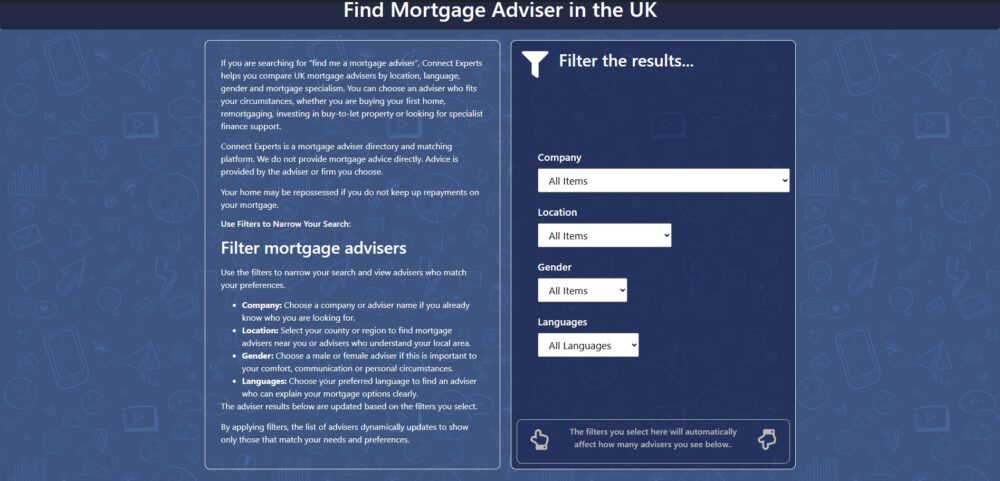
Connect Experts helps you find mortgage advisers by location, expertise, language and other practical preferences. Connect Experts does not provide mortgage advice directly. Any advice is provided by the adviser or firm you choose.
At a Glance
A mortgage broker supporting Greater London clients may help with residential purchases, remortgages, buy-to-let properties and specialist property finance.
Before choosing an adviser, consider:
- The type and location of the property.
- Whether the property is freehold, leasehold or share of freehold.
- Your employment, income and deposit structure.
- Whether the property will be your home or an investment.
- Any HMO, planning, licensing or commercial-use issues.
- Whether you require regulated mortgage advice or specialist business finance.
The right adviser should understand both your financial position and the property being financed.
Find a mortgage adviser through the Connect Experts directory.
What Does a Mortgage Broker in Greater London Do?
A mortgage broker reviews the borrower, the property and the intended transaction before identifying potentially suitable lenders.
This work may include:
- Assessing income, expenditure and existing credit commitments.
- Reviewing deposit sources and loan-to-value requirements.
- Checking lender criteria for the property type.
- Comparing fixed, variable and tracker mortgage options.
- Preparing documents before an application is submitted.
- Explaining fees, early repayment charges and mortgage conditions.
- Communicating with lenders, valuers, solicitors and other parties.
For regulated residential mortgages, suitability and affordability remain central considerations. The Financial Conduct Authority’s mortgage guidance explains that lenders must assess whether repayments are affordable now and in the future.
A mortgage is therefore more than an interest rate. It is a long-term financial commitment secured against property.
Why Greater London Mortgage Applications Can Be Complex
Greater London contains the City of London and 32 London boroughs. However, mortgage complexity is rarely created by geography alone.
The property itself may influence the available lenders. Common considerations include:
- Short or unusual lease terms.
- High service charges or planned major works.
- Flats above shops, restaurants or other commercial premises.
- High-rise blocks and building construction.
- New-build flats and lender exposure within one development.
- Studio flats or properties with limited floor space.
- Converted houses and non-standard layouts.
- Multiple kitchens, units or tenancy arrangements.
- Properties affected by planning or licensing requirements.
- Higher-value borrowing and lender exposure limits.
An adviser should identify these points before recommending a mortgage route. A valuation or legal review may still reveal further issues later.
Residential Mortgages in Greater London
Residential mortgage applications are assessed using the applicant’s income, expenditure, credit commitments, deposit and personal circumstances.
Applicants may include:
- First-time buyers.
- Home movers.
- Existing owners remortgaging.
- Self-employed applicants.
- Contractors and company directors.
- Applicants using bonuses, commission or overtime.
- Buyers receiving a gifted deposit.
- Applicants with more than one income source.
London property prices can mean that some applicants require a larger mortgage relative to their income. However, income multiples are only one part of an affordability assessment.
Lenders may also review:
- Monthly household expenditure.
- Existing loans and credit cards.
- Childcare and maintenance commitments.
- The proposed mortgage term.
- Future changes in income or expenditure.
- The applicant’s age at the end of the term.
- The sustainability of variable income.
Those purchasing their first home can search for first-time buyer mortgage brokers with relevant experience.
Leasehold Flats and London Mortgage Criteria
Leasehold property is common across Greater London. The lease determines how long the buyer has the legal right to occupy the property and sets out obligations affecting the owner.
A lender or solicitor may examine:
- The unexpired lease term.
- Ground rent provisions.
- Service charges.
- Planned major works.
- Restrictions on letting or alterations.
- The responsibilities of the freeholder.
- Building insurance arrangements.
- Any disputes involving the management company.
A short lease may reduce the number of available lenders. It may also affect valuation, resale and the cost of extending the lease.
Buyers should not assume that mortgage approval resolves every leasehold issue. The lender considers its security, while the buyer must consider whether the property remains suitable for their plans.
Buy-to-Let Mortgages in Greater London
Buy-to-let lenders commonly assess the expected rent, loan amount, property type and landlord’s experience.
Personal income may also matter, depending on the lender and application.
London buy-to-let considerations can include:
- Rental stress testing.
- Lower yields in some higher-value districts.
- Service charges reducing net rental income.
- Limited company or personal ownership.
- Houses converted into flats.
- Multi-unit properties.
- Tenant types and tenancy terms.
- Lender exposure within a postcode or development.
- Existing mortgages across a landlord’s portfolio.
A landlord purchasing one flat may face different criteria from an investor refinancing several properties.
Our guide to buy-to-let mortgage brokers explains the information that lenders may request.
Portfolio Landlord Mortgage Advice
Many lenders treat applicants with four or more mortgaged buy-to-let properties as portfolio landlords. Their assessment may consider the new transaction and the wider portfolio.
Information may include:
- Property addresses and values.
- Outstanding mortgage balances.
- Monthly rental income.
- Current interest rates.
- Ownership structures.
- Loan-to-value figures.
- Portfolio cash flow.
- Future purchases or refinancing plans.
A clear portfolio schedule can help an adviser identify lender exposure issues before an application is submitted.
Landlords with several properties can review portfolio landlord mortgage brokers through the directory.
HMO Mortgages Across Greater London
A house in multiple occupation can require a specialist mortgage because its layout, tenancy arrangements and licensing position differ from a standard rental property.
Lenders may assess:
- The number of bedrooms and tenants.
- Whether facilities are shared.
- Planning use.
- Mandatory or additional licensing.
- Fire and safety requirements.
- The applicant’s landlord experience.
- The proposed management arrangements.
- Valuation on an investment or comparable basis.
Licensing rules can vary between London boroughs. Landlords should check the property with the relevant council before relying on expected rental income.
GOV.UK advises landlords to contact the local council to establish whether an HMO licence is required. Large HMOs require a licence in England and Wales. Check HMO licensing requirements before committing to a purchase or conversion.
Applicants can also search for HMO mortgage brokers with experience in shared accommodation.
Commercial and Mixed-Use Property
Greater London contains many buildings combining residential and commercial uses. Examples include flats above shops, offices with residential space and investment buildings occupied by several tenants.
The finance required may depend on:
- The proportion of residential and commercial space.
- Whether the property is owner-occupied or let.
- The type of commercial tenant.
- Lease length and rental income.
- The applicant’s trading history.
- The condition and location of the building.
- The proposed repayment or exit strategy.
Commercial and semi-commercial cases are not assessed in the same way as standard residential mortgages.
Borrowers requiring this type of support can find commercial mortgage brokers through Connect Experts.
Bridging Finance in Greater London
Bridging finance is short-term borrowing. It may be used when a standard mortgage cannot complete within the required period or the property does not yet meet long-term lending criteria.
Possible uses include:
- Auction purchases.
- Property refurbishment.
- Lease extension work.
- Buying before an existing property is sold.
- Resolving a broken property chain.
- Purchasing a property requiring substantial work.
- Funding a transaction before longer-term finance is arranged.
Bridging finance usually carries higher costs than a standard mortgage. Fees, monthly interest and the repayment strategy must be considered together.
The exit strategy is central. This may involve selling the property, refinancing or repaying the loan from another defined source.
Search for bridging loan mortgage brokers if the transaction has a clear short-term funding need.
Later-Life Mortgage Advice in London
Older homeowners may consider standard mortgages, retirement interest-only mortgages or equity release. These products work differently and should not be treated as interchangeable.
The suitability of each route can depend on:
- Age and income.
- Existing mortgage balance.
- Property value and condition.
- Required borrowing.
- Monthly repayment capacity.
- Inheritance intentions.
- Future care or moving plans.
- The effect on tax or means-tested benefits.
For separate later-life information, visit Equity Release Advisers in London.
Equity release reduces the value of your estate and may affect entitlement to means-tested benefits. It should only be considered after its costs, alternatives and long-term effects have been explained.
Documents a Greater London Mortgage Broker May Request
Preparing documents early may reduce avoidable delays.
Depending on the application, an adviser may request:
- Proof of identity and address.
- Recent payslips.
- Bank statements.
- Tax calculations and tax year overviews.
- Company accounts.
- Evidence of deposit.
- Existing mortgage statements.
- Credit commitment details.
- Property particulars.
- Tenancy agreements.
- Portfolio schedules.
- Lease information.
- HMO licences or planning documents.
- Evidence explaining unusual transactions.
The exact requirements vary by lender and application. Documents should be current, complete and consistent with the information supplied.
How to Choose a Mortgage Broker in Greater London
Location can be helpful, but relevant experience is more important than physical distance.
Before making contact, consider asking:
- Does the adviser regularly handle this property type?
- Can they advise on the mortgage category you require?
- Which fees could become payable?
- How broad is their lender access?
- Who will manage the case after submission?
- How will they explain recommendations and risks?
- Can meetings take place in person, by telephone or online?
- Is language support available where required?
You should also check the adviser or firm’s regulatory details before acting on regulated mortgage advice.
Find a Mortgage Broker in Greater London
Connect Experts helps users search for advisers across Greater London without presenting one adviser as suitable for every case.
You can search according to:
- Location.
- Mortgage expertise.
- Language.
- Gender preference.
- Residential or specialist finance requirements.
- Online, telephone or face-to-face availability.
A mortgage decision should begin with a clear view of the borrower, the property and the purpose of the loan. Only then can mortgage features and lender criteria be compared properly.
Search the Connect Experts adviser directory to find an adviser who matches your requirements.