What Is a Mortgage Broker? A mortgage broker is a qualified professional who assesses your circumstances and recommends a suitable mortgage. Brokers are also commonly called mortgage advisers.
They can research lenders, explain mortgage costs, prepare an application, and communicate with lenders. Their role is not simply to find a low rate. It is to identify a mortgage that fits the borrower, the property, and the repayment plan.
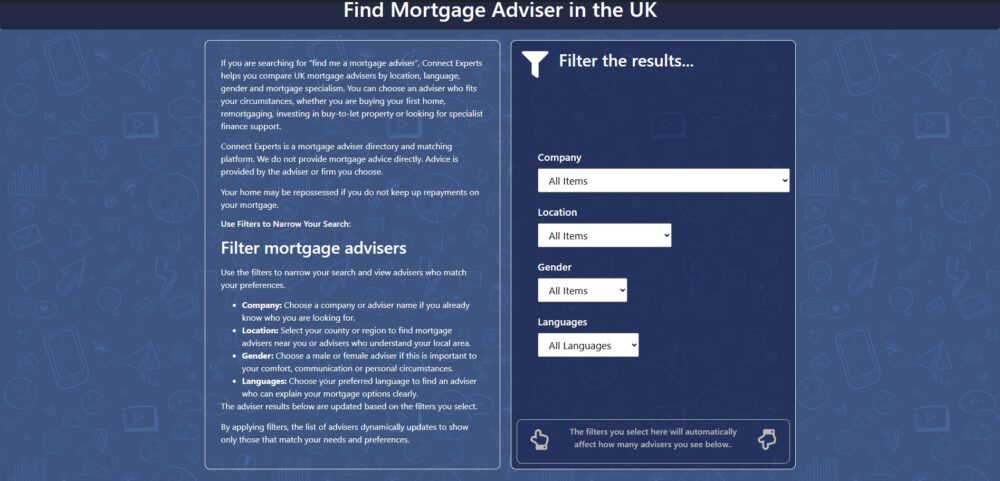
Connect Experts helps you find a mortgage adviser by location, mortgage type, language, gender and specialist experience.
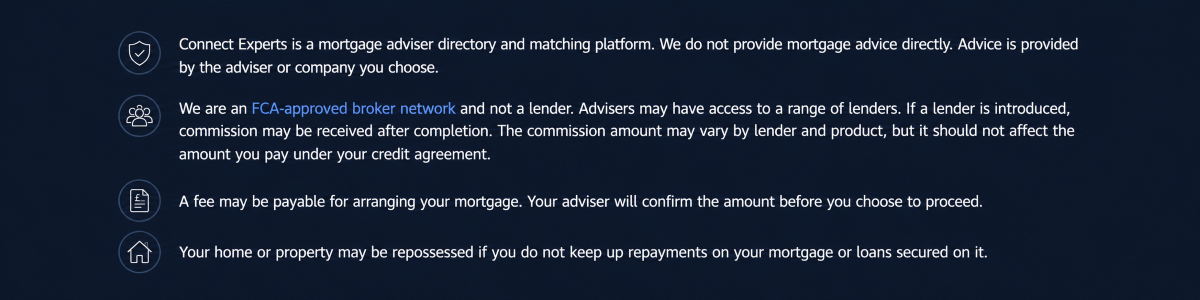
Connect Experts is a directory and matching platform. It does not provide mortgage advice directly. Advice is provided by the adviser or firm you choose.
At a Glance
- A mortgage broker and mortgage adviser usually perform the same role.
- The broker assesses your income, deposit, credit position and property plans.
- They research mortgages available through the lenders they can access.
- They explain costs, risks, conditions and repayment options.
- They may manage the application and speak with the lender.
- Broker fees and lender commission should be explained before you proceed.
- You should check the adviser’s firm and permissions before accepting advice.
- Connect Experts lets you search for advisers who match your mortgage requirements.
What Does a Mortgage Broker Do?
A mortgage broker matches a borrower’s circumstances with suitable mortgage products.
That requires more than comparing interest rates. Lenders use different rules for income, credit history, deposits, property construction and loan purpose. A mortgage that appears competitive may not be available to every applicant.
A broker will usually examine:
- Your income and employment.
- Your regular spending and financial commitments.
- Your available deposit or property equity.
- Your credit history.
- The property type and purchase price.
- Your preferred mortgage term.
- Your attitude towards payment changes.
- Your future plans for the property.
The broker uses this information to research lenders and recommend an appropriate mortgage.
A recommendation should explain why the mortgage is suitable, its main costs and any important risks.
Is a Mortgage Broker the Same as a Mortgage Adviser?
In everyday UK usage, “mortgage broker” and “mortgage adviser” usually describe the same type of professional.
Both terms can refer to someone who gives mortgage advice, researches products and helps with an application.
However, firms may offer different levels of market access. Some advisers consider products from a restricted panel of lenders. Others can research a wider part of the mortgage market.
A wider range does not automatically produce a suitable mortgage. The value comes from matching lender criteria with the borrower’s circumstances.
Read more about whole-of-market mortgage brokers and the questions you should ask about market access.
How Does the Mortgage Broker Process Work?
1. Initial conversation
The broker asks what you want to achieve.
This could involve buying a home, moving, remortgaging, purchasing a rental property or reviewing an existing mortgage.
2. Fact-find
The adviser collects information about your income, spending, debts, deposit, credit history and property plans.
Accurate information is essential. A recommendation can only be based on the facts available to the adviser.
3. Affordability review
The broker considers what monthly payment may be manageable.
The lender will make its own affordability decision. It may also test whether repayments remain affordable if circumstances or interest rates change.
4. Mortgage research
The broker compares products from the lenders and product ranges available to them.
The research may consider:
- Interest rate.
- Initial monthly payment.
- Product fee.
- Valuation fee.
- Early repayment charges.
- Mortgage term.
- Repayment method.
- Incentives.
- Portability.
- Lender criteria.
A low rate is not always the lowest-cost option. Fees, incentives and the length of the initial deal can affect the total cost.
5. Recommendation
The adviser explains the recommended mortgage and why it may suit your needs.
You should receive enough information to understand the costs, conditions and risks before deciding whether to proceed.
6. Agreement in principle
A broker may help you request an agreement in principle.
This is an initial indication of what a lender might consider. It is not a mortgage offer or a guarantee that the application will be accepted.
7. Full application
The broker prepares and submits the application with the required documents.
These may include payslips, accounts, tax calculations, bank statements, identification and evidence of the deposit.
8. Lender communication
The lender may ask questions or request further evidence.
The broker can help explain those requests and provide the information through the correct process.
9. Mortgage offer
If the lender approves the application and property, it may issue a formal mortgage offer.
Your solicitor or conveyancer will complete the legal work before the mortgage begins.
What Mortgages Can a Broker Help With?
A broker’s permissions and experience may cover different mortgage areas.
These can include:
- First-time buyer mortgages.
- Home mover mortgages.
- Remortgages.
- Buy-to-let mortgages.
- Limited company buy-to-let.
- Portfolio landlord mortgages.
- HMO mortgages.
- Self-employed applications.
- Mortgages involving credit problems.
- Commercial mortgages.
- Bridging finance.
- Development finance.
- Later-life mortgages.
- Protection linked to mortgage planning.
Not every adviser covers every area. Search for someone with experience that matches the case.
For example, applicants with company accounts, retained profits or contracting income may wish to find self-employed mortgage brokers.
Does a Mortgage Broker Have Access to Every Lender?
Not necessarily.
Some brokers use a restricted panel. Others can consider a wider range of lenders. Certain lenders or products may only be available directly and may not be offered through brokers.
Ask the adviser:
- Which lenders can you consider?
- Are any lender groups excluded?
- Do you offer a broad or restricted service?
- Will you tell me when a direct lender may need separate consideration?
- How did you select the recommended product?
Clear answers help you understand the scope of the advice.
How Much Does a Mortgage Broker Cost?
There is no single standard mortgage broker fee.
An adviser may charge:
- A fixed fee.
- A percentage of the mortgage.
- A fee based on the complexity of the case.
- A fee at application, offer or completion.
- No direct fee in some circumstances.
A lender may also pay commission to the broker after completion.
Commission does not remove the need for transparency. The adviser should explain how they are paid and any fee you must pay before you agree to proceed.
Ask for written confirmation of:
- The fee amount or calculation method.
- When the fee becomes payable.
- Whether any part is refundable.
- Whether further fees could apply.
- Whether the broker receives lender commission.
What Are the Benefits of Using a Mortgage Broker?
Matching criteria before applying
A broker can compare your circumstances with lender criteria before submitting an application.
This may reduce unsuitable applications, although approval can never be guaranteed.
Comparing more than the interest rate
A broker can assess fees, incentives, early repayment charges and the initial deal period.
This provides a fuller view of cost.
Managing documents
Mortgage applications often require detailed evidence.
A broker can help identify which documents are needed and how they should be presented.
Explaining technical terms
Mortgage decisions involve rates, repayment methods, loan-to-value limits and lender conditions.
A broker can explain what those terms mean in practice.
Supporting specialist cases
Professional research may be useful when income, credit history, property type or ownership structure does not fit standard lender rules.
Are There Disadvantages to Using a Mortgage Broker?
A broker may charge a fee.
They may not cover every lender or product. Service quality and specialist experience can also differ between advisers.
Using a broker does not guarantee:
- Mortgage approval.
- A particular interest rate.
- The highest borrowing amount.
- A faster offer.
- Access to every UK lender.
The correct question is not whether every borrower needs a broker. It is whether professional advice adds enough clarity and practical value to the decision.
How Can I Check a Mortgage Broker?
Check the firm before sharing documents, paying money or accepting advice.
Use the FCA Firm Checker to confirm that the firm is authorised and has permission for the service being offered.
You should also confirm:
- The adviser’s firm or network.
- The type of mortgage advice offered.
- The adviser’s relevant experience.
- Which lenders they can consider.
- How fees and commission work.
- How complaints are handled.
- Whether advice is online, by telephone or face-to-face.
You can also read MoneyHelper’s guide to using a mortgage adviser.
How Do I Choose a Mortgage Broker?
Choose an adviser based on the work required, not only on proximity or advertising.
Ask:
- Do you advise on my type of mortgage?
- Which lenders and products can you research?
- Have you handled similar circumstances?
- What fees could I pay?
- When are those fees payable?
- How will you communicate with me?
- Who will manage the application?
- How long do you retain my documents?
- What happens if the first lender declines?
- How can I make a complaint?
Our guide to choosing the right mortgage broker explains these checks in more detail.
How Connect Experts Helps You Find a Mortgage Adviser
Connect Experts lets you search for mortgage advisers using practical criteria.
You can search by:
- Location.
- Mortgage type.
- Specialist experience.
- Language.
- Gender.
- Adviser name.
- Company name.
- Preferred communication method.
The directory helps you narrow the search before making contact.
It does not choose a mortgage product for you. It also does not replace the regulated advice given by the adviser or firm you select.
Use the mortgage broker directory to compare available advisers and choose who you wish to contact.
Frequently Asked Questions
What is a mortgage broker in simple terms?
A mortgage broker is a professional who assesses your circumstances, researches suitable mortgages and helps you apply to a lender.
What is the difference between a bank and a mortgage broker?
A bank usually discusses its own mortgage products. A broker may consider products from several lenders, depending on the service and lender panel offered.
Can a mortgage broker guarantee approval?
No. The lender decides whether to approve an application after assessing the borrower, property and supporting evidence.
Can a mortgage broker get a better rate?
A broker may identify competitive or intermediary products. However, no adviser can guarantee that a lower rate will be available.
Do mortgage brokers charge fees?
Some do. The amount and payment method vary. The adviser should explain all fees and commission arrangements before you proceed.
Can I use a mortgage broker if I am self-employed?
Yes. Some brokers have experience with company directors, contractors, sole traders and applicants with variable income.
Does Connect Experts give mortgage advice?
No. Connect Experts is a mortgage adviser directory and matching platform. Mortgage advice is provided by the adviser or firm you choose.
How do I find a mortgage broker near me?
Search by town, county or postcode through Connect Experts. You can then refine the results by mortgage type, language, gender and specialist experience.
Find a Mortgage Adviser
A mortgage is a long-term financial commitment. Good advice should make the costs, choices and limitations easier to understand.
Search Connect Experts to find an adviser whose experience and service fit your circumstances.
Find a Mortgage Adviser