Mortgage Broker in Stamford Hill: A mortgage application turns a future property into a present financial decision.
In Stamford Hill, that decision may involve a period house, a converted flat, a leasehold property or a home for a growing family. Each property and applicant creates a different lending assessment.
A mortgage broker in Stamford Hill can review the financial and property details before approaching a suitable lender. This may help identify affordability limits, document requirements and possible application concerns at an earlier stage.
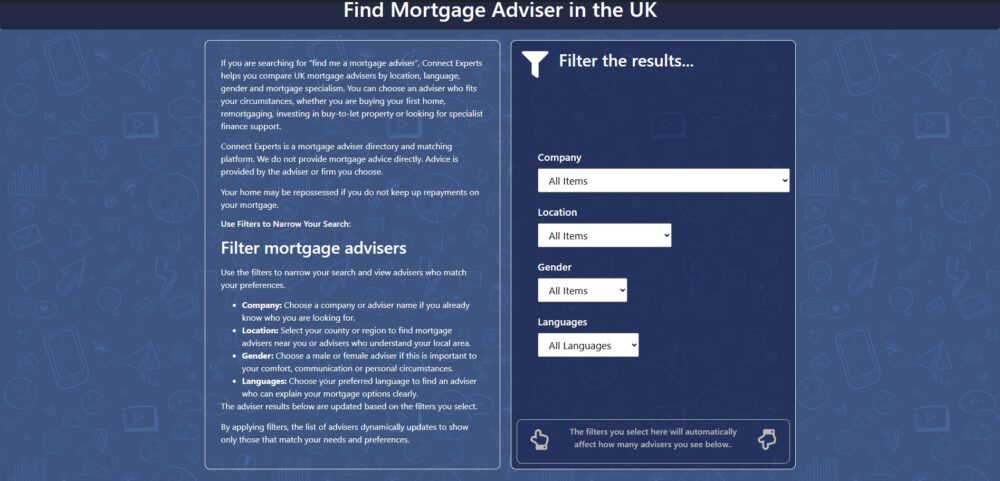
Connect Experts helps you find mortgage advisers who serve Stamford Hill and surrounding areas of North London. You can search by location, language, gender and mortgage expertise.
Finding a Mortgage Broker in Stamford Hill
A Stamford Hill mortgage broker may help you:
- Estimate a realistic borrowing range
- Understand how lenders assess your income
- Compare mortgage types and lender criteria
- Review your deposit and loan-to-value
- Prepare the required documents
- Examine leasehold or property-related concerns
- Manage the application through to a mortgage offer
The suitable mortgage will depend on your finances, property, deposit and long-term plans. A lower initial rate does not always produce the lowest overall cost.
Mortgage Advice for Stamford Hill Property Buyers
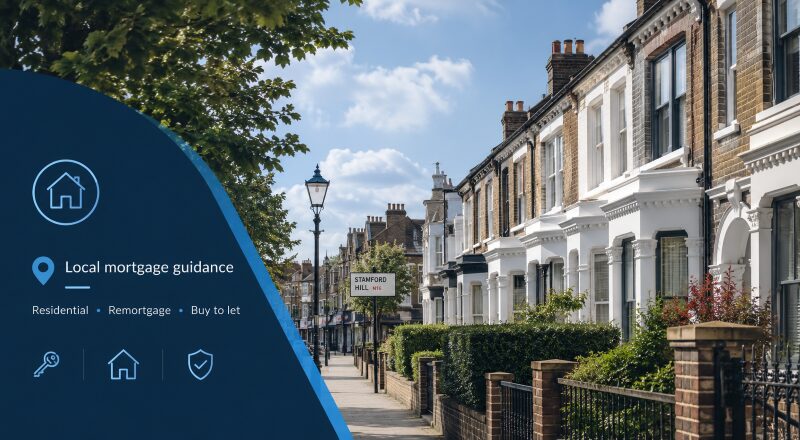
Stamford Hill sits in North London and is associated mainly with the N16 postcode district. Its housing includes terraces, converted buildings, flats, larger family homes and properties near established commercial streets.
The local housing mix can affect mortgage applications in practical ways.
A lender may need to assess:
- Whether the property is freehold or leasehold
- The remaining term on a lease
- Service charges and ground rent
- The construction and condition of the building
- Whether the property has been converted
- The number and type of separate units
- Any commercial premises within the building
- The proposed residential or rental use
- The valuation and expected marketability
A mortgage decision therefore concerns more than the applicant’s income. The lender must also decide whether the property offers acceptable security for the loan.
What Does a Mortgage Broker Do?
A mortgage broker reviews your circumstances and recommends mortgage options that may be suitable.
The process normally begins with a discussion about:
- Your income and employment
- Savings and available deposit
- Loans and credit commitments
- Monthly household expenditure
- Credit history
- Preferred property
- Expected purchase price
- Intended use of the property
- Future plans
The broker can then examine lenders whose criteria may fit the application.
This matters because lenders do not assess every source of income, property or credit issue in the same way. A case declined by one lender may fall within another lender’s criteria. However, no broker can guarantee acceptance.
Mortgage Affordability in Stamford Hill
Mortgage affordability is not based on income alone.
Lenders usually consider income alongside expenditure, existing credit commitments, dependants, mortgage term and the proposed interest rate. They may also test whether repayments remain affordable if rates or household costs increase.
Relevant income could include:
- Basic salary
- Overtime
- Commission
- Bonuses
- Self-employed profit
- Company director remuneration
- Contract income
- Pension income
- Certain benefits
- Rental income
Each lender may apply different evidence rules.
Applicants with business or variable earnings can read the UK self-employed mortgage guide before preparing an application.
A broker can estimate affordability, but the lender makes the final decision after reviewing the full application.
Deposits and Loan-to-Value
Your deposit determines the percentage of the property price that must be borrowed.
This percentage is called the loan-to-value, or LTV.
For example, a buyer providing a 10% deposit would normally need a 90% LTV mortgage. A larger deposit can reduce the lender’s risk and may provide access to a wider product range.
However, buyers should not commit every available pound to the deposit.
Other costs may include:
- Mortgage product fees
- Broker fees
- Valuation fees
- Survey costs
- Conveyancing charges
- Stamp Duty Land Tax, where applicable
- Buildings insurance
- Removal costs
- Immediate repairs
- Leasehold charges
A sound mortgage budget protects the purchase and the period after completion. Ownership begins with the keys, but affordability continues for the full mortgage term.
First-Time Buyers in Stamford Hill
First-time buyers should establish their budget before concentrating on individual properties.
An early review can clarify:
- The deposit required
- A possible borrowing range
- Expected monthly repayments
- Suitable mortgage terms
- Documents required by lenders
- Whether gifted funds are acceptable
- Whether a property may present lending concerns
- The likely costs outside the deposit
An Agreement in Principle can provide an early indication of possible borrowing. It is not a mortgage offer and does not guarantee approval.
The first-time buyer guide explains deposits, affordability, documents and the purchase process in more detail.
Moving Home in Stamford Hill
Moving home can involve two connected transactions.
The existing property may need to be sold before the new purchase completes. The buyer must also consider the mortgage balance, available equity, early repayment charges and any arrangement fees on the next mortgage.
A broker may compare:
- Moving the existing mortgage
- Taking a new mortgage with the same lender
- Changing to another lender
- Borrowing more for the next property
- Adjusting the mortgage term
- Changing the repayment structure
Porting a mortgage does not mean the borrowing is automatically transferred. The lender usually reassesses the application against its current criteria.
Remortgaging a Stamford Hill Property
A remortgage replaces an existing mortgage with another mortgage product.
Homeowners may review their options because:
- A fixed or discounted rate is ending
- They want greater payment certainty
- They need to change the mortgage term
- They want to raise funds
- Their property value has changed
- Their personal circumstances have changed
- They want to remove or add a borrower
The overall cost should be considered alongside the rate. Product fees, legal costs, valuation fees and early repayment charges can affect the result.
The UK remortgage guide explains what to review before an existing deal ends.
Borrowing more against a property increases the secured debt. It may also increase monthly repayments or extend the period over which interest is paid.
Buy-to-Let Mortgages in Stamford Hill
A buy-to-let mortgage is designed for a property that will be rented to tenants.
The assessment may include:
- Expected monthly rent
- Interest coverage requirements
- Deposit size
- Applicant income
- Landlord experience
- Property type
- Tenancy arrangements
- Personal or limited company ownership
- Existing rental properties
- Overall portfolio borrowing
A property containing several units, a house in multiple occupation or accommodation above commercial premises may require a specialist assessment.
Prospective landlords can read the buy-to-let mortgage guide before considering the structure and costs of an investment.
Some buy-to-let mortgages are not regulated by the Financial Conduct Authority.
Leasehold Flats and Converted Properties
Leasehold details can affect both affordability and lender acceptance.
Before applying, buyers should establish:
- The remaining lease length
- Current service charges
- Ground rent terms
- Planned major works
- Building insurance arrangements
- Management company information
- Any restrictions on letting or alterations
- Whether the building has been converted correctly
Some lenders apply minimum lease requirements. Others may decline ground rent terms they consider unacceptable.
A solicitor examines the legal title. A surveyor considers the condition and value. The lender decides whether the property provides suitable security.
These roles are connected but not interchangeable.
Mortgages for Complex Income
Stamford Hill applicants may receive income from salaries, businesses, contracting, property, or a combination of these sources.
Complex income does not automatically prevent borrowing. However, it may require more detailed evidence.
Depending on the applicant, a lender might request:
- Payslips
- P60 documents
- Employment contracts
- Personal bank statements
- Business bank statements
- Tax calculations
- Tax year overviews
- Certified accounts
- Company accounts
- Dividend records
- Existing tenancy agreements
- Evidence of deposit funds
The period assessed and the calculation used will vary between lenders.
A broker can examine how different lenders may interpret the income before a formal application creates a credit footprint.
Credit History and Mortgage Applications
Lenders review how applicants have managed previous financial commitments.
They may consider:
- Missed payments
- Defaults
- County Court judgments
- Debt management plans
- Individual voluntary arrangements
- Bankruptcy
- Current credit balances
- Recent credit applications
- Electoral roll information
- Use of arranged or unarranged overdrafts
The type, value, date and reason for a credit problem can all affect the assessment.
Applicants should review their credit reports before applying. Errors should be addressed with the relevant credit reference agency.
Avoid making several speculative mortgage applications. Repeated credit searches can complicate the position without resolving the underlying issue.
Later-Life Borrowing and Equity Release
Older homeowners may have several borrowing routes, depending on their income, age, property and objectives.
Possible options can include:
- A standard residential mortgage
- A retirement interest-only mortgage
- A later-life mortgage
- A lifetime mortgage
- Downsizing
- Using savings or other assets
These products work differently and can create different long-term costs.
Homeowners considering a lifetime mortgage should seek qualified advice and understand how compound interest may reduce the remaining estate.
See Equity Release Advisers in London for separate guidance about later-life lending and equity release.
Documents to Prepare
Preparing documents early may reduce avoidable delays.
You may need:
- Proof of identity
- Proof of address
- Recent bank statements
- Payslips or income evidence
- Details of loans and credit cards
- Proof of deposit
- Evidence explaining gifted funds
- Existing mortgage statements
- Property details
- Accounts and tax records if self-employed
- Residency or visa documents where relevant
- Evidence of rental income for landlords
Documents should be complete, legible and consistent with the information supplied in the application.
Unexplained transactions, changing income figures or missing statements can lead to further questions.
The Mortgage Process
1. Initial assessment
The adviser reviews your objectives, income, expenditure, credit position and deposit.
2. Affordability review
Possible borrowing and monthly repayments are estimated.
3. Mortgage research
Suitable mortgage products and lender criteria are compared.
4. Agreement in Principle
A lender may provide an early indication of possible borrowing.
5. Property review
The property type, tenure, value and intended use are considered.
6. Full application
The application and supporting documents are submitted.
7. Valuation and underwriting
The lender examines the applicant and property.
8. Mortgage offer
An offer is issued if the lender accepts the application.
9. Legal work
The solicitor completes searches, title checks and contractual work.
10. Completion
Funds are released and the transaction completes.
Timescales vary according to the lender, property, legal work and complexity of the application.
How to Check a Mortgage Adviser
Before sharing personal or financial information, confirm who you are dealing with.
The Financial Services Register can be used to check whether a firm or individual has the relevant regulatory status.
You should also understand:
- Which service is being provided
- Whether a fee will be charged
- When the fee becomes payable
- Whether the adviser reviews a limited or broad lender range
- How personal information will be used
- How complaints are handled
- Which mortgage areas the adviser is permitted to advise on
Regulatory status should be checked rather than assumed.
Frequently Asked Questions
Can a mortgage broker help before I find a property?
Yes. An early assessment can help establish a possible budget, deposit requirement and document list before you arrange viewings.
Is Stamford Hill in the N16 postcode district?
Stamford Hill is commonly associated with N16. Some nearby streets and local descriptions may overlap with adjoining areas, so the full property postcode should always be checked.
Can I obtain a mortgage with self-employed income?
Potentially. Lenders may assess accounts, tax records, business performance, salary, dividends or retained profit. Their calculations and evidence requirements vary.
Can I obtain a mortgage for a converted flat?
Potentially. The lender may examine the conversion, construction, lease, access, services, planning position and marketability before deciding.
Does an Agreement in Principle guarantee a mortgage?
No. It is an initial indication based on limited information. The lender must still assess the complete application and property.
Should I choose the mortgage with the lowest rate?
Not automatically. Fees, early repayment charges, incentives, mortgage term and repayment structure can alter the overall cost.
Can a broker guarantee mortgage approval?
No. A broker can research suitable options and prepare an application. The lender makes the final decision.
Can I remortgage to release money from my home?
Possibly. The lender will consider affordability, property value, loan-to-value, purpose of borrowing and credit history. Increasing secured borrowing can increase the total cost.
Find a Mortgage Broker in Stamford Hill
A suitable mortgage begins with accurate information.
Connect Experts helps you search for a mortgage adviser based on location, mortgage type, language, gender and specialist experience.
Use the adviser search to find a mortgage broker serving Stamford Hill, N16 and surrounding parts of North London.